

The overhead smash is one of pickleball's most powerful finishing shots, but most players are making the same critical mistakes. Here's how to master your overhead smash and turn it into a weapon that opponents can't retrieve.
The overhead smash is supposed to be your finishing move. It's the shot that ends rallies, demoralizes opponents, and makes you feel like a champion.
But here's the problem: most players are hitting it wrong, and they don't even know it.
According to top APP pro and pickleball content creator Tanner Tomassi, the mistakes people make with their pickleball overhead smash are surprisingly consistent.
And the good news? They're fixable.
In under 60 seconds, Tomassi breaks down the three biggest errors holding back your smash game, and once you understand them, your overhead will transform from a liability into a genuine weapon.
Love pickleball? Then you'll love our free newsletter. We send the latest news, tips, and highlights for free each week.
The Biggest Pickleball Overhead Smash Mistake: Hitting Down Instead of Out
Here's what most players do wrong with their overhead smash: they try to hammer the ball straight down into the court.
It feels powerful. It looks aggressive. And it's almost always a mistake.
When you hit the ball down, you're making it easy for your opponent to retrieve it.
The ball comes in at a steep angle, giving them time to react and position themselves for a return.
But when you hit the ball out and deep to the baseline, everything changes.
The trajectory becomes flatter, the ball travels deeper into the court, and your opponent suddenly has to make a much harder decision about whether they can even reach it.
Tomassi emphasizes that the difference between these two approaches is night and day.
A shallow smash that lands near the net? That's a gift.
A deep smash that pushes your opponent back to the baseline? That's a winner.
The mental shift here is crucial. You're not trying to spike the ball down like you're playing volleyball. You're trying to place it deep and out of reach.
Think of it as a placement shot with power, not a power shot with placement.
Why Court Angles Make Your Overhead Smash Unstoppable
Most players don't realize they're leaving points on the table because they're not using the full court when they have an overhead smash opportunity.
Here's the geometry: there are three angles you can hit, and only two opponents. That means one angle is always open.
You can go crosscourt to one side, you can go down the middle, or you can go to the other side. At least one of those options will find empty court.
Tomassi's insight here is that players get tunnel vision. They see the ball go up, and they immediately think "smash it at someone."
But the smarter play is to look at the court first. Where are your opponents positioned? Which angle is most open? Then hit your pickleball overhead smash there.
This is where pickleball's doubles format becomes a strategic advantage. Unlike tennis, where you might have more court to work with, pickleball's smaller court means that court positioning is everything.
If both opponents are leaning one direction, the opposite side is vulnerable. If they're both back, the middle is open.
Your overhead smash should exploit these gaps, not ignore them.
The same angle-first thinking applies when you're attacking drives and beating bangers — read the court before you commit to the shot. And if you want to go deeper on court-wide attack strategy, six spots to attack your opponents gives you the full map.
 Alex E. Weaver
3. The Stance Problem: Why Your Power Is Disappearing
The third major issue with most players' overhead smash is that they're not generating enough power because they're using the wrong stance.
Tomassi observes that most players try to hit the shot with just their arm. They see the ball go up, they reach for it, and they swing.
But that's like trying to throw a baseball with just your elbow. You're leaving 80 percent of your power on the court.
The correct approach is to turn sideways when the ball goes up. Point at the ball with your off hand.
This accomplishes two things: it gets your body into the proper position, and it loads your power. When you swing into the shot from this position, you're using your core, your legs, and your arm all together. That's where real power comes from.
Think of it like a tennis serve. You don't just flail your arm at the ball. You load up, you turn, you point, and then you explode through the shot.
Your pickleball overhead smash should follow the same principle, even though the court is smaller and the distances are shorter.
The difference between an arm-only smash and a full-body smash is the difference between a ball that lands in the net and a ball that your opponent can't touch. It's that significant.
This is exactly why generating effortless power through proper body rotation is one of the highest-leverage mechanical fixes in the game. Getting your pickleball stance fundamentals right underpins every power shot, not just the overhead.
The Dink Media Team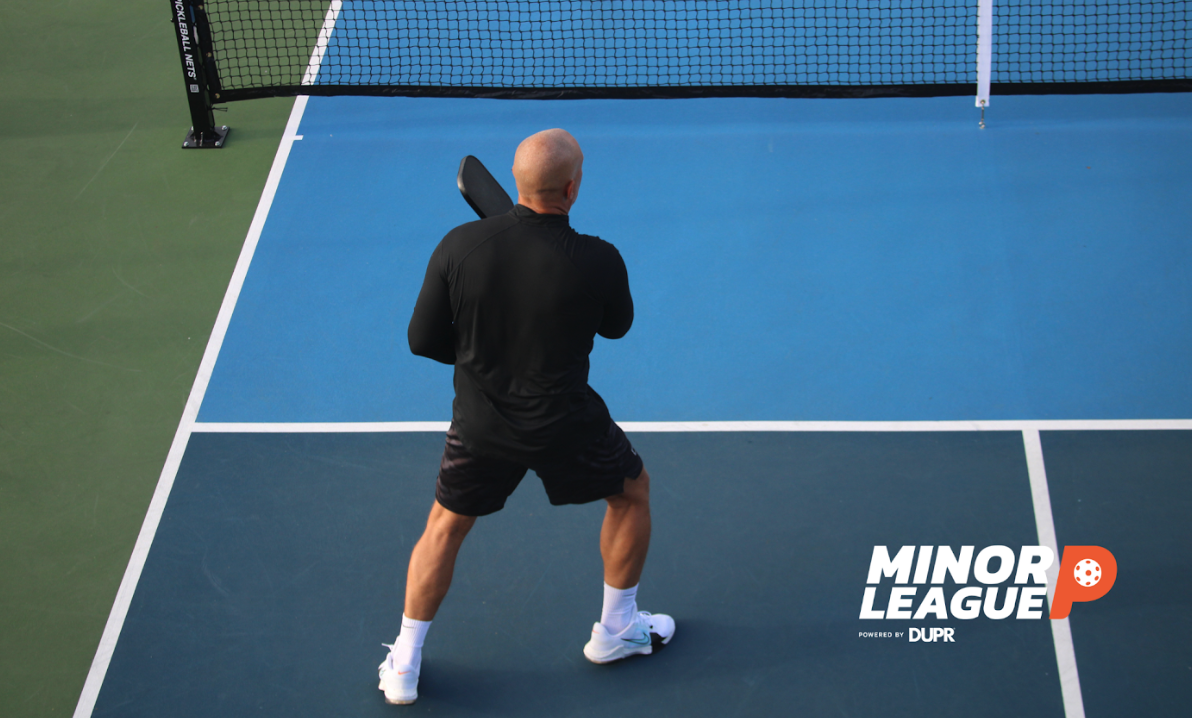
Putting It All Together: The Complete Overhead Smash Picture
So you've got the three pieces: hit the ball out and deep, use all three court angles, and load your power with proper stance.
But how do these work together in a real match?
Imagine you're at the net, and a lob comes up. Your first instinct is to smash it. But before you do, take a half-second to assess.
Where are your opponents? Which angle is open? Then turn sideways, point at the ball, and swing through it with your whole body, aiming deep and out rather than down and hard.
That's the overhead smash that wins points.
That's the overhead smash that wins points. That's the shot that makes opponents regret hitting that lob in the first place.
The beauty of these three principles is that they're not complicated. They're not requiring you to buy new equipment or spend months in training.
They're just about understanding the mechanics and the strategy behind one of pickleball's most important shots.
If lobs are giving you trouble on both offense and defense, Jack Sock's breakdown of how to demolish the lob serve is worth studying. And for players over 50 who want a reliable overhead response, this defensive technique for handling lobs is a direct complement to what Tomassi is teaching here.
The Dink Media Team
Why This Matters for Your Game
If you're serious about improving your pickleball, the overhead smash is one of the highest-leverage shots to work on.
It's a finishing shot, which means every improvement directly translates to more points won. You don't need to be perfect at it.
You just need to be better than you are now.
Tomassi's breakdown is valuable because it identifies the specific errors that are holding most players back. It's not that people don't know how to hit an overhead smash in pickleball.
It's that they're making the same three mistakes over and over, and nobody's ever pointed them out.
Once you start thinking about your smash differently, you'll notice the change immediately. Your opponents will start backing up when they see the ball go up. They'll start missing more returns.
And you'll start winning more points.
That's the power of understanding the fundamentals.
Pair this with Tomassi's mechanics and the 3-part motion for mastering overhead smashes, and you have a complete system for owning this shot. If you want to see how the pros defend it, the Survivor Drill shows exactly how elite players handle incoming smashes, which will sharpen your own execution even further.
According to ESPN's coverage of pickleball's explosive growth, the sport now reaches millions of recreational players who are actively seeking technique improvements exactly like this one. And as CBS Sports has reported, the gap between casual play and competitive play often comes down to shot mechanics, not athleticism.
Frequently Asked Questions
What is the most common pickleball overhead smash mistake?
The most common mistake is hitting the ball down instead of out. Directing your smash steeply downward gives opponents an easier angle to retrieve, while hitting out and deep to the baseline forces a much harder reaction.
How do court angles improve your overhead smash in pickleball?
With three available angles and only two opponents, one opening always exists. Identifying which angle is unguarded before you swing, rather than reacting on instinct, turns a good smash into a guaranteed point.
Why is proper stance critical for a powerful overhead smash?
Turning sideways and pointing at the ball with your off hand engages your core and legs, not just your arm. This full-body loading, similar to a tennis serve, can dramatically increase both power and accuracy on your smash.
Should you always try to hit a winner on your pickleball overhead smash?
Placement and depth matter more than raw power. A well-placed smash that pushes your opponent to the baseline is more effective than a hard swing that clips the net or lands short.
How do you practice your pickleball overhead smash to build consistency?
Have a partner feed you consistent lobs and focus on all three mechanics: depth, angle selection, and full-body stance. Repetition builds muscle memory and footwork that carries over directly into match play.
Love Pickleball? Join 100k+ readers for free weekly tips, news & gear deals.
Subscribe to The Dink