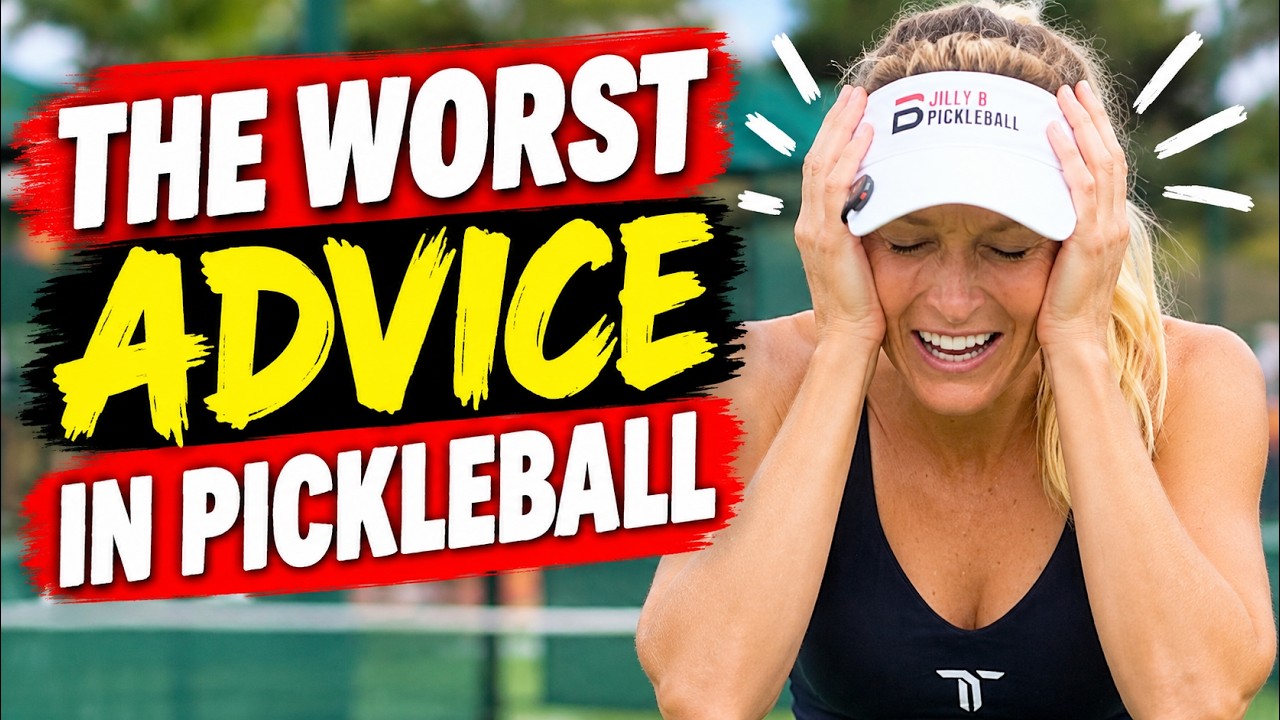

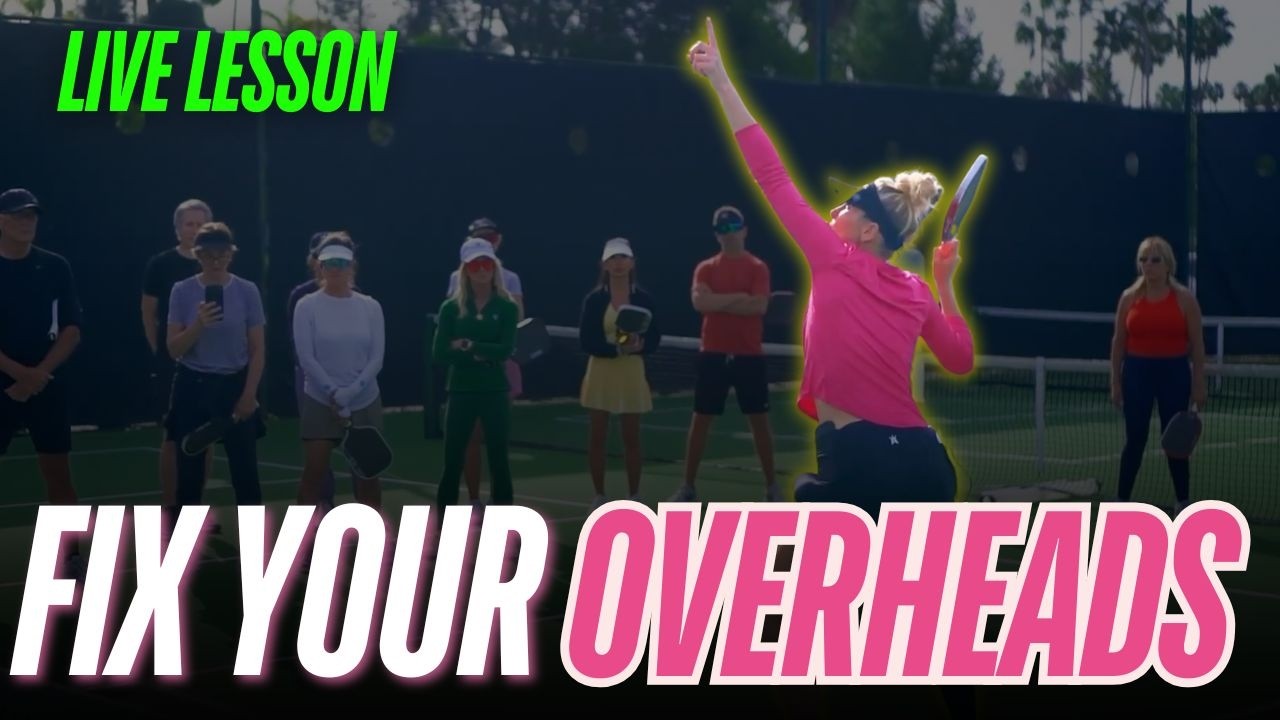
Your overhead fix doesn't require hours of practice. Jilly B breaks down the four most common overhead flaws and shows exactly how to correct them with simple footwork drills and positioning adjustments.
According to Jilly B, a professional pickleball coach who recently worked with the highest-level junior players in the country, most players struggle with overheads because they're making the same four predictable mistakes.
The good news? These flaws are fixable, and you don't need months of training to see results.
Love pickleball? Then you'll love our free newsletter. We send the latest news, tips, and highlights for free each week.
The Four Overhead Flaws Holding You Back
When Jilly B taught a camp session with elite junior players, she noticed something striking: nearly every player made the same mistakes when hitting overheads.
These weren't subtle technical issues either. They were fundamental flaws that cost points and, more importantly, were completely preventable.
The four most common overhead problems are:
- The backpedal
- The no shoulder turn
- The too slow to react
- The let it bounce
Each one has a specific fix, and understanding why these flaws happen is the first step toward correcting them.
Why Your Footwork Is Everything for a Pickleball Overhead Fix
Here's what most players get wrong: they think the overhead is about arm strength or swing mechanics. It's not.
Your overhead fix starts with your feet.
Jilly B teaches a foundational footwork drill that mimics the old tennis warm-up routine.
The drill involves three synchronized movements:
- Your left hand points at the ball.
- Your right hand comes to your ear like you're answering a phone call.
- Your feet shuffle sideways.
This isn't just busy work. This is the foundation of every good overhead.
The reason this matters is that your shoulders need to turn perpendicular to the net.
- If your shoulders stay facing forward, you have nothing to put on the ball.
- If your shoulders don't turn, you'll fall backward when you try to hit the overhead.
The shuffle comes from torso rotation, and that rotation is what keeps you balanced and in control.
When you're in the correct position, just getting into that posture should feel uncomfortable.
If you feel like a caricature of yourself, you're doing it right.
Jilly B has logged over 400,000 hours of tennis, so the position feels natural to her. For you, it should feel exaggerated.
 The Dink Media Team
The Cardinal Sin: Letting the Ball Bounce
One of the most critical elements of an overhead fix is understanding this rule:
Never let the ball bounce.
This is non-negotiable.
Jilly B emphasizes this point repeatedly because it's where most players lose points.
Even if you think you're going to hit the worst overhead ever, even if you're barely there, take it in the air. Do not let it bounce.
The moment that ball bounces, your opponent has gained control of the point.
Why? Because a ball that bounces gives your opponent time to react and position themselves. A ball taken in the air puts immediate pressure on them.
It's really hard to hit a bad lob if you're catching it in the air.
You can hit a bad lob off the bounce, but in the air, the geometry of the shot is already working in your favor. Players who consistently take the overhead smash in the air win far more of those exchanges.
Quick First Steps: Solving the Reaction Problem in Your Overhead Fix
One of the biggest issues Jilly B sees at the professional level is a slow first step.
Players see the lob go up and their instinct is to watch it, stand in the lobby, and then jump for it. That's backward.
The moment you see the ball go up, your feet need to move first. Your eyes can follow the ball, but your feet should already be moving.
This is where the quick first step comes in. It's not about taking one big drag step or one big jump.
It's about taking lots of little steps, itty bitty ones, that get you moving immediately.
The difference between a slow first step and a quick first step is the difference between hitting an overhead at full extension and hitting one where you're already positioned.
One feels desperate. The other feels controlled.
The Dink Media Team
Where to Aim: The Lob Defense That Actually Works
Here's something counterintuitive: your lob doesn't have to be good.
Jilly B spent years trying to make her lob perfect, and it wasn't until she worked with elite juniors that she realized the real secret.
Bad lobs work. What matters is where your opponents are standing.
- If your opponent is leaning in, that's when you lob.
- If they're back, don't lob.
- If they're in the middle of the court, aim for the corners.
Jilly B taught this drill to the highest-level juniors in the country, and they threw every single lob to the middle of the court.
Once she corrected them to aim for the corners, they started winning those points.
The positioning of your opponent matters more than the quality of your lob. A mediocre lob to the corner beats a perfect lob to the middle of the court every single time.
Understanding the offensive lob as pickleball's most overlooked weapon makes this correction even easier to apply in real matches.
The Dink Media Team
The Stable Base: Your Secret Weapon for a Better Overhead
A good overhead fix comes down to one thing: a stable base and stable footwork.
If you're still moving and you're off balance, you should not lob. Period.
When your feet are set and stable, you should feel like you have every option available to you on the court.
You can dink, you can speed up, you can lob. Nothing has changed in your swing.
It's 90 percent the same. But from that exact same posture, you can execute any shot.
This is why Jilly B emphasizes that you can tell if someone is going to hit a good overhead just by looking at their feet.
Are they set? If yes, the overhead is coming. If no, they're going to struggle.
Perfecting your pickleball posture is the foundation that makes everything else in your overhead technique work.
The Dink Media Team
The Drill You Can Do at Home to Fix Your Pickleball Overhead
The beauty of this overhead fix is that you don't need a court or a partner. You can do this in your backyard, alone, with just a paddle and a ball.
The drill is simple: focus on keeping your arm up as long as you can and your chest up as long as you can.
Don't worry about finishing the swing with a big follow-through. Keep that arm elevated.
This single adjustment changes everything about how your overhead feels and performs.
Jilly B wouldn't have spent as much time on this detail if it weren't really important. It is. This is the drill to take home and practice.
The Dink Media Team
Why the Pickleball Overhead Fix Matters More Than Ever in 2026
The lob is being called the shot of 2026, and for good reason.
On the professional tour, the overhead is such a weak point that players are winning free points just by lobbing. As ESPN has reported on the rapid growth and evolution of professional pickleball, the pro game continues to expose technical weaknesses that trickle down to the recreational level.
If that's true at the pro level, imagine how many free points you could be earning at the amateur level.
Making a pickleball overhead fix isn't just about looking better on the court. It's about winning points you're currently losing.
It's about taking away one of your opponent's favorite weapons.
It's about confidence.
Frequently Asked Questions
What are the four main flaws that a pickleball overhead fix addresses?
The four main overhead flaws are the backpedal, the no shoulder turn, the too slow to react, and the let it bounce. Each one has a specific fix, and understanding why these flaws happen is the first step toward correcting them. According to Jilly B, these are the most common mistakes she sees even at the professional level.
Why is letting the ball bounce such a critical mistake in overhead play?
Letting the ball bounce gives your opponent time to react and position themselves, handing over control of the point. A ball taken in the air puts immediate pressure on your opponent and is much harder to miss. Even if you think you're going to hit a bad overhead, taking it in the air is always the better choice.
Can I practice this overhead fix without a partner or a court?
Yes, absolutely. You can do the footwork drill and the arm positioning drill in your backyard with just a paddle and a ball. You don't need a partner or a full court to work on the fundamentals of a better overhead.
How quickly can I expect improvement after working on my pickleball overhead fix?
According to Jilly B, it took her four years to develop these principles, but she's distilled them into a 10-minute lesson. With focused practice on the footwork drill and the stable base concept, you should see improvement in your next few sessions on the court.
What is the single most important element of a good pickleball overhead fix?
The most important element is a stable base and stable footwork. If your feet are set, everything else follows naturally. You can tell if someone is going to hit a good overhead just by looking at their feet, and that rule applies at every level of the game.

Love Pickleball? Join 100k+ readers for free weekly tips, news & gear deals.
Subscribe to The Dink