
Why Your Kitchen Bounce Shot Keeps Losing You the Point (And How to Fix It)
The kitchen bounce shot is one of the most misunderstood situations in pickleball. Fix your apex timing and hip rotation and you stop giving up free points off the bounce.
The kitchen bounce shot is one of the most misread situations in recreational pickleball. Your opponent drops a good ball into the kitchen, you decide to let it bounce, and then everything falls apart before you even swing.
The problem is not the decision to let it bounce. The problem is what happens after that decision.
Most players freeze, stay in an open stance, and let the ball come back to them instead of moving through it.
This breakdown covers exactly how to fix the kitchen bounce shot, from footwork and hip rotation to apex timing and swing compactness.
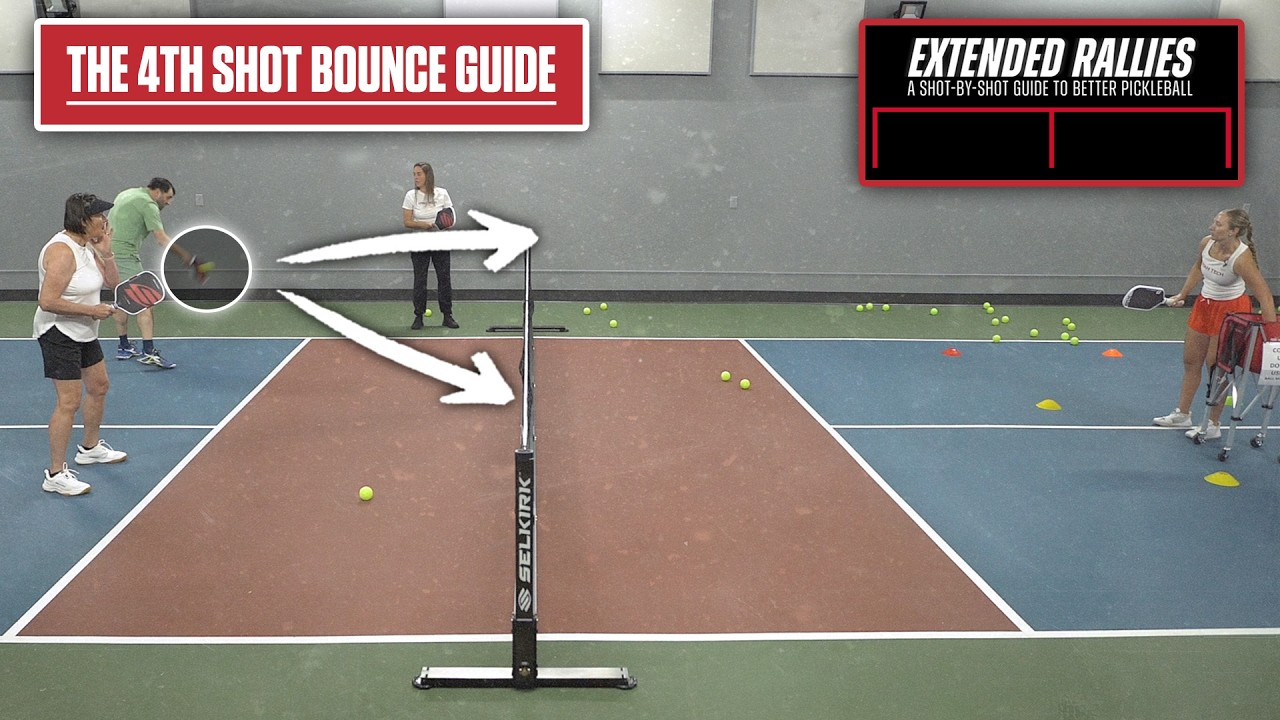
The instruction here comes directly from Selkirk TV on YouTube, where coaches walk through this scenario with real players making real mistakes in real time.
Love pickleball? Then you'll love our free newsletter. We send the latest news, tips, and highlights for free each week.
Why Most Players Lose the Point Right Here
When your opponent hits a quality reset that lands in the kitchen, there is a temptation to treat it as a concession.
Like you already lost that exchange and you are just trying to survive the next one.
That thinking is wrong. You still have the advantage if you make a smart decision and get your feet set correctly.
The real mistake most players make is staying passive.
They stay in a closed or square stance, wait for the ball to come to them, and then swing with their weight drifting backward.
That backward momentum is the direct cause of most errors off the bounce.
If you have ever sent a kitchen bounce shot into the net or watched it float long, backward momentum is almost always why.
The fix starts well before you swing, and it belongs on the same list as the shots you must master to break through your current level.
What Does the Apex Have to Do With It?
The apex is the highest point a ball reaches after bouncing. Every ball that lands in the kitchen climbs toward an apex before it begins dropping again.
Most players contact the ball on the way down, which shrinks your window and forces you to lift the ball back up over the net.
When you contact the ball at its apex, you get the most favorable angle.
You can hit down through the ball rather than up at it, and that is the difference between applying pressure and just keeping the ball in play.
The key is making your decision to let the ball bounce early enough that you can actually get into position to meet it at the right height.
If you are still deciding whether to volley or let it bounce when the ball is already landing, you are already too late to hit a good shot.
For more on how ball height should change your decision-making, check out this breakdown of pickleball shot selection ball height rules.
How Should You Set Up Your Footwork?
Early footwork preparation is the single most important factor in executing a good kitchen bounce shot.
The moment you decide to let that ball bounce, your feet should already be moving into position.
Here is what the correct setup looks like, step by step:
- Make the decision early. As soon as you see the ball is going to land short, commit to letting it bounce. Do not wait.
- Open your hips toward the target. On the forehand, rotate your lead hip open. On the backhand, open your opposite hip. This creates the space you need to swing forward through the ball.
- Step into the ball at apex. Time your step so that contact happens when the ball is at its highest point, not on the way down.
- Keep all momentum moving forward. Your weight should be transferring through the ball at contact, not sitting or drifting back.
This is the same principle that makes every aggressive shot work at the pickleball kitchen line.
Forward momentum equals pressure. Backward momentum equals errors.
If you want to see how this connects to your overall movement at the line, read about pickleball footwork tips that apply across all skill levels, then load them into the 12 drills worth running this season.
 The Dink Media Team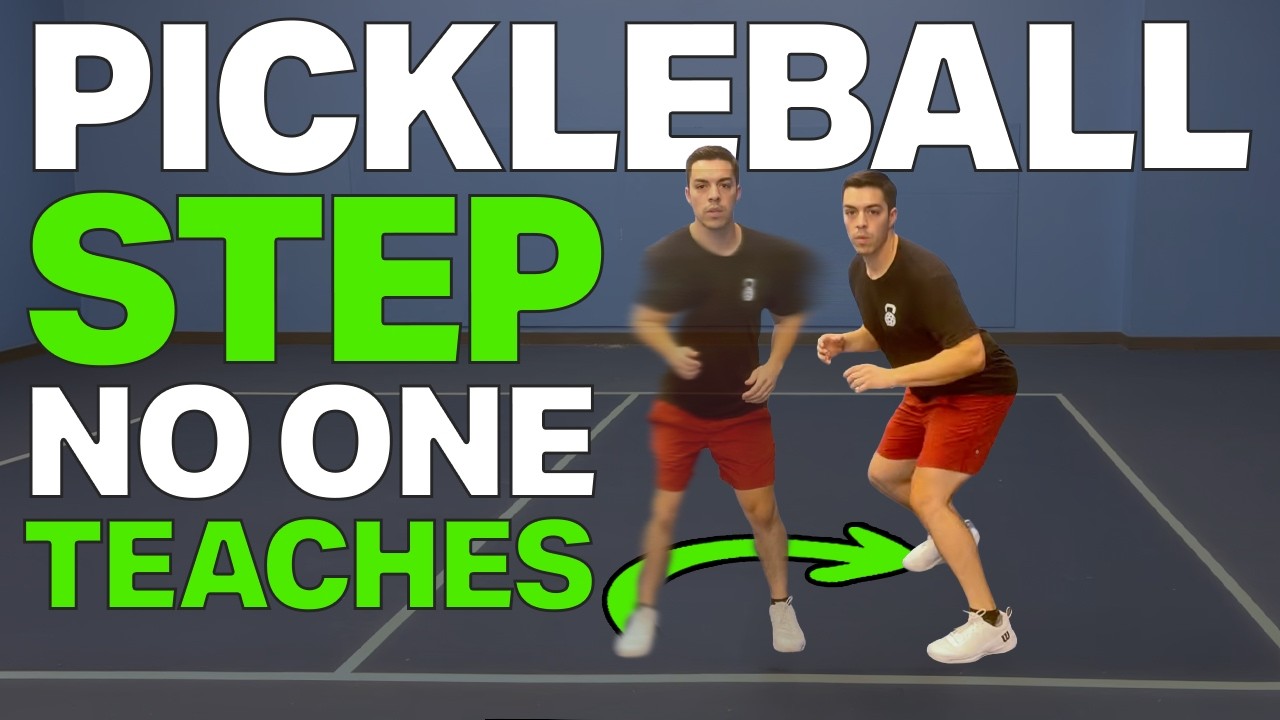
What Does the Hip Rotation Actually Do?
Opening your hips is not just a style preference. It is mechanical.
When your hips are closed or square to the net, your swing has nowhere to go except across your body, which bleeds power and direction.
When you open your hips before contact, you create a clear path for the paddle to travel forward and through the ball.
You can drive your momentum in the direction you want the ball to go instead of fighting your own body position.
- On the forehand: Your lead hip opens toward the ball as you step in. Think of your hip rotating to face your target, not the net.
- On the backhand: Your opposite hip opens, giving the paddle room to come across and through. The mechanics are nearly identical. The setup is the same, just mirrored.
This hip rotation is also what lets you generate topspin even with a compact swing. The body rotation through the shot is doing most of the work, not the arm.
 The Dink Media Team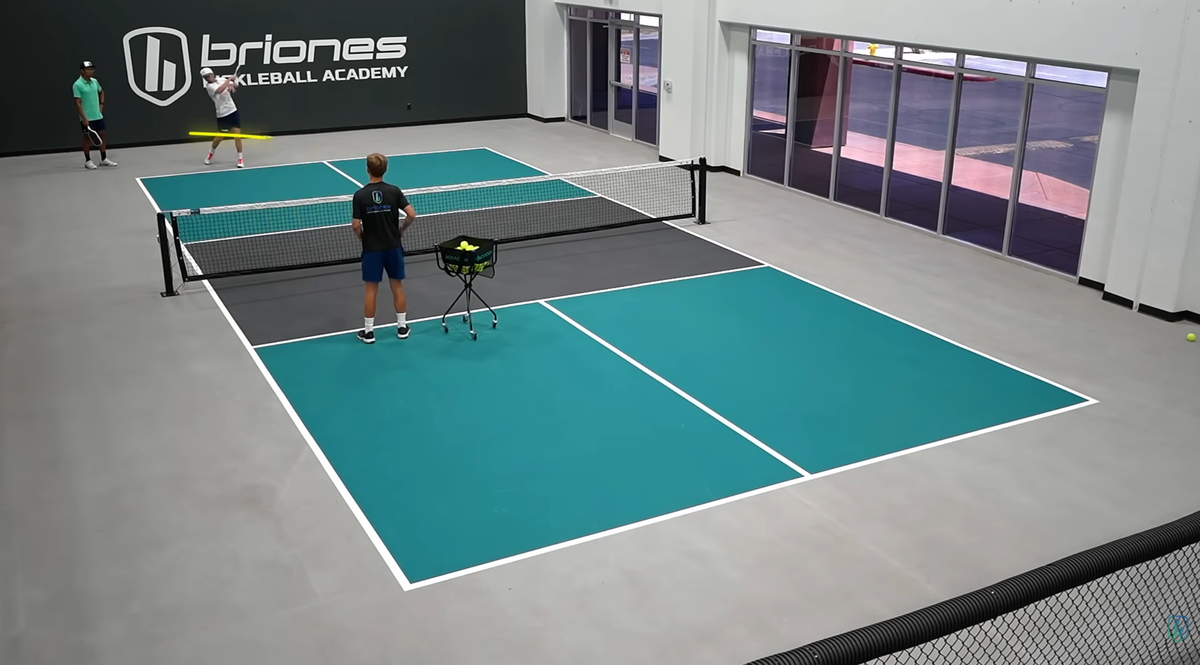
Why a Compact Swing Matters More at the Kitchen
Players coming from a tennis background especially struggle with this. At the kitchen line, you have far less court to work with than on a groundstroke.
A big takeback means a big margin for error, and you are already working with a small target.
The goal is a very compact takeback. Not a punch, not a block, but a controlled forward stroke that starts close and drives through the ball.
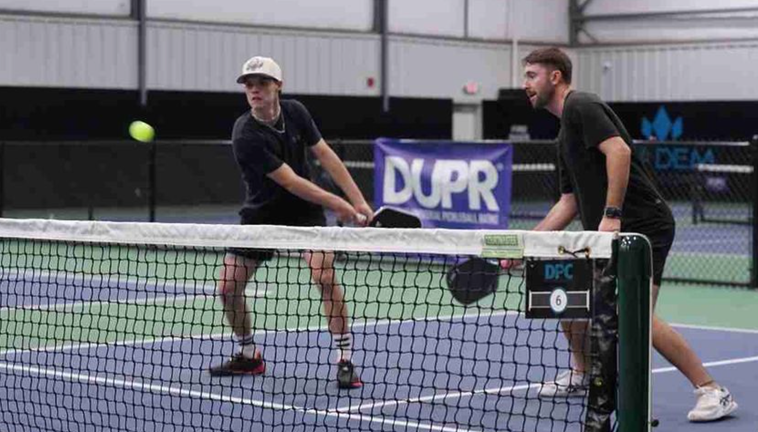
A useful checkpoint: if you can see your own paddle during the takeback, you are in a good position.
If the paddle has disappeared behind your body or dropped far below your hip, the swing is too big.
Here is a summary of what compact looks like in practice:
- Paddle stays visible at all times during takeback
- Elbow stays relatively close to the body
- The forward swing generates speed, not the backswing
- Paddle head dips through the contact zone to create topspin without overswinging
This same principle applies to dinking. If your dink technique has problems, chances are the swing compactness is a factor.
See these forehand dink fixes for a closer look at how compactness changes everything near the net.
 The Dink Media Team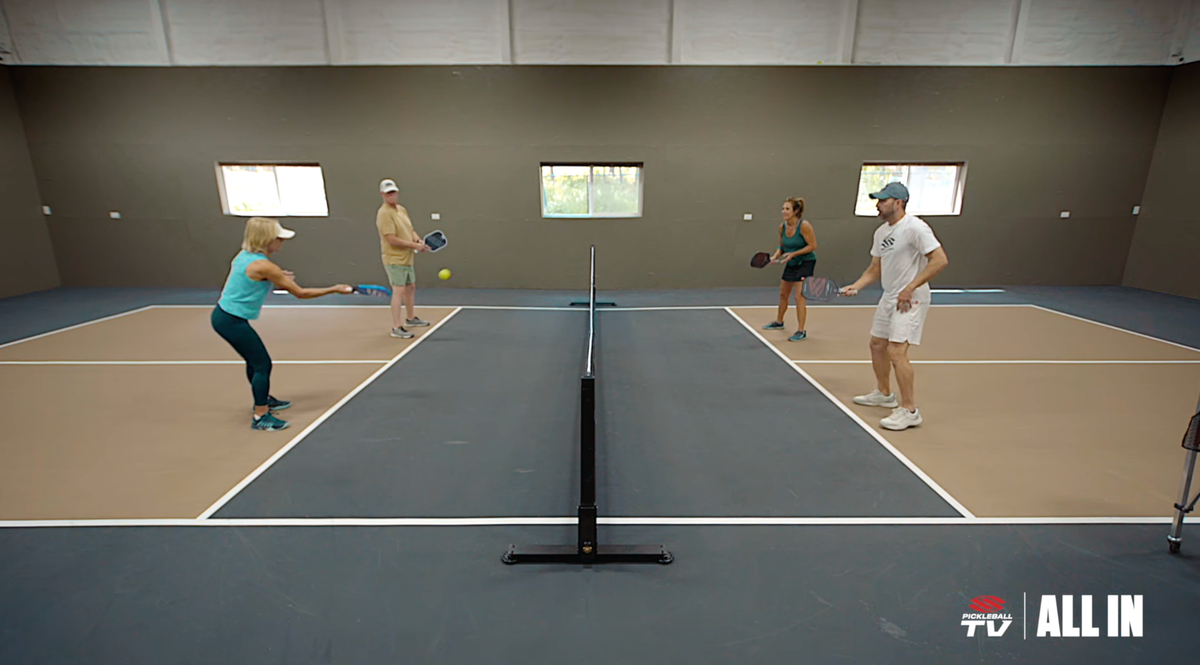
Where Should You Aim the Kitchen Bounce Shot?
Once your mechanics are correct, you need a target. Hitting the ball with great technique into the middle of the court is still a neutral shot.
You want to be putting your opponent in a difficult position.
The best targets off the kitchen bounce shot are:
- At the feet of the incoming opponent, particularly if they are still moving toward the kitchen line
- The backhand hip, which forces an uncomfortable compact response
- The sideline to drag the opponent wide and open up the middle
Targeting feet is especially effective because a player who is still transitioning forward has no good answer for a ball that arrives low and fast at their toes.
That is exactly the situation shot selection rules by ball height are designed to help you exploit.
The reason you want the ball at apex before contact is that it gives you the best downward angle to find their feet.
Contact the ball too low and you are hitting up. Contact it at apex and you can drive it down right where you want it.
 The Dink Media Team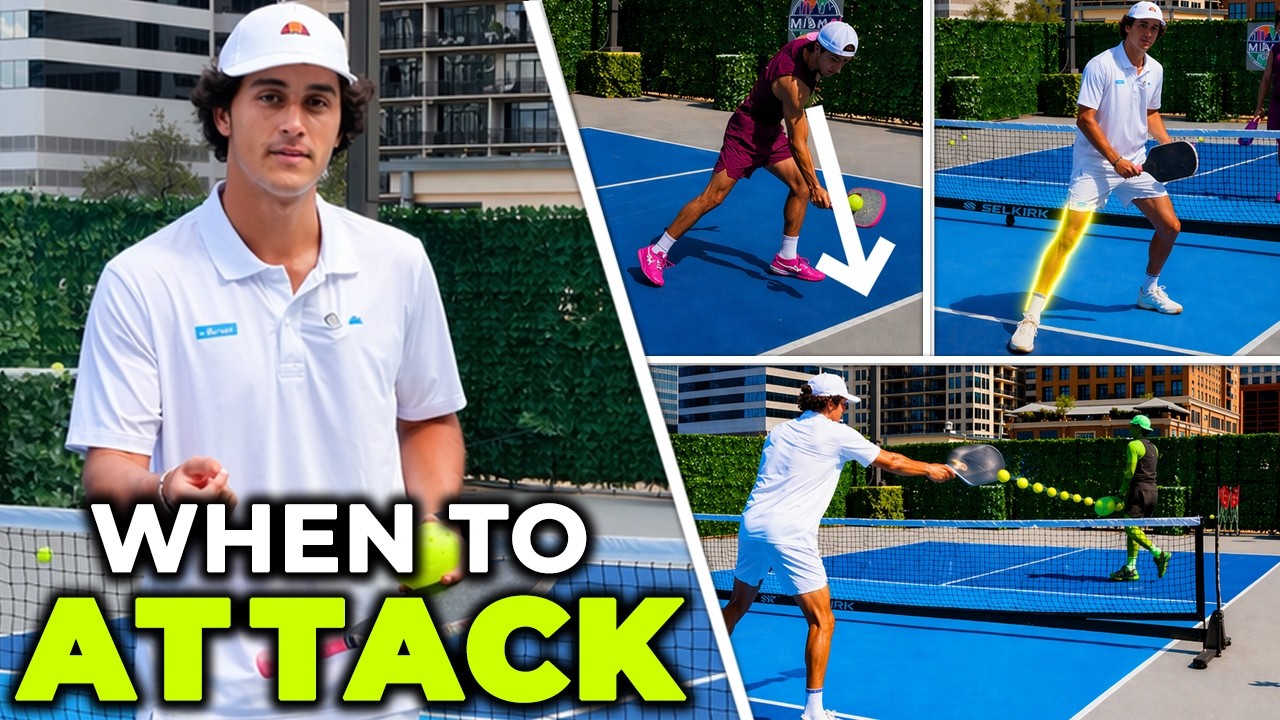
How Does This Change the Dynamic of the Point?
When you execute the kitchen bounce shot correctly, you flip the script on your opponent. They hit a reset expecting to take control of the exchange.
Instead, they get a sharp, forward-driven ball that arrives fast at a bad spot.
That forces them to hit a higher response, which gives you the next attack opportunity.
This is how smart players string together sequences instead of just reacting.
For more on how to build these sequences deliberately, the breakdown of when and how to hit a speed up off the bounce is directly related to this concept.
If you want to see how the best players make these decisions under pressure, the analysis of 5 pickleball IQ decisions pros make every point shows exactly this kind of situational awareness in action.
 The Dink Media Team
The Most Common Mistake to Fix First
If you take one thing from this, make it this: stop letting your weight drift backward at contact.
It is the root cause of almost every bad kitchen bounce shot. The net errors, the long balls, the floaty responses that get attacked immediately.
All of them trace back to a player whose momentum was moving the wrong direction when the paddle met the ball.
Your body has to be moving forward at contact.
Not leaning, not falling, just transferring weight through the ball the same way you would want to on any aggressive shot in pickleball.
That forward momentum is also what separates a neutral dink exchange from a genuine attack.
Want to understand the full range of options when a ball bounces in the kitchen?
The guide on kitchen attack strategy including roll vs flick covers exactly when each option gives you the best result.
For players who struggle with keeping the reset and then transitioning into offense, the article on why your pickleball reset fails is worth reading alongside this one.
Knowing when your opponent's reset is weak enough to punish off the bounce is just as important as knowing how to execute the shot itself.
And if your issue is shot selection more broadly, the 1 to 10 scale for pickleball shot selection gives you a practical framework for deciding when to be aggressive off the bounce versus when to reset again.
Frequently Asked Questions
What is the apex in pickleball and why does it matter for bounce shots?
The apex is the highest point a ball reaches after it bounces off the court. Contacting the ball at its apex gives you a downward angle into the court, which lets you drive the ball with more pressure and less risk of hitting into the net or floating it long.
Should I always try to attack a ball that bounces in the kitchen?
Not always, but you should never automatically concede. If the ball bounces short and comes up to a comfortable height, you have a genuine opportunity to apply pressure off the bounce. The decision should be made early based on the ball's trajectory and your positioning.
Why does my kitchen bounce shot keep going into the net?
In most cases, it is because your weight is moving backward at contact. When your momentum is going back, the natural swing path pushes the ball downward into the net. Fix your forward weight transfer and the net errors drop significantly.
How compact does my takeback need to be at the kitchen line?
Very compact. A useful test is whether you can see your own paddle during the backswing. If you can see it, the takeback is probably fine.
If the paddle has disappeared behind your hip or shoulder, you are overswinging for the amount of court you have to work with.
What is the best spot to aim the kitchen bounce shot?
Target the feet of your opponent, especially if they are still moving toward the kitchen line. A ball that arrives low and fast at their feet while they are transitioning gives them very few good options and almost always produces a high return you can attack.

Love Pickleball? Join 100k+ readers for free weekly tips, news & gear deals.
Subscribe to The Dink