
3 Steps to Build Anticipation in Pickleball (and Stop Reacting Late)
Anticipation in pickleball is the skill that separates players who always look rushed from players who always look ready. Here are the three steps coaches use to build it.
If you feel rushed on every fast exchange, your problem probably isn't hand speed. It's anticipation in pickleball, and most amateurs never train it.
The coaches at Aylex Pickleball Academy call reacting late the one habit that quietly destroys your game.
You see the ball after it's hit, you scramble, and you spend the whole point a half step behind.
The fix is a three-step framework: read the ball, read your opponent, and check in with yourself. Here's how each one works.
Love pickleball? Then you'll love our free newsletter. We send the latest news, tips, and highlights for free each week.
What Is Anticipation in Pickleball?
Anticipation in pickleball is the skill of predicting your opponent's next shot using the height, depth, and speed of the ball you just hit, plus your opponent's body language.
Instead of waiting to see the shot, you position your paddle and feet for the most likely outcome before contact.
That sounds like a superpower. It isn't.
As the Aylex coaches put it, "95% of the time, a shot like that, you will have all the data you need." The other 5% of the time, you're still ready to react.
This is the foundation of learning to anticipate every shot the way pros do. Now let's build it.
Step 1: Read the Ball You Just Hit
The ball you send over the net tells you exactly what can come back.
The Aylex coaches describe it as "using the data of the ball based on the ball that you sent, how deep it is, how high it is, maybe how fast it's traveled."
Three qualities matter most:
- Height. A ball that lands low forces your opponent to hit up. Set your paddle higher and get ready to put the next one away.
- Depth. A deep ball keeps your opponent pinned back, which takes their sharpest angles away.
- Speed. A slow, high ball gives your opponent every option: a counter drive, a drop, or an angle. More options for them means more court for you to cover.
Here's the practical payoff. If you hit a ball deep and low, you know the return has to come up over the net, so your paddle should already be high.
No guessing, no panic, and far less dependence on raw reaction time.
If you float something high and slow instead, that's your cue to expect pressure. You might even take a step back before the ball is struck.
Pickleball shot selection at this level isn't a guess. It's a read.
And the more clearly you read your own shot, the earlier you can move into position and own the exchange.
That's the real edge behind mastering the essential shots that put opponents on defense.
Step 2: Your Opponent's Movement Is the Tell
Watch how your opponent moves to the ball, because as the Aylex coaches say, "your movement is the tell of whether you're going to hit aggressive or not."
A player sprinting to a short ball with momentum flying forward has almost no options. They'll hit hard, and the ball is going into the net or out.
Often all you need to do is block it back, or simply turn away and let it sail.
A calm, balanced opponent is the dangerous one. Controlled body language means real choices: hard or soft, middle or angle.
That's when you stay honest and hold your ground.
This is exactly what makes Tyra Black so hard to beat at the net. Her kitchen line secrets are mostly reads: she knows who is out of position before the ball does.
Out of position opponents usually throw a hail mary, something safe and quick just to stay in the point.
Recognize it, and you stop treating every ball like an emergency. That alone removes half the mistakes 4.0 players make over and over.
Learning to read body language in pickleball is also a two-way street.
Understanding how opponents use body language to deceive gives you an edge on both sides of the read.
The modern pickleball strategies winning in 2026 all rely on this same principle: outthink first, outrun second.
 The Dink Media Team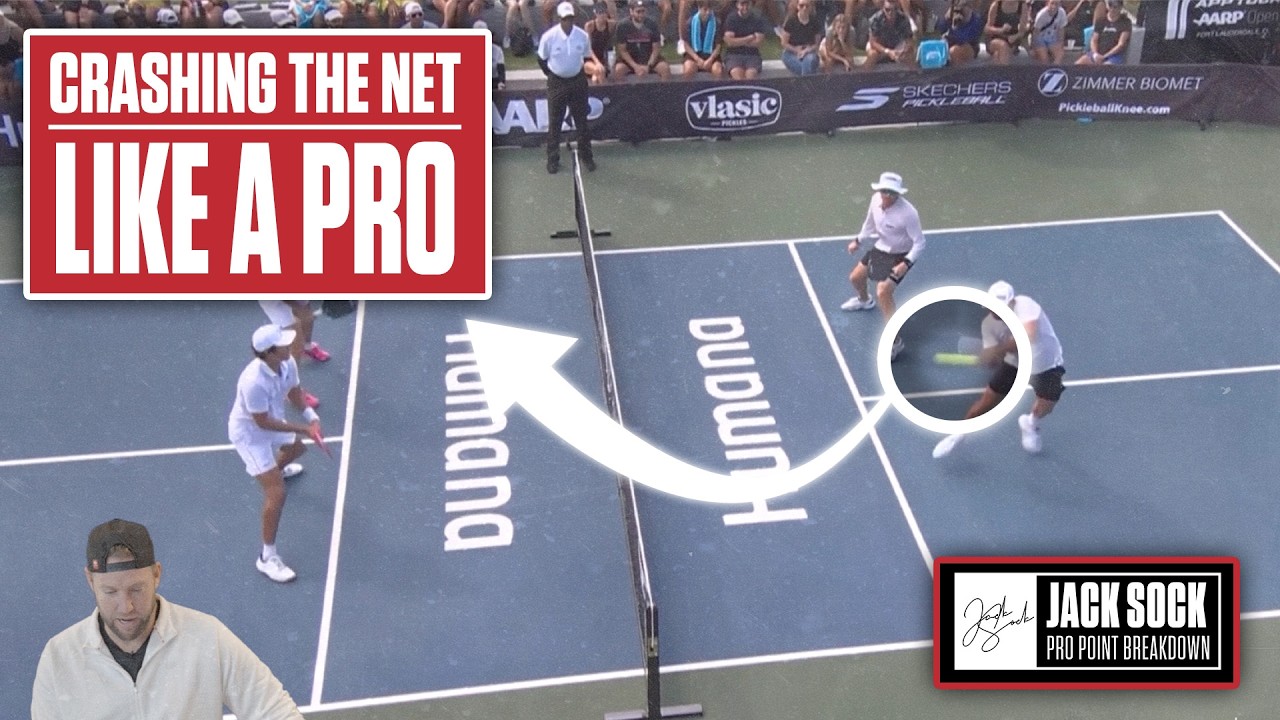
Step 3: Check In With Yourself
The third input is you: your position, your balance, and your plan. The Aylex framework is blunt about this one.
"We have already made a decision before we even get a chance to hit the ball."
That means before contact, you've made an educated guess and committed to it, with a little leeway to adjust if you're wrong.
You're no longer a passenger in the point.
Ask yourself two quick questions between shots. Am I balanced, or am I stretched and still moving? And does my kitchen positioning match the ball I just hit?
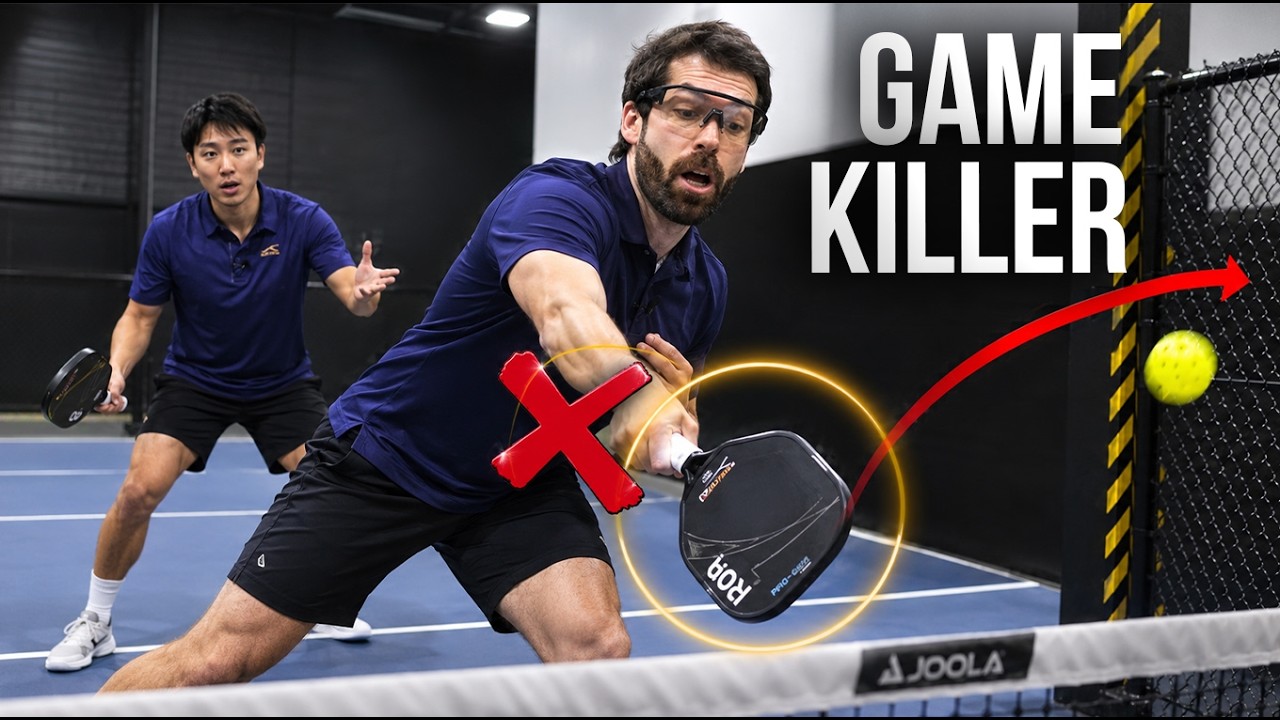
If you're lunging at full extension, that's not your strongest position, and it's a signal to reset.
The same logic explains why most pickleball mistakes come from the transition zone: players hit while moving instead of deciding first.
Committing to a plan before contact is the core habit that separates reactive players from anticipatory ones.
The simple 4-step system to win more pickleball games builds on exactly this idea.
 The Dink Media Team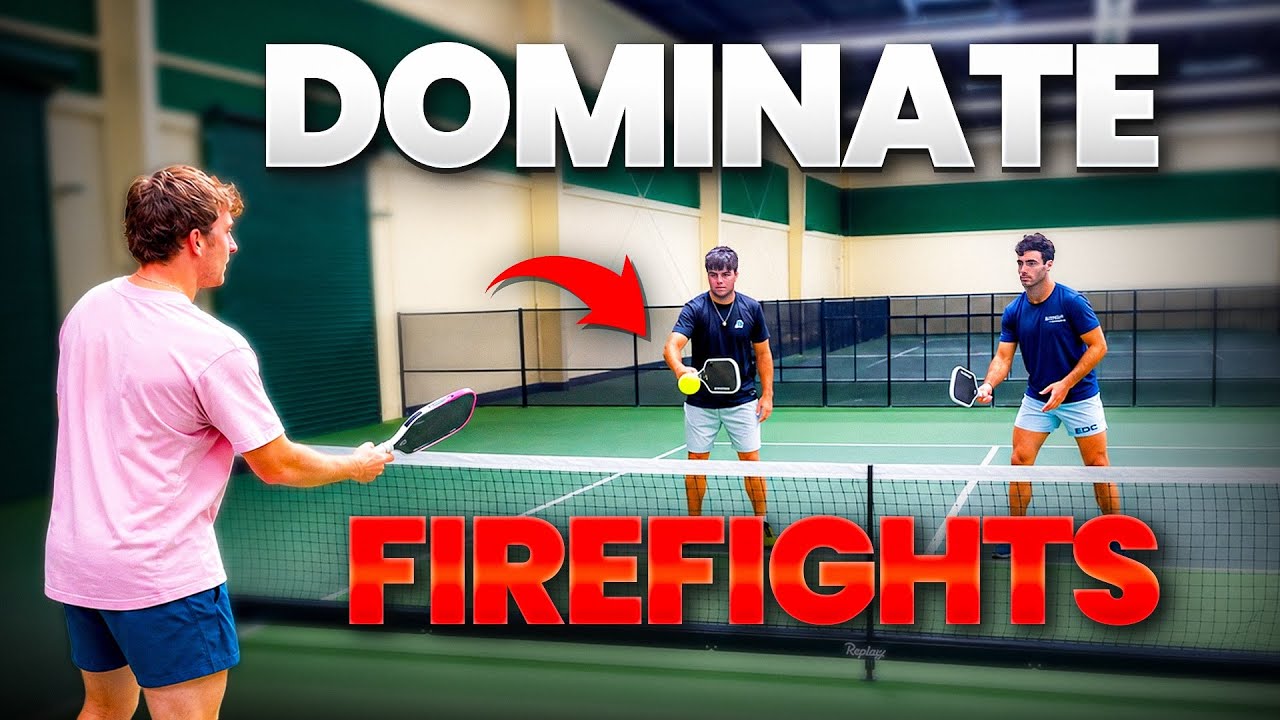
Should You Hold the Kitchen Line or Step Back?
Sometimes the right read is a single step back, not a heroic stab volley.
When you've floated a high, slow ball and your opponent is winding up, one step buys you the time to counter instead of flinch.
The Aylex coaches demonstrated this on court. At the line, a hard ball gave their student almost no chance.
One step back created a happy medium: still close enough to attack a high ball, but with enough time to handle the drive.
Go back too far, though, and you're stretched, defending everything and attacking nothing.
The step back is a tool, not a home base, which is why how to stop getting attacked at the kitchen starts with reading the ball, not retreating from it.
The transition zone punishes players who don't decide before contact.
When you're caught mid-court without a plan, every ball feels like an emergency.
Learning the two tactics to escape trouble in the transition zone gives you a way out before the panic sets in.
One more detail from the lesson: try not to be moving at contact. Quick, early footwork followed by a still, set body beats a late sprint every time.
 The Dink Media Team
How to Train Anticipation in Pickleball
The fastest way to train anticipation in pickleball is to narrate the ball out loud, then act on it.
The Aylex coaches give the exact script: "low ball, fast, I'm going to be prepared to counter or attack. High ball, slow, prepared to defend."
Run it as a drill with a partner feeding mixed balls:
- Call out one quality of every incoming ball: high, medium, or low. That's it at first.
- Add a decision to the call. Low and fast means prepare to counter or attack. High and slow means prepare to defend.
- Add your opponent's body language to the read. Are they winding up or stretching?
- Commit to the guess, then allow yourself a small adjustment if the read was wrong.
This sounds almost too simple. But saying it forces awareness, and awareness is what advanced players do differently.
It's also the engine behind building pickleball reflexes and reaction time, and the same quality Yahoo Sports highlighted when examining what makes Ben Johns so good. Ben Johns rarely looks fast because he's rarely surprised.
There's a bonus benefit.
As the coaches note, "once you start having more intention here, it becomes more obvious what you need to practice." Your weaknesses stop hiding.
Want to go deeper on drills that sharpen your reads? The 5 shots you must master before breaking 5.0 are all built on the same anticipatory foundation.
And why pros abandoned the slice shot in 2025 comes down to this: predictable shots are readable shots, and readable shots get punished at the highest level.
 The Dink Media Team
Stop Reacting, Start Deciding
Anticipation in pickleball comes down to three checkpoints on every ball: what did my shot give them, what is their body telling me, and where am I?
Answer those and you've replaced panic with a plan.
The sport keeps getting faster, with LeBron James and Tom Brady betting big on pickleball and the talent pool deepening every season.
The players who thrive won't be the ones with the quickest hands.
They'll be the ones who saw the shot coming and were already there.
Pickleball shot selection, body language reads, and early positioning aren't separate skills.
They're one skill, and the 25 biggest stories in pro pickleball from 2025 prove that the players rising fastest are the ones who read the game earliest.
Frequently Asked Questions
What Is the Fastest Way to Improve Anticipation in Pickleball?
Narrate the ball. Call out one quality of every incoming ball (high, medium, or low), then attach a decision: low and fast means counter or attack, high and slow means defend. Within a few sessions the reads become automatic.
Does Anticipation in Pickleball Matter More Than Hand Speed?
For most players, yes. Anticipation gives you a head start before the ball is hit, while hand speed only helps after. The best results come from combining both, and a focused hand speed drill works far better once you're reading the ball early.
Should I Watch the Ball or My Opponent First?
Start with the ball you just hit. Its height, depth, and speed define what's possible in return. Then shift your eyes to your opponent's movement, because a rushed, sprinting player has far fewer options than a calm, balanced one.
Should I Always Stay at the Kitchen Line?
Most of the time, yes, but not on every ball. If you've left a high, slow ball and your opponent is winding up, one controlled step back gives you time to counter while keeping you close enough to attack. Step back too far and you surrender the net entirely.
What If My Educated Guess Is Wrong?
You'll be right far more often than wrong. A good read based on ball height, depth, and speed holds up about 95% of the time, and committing to it still leaves you a small window to adjust on the rare ball that surprises you.
Love Pickleball? Join 100k+ readers for free weekly tips, news & gear deals.
Subscribe to The Dink