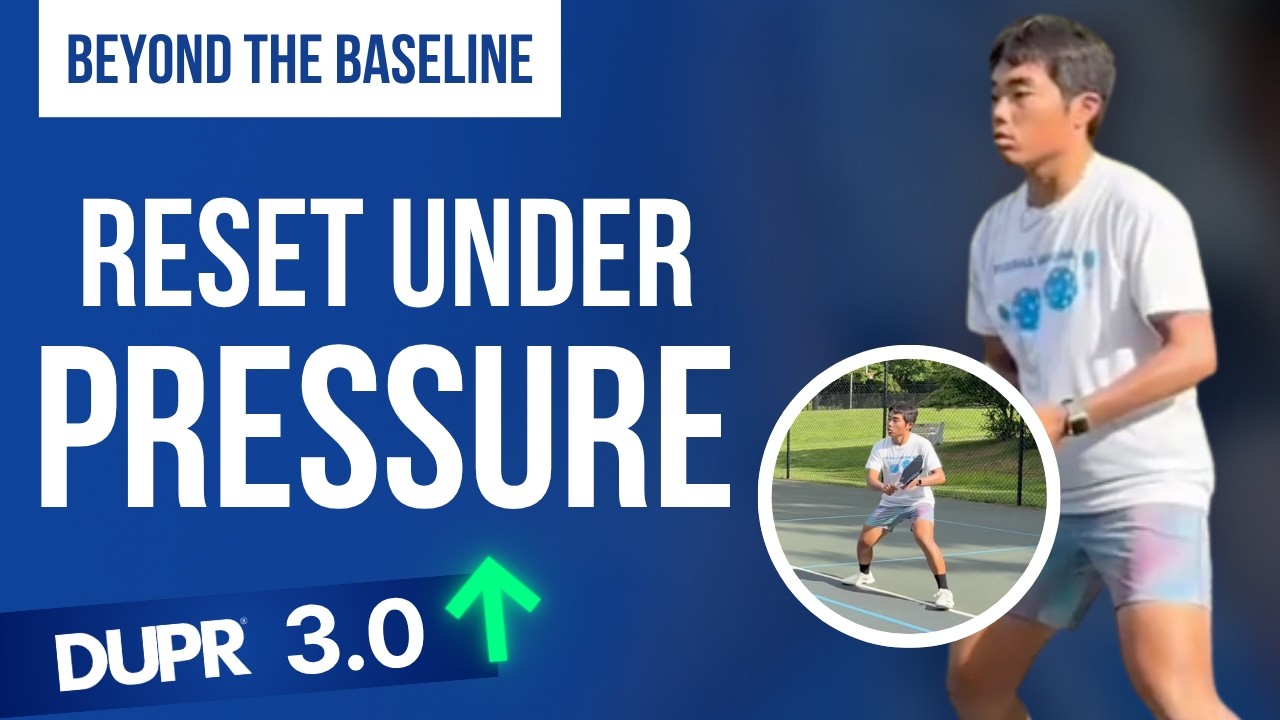
Most players lose points in the transition zone because their resets break down under pressure. This pickleball reset drill trains you to absorb pace, stay calm, and advance to the kitchen with confidence.
The pickleball reset drill most players skip is the exact reason they keep getting stuck in no man's land.
You get pulled into the transition zone, the opponent fires a volley at you, and suddenly your paddle tightens up and the ball sails long.
This is not a talent problem. It is a practice problem.
Most players never train resets under real pressure, so when the moment comes in a match, the body does not know what to do.
This drill comes from DUPR on YouTube, featuring instructor William Yu, a DUPR ambassador who walks through a simple but highly effective method for building the reset habit from the ground up.
Here is exactly how it works and why it matters.
Love pickleball? Then you'll love our free newsletter. We send the latest news, tips, and highlights for free each week.
What Is the Transition Zone and Why Does It Break Your Game?
The transition zone is the area a few feet behind the kitchen line.
It is where most rallies are actually won or lost, and it is the part of the court players practice the least.
When you are stuck there, you are not at the net and not at the baseline. The opponent at the kitchen has every advantage.
They are compact, stable, and ready to fire volleys at your feet.
If you do not have a trained reset, you will either pop the ball up or bail out by backing up. Neither of those responses keeps you in the point.
The goal of this drill is to give you a reliable way to neutralize that pressure and keep moving forward.
Understanding the three keys to mastering the transition zone is a good starting point before you add this drill to your practice sessions.
How to Set Up the Drill
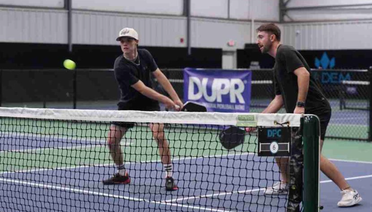
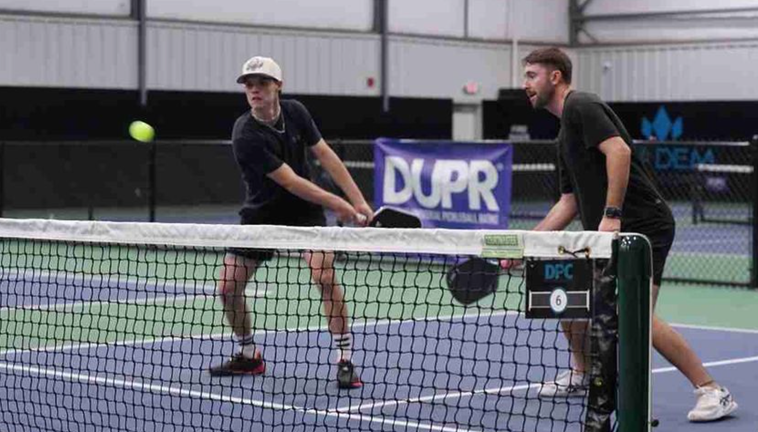
The setup is straightforward. One player stands at the kitchen line, and the other stands in the transition zone a few feet behind it.
Their roles are clearly defined from the start.
- The player at the kitchen continuously hits controlled volleys, applying steady pressure.
- The player in the transition zone focuses on hitting soft resets into the kitchen on every ball.
- After each successful reset, the transition zone player takes one small step forward.
- The drill continues until the resetting player reaches the kitchen line.
That is the whole structure. Simple to explain, harder to execute correctly. The pressure is real, and that is the point.
What Does a Real Reset Actually Look Like?
A reset is not a defensive flick or a soft push.
It is a deliberate act of absorbing pace and redirecting the ball gently into the kitchen so it bounces low and gives you time to move.
The mechanics come down to a few non-negotiables. Your grip needs to loosen significantly. A tight grip transfers pace back into the ball instead of killing it.
Your paddle should stay out in front of your body at all times.
If the paddle drops behind you or drifts to your side, you lose control and end up muscling the shot. That is where pop-ups come from.
Think of your hand and arm as a shock absorber.
The ball comes in with pace, and your job is to let that energy dissipate through a soft, open paddle face that guides the ball forward and down into the kitchen.
If your resets are consistently popping up, check out this breakdown of why your pickleball reset fails and three fixes that work.
 The Dink Media Team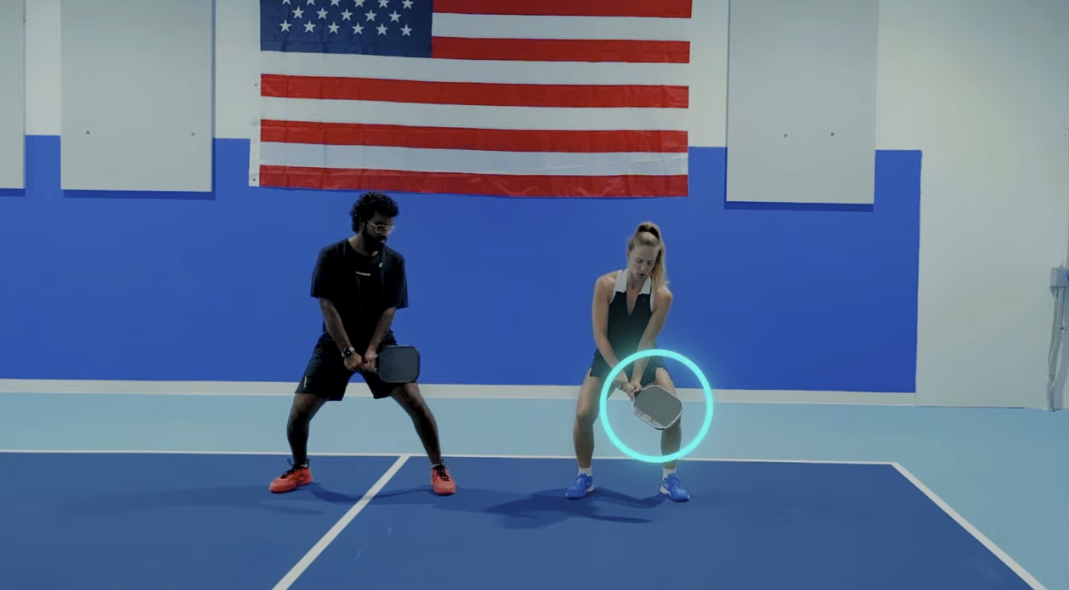
Why Do So Many Players Rush This Drill?
The biggest mistake players make is treating the forward movement as the goal.
They want to get to the kitchen fast, so they rush steps before they have earned them with a clean reset.
Balance and patience are what this drill is actually training. The step forward is a reward for a controlled shot, not a race to the net.
If you step forward before you have reset well, you are training the wrong habit.
This connects to a broader problem in how recreational players think about the transition zone.
Most treat it as a place to escape rather than a place to work from, and that mindset leads to rushed shots and unforced errors.
You are not running through the transition zone. You are earning your way through it, one controlled ball at a time.
 The Dink Media Team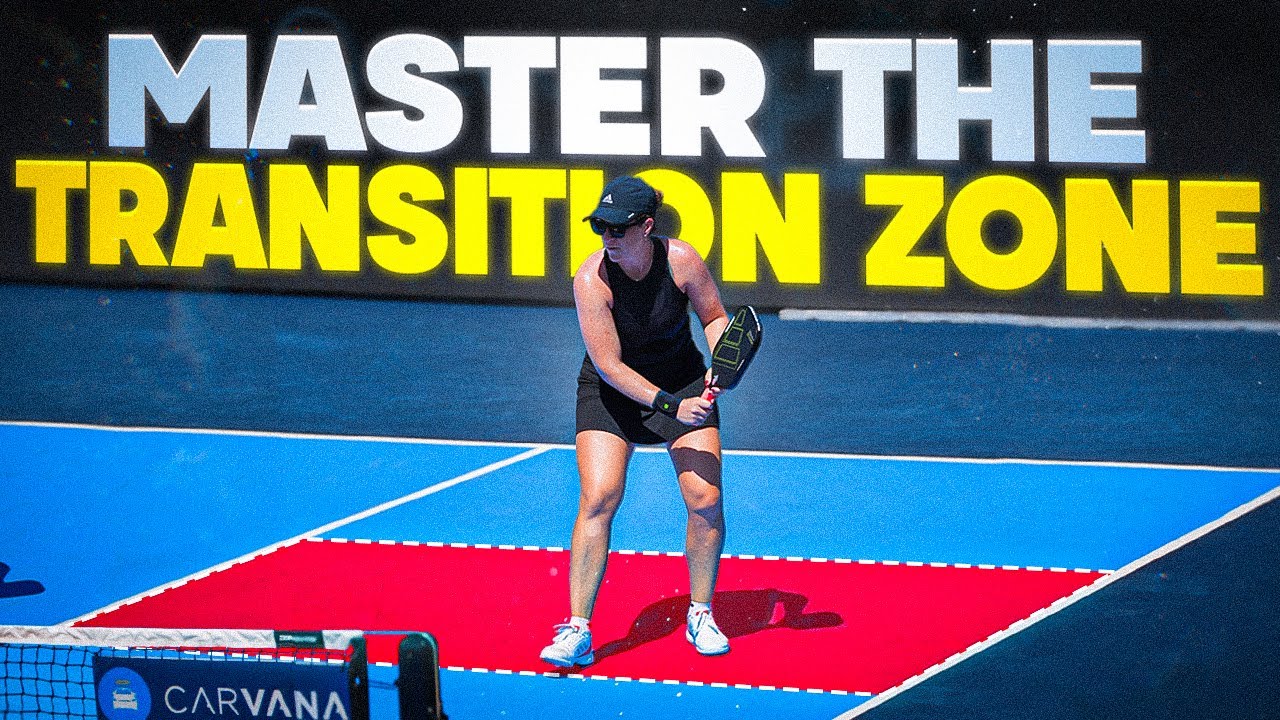
How Does Grip Pressure Change Everything?
Grip pressure is the most underrated variable in resetting.
Most players grip the paddle like they are afraid of dropping it, especially when they are under pressure and the ball is coming fast.
That tightness is a reflex. The body senses threat and tenses up. But a tight grip makes your paddle stiff, which means pace bounces right back off it.
The result is a reset that flies long or pops up into a kill zone.
The fix is intentional practice with a relaxed hand.
If you want to understand exactly how grip pressure shapes every shot you hit, this breakdown of grip pressure and control is worth reading before your next session.
During the drill, consciously check your grip on every single rep. It should feel almost uncomfortably loose. That feeling is correct.
 The Dink Media Team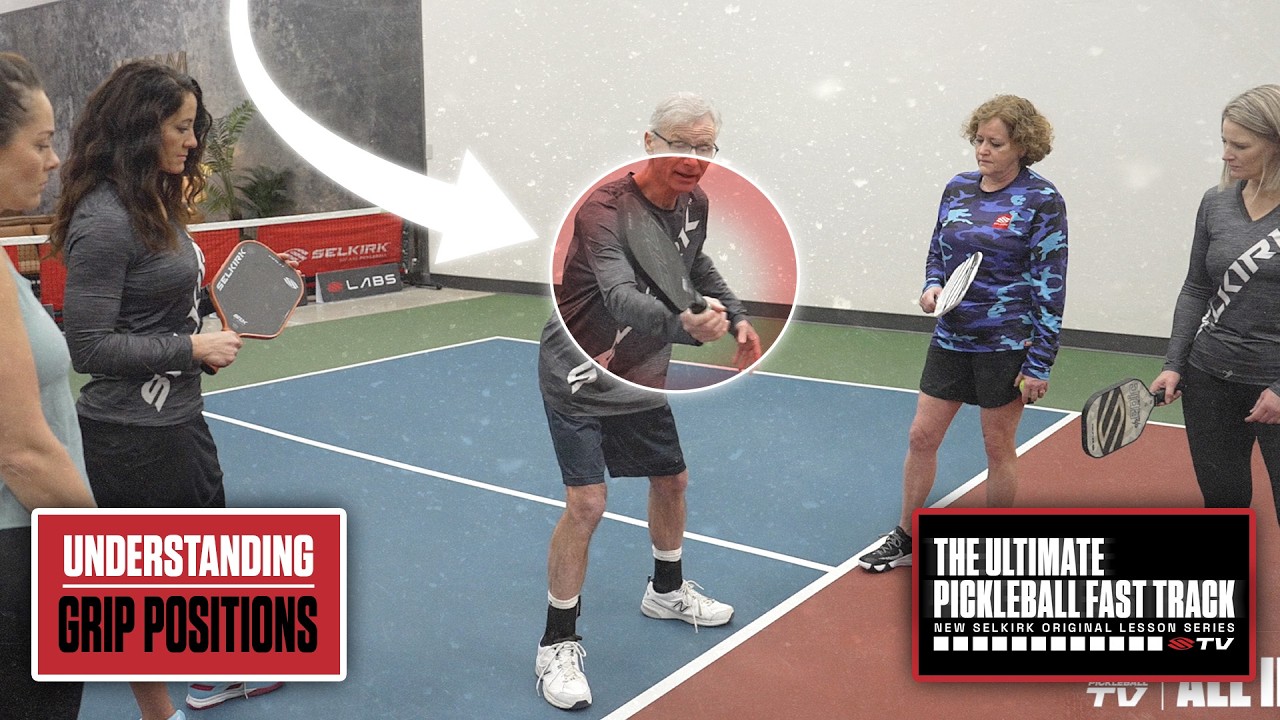
The Step Forward: Timing It Right
Moving forward in the transition zone is a skill on its own. The timing of that step matters as much as the quality of the reset itself.
Here is the sequence you want to repeat until it becomes automatic:
- Receive the volley from the kitchen player with a relaxed grip and paddle out front.
- Guide the ball softly into the kitchen, absorbing pace rather than redirecting it with force.
- Watch the ball land cleanly in the kitchen before moving.
- Take one small, controlled step forward toward the kitchen line.
- Reset your stance and get ready for the next ball before it arrives.
The key phrase here is one small step. Not a lunge. Not two steps.
One deliberate move forward that keeps your balance intact and your paddle ready.
Rushing this part is exactly what gets players caught with their weight on the wrong foot when the next volley arrives.
If you want to understand why your pickleball reset keeps failing, uncontrolled forward movement is usually part of the answer.
 The Dink Media Team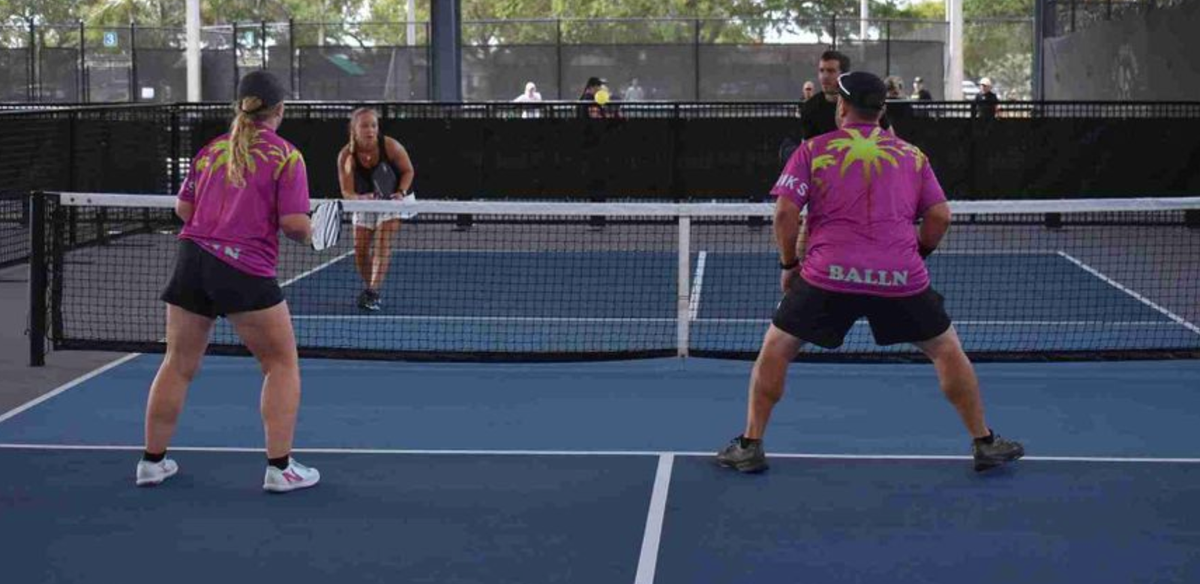
How This Drill Builds Confidence Under Real Match Pressure
Drilling resets in a low-pressure, isolated environment is only the beginning.
The reason this particular drill works so well is that the continuous volleys from the kitchen player create genuine pressure, not simulated pressure.
You are not hitting soft feeds. Someone is actively firing at you while you try to stay calm, reset cleanly, and advance.
That is the closest thing to a live match situation you can create in a controlled drill setting.
Over time, your nervous system adapts. The incoming pace stops triggering a panic response because you have trained through it hundreds of times.
That is how confidence actually builds, through repetition under realistic conditions, not through mental pep talks.
For players who struggle with panic responses in matches, this guide on stopping panic and winning more rallies pairs well with reset training.
 The Dink Media Team
Adding This Drill to Your Practice Sessions
This drill does not need a long block of time to be effective.
Even ten minutes of focused repetition per session will produce noticeable improvements within a week or two.
Here are a few ways to structure it so you get maximum value:
- Start every practice session with five minutes of reset drilling before moving to live play.
- Rotate roles every few minutes so both players get reps on both sides of the drill.
- Add variety by having the kitchen player aim at feet, body, and wide angles to simulate different match scenarios.
- Track how many successful resets it takes you to reach the kitchen line. Try to improve that ratio over time.
This also pairs well with other transition game work.
These three fixes for resetting speed-ups cover the harder version of the same skill, which is neutralizing a ball that is coming at you with serious pace and spin.
If you want a full drilling framework, this 90-minute drilling blueprint from a PPA pro shows you how to structure an entire practice session around targeted skill development.
 The Dink Media Team
What This Drill Is Really Training
On the surface, this is a reset drill.
But what it is really training is your ability to stay composed when the game is not going your way and you are in a vulnerable position on the court.
That is one of the four most important pickleball shots that decide points.
Resets do not win you rallies outright. But they keep you alive long enough to win them.
Patience, soft hands, and smart footwork are the three things separating players who survive transition zone firefights from those who hand points away.
This drill trains all three at once.
The players who get stuck at 3.5 or 4.0 are often the ones who have never seriously practiced their resets.
They work on drives, serves, and dinking, but skip the one skill that would actually keep them in more points.
Top pros still drill resets regularly, and that should tell you something about how important they are at every level.
Add this drill to your weekly practice rotation, stay patient with the step timing, and you will feel the difference in your next match.
Frequently Asked Questions
What is a pickleball reset and why does it matter?
A pickleball reset is a soft, controlled shot hit from the transition zone that lands in the kitchen and neutralizes incoming pace. It matters because it keeps you in rallies when you are out of position and buys you time to move forward to the kitchen line. Without a reliable reset, you will either pop balls up or retreat, both of which hand the point to your opponent.
How do I stop popping up my resets?
Popping up resets almost always comes from a tight grip and a paddle that is not out in front of your body. Loosen your grip significantly and keep the paddle face slightly open and forward so you can absorb pace rather than deflect it. Drilling this motion with a partner applying continuous pressure is the fastest way to fix it.
How long does it take to improve resets with this drill?
Most players notice a difference within one to two weeks of consistent drilling, even with just five to ten minutes per session. The key is quality repetitions under pressure, not just going through the motions. Focused practice beats long unfocused sessions every time.
Should I step forward after every reset or wait for the right moment?
You should only step forward after a clean, controlled reset that lands softly in the kitchen. If you step before the ball lands well, you are moving on faith rather than execution and that creates balance problems on the next shot. Train yourself to confirm the reset before committing to the step forward.
Can I do this drill solo or do I need a partner?
This specific drill requires a partner at the kitchen line to apply continuous pressure, which is what makes it effective. Solo wall drills can build general reset mechanics, but the live pressure from another player is what trains your composure under match conditions. If you do not have a regular drill partner, check in with your local club to find someone willing to swap reps.

Love Pickleball? Join 100k+ readers for free weekly tips, news & gear deals.
Subscribe to The Dink