
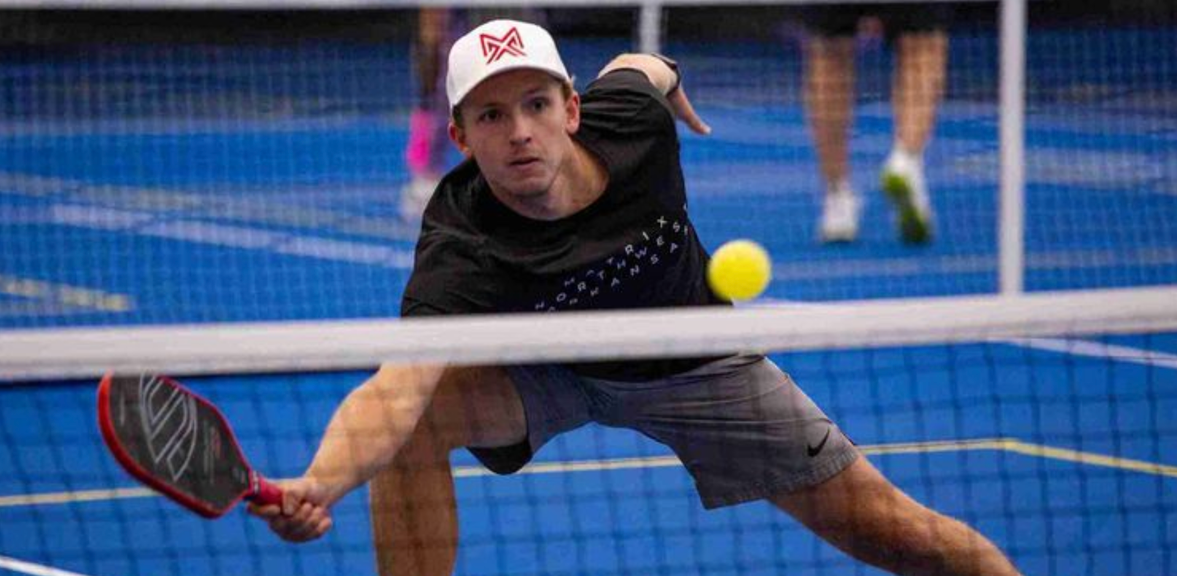
This guide breaks down the 1-to-10 scale, the biomechanics research behind late pressure, and a solo wall drill that recalibrates your hands in three sessions.
Your pickleball grip pressure is probably the single most expensive habit in your game, and you've never once thought about it. You've bought the paddle.
You've drilled the third shot drop. You've watched enough film to argue about paddle cores at happy hour.
But the thing actually costing you points in hands battles is happening six inches below your wrist, and it's costing you every single rally.
Here's the thing. Most players squeeze harder the second the ball speeds up. That's backwards, and it quietly caps your drill work too.
Love pickleball? Then you'll love our free newsletter. We send the latest news, tips, and highlights for free each week.
What Is Pickleball Grip Pressure, Really?
Pickleball grip pressure is how tightly you hold the paddle handle, measured as a percentage of the hardest you could possibly squeeze.
Coaches usually simplify it to a 1-to-10 scale, where 1 is the paddle nearly falling out of your hand and 10 is a white-knuckle death grip.
Most recreational players live at a 7 or 8 without realizing it, which is why so many beginner fixes never stick, and they never change.
That last part is the real problem. Not the number. The never changing part.
Think about how a reset actually works. You're absorbing pace, letting the ball die into the kitchen. Now think about a counter off a speedup.
You're redirecting pace with almost no swing. Those two shots need completely different hands, and one static grip cannot serve both.
The 1-to-10 Scale Every Coach Uses
Here's a working range that holds up across skill levels:
- 2 to 3: Dinks, drops, and soft resets where absorption is the whole point
- 4 to 5: Neutral ready position at the line, paddle up, nothing decided yet
- 6 to 7: Blocks and counters where you need the face to stay put on contact
- 8 to 9: Drives, overheads, and swing volleys where you're generating real pace
Notice that 10 never shows up.
There's no shot in pickleball that requires your maximum squeeze, and if you're getting there, something upstream in your technique is compensating.
Why Does Pickleball Grip Pressure Wreck Your Hands Battles?
Because tension travels.
Squeeze the handle and your forearm fires, your wrist locks, and your paddle head stops moving freely, which is exactly the opposite of what you want when a ball is coming at your chest from seven feet away.
Your pickleball grip pressure is effectively a speed limiter on your own hands, and it's a setting you control.
We don't have paddle-sensor research in pickleball yet, so this borrows from sports with similar swing mechanics.
We do have it in golf, and the pattern is hard to ignore.
What the Golf and Tennis Data Actually Says
Sensor-instrumented grip testing at The Golf Lab found that professional golfers actually decrease grip pressure early in the downswing, while high-handicap amateurs spike theirs, especially in the trail hand, creating wrist and forearm tension that restricts a full release.
The pros relax when it matters most. Everyone else clamps down, and you can see the same split between a rec player and someone with genuinely unusual touch.
Electromyography backs that up.
A University of the West of Scotland study measuring forearm muscle activity found amateurs generate significantly higher forearm activation than professionals across both the backswing and downswing, regardless of grip size.
Separate research found high forearm extensor activity during the backswing was negatively correlated with carry distance.
More squeezing, less output. It's the same reason a rushed mid-court ball turns into a pop-up.
Translate that to the kitchen line and it explains everything you already feel during a fast hands exchange. Tight hands are slow hands.
 The Dink Media Team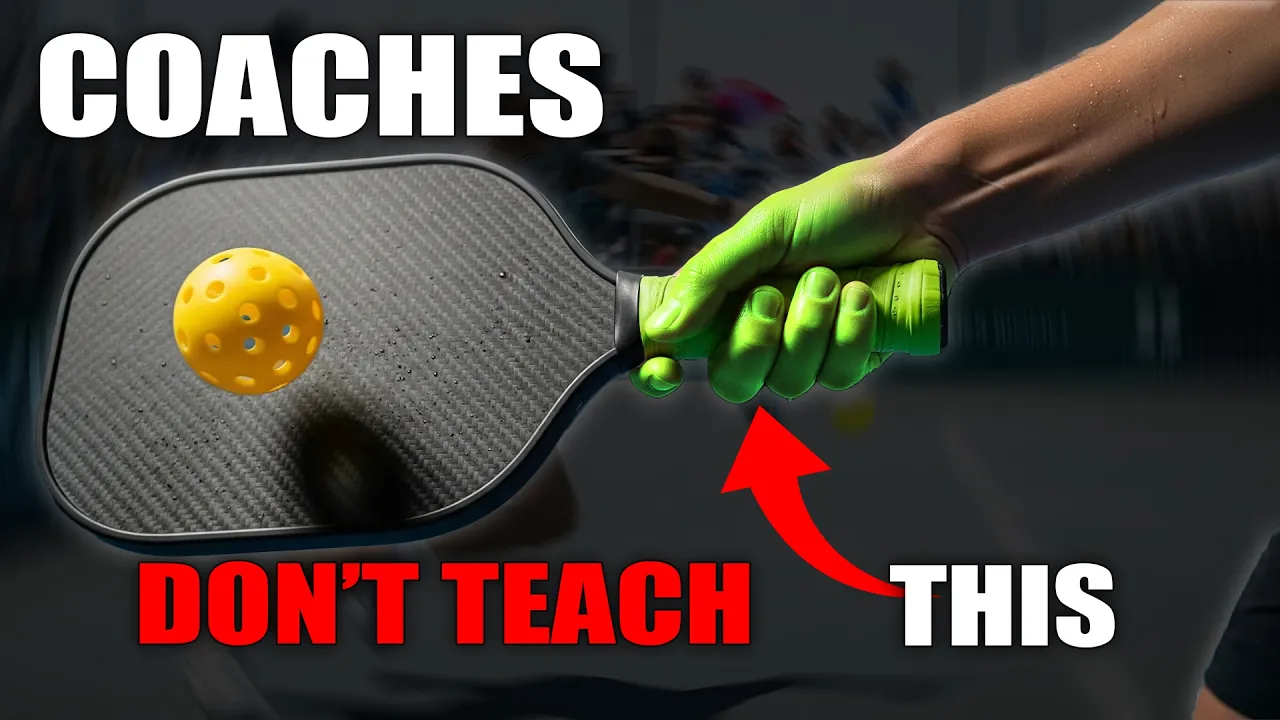
So What's the One Fix? Squeeze Late, Not Early
Set your baseline at a 4, then add pressure only in the last few inches before contact.
That's it. That's the fix.
You're not holding a firmer paddle, you're holding a firmer paddle later, and the difference shows up immediately in dinking exchanges and speedups alike.
Most players do the reverse.
They pre-load tension the moment they see a ball rise, hold it through the entire flight path, and arrive at contact with a forearm that's already been squeezing for half a second.
By the time the ball gets there, they have no adjustment left. Nothing soft available, nothing fast available.
Late pressure keeps both doors open, and that's the whole argument for treating pickleball grip pressure as a variable instead of a setting.
You can still take pace off. You can still rip a counter. The decision stays live until the last possible moment, which is the entire point of good hands at the kitchen.
 The Dink Media Team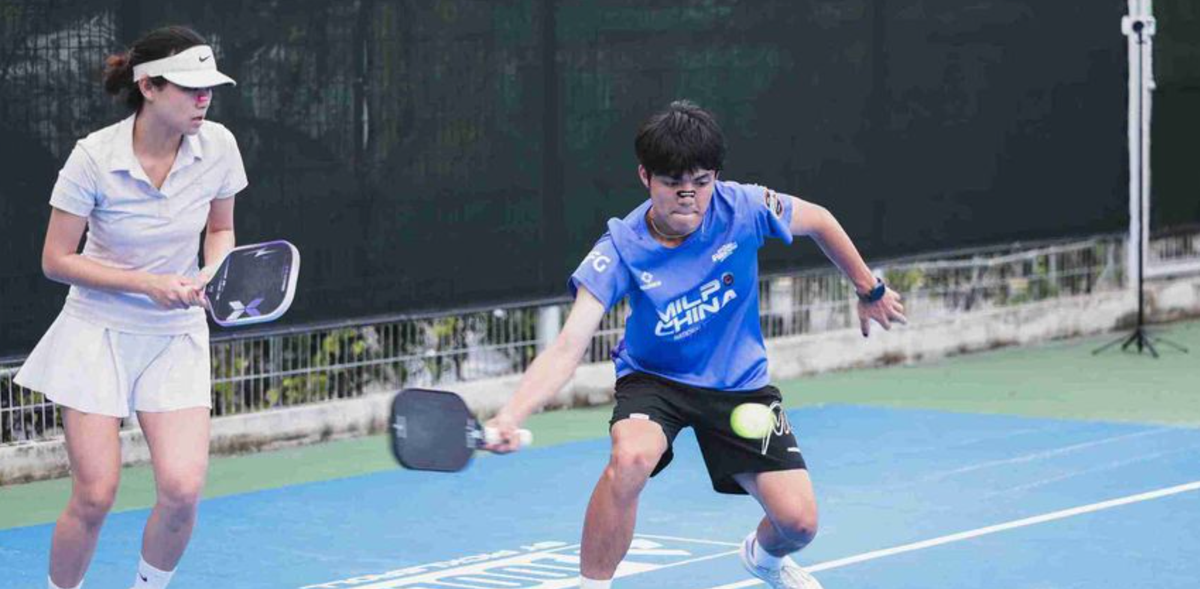
How to Practice Pickleball Grip Pressure Solo
You can build this without a partner.
Wall drilling is the best pickleball grip pressure lab there is, because the feedback loop is instant and you're not managing a rally at the same time.
Try this progression, borrowed loosely from standard solo drill work:
- Ten dinks at a 2. Deliberately too loose. Let the paddle wobble a little. Feel where control actually breaks down.
- Ten dinks at an 8. Deliberately too tight. Notice how the ball jumps off the face and how little touch you have.
- Ten at a 3, then squeeze to a 6 in the last inch. That's the rep that matters.
- Two minutes of random wall counters from the 3-to-6 pattern, no thinking, just reacting.
Do that before your regular drill block three sessions in a row and you'll notice it in live play by the fourth.
Where Pickleball Grip Pressure Should Change Shot to Shot
Your pickleball grip pressure should move constantly, and the shots that punish you most for getting it wrong are the touch shots.
A slice dink with a tight hand sails. A topspin roll with a loose hand gets no bite because the face turns on you.
A backspin return needs firmness at contact and softness everywhere else.
Honestly, the fastest way to audit yourself is to notice your non-paddle hand. If your off hand is clenched during a dink rally, your paddle hand is too.
Tension is symmetrical and it's a tell.
 The Dink Media Team
Does a Different Grip Size Fix Your Pickleball Grip Pressure?
No, and this is where a lot of players waste money. Changing grip circumference does not meaningfully reduce forearm muscle activation.
The same electromyography research that measured undersize, standard, and oversize grips found no significant change in forearm activity across grip sizes, though undersized grips did produce a small but statistically significant bump in clubhead speed.
It's a habit, not a gear upgrade.
So a smaller handle or a fresh overgrip might help you hold on with less effort, the same way a comfortable serve grip makes the motion repeatable. It will not retrain the habit.
That's a reps problem, not a gear problem, and no paddle purchase fixes it.
If you want the handle to help, let the paddle do the work and build the pressure change on top of it.
One caution on the other end. "Hold it like a bird" advice gets repeated everywhere, and taken literally it fails.
Mechanical testing published in the Journal of Sports Sciences found that firmer grip pressure increases rebound velocity on off-center impacts by reducing paddle recoil, while center-face contact is basically independent of grip tightness.
Translation: if you shank one off the edge with a noodle hand, the paddle twists and the ball goes nowhere. You need enough security to survive a mishit.
That's the balance, and it holds up under real match pressure.
Loose enough to be fast, firm enough to hold the face square on a bad contact.
Somewhere between a 3 and a 6 for most of the rally, and only above that when you're genuinely swinging on a power shot.
 The Dink Media Team
Key Takeaways
- Pickleball grip pressure should change within every rally, not stay locked at one setting
- Baseline at a 4, drop to 2 or 3 for dinks and resets, spike to 6 or 7 only in the final inches before contact
- Golf sensor data, not pickleball lessons, shows pros relax during the downswing while amateurs squeeze harder, and forearm tension correlates with worse output
- Grip size changes do not reduce forearm muscle activation, so this is a habit fix, not a gear fix
- Too loose is a real failure mode: off-center contact needs enough grip security to prevent paddle twist
- Wall drilling at deliberately extreme pressures is the fastest way to calibrate your own scale, then layer it into shot-selection drilling
Frequently Asked Questions
What is the ideal pickleball grip pressure on a 1-to-10 scale?
Most coaches land on a 3 to 4 baseline for soft-game exchanges, rising to a 6 or 7 at contact on counters and drives. There's no single correct number because it depends on the shot, same as court positioning. The mistake almost nobody avoids is holding one pressure for the entire rally, even on a routine return slice.
Does a loose grip really make your hands faster?
Yes, in the sense that a relaxed forearm allows quicker paddle-head movement and faster directional changes. Studies in golf, echoed in everyday drilling, show amateurs carry significantly more forearm muscle activation than professionals, and higher forearm activity correlates with reduced output. Speed comes from being able to accelerate, and tension blocks that. It shows up most on deception shots where the disguise depends on a late hand.
How do I know if I'm gripping the paddle too tight?
Check your off hand during a dink rally. If it's clenched, your paddle hand is worse. Other tells: your dinks and serves pop up consistently, your resets bounce too high off the face, your lobs fly long, and your forearm is sore after casual play even though you barely swung. Players who fix it often describe the same jump that comes with any real level change.
Will a thinner grip or new overgrip fix my grip pressure problem?
No. Electromyography research comparing undersize, standard, and oversize grips found no significant difference in forearm muscle activation. A better-fitting handle can make holding on easier, but the habit of squeezing has to be retrained through reps, ideally with a partner.
Can grip pressure be too loose in pickleball?
Yes. Mechanical testing in tennis showed that on off-center impacts, a firmer grip increases rebound velocity by reducing tool recoil. A paddle held too loosely twists on mishits, killing both pace and direction, which is brutal when you're pulled wide off the kitchen. Aim for relaxed, not limp. Getting pickleball grip pressure into that window is the whole job.

Love Pickleball? Join 100k+ readers for free weekly tips, news & gear deals.
Subscribe to The Dink