
5 Reasons to Drop Between His Feet Instead of Down the Line
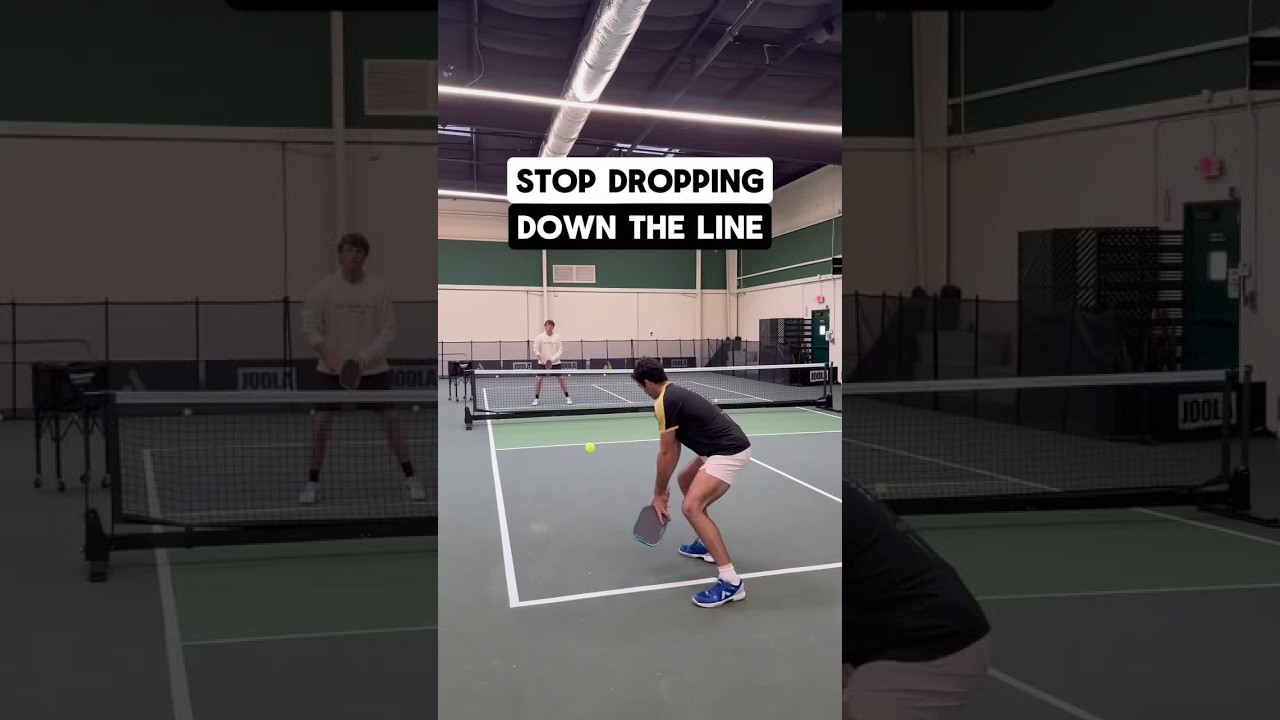
Hitting your third shot drop down the line gives your opponent an easy Erne or reach. Aim between his feet instead and you take away his angles while you move forward.
Your third shot drop lands down the line, your opponent steps across for an Erne, and suddenly you are the one under pressure.
It happens at every level, and it usually comes from one bad habit. The fix is simpler than most players expect.
These ideas come from Richard Pickleball on YouTube, who breaks down why the line is the worst target you can pick and what to aim at instead.
Below, you will learn why the down the line drop fails, where the better target sits, and how to hit it so you can follow your shot in with confidence.
Love pickleball? Then you'll love our free newsletter. We send the latest news, tips, and highlights for free each week.
Why Does the Down the Line Drop Get You in Trouble?
Dropping down the line gives your opponent two easy attacking options: the Erne or a reach.
Both shots take advantage of a ball that travels along the sideline and stays close to his body's natural path.
An Erne is a shot where a kitchen-line player steps around the kitchen corner and out of bounds to hit a ball that would otherwise land outside the court.
If you are new to the term, think of it as a sneaky volley taken from the side, and it only works when your ball hugs the sideline.
When you aim down the line, you hand over exactly that ball.
Even a decent drop becomes a weapon in his hands, and you end up defending instead of building toward the kitchen.
The other problem is margin. The sideline is a thin target, and you are asking a soft shot to land within inches of it while moving and under pressure.
If you want to see how early, aggressive pressure fits into your third shot plan, read Take the Third Shot Early: 6 Keys to Pressure.
What Is the Better Target for Your Third Shot Drop?
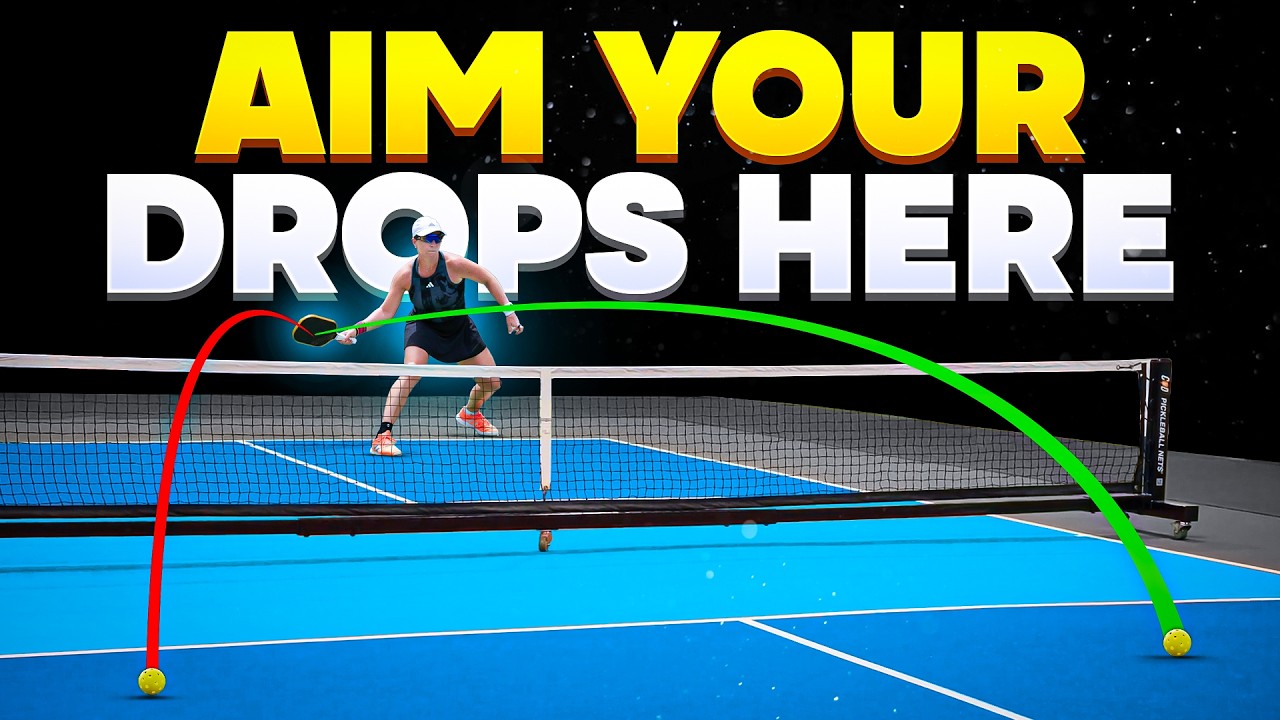
The best target for your third shot drop is the spot right between your opponent's feet.
This is the easy option when you want to drop to the player in front of you.
A ball at his feet is awkward by design. He cannot comfortably take it out of the air, he has to bend and adjust, and his paddle path gets cramped.
Even better, the middle of his stance takes both of his best answers away.
- If he tries to Erne, the ball is too far away.
- If he tries to reach, he has no angle to create with.
That leaves him with a simple, low-risk response, which is exactly what you want from your opponent when you are the one moving up.
The same logic runs through smart placement strategy on every shot you hit.
Here is what the feet target does for you:
- Jams his body: He has to choose a side and commit awkwardly.
- Kills the Erne: The ball is nowhere near the sideline.
- Removes angles: Reaching across gives him nothing sharp to hit.
- Gives you time: A neutral reply lets you walk forward.
5 Reasons the Feet Target Beats the Line
- It takes away the Erne. The ball lands in the middle of his body, far from the sideline lane he needs.
- It limits his reach angles. A reach from a centered ball cannot create a sharp crosscourt response.
- It gives you a bigger target. Aiming at a player is easier than aiming at a painted line.
- It buys you time to advance. His awkward reply is usually soft, so you can follow your shot in.
- It builds pressure from the start. Moving forward behind a good drop puts you in control of the next ball.
Each reason stacks on the last. A drop that jams him leads to a weaker reply, and a weaker reply lets you move forward.
 The Dink Media Team
How Do You Aim at His Feet Without Popping the Ball Up?
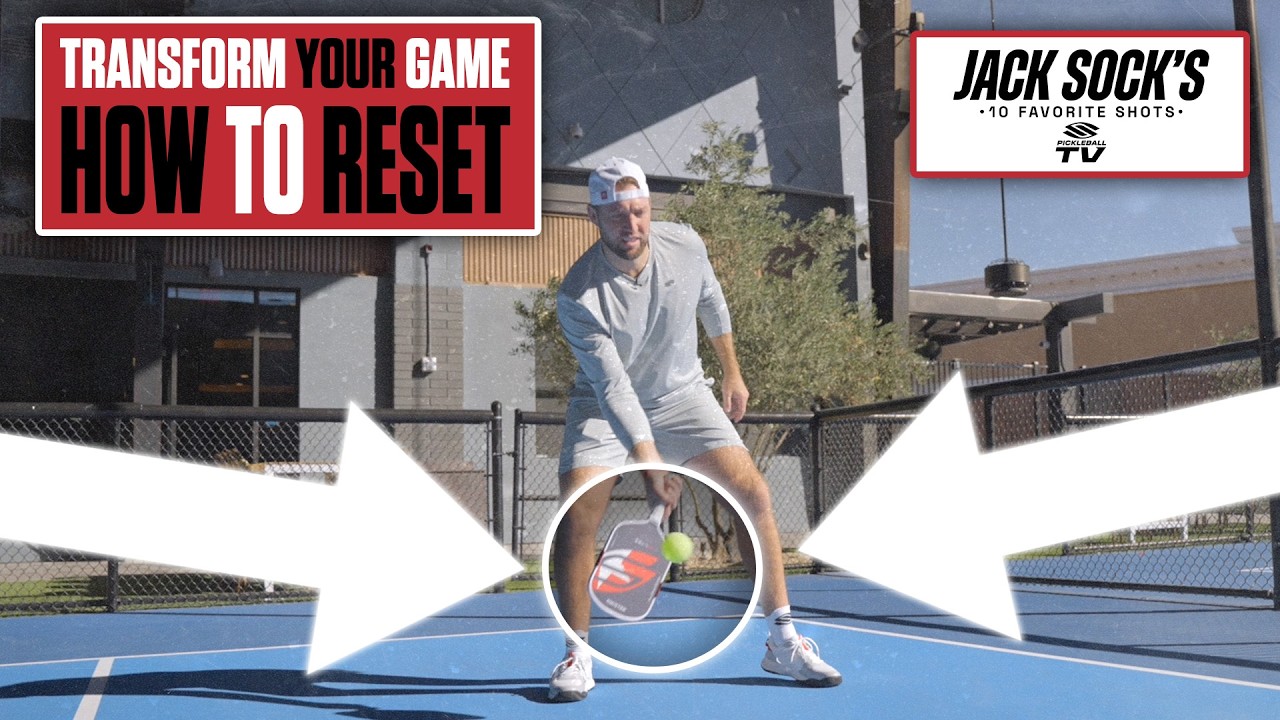
Aim at his feet with a soft, arcing shot that peaks near the net and drops steeply.
The ball should land in the kitchen or just past it, not float deep where he can step in and attack.
Think of the target as a small circle around his shoes rather than one exact point. That gives you a few inches of forgiveness on every side.
If your drops tend to sail, the issue is usually contact height or an open paddle face.
For a deeper look at why that happens, start with your apex and your contact point.
A few simple adjustments help you land the ball at his feet more often:
- Pick the spot early. Decide on his feet before the ball reaches you.
- Use your legs. Bend and lift instead of swinging your arm.
- Finish low and smooth. A short, relaxed follow through keeps the arc soft.
- Watch his stance. Aim for the gap between his feet, even if he shifts.
For a practice plan, try the progressions in Third Shot Drops After 50: One Stop vs Two Stop and adapt the footwork ideas to your own game.
 The Dink Media Team
Why Does Following Your Shot In Matter So Much?
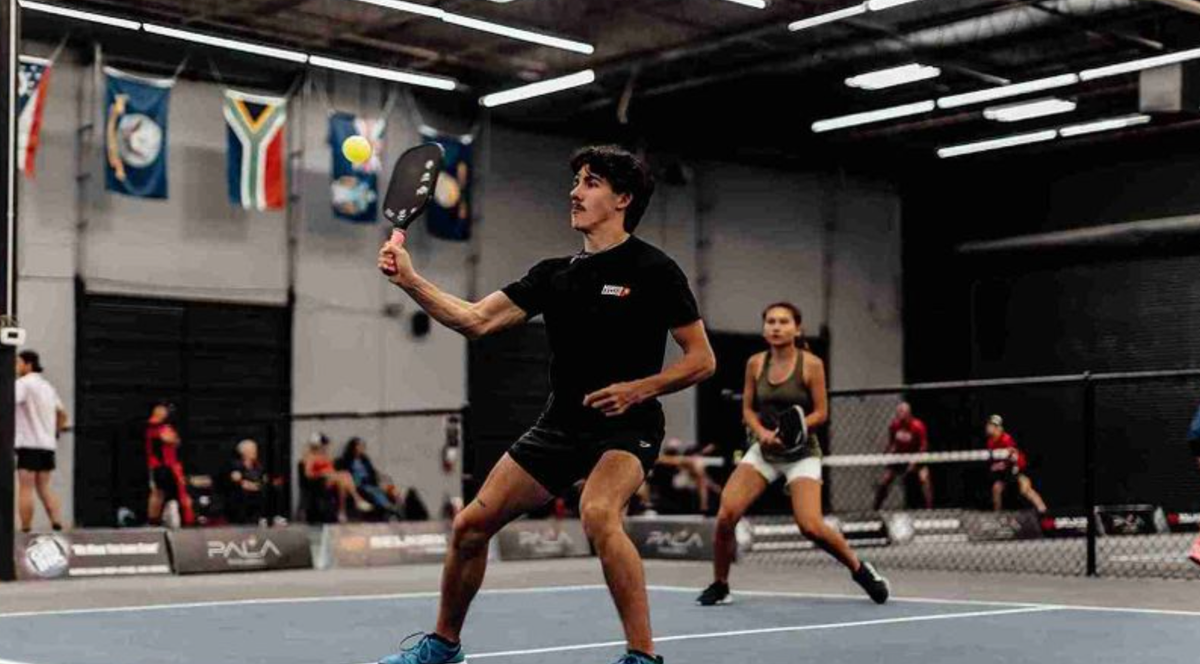
Following your shot in matters because the third shot drop only works if you move up behind it. A great drop that you watch from the baseline is wasted.
When the ball lands at his feet, you have a short window before he replies. Use it to take two or three steps forward and get ready for the next ball.
If you freeze after hitting, he can dink or reset in peace, and the advantage you just earned disappears. Moving as the ball travels keeps the pressure on.
Because he cannot create angles from a ball at his feet, you can follow your shot in and apply real pressure.
To sharpen the moves that come next, study kitchen strategy so you know what to do once you arrive, and tighten up your fourth shot while you are at it.
 The Dink Media Team
What Should You Do If He Moves or Backs Up?
If your opponent shifts his feet or steps back, adjust your target to the space between his shoes and the kitchen line.
The goal stays the same: a ball that lands low, close to his body, and away from the sideline.
Watch where his weight sits before you swing. A player leaning toward the sideline is begging you to avoid that lane.
Avoid the temptation to get creative. The middle works because it is boring, and boring drops keep your opponent from attacking.
Players who play on the right side should pay extra attention here, since down the line drops often tempt them toward the sideline.
For speed up options that pair with this idea, see 7 Forehand Speed Up Patterns for Right Side Players.
 The Dink Media Team
How Do You Practice This Third Shot Drop Pattern?
Practice the feet target with a partner standing at the kitchen line while you hit drops from the baseline.
Aim for the space between his shoes and count how many land there out of ten.
Start with the target stationary, then have him shift his feet so you learn to adjust. Once you hit six or seven out of ten, add the follow in step after every drop.
Keep your sessions short and focused so the pattern becomes automatic. A smarter practice plan can help you fit it into your week.
Beginners who are still building a solid drop should start with the basics. A steady base makes the feet target far easier to hit.
Here is a simple practice sequence you can try this week:
- Hit 10 drops aimed at his feet from the baseline.
- Track how many land softly in the kitchen.
- Add a follow in step after each drop.
- Play a short game where only feet drops count as winners.
 The Dink Media Team
Is Down the Line Ever the Right Choice?
Down the line can work when your opponent is clearly out of position or leaning far toward the middle. Even then, the feet target is safer, and almost always safer under pressure.
The point is not that the line is illegal or foolish. The point is that it is a high risk target with a low reward for most rec and intermediate players.
Choosing the feet means choosing the percentage play. You keep the ball low, deny the Ernie, and give yourself time to move forward.
Players who play on the right side should pay extra attention here, since down the line drops often tempt them toward the sideline.
For speed up options that pair with this idea, see these forehand speed up patterns.
If your drops still get attacked, the problem may be a rushed swing rather than the target. Slowing down helps, and fixing your tempo walks through how.
Once the feet target feels automatic, the next step is adding spin and disguise, which is where the advanced levels of this shot live.
Frequently Asked Questions
Where should I aim my third shot drop?
Aim at the space between your opponent's feet. It jams his body, takes away the Erne, and removes the angles he would need to attack.
Why is dropping down the line a bad idea?
The ball stays near the sideline, which gives your opponent an easy Erne or reach. It also leaves very little margin for error on a soft shot.
What is an Erne in pickleball?
An Erne is a shot where the kitchen-line player steps around the corner of the kitchen and out of bounds to hit a ball in the air. It works best against balls that travel down the sideline.
Should I move forward after my third shot drop?
Yes. A drop that lands at his feet produces a weak reply, so you should follow your shot in and apply pressure.
What if my opponent moves before I hit the drop?
Adjust to the gap between his feet or just in front of them. Keep the ball low and away from the sideline, and avoid trying anything fancy.


Love Pickleball? Join 100k+ readers for free weekly tips, news & gear deals.
Subscribe to The Dink