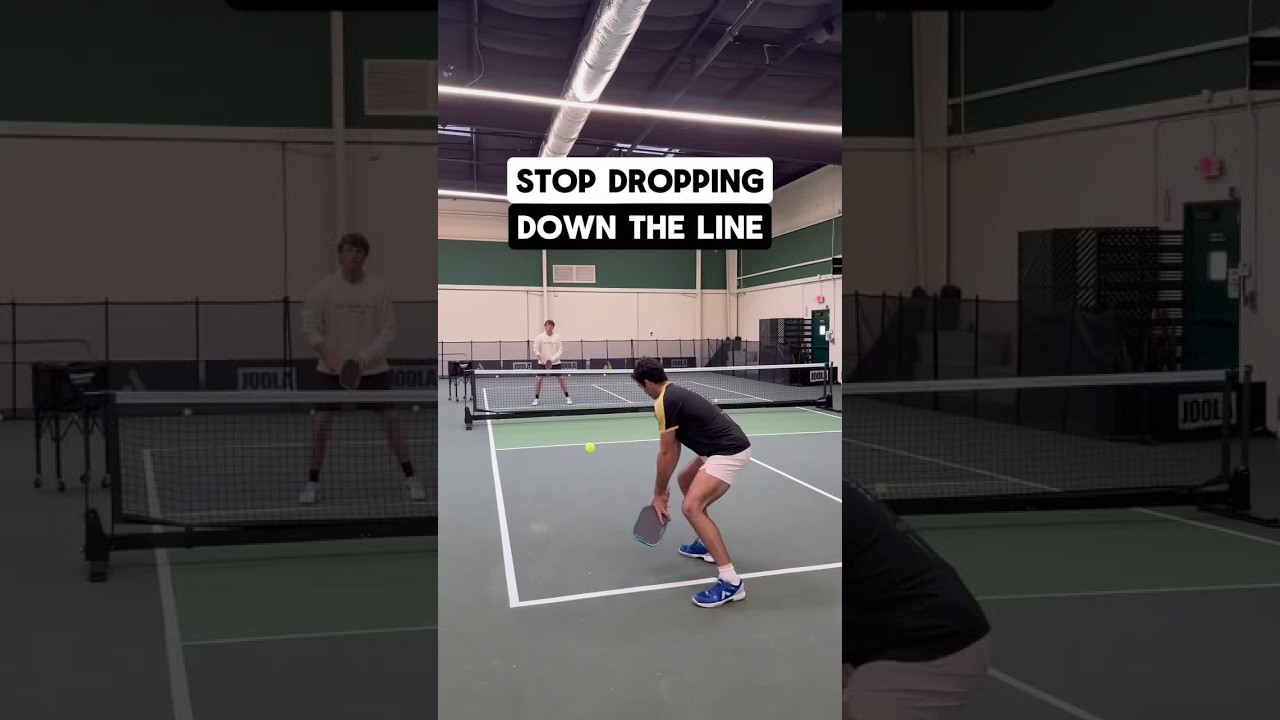


Your third shot drop gets more consistent when you start beneath the ball, brush across it, and load your outside leg. These three swing tips come from studying how Anna Leigh Waters, Lea Jansen, and Anna Bright hit the same drop on every point.
If your third shot drop floats high, dumps into the net, or sits up in the kitchen for a free slam, you are not alone.
The third shot drop is the shot that decides who controls the point, and most players treat it like a guessing game.
The fix is not more feel or more luck. It is a repeatable swing built from three simple pieces that the best drop hitters in the game all share.
These tips come from Pickleball Playbook - Austin Hardy, whose Pickleball Playbook channel on YouTube broke down the topspin drop after he got picked apart by a pro in a match.
He studied slow motion footage of Anna Leigh Waters, her mother, and Anna Bright, and found the same three habits on every single drop.
Love pickleball? Then you'll love our free newsletter. We send the latest news, tips, and highlights for free each week.
What Makes a Third Shot Drop Consistent?
A consistent third shot drop comes from the same setup and the same swing path every time, no matter where the return lands.
The pros do not change their form for deep returns or short returns.
They adjust with their legs and their aim, not with a new swing.
The third shot drop is the soft shot the serving team hits after the return, aimed to land in or near the opponent’s kitchen.
Its job is simple: slow the ball down so you and your partner can walk forward and take the net.
Here are the three pieces that make it repeatable:
- Start beneath the ball with the paddle tip down and wrist cocked back.
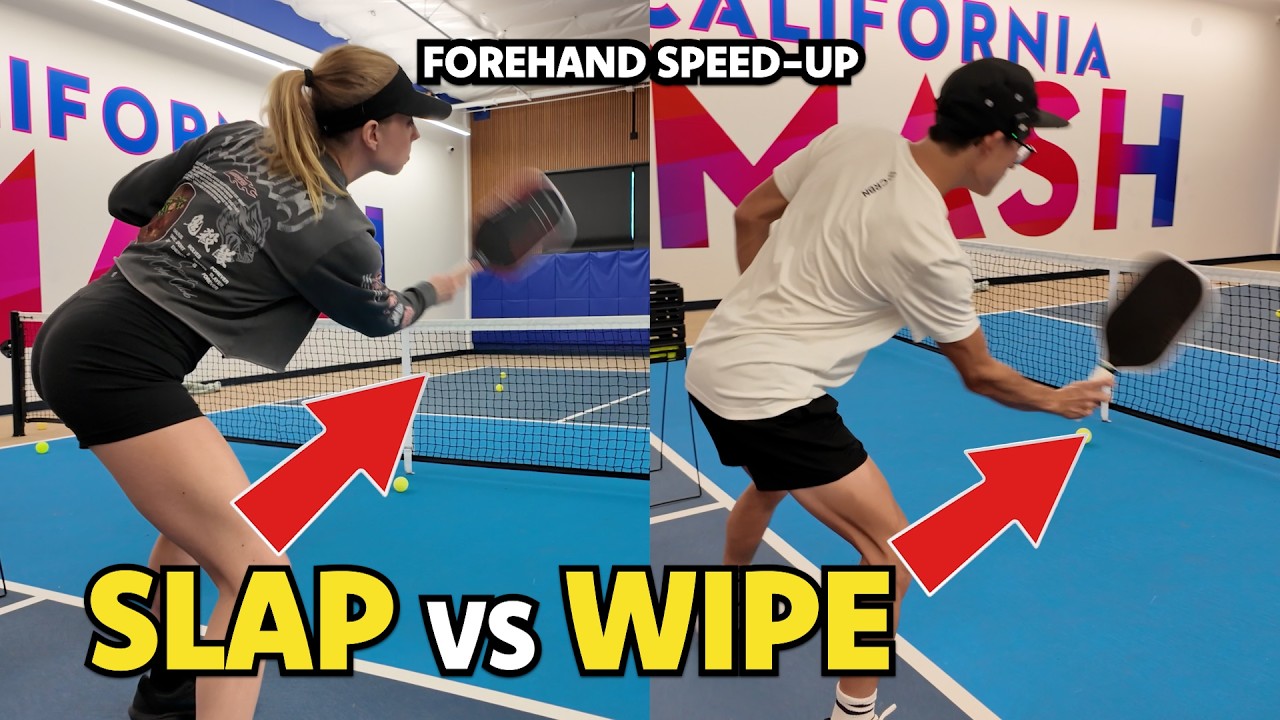
- Brush across the ball in a windshield wiper motion and finish on the opposite side of your body.
- Load your outside leg and pivot on it through contact.
The same form works on both wings. The backhand just mirrors the forehand, like hitting a lefty forehand.
Tip 1: Why Should You Start Beneath the Ball?
You should start about a foot beneath the ball because it forces you to lift up into the shot instead of driving it down into the net.
Players who start at ball height lose spin and tend to hit straight into the ground.
The setup is the same every time. Paddle tip down, wrist cocked backward, and the paddle face below the ball before you swing.
Think of it as building the lift into your setup so you do not have to manufacture it during the swing.
Once you are in that position, all you have to do is brush up the back of the ball.
Check your setup with this quick list before each drop:
- Paddle tip pointing toward the ground
- Wrist cocked back, not locked straight
- Paddle roughly a foot beneath the ball
- Contact point out in front of your body
If you struggle to catch the ball early enough to set up this way, work on your drop step so you arrive on time instead of reaching.
Tip 2: How Do You Brush the Ball Like a Windshield Wiper?
You brush the ball by swinging from tip down to tip across, finishing on the far side of your body, like a windshield wiper sweeping across glass.
The swing stays out in front of you, not starting behind your body and finishing way across it.
This is where topspin comes from. When you start beneath the ball and wipe up and across, the ball clears the net and then dips fast.
Austin offers a great mental image here: pretend the ball has hair on it. You are not hitting the scalp, you are combing the hair back.
That brushing feel turns your drop into something closer to a drip, a mix between a drive and a drop that dives into your opponent’s feet.
If you want to go deeper, here is how the third shot drip works against better teams, and when to choose a topspin drop versus a slice drop.
One exception: on an inside out shot, where you hit your forehand toward the odd side of the court as a righty, your finish will naturally end farther over.
For most drops, just finish on the opposite side of your body.
 The Dink Media Team
Tip 3: Which Leg Should You Put Your Weight On?
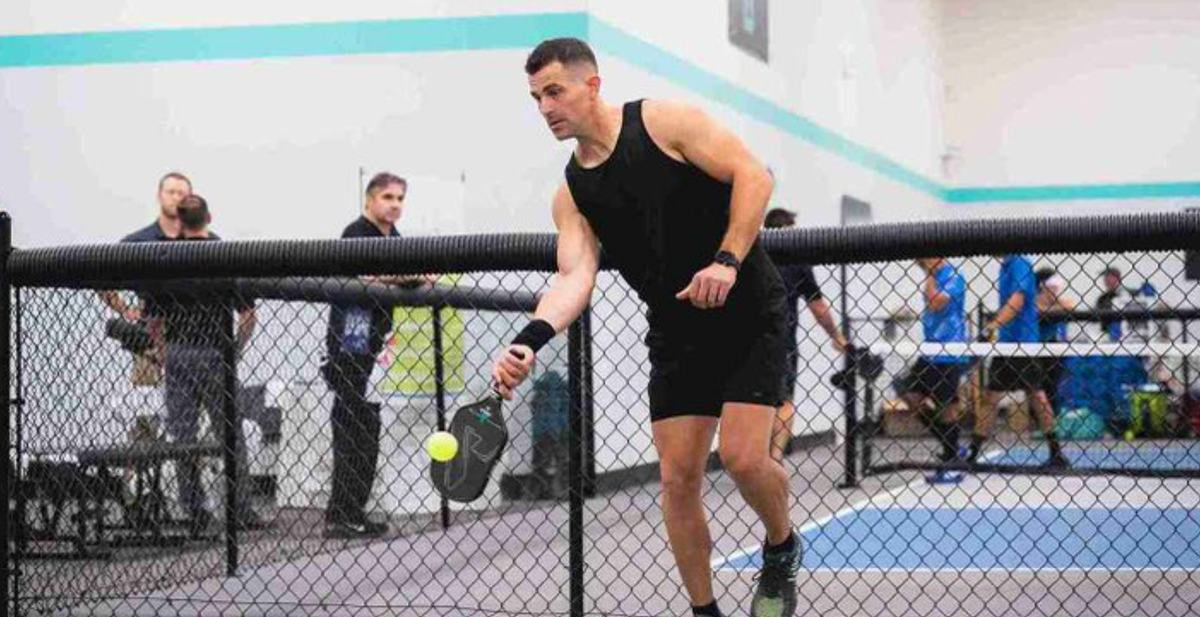
Put your weight on the leg on the side you are hitting, then pivot on it through contact. On the forehand as a righty, that is your right leg.
On the backhand, it flips to your left leg, which is the outside leg. Austin calls this the tip that makes the biggest difference to consistency.
Every pro he studied sits on that outside leg as the paddle comes through and pivots off the toe.
Most of them hit from a closed stance when moving forward into the shot.
They are not opening up toward the court, they are staying sideways and lifting from that loaded leg.
You will also notice a small step back through the shot on many of their drops.
The women on tour hit a lot of drops in mixed doubles because the guy across the net drives harder, so they have had years of practice staying balanced through this pivot.
Use this quick sequence to groove the motion:
- Get to the ball and load your outside leg.
- Set the paddle tip down and beneath the ball.
- Brush up and across, finishing on the opposite side.
- Pivot on that leg as you finish, keeping your head still.
If you tend to get stuck on your back foot or lean forward, pair this with these footwork fixes to keep your base stable.
 The Dink Media Team
Where Should Your Third Shot Drop Land?
Your third shot drop should land at your opponent’s shins and feet, not just anywhere in the kitchen.
A drop that lands in the middle of the kitchen can still be slammed if it sits up, and the pros rarely aim there.
When the ball lands at the shins, your opponent has a decision to make.
They can take it out of the air or step back and let it bounce, and either way they have to bend down and give up the kitchen.
If they speed it up from that low position, you usually get a pop up you can put away.
That is why Anna Leigh Waters and Anna Bright keep drops low and penetrating rather than floaty and soft.
You can still land drops in the kitchen as long as they stay low. Just shift your target from the kitchen as a whole to the feet of the player you are hitting at.
If your drops keep sitting up no matter where you aim, this breakdown of why your third shot drop pops up is a good companion read.
 The Dink Media Team
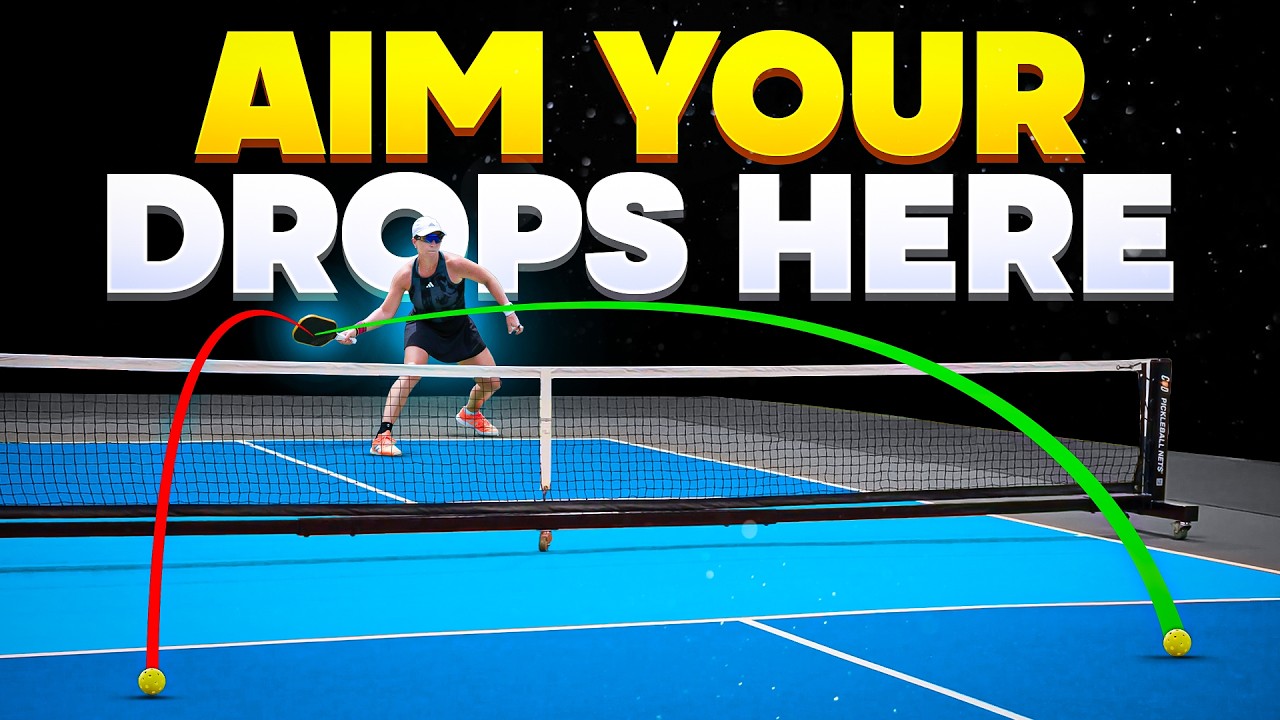
How Do You Fix a Drop That Keeps Sailing High?
If your drop sails high, keep your head down and aim lower over the net with your mind.
A small change in your target often corrects the whole shot without touching your mechanics.
In the video, Austin hits a few drops too high, makes only that mental adjustment, and the next balls come in lower.
Your brain is already calibrating; you just have to give it a lower target.
Check these common causes when the ball floats:
- Starting at the ball instead of beneath it
- Swinging too hard instead of brushing
- Standing on both feet instead of loading one leg
- Lifting your head before contact
If the drop keeps dumping into the net instead, the opposite problem usually applies. Go back to why you keep missing your third shot drop to diagnose it.
 The Dink Media Team
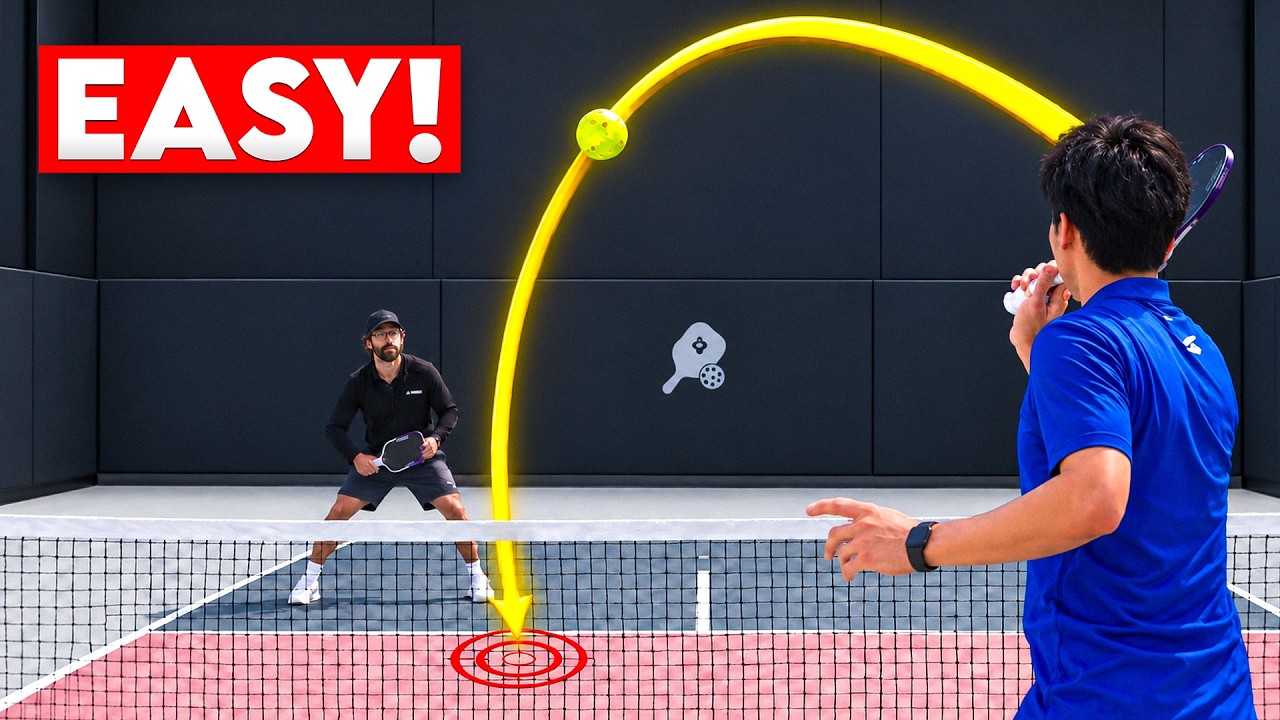
How Do You Practice the Third Shot Drop So It Holds Up Under Pressure?
You practice the third shot drop by repeating the same setup and swing until it feels automatic, then adding pressure and varied feeds.
Reps without a plan build habits, but reps with a target build a shot you can trust in a tournament.
Start with the form drills at a slow pace, focusing on one tip at a time. Tip down and beneath first, then the windshield wiper, then the outside leg.
Once the form feels natural, feed yourself from different depths and aim for the shins. Track how many of ten balls land low and in.
For a structured plan, borrow from this practice framework for making skills stick, and use these practice drills for any skill level to build the reps.
Once your drop is steady, take the next step by learning to take the third shot early when the return gives you the chance.
 The Dink Media Team
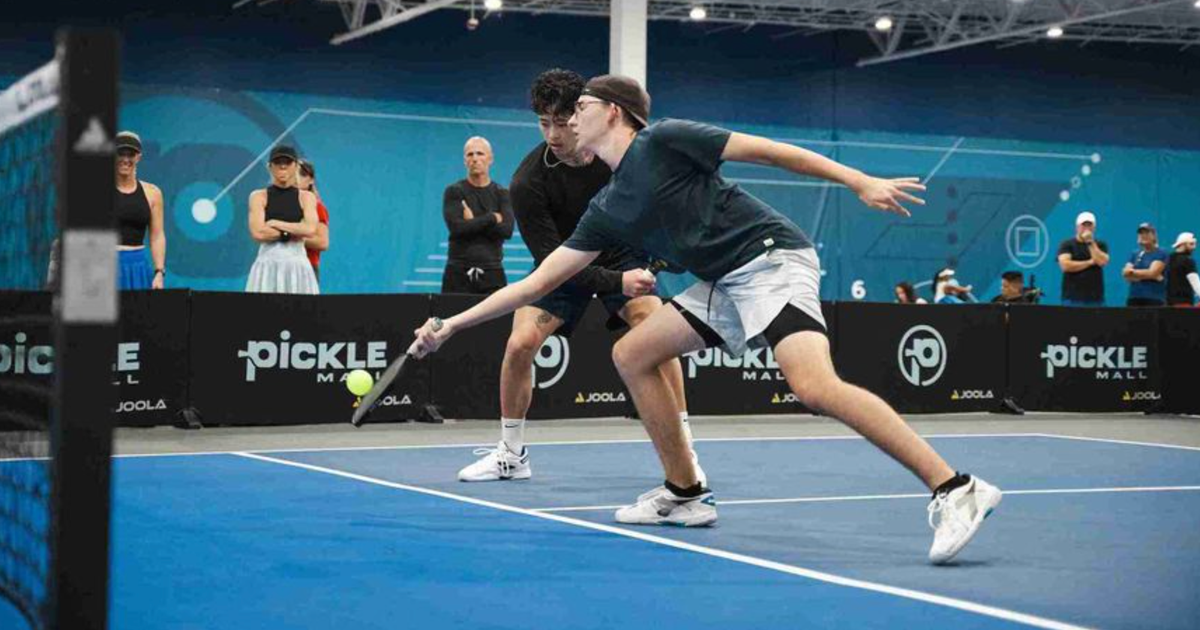
What Does This Look Like in a Real Match?
In a real match, you will not get a perfect feed every time, so the setup has to travel with you.
Austin noticed that the best drop hitters use the same motion whether the return is deep, short, or difficult.
That is the real value of this system. You stop reinventing the shot on every point and start trusting a swing that already works.
If you want to read more about the players who inspired this breakdown, check out how Waters claimed another triple crown on the PPA Tour.
Frequently Asked Questions
What is the third shot drop in pickleball?
The third shot drop is a soft, arcing shot hit by the serving team after the return, aimed to land in or near the opponent's kitchen. It slows the ball down so you and your partner can move up to the net.
Why do I keep hitting my third shot drop into the net?
Most players hit the net because they start at ball height and swing down instead of starting beneath the ball and brushing up. Start about a foot below the ball with the paddle tip down and lift through contact.
Where should a third shot drop land?
Aim for your opponent's shins and feet rather than the middle of the kitchen. A low drop forces them to bend down and concede the kitchen, while a floaty drop in the kitchen can still be attacked.
Do I hit the backhand third shot drop the same way as the forehand?
Yes, the motion is the same, just mirrored like a lefty forehand. Start beneath the ball, brush across, and put your weight on the outside leg as you pivot through contact.
How do I add topspin to my third shot drop?
Start beneath the ball with the paddle tip down and wrist cocked back, then brush up and across the ball like a windshield wiper. Picture combing the hair on the ball rather than hitting it.


Love Pickleball? Join 100k+ readers for free weekly tips, news & gear deals.
Subscribe to The Dink