
How to Hold a Pickleball Paddle for Beginners: Grip Basics That Change Everything
Knowing how to hold a pickleball paddle for beginners is the single most important skill you can build before touching the court. Get your grip wrong and everything else, your dinks, your drives, your serves, collapses with it.
Knowing how to hold a pickleball paddle for beginners is the foundation every shot you'll ever hit is built on.
Get it wrong and it doesn't matter how much you practice: your mechanics stay broken at the source.
Get it right and the game starts to click faster than you'd expect.
Most new players grab the paddle like they're shaking hands with a frying pan. That instinct isn't totally wrong, but it's not totally right either.
The difference between a grip that works and one that fights you is subtle. And that subtlety shows up on every single shot.
Love pickleball? Then you'll love our free newsletter. We send the latest news, tips, and highlights for free each week.
How to Hold a Pickleball Paddle for Beginners: Start With the Handshake
The best starting grip for a beginner is the continental grip, sometimes called the "handshake grip."
To find it: hold the paddle out in front of you with the face perpendicular to the ground, then shake hands with the handle.
Your thumb and index finger should form a V along the top bevel. That's it. You're already ahead of half the people on public courts.
Why does this matter so much? Because the continental grip is neutral.
It lets you move naturally between forehand and backhand shots without rotating the paddle in your hand.
For beginners who haven't yet developed the muscle memory to switch grips mid-rally, that neutrality is a lifeline.
If you want to go deeper on how beginners can build a complete skill set from the ground up, this breakdown of 3 tips every beginner needs to know is a smart next read.
The Three Main Pickleball Grip Styles Explained
There are three grip types you'll hear players talk about.
Each has trade-offs, and understanding them early saves you from building bad habits you'll have to break later.
- Continental (neutral grip): The V formed by your thumb and index finger sits on the top bevel of the handle. This is the go-to starting point for most beginners and the grip most coaches recommend for kitchen play. It gives you control over soft shots and decent power on groundstrokes. According to USA Pickleball's official rules and technique resources, the paddle handle must allow full control, and a neutral grip best supports that across both sides of the court.
- Eastern grip: Rotate the paddle slightly toward your forehand side. Your palm sits more behind the handle. This adds power on forehand drives and is popular with players who come from a tennis background. The trade-off is that backhand shots require a small adjustment.
- Western grip: Rotate further, so the palm sits almost under the handle. This is the topspin-heavy grip borrowed from tennis. It's rare in pickleball because the shorter handle and smaller paddle face make it harder to execute cleanly. Most coaches won't recommend this for beginners.
For context on how serve mechanics connect to grip, this guide on pickleball serve grip breaks down how your hold changes depending on the shot.
Why Does Grip Pressure Change Everything?
Grip pressure is the most underrated variable in pickleball technique, and most beginners squeeze too hard.
Here's the thing: you want a grip pressure of about 4 out of 10 on most shots. Firm enough to control the paddle face, loose enough to absorb pace and feel the ball.
Think of holding a tube of toothpaste with the cap off. Squeeze too hard and toothpaste goes everywhere. That's your dink when you death-grip the paddle.
Grip pressure also changes based on shot type. On a hard drive or overhead smash, you naturally firm up to 6 or 7.
On a dink or drop shot, you go back to that relaxed 4. The ability to adjust pressure dynamically is what separates 3.5 players from 4.0 players.
Letting your paddle do the work is a concept worth internalizing early.
And when you're ready to start generating real power on your shots, that looseness is exactly what allows the snap you need.
 The Dink Media Team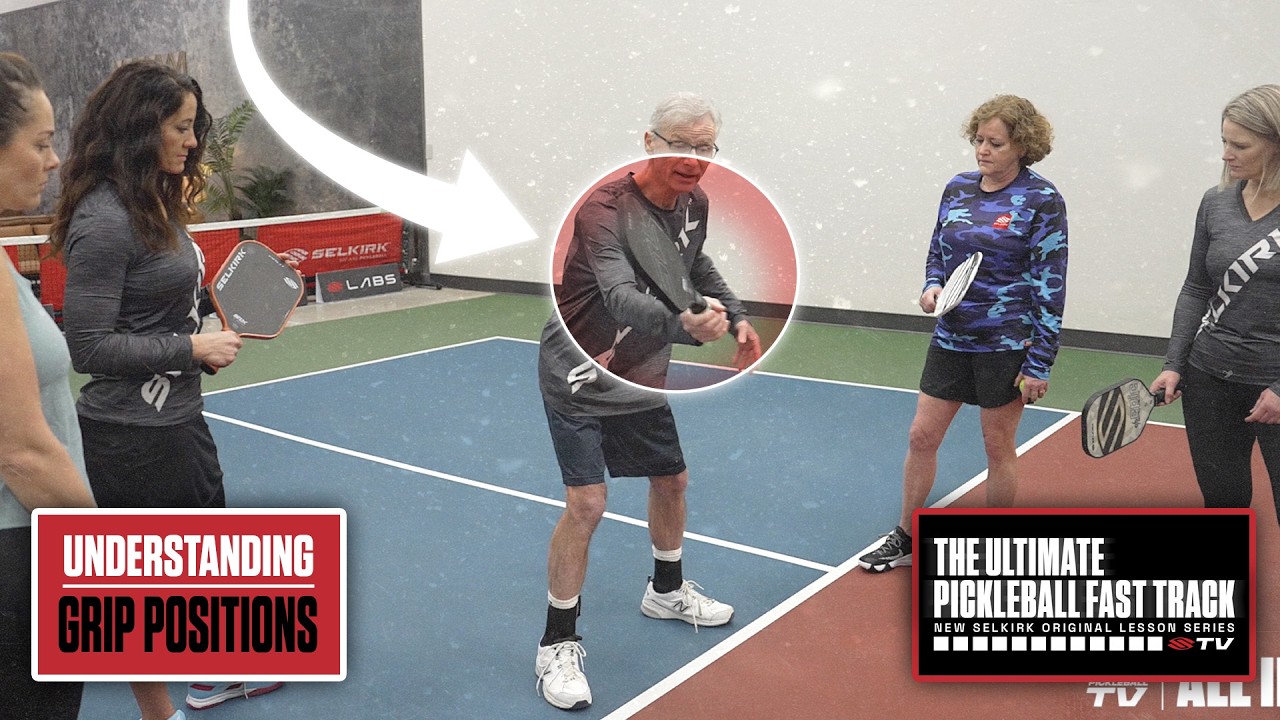
What Is Grip Size and Why Should Beginners Care?
Grip size refers to the circumference of the paddle handle, and choosing the wrong size creates mechanical problems that are hard to diagnose later.
Most pickleball paddles come in small (4-inch) or standard (4.25-inch) grip sizes. A small number of paddles offer a 4.5-inch option.
For most adult beginners, a 4 or 4.25-inch grip is the right starting point.
To check: grip the paddle normally, then slide your non-dominant index finger into the space between your fingertips and your palm.
If it fits snugly with a little room, you're in the right range. If there's no room or too much space, the grip is sized wrong for your hand.
Undersized grips cause players to over-squeeze, which ties directly back to the pressure problem above.
Oversized grips reduce wrist mobility, making quick directional changes harder. A grip that fits correctly keeps your hand relaxed and your paddle face consistent.
If you're building the skill investments that actually move the needle, dialing in grip size belongs near the top of that list.
The Dink Media Team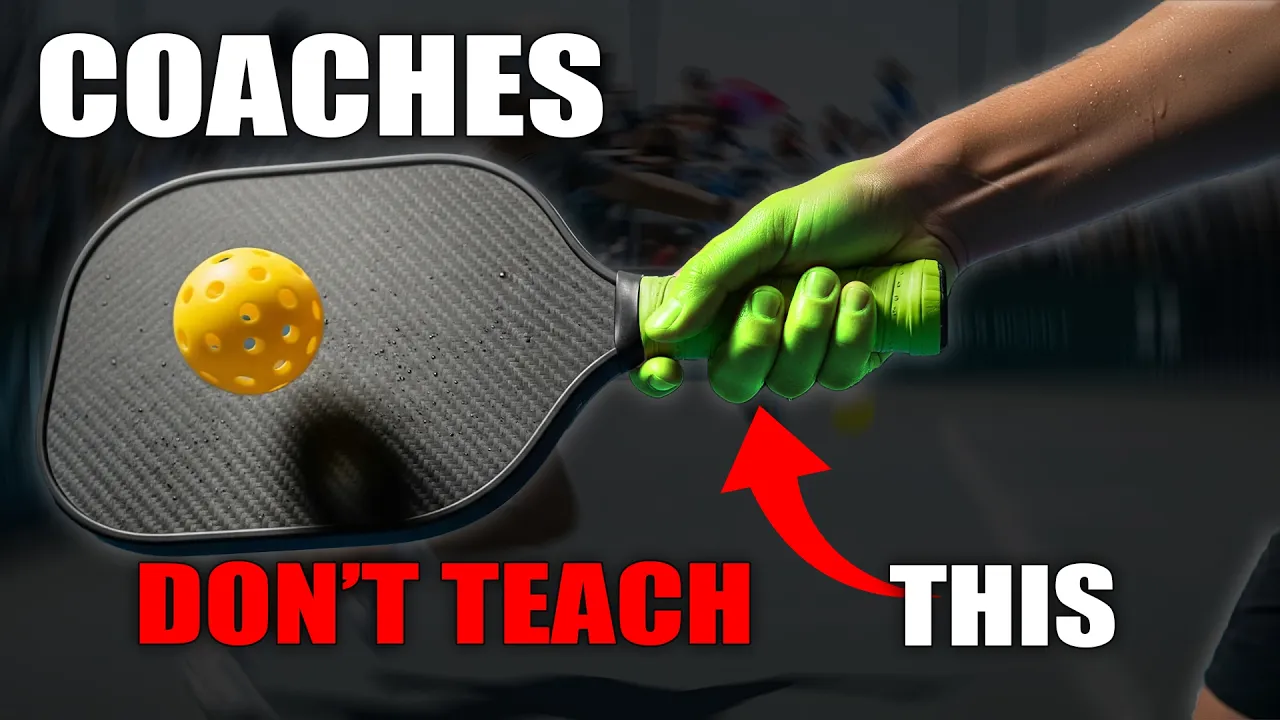
How to Hold a Pickleball Paddle for Beginners: Common Mistakes to Fix Now
Most grip errors follow predictable patterns. Fixing them early is the fastest way to stop leaving easy points on the table.
- Mistake 1: Choking up too high on the handle. When players choke up toward the throat of the paddle, they lose the leverage the handle provides. Keep your bottom hand near the butt cap, which gives you better control across the full swing arc.
- Mistake 2: Letting the paddle rotate during rallies. This happens most often after a hard shot where the ball impact twists the handle. Your dominant hand needs to reset the grip face to neutral between shots. It sounds obvious. It almost never happens automatically without deliberate practice.
- Mistake 3: Forehand grip locked in during backhand shots. If you're running an eastern forehand grip and trying to hit backhand shots without adjusting, you're fighting your own mechanics. Either use the continental grip for both, or practice a quick grip change on the backhand side. Cleaning up your backhand mechanics is far easier once your grip is in the right place to start.
- Mistake 4: Gripping with your palm instead of your fingers. Control in pickleball comes from finger placement, not palm pressure. Your fingers should wrap the handle with the paddle face naturally square to the direction you're hitting. If your palm is doing most of the gripping, your shot feel disappears.
A study from Sports Biomechanics (2025) noted that finger-dominant gripping in paddle sports produces measurably better directional accuracy on short-range touch shots compared to palm-dominant holds.
That's the kitchen game in a nutshell.
The Dink Media Team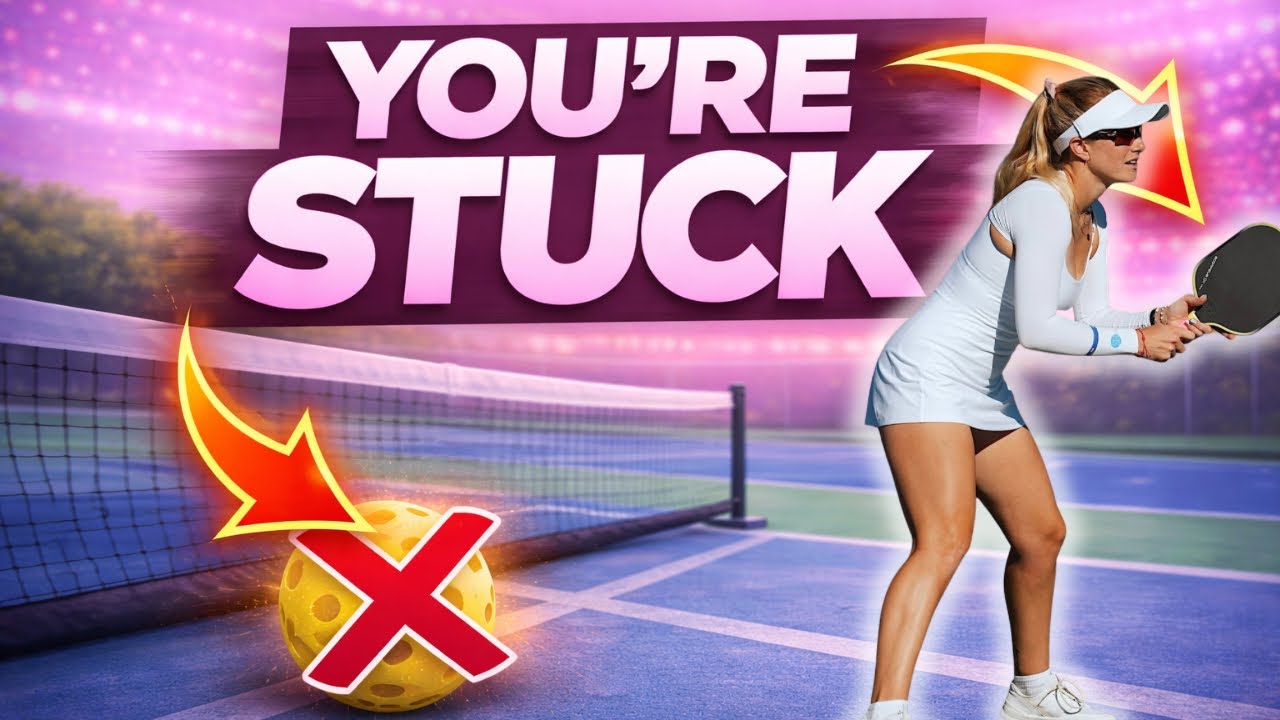
How Does Your Grip Affect Kitchen Play?
At the kitchen line, your grip is the single biggest determinant of your dink consistency.
The non-volley zone is where most pickleball points are decided, and soft hands at that line require a loose, responsive grip.
Turning mediocre dinks into winners starts with getting your grip pressure right before you even think about paddle angle or swing path.
The continental grip shines here because you can absorb incoming pace without adjusting. You're not fighting the ball. You're redirecting it.
When a ball comes at you at 40 mph at the kitchen and you're holding the paddle like a hammer, the ball goes long.
When you're relaxed and centered, it drops right where you want it.
There's also the matter of paddle face control during fast exchanges.
Positioning yourself correctly at the kitchen and keeping your grip quiet are two sides of the same coin. One without the other doesn't hold up under pressure.
The Dink Media Team
Ready Position: Where Your Grip Meets Your Setup
A proper ready position keeps your grip active and your paddle face in the right spot before every shot.
Hold the paddle in front of your body at roughly waist height with the face pointing slightly upward.
Your elbow should be bent at around 90 degrees, close to your body. This position lets you react to shots in any direction without a big wind-up.
Your grip during ready position should be light. Think 3 out of 10. The moment you see the ball coming, you load slightly.
But starting loose keeps your reaction time fast and your swing path clean.
This is why mid-court pickleball tips always circle back to paddle prep: your grip and your setup are linked.
One cue that works for a lot of beginners: pretend you're carrying a full cup of water in your paddle hand. You're not going to spill it.
That's the tension level you want in your grip before the point starts.
Once you've got that down, you can start thinking about how to return serve with that same calm, loaded grip.
The Dink Media Team
Key Takeaways
- The continental grip is the best starting point for beginners. It's neutral, adaptable, and doesn't require switching between forehand and backhand.
- Grip pressure should be around 4 out of 10 on most shots. Too tight kills your feel. Too loose and you lose control.
- Grip size matters. A grip that's too small causes over-squeezing. Too large reduces wrist mobility. Use the index finger test to find your fit.
- Finger-dominant gripping produces better directional accuracy on touch shots than palm-dominant holds.
- Your grip feeds everything else: dinking, serving, driving, resetting. Fix it first and the rest of your game builds on a solid foundation.
Frequently Asked Questions
What is the best grip for a beginner learning how to hold a pickleball paddle?
The continental grip is the best option for beginners. To find it, hold the paddle perpendicular to the ground and shake hands with the handle. The V formed between your thumb and index finger should rest along the top bevel of the handle. This grip is neutral enough to handle both forehand and backhand shots without needing to rotate the paddle mid-rally.
How tight should you hold a pickleball paddle?
Most coaches recommend grip pressure of about 4 out of 10 on a scale where 10 is maximum squeezing. That's firm enough to maintain paddle face control but loose enough to absorb pace and feel the ball on soft shots. On drives and overheads, it's natural to firm up to 6 or 7. The mistake most beginners make is gripping at 8 or 9 on every shot, which kills touch and wrist mobility.
Does grip size affect how you hold a pickleball paddle?
Yes. If your grip is too small, you tend to compensate by over-squeezing, which creates tension and reduces feel. If it's too large, your wrist can't move as freely, making quick directional changes harder. Use the index finger test: grip the paddle normally and slide your non-dominant index finger between your fingertips and your palm. A snug fit with a little room is what you're looking for.
What mistakes do beginners make when holding a pickleball paddle?
The most common errors are gripping too tightly, choking up too high on the handle, letting the paddle rotate during rallies without resetting, and using palm pressure instead of finger pressure. Each one creates mechanical problems that compound over time. The earlier you catch and fix these habits, the less undoing you'll have to do later.
Should you change your grip between forehand and backhand shots?
With a continental grip, you generally don't need to. That's its biggest advantage. If you use an eastern or western grip, you'll need to make small adjustments between forehand and backhand. For beginners who are still building rally consistency, staying in a neutral continental grip removes one more variable from an already complicated equation.

Love Pickleball? Join 100k+ readers for free weekly tips, news & gear deals.
Subscribe to The Dink