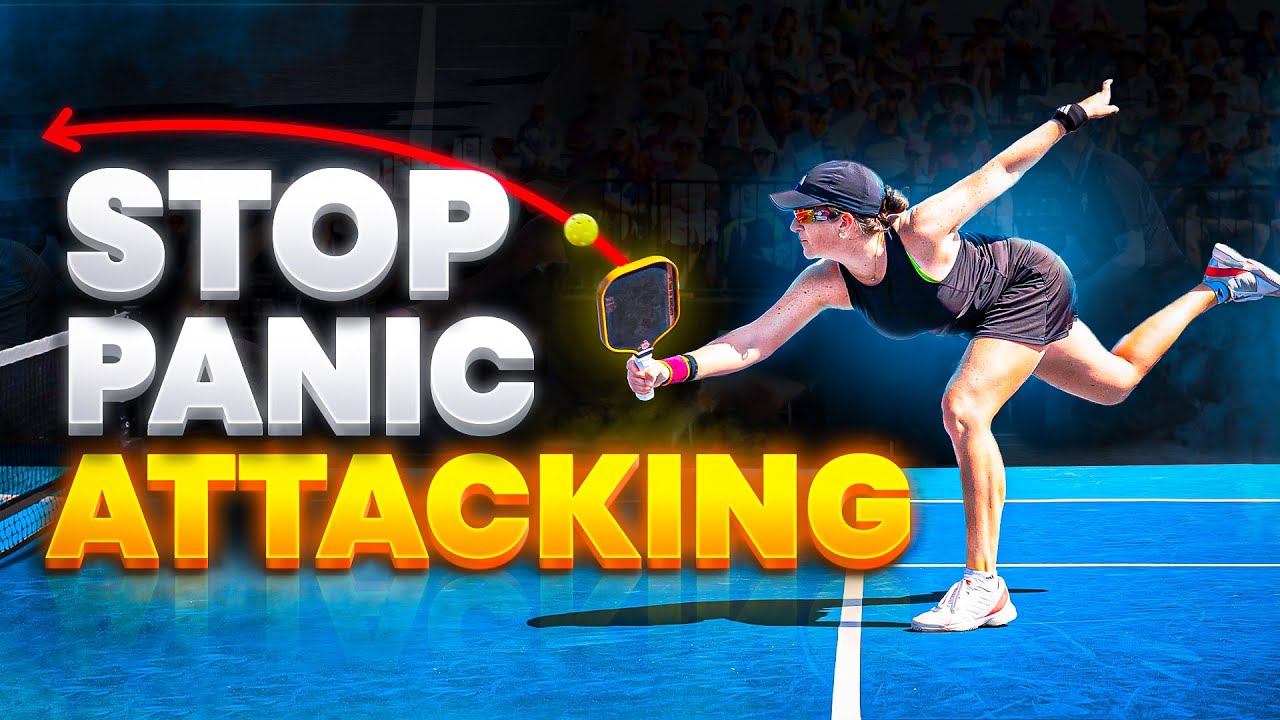
A panic attack in pickleball happens when you speed up the ball from a position where you have no business attacking. Here is exactly what to do instead.
The panic attack in pickleball is one of the most common mistakes players make, and most of them do not even realize they are doing it.
You get pulled wide. You are scrambling.
The ball comes back, and instead of resetting, you fire a speed-up from a spot where you have no balance, no position, and no advantage.
The result is almost always an error or a free setup for your opponent.
This breakdown comes from Mari Humberg Pickleball on YouTube, and she makes the case clearly: panic attacking is not just bad strategy, it breaks every fundamental rule of when you should attack at all.
Here is what to do instead.
Love pickleball? Then you'll love our free newsletter. We send the latest news, tips, and highlights for free each week.
What Is a Panic Attack in Pickleball?
A panic attack is when you speed up the ball from a position of weakness rather than strength.
It is pickleball shot selection driven by fear instead of information.
It usually happens when your opponent hits a wide dink that pulls you off the court. Instead of slowing the rally down, you panic and try to go offensive.
You are not balanced, you are not well positioned, and your opponent is comfortably set up at the kitchen line.
That is the worst possible time to attack.
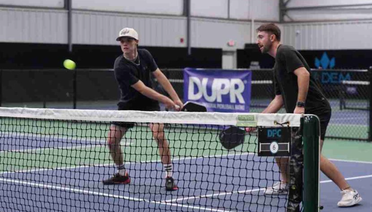
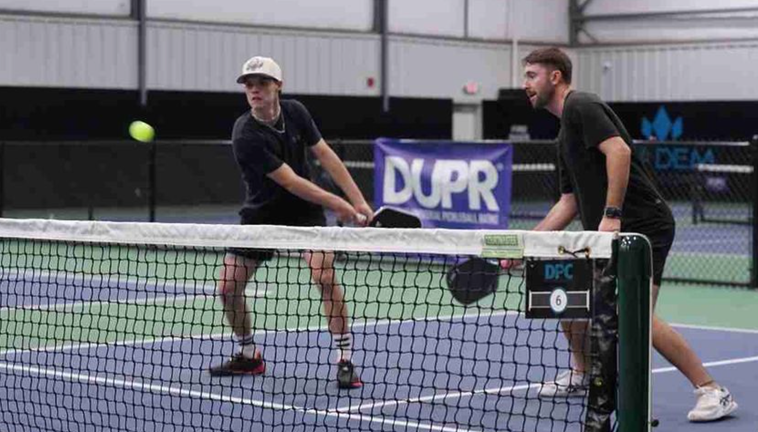
Mari demonstrates this by running wide to chase a dink and then ripping a speed-up.
The shot goes well off the court, and even when it barely stays in, the opponent is in a perfect spot to counter.
You gave away the point before the ball even crossed the net.
The panic lob is the same mistake wearing a different hat.
If you have read anything about lob coverage in pickleball, you know a desperation lob from wide and off balance rarely ends well either.
The 3 Rules You Break Every Time You Panic Attack
Before you attack in pickleball, three conditions need to be true. Mari calls these her fundamental attack rules, and they are worth memorizing.
- You must be well balanced. If your feet are still moving or you are reaching, do not attack. A speed-up requires a stable base or the shot has no precision. This is why balance changes everything in pickleball and why so many rally-ending errors trace back to a body that was still in motion.
- You must be well positioned. Attacking from the sideline gives your opponent the entire court to work with. You need to be near the center of the kitchen line to execute offense safely.
- Your opponent must be at least slightly off balance. Attacking when your opponent is perfectly set up at the kitchen line is handing them an easy put-away. You need them moving or guessing.
Learning how to become unattackable in pickleball is the mirror image of this rule, and it explains why your speed-ups keep getting countered.
When you get pulled wide and try to speed up, you break all three rules simultaneously.
You are moving. You are out of position. And your opponent is standing comfortably at the net, waiting.
That is three reasons not to attack, stacked on top of each other.
Understanding pickleball shot selection rules matters more than raw shot execution.
The wrong shot at the wrong time loses points no matter how well you hit it, which is exactly what the modern pickleball strategies winning in 2026 keep proving.
What Should You Do Instead?
Slow your paddle down and reset the ball back to the middle of the court. That is the entire answer.
There is a concept that applies here directly: when your feet are moving too much, you have to slow your paddle down.
These two things need to work in opposite directions.
The more chaotic your footwork, the softer your shot needs to be.
Here is why the middle of the court matters so much. By returning the ball to the center, you take away your opponent's angles.
A wide ball gives them a massive angle to work with, and angles matter in pickleball more than most rec players account for.
A ball in the middle collapses those angles and forces them to reset the dink rally from a neutral spot.
This also gives you time to recover your position, which is the part most players skip thinking about.
The reset is not just a defensive shot. It is a position-recovery tool.
For a closer look at why resets break down and how to fix them, this breakdown on why your pickleball reset fails covers the mechanics in depth.
 The Dink Media Team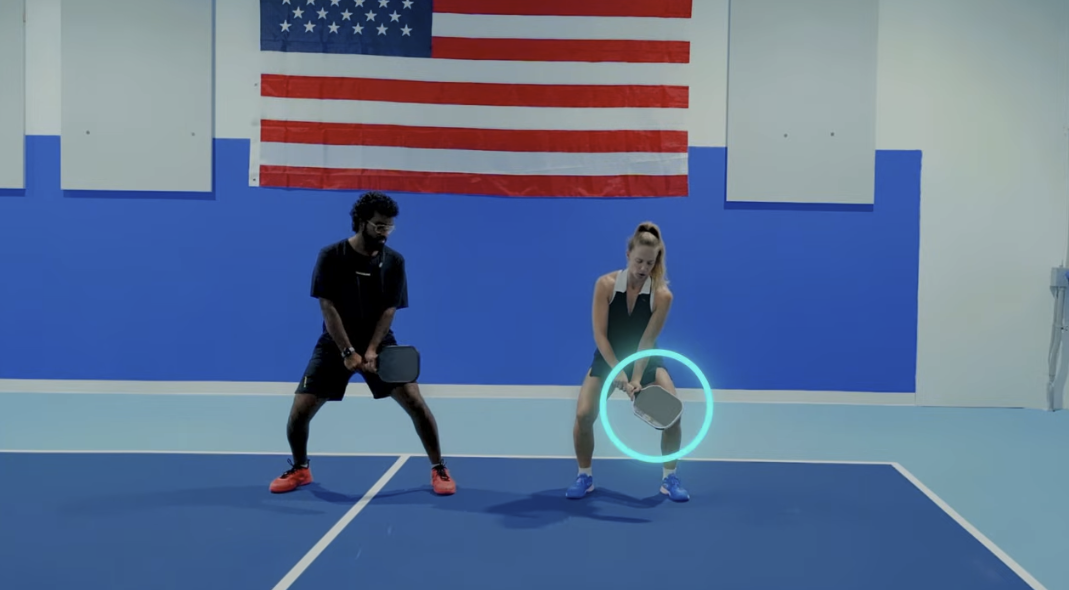
Why Short and Low Is the Only Priority
When you are running wide and forced to hit a recovery shot, you have one job: short and low.
Not pretty. Not fast. Not clever.
Just short and low.
If the ball comes back too high, your opponent will attack it.
Mari shows this clearly by intentionally hitting a high recovery ball, and the result is immediate: her drilling partner attacks and the point is essentially over.
A short, low ball at the kitchen forces your opponent to dink again.
That means you get one more shot to recover your position and get back into a neutral exchange.
Think of it this way: the recovery shot buys you time. Every additional dink the opponent has to hit is another moment you have to get your feet back under you.
 The Dink Media Team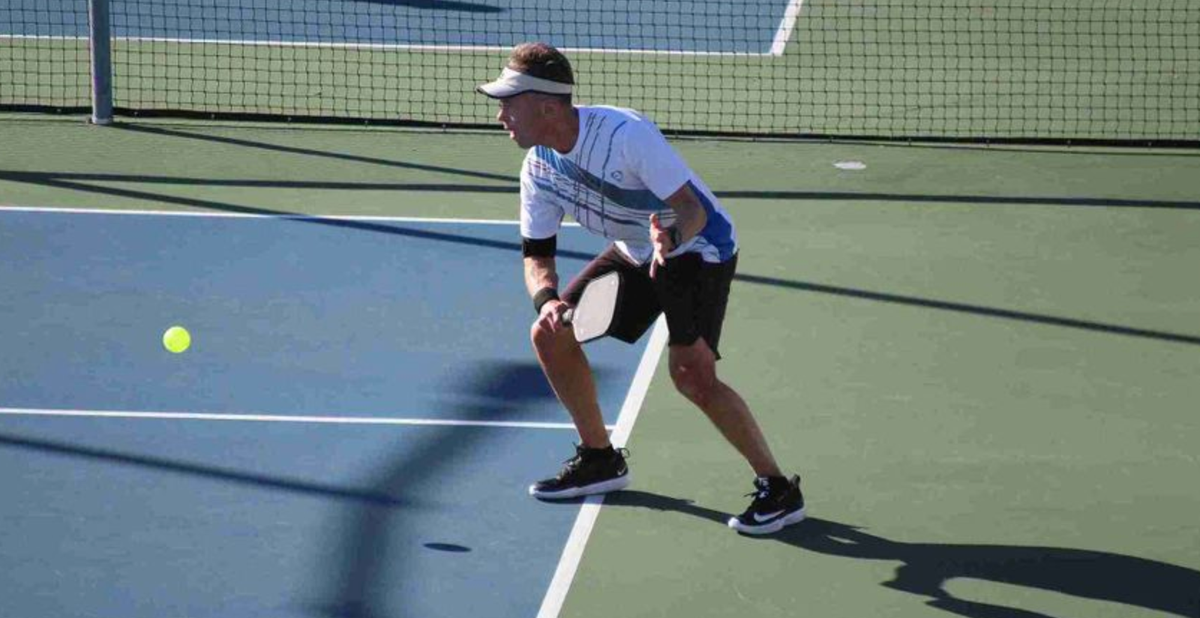
Does It Matter If the Ball Is a Little High When You Recover?
Yes, but it is still better than panic attacking.
Mari makes a point that even a slightly high reset is preferable to a panic speed-up. The opponent might attack your high reset. That puts you in a tough spot.
But a panic attack from out wide almost guarantees a worse outcome, either an outright error or a ball your opponent can easily put away.
You are choosing between two bad options. Choose the one that gives you a fighting chance.
Learning to keep that reset ball low is a trainable skill.
Work on wide dink mistakes and how to fix them specifically, because the mechanics of hitting from a stretched position are different from hitting a standard dink.
 The Dink Media Team
How Do You Train Yourself Out of the Panic Attack Habit?
The panic attack is a habit, and like any habit, it requires deliberate practice to replace.
Here is a simple drill structure to build the right response:
- Set up the wide dink scenario intentionally. Have a partner hit wide dinks to your forehand and backhand sides repeatedly. Your only job is to reset to the middle, short and low.
- Focus on foot speed, not paddle speed. The faster you get to the ball, the more time you have to slow the shot down, so work on your lateral movement first.
- Use a consequence rule in practice. Any time you speed up from an out-of-position spot, the point automatically goes to your opponent. Make the cost of panic attacking real in drilling.
- Count your resets, not your winners. Track how many times you successfully neutralize a wide ball with a short, low reset. Make that the metric you care about, not how many times you attacked.
Players who work on backhand dink drills for consistency find that their wide ball recovery improves quickly, because the mechanics overlap directly.
Adding a few of the 12 drills you need to play your best pickleball will sharpen the same movement patterns.
Also worth noting: the habit gets worse under pressure.
Understanding ball height rules for shot selection gives you a clear trigger for when to attack and when to reset, so you are not making the decision in the moment under stress.
According to USA Pickleball, the sport's national governing body, participation has climbed steadily across every age bracket, which means the average opponent you face today is more disciplined than the one you faced two years ago.
Sloppy pickleball shot selection gets punished faster now than it used to.
 The Dink Media Team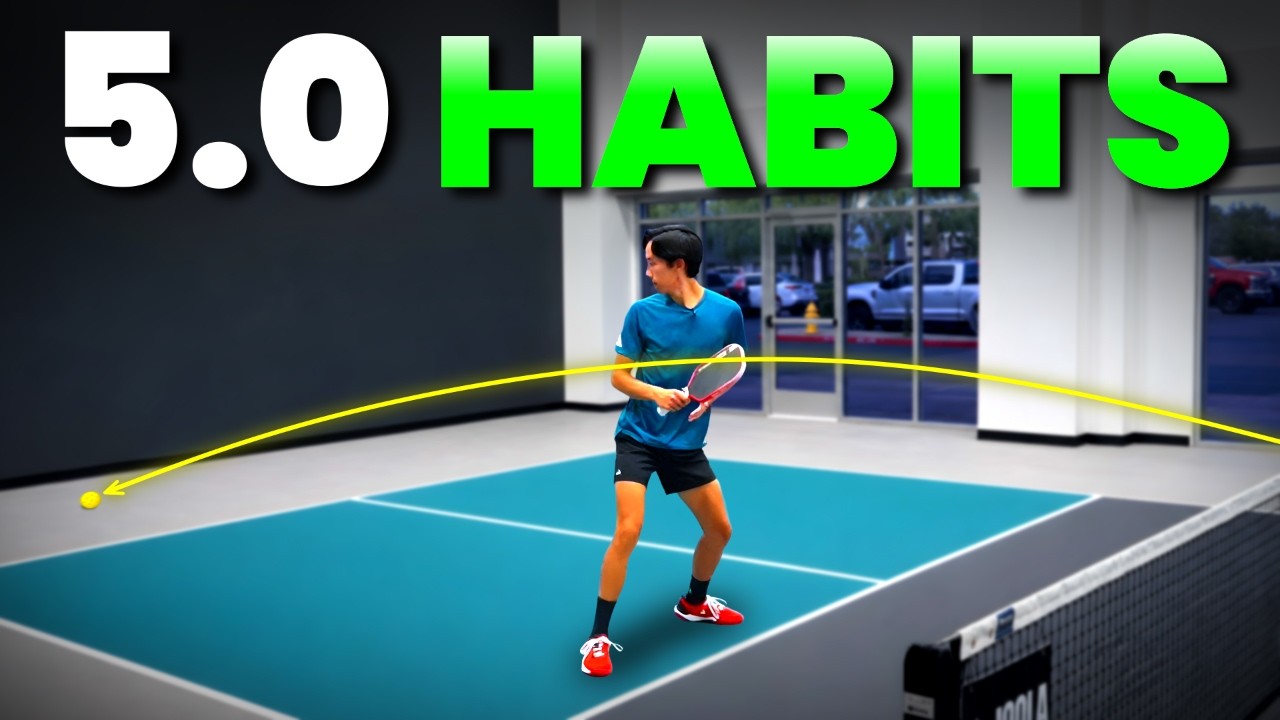
The Bigger Picture: Earning Your Attacks
Attacks should be earned, not forced.
The entire point of the dinking game is to create a situation where your opponent is off balance or gives you a high ball in a spot where you are well positioned.
That is when you go. Trying to manufacture offense from a defensive position just gifts your opponent easy points.
Mari puts it plainly: stop doing those and focus on getting back into the rally, getting well balanced, and earning an opportunity to speed up.
That sequence matters. Rally first.
Balance second. Attack only when the opportunity shows up.
This connects to a larger understanding of pickleball IQ, which is knowing that patience creates more real opportunities than aggression does.
Players who wait for the right moment will outperform panic attackers at every level.
The growth data backs up why this matters.
Industry participation tracking from the Sports & Fitness Industry Association shows pickleball's player base expanding fast enough that the skill gap at the 3.5 and 4.0 level is tightening every season.
If you want the full framework for when to speed up and when to hold back, this breakdown on when, how, and why to hit a speed-up off the bounce is worth reading alongside this one.
Pair it with the 4-step system to win more pickleball games for a complete decision map.
And if your recovery shots keep coming back too high, the fixes in why you keep popping the ball up address exactly that problem.
Cleaning up your reset is also one of the 5 shots you must master to break 5.0, alongside the 6 essential pickleball shots every advancing player needs.
The bottom line is this: when you are out of position, your opponent has not beaten you yet. The panic attack is what actually loses you the point.
Fix your pickleball shot selection and you will immediately stop giving away free points.
Frequently Asked Questions
What is a panic attack in pickleball?
A panic attack in pickleball is when you attempt to speed up or attack the ball from a position where you are off balance, out of position, or your opponent is well set up. It almost always results in an error or a ball your opponent can easily counter. The term describes the instinct to go offensive out of pressure rather than strategy.
What should I do instead of panic attacking when pulled wide?
Reset the ball short and low back to the middle of the court. This removes your opponent's angles and gives you time to recover your position. Your only priority in that moment is a ball that is short enough to force another dink and low enough that it cannot be attacked.
Why does hitting to the middle of the court help after a wide dink?
A ball returned to the middle collapses the angles your opponent can use against you. A wide ball leaves massive open court for them to attack into, while a centered ball limits their options significantly. It also gives you the most direct path back to your own position at the kitchen line.
Is a panic lob the same as a panic attack?
Yes. A desperation lob hit from an off-balance, out-of-position spot is considered a panic attack because it is an offensive attempt made under pressure without the conditions needed to succeed. Most panic lobs sail long or sit up high enough for the opponent to smash.
Reset instead.
How do I know when I am actually ready to speed up?
You need all three conditions in place: you are well balanced, you are well positioned near the center of the kitchen line, and your opponent is at least slightly off balance or moving. If any one of those three is missing, hold the attack and keep dinking until a real opportunity shows up.

Love Pickleball? Join 100k+ readers for free weekly tips, news & gear deals.
Subscribe to The Dink