
Why Your Pickleball Reset Keeps Failing (And the 3 Fixes That Work)
Your pickleball reset is failing because the decision of when and where to hit it is being made too late. Here are three fixes that make the transition zone much less painful.
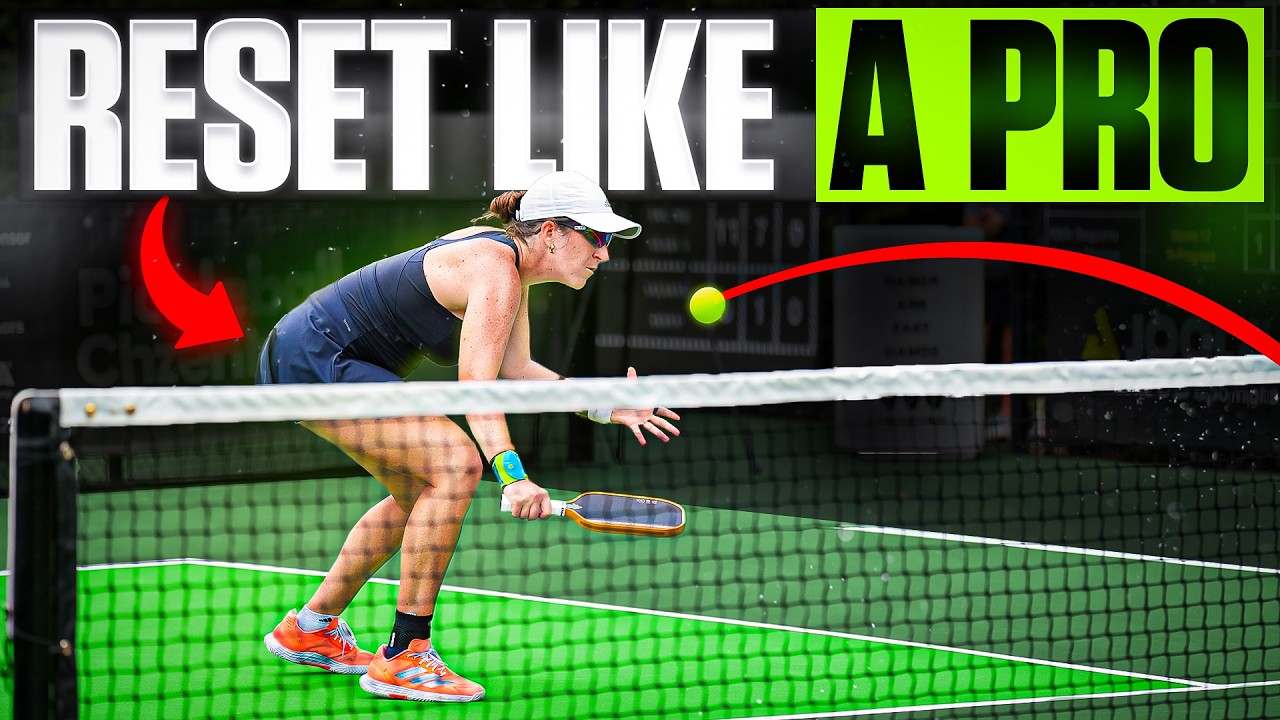
The pickleball reset is one of those shots that sounds simple until you're standing in the transition zone watching the ball come at your feet.
Most players make the same mistakes: they decide too late, aim at nothing specific, and use the wrong paddle angle for where the ball actually is.
All three of those problems are fixable.
This breakdown comes from Mari Humberg on YouTube, where she walks through the full reset decision-making process with live demonstrations.
Here is what actually matters.
Love pickleball? Then you'll love our free newsletter. We send the latest news, tips, and highlights for free each week.
The Transition Zone Is Where Points Are Lost Before They Start
The transition zone is the most uncomfortable part of the court. That is not an opinion.
It is the place where most recreational players give up free points without realizing it.
The problem is rarely the reset itself. It is everything that happens before the paddle makes contact.
If you are figuring out your reset plan after the ball arrives, you are already behind.
There are three layers to fixing this: when to take the ball, where to aim it, and how to angle your paddle.
Nail all three and the transition zone becomes manageable. Miss any one of them and you are popping balls up or dumping them in the net.
Should You Take the Reset Out of the Air or Off the Bounce?
This is the first and most important decision you need to make on every single ball in the transition zone.
The answer needs to come when the ball is leaving your opponent's paddle, not when it reaches you.
That sounds obvious. It is not how most players actually play.
A common pattern is players standing in ready position and reacting only after the ball arrives. That split-second delay causes rushed, uncontrolled contact.
The whole point of watching the ball off your opponent's paddle is that you have more time than you think.
Here is how to train this decision faster:
- Watch your opponent's paddle face and body position before they hit
- Call "air" or "bounce" out loud as they make contact, not after the ball crosses the net
- Practice this verbal cue drill with a partner hitting varied balls to the transition zone
- Commit to the decision early, even if you are occasionally wrong
The goal is to stop treating the reset as reactive and start treating it as a planned response.
Mastering the transition zone starts with this mental shift more than any physical technique.
Where Are You Actually Aiming Your Resets?
When asked where they aim their resets, most players say one of two things: "into the kitchen" or "at the weaker player."
Those answers are not wrong, but they are not precise enough to be useful.
You have three real target options on every reset:
- Down the line (directly in front of the near opponent)
- Middle (between both opponents)
- Cross court (to the far opponent)
The rule that makes this easier: reset in the same direction the ball is coming from.
If a ball is coming at you from cross court, reset it cross court. If it is coming down the line, send it back down the line.
Switching directions on a reset is harder than maintaining direction.
Cross court to down the line is especially awkward because your paddle path has to fight the ball's natural angle.
The middle reset is the most forgiving option regardless of where the ball is coming from.
It requires the least directional adjustment and puts the ball in a low-value spot for both opponents.
This is the same principle behind why so many resets fail.
Players are not picking a target before the ball gets to them, which means their paddle ends up pointing somewhere random.
 The Dink Media Team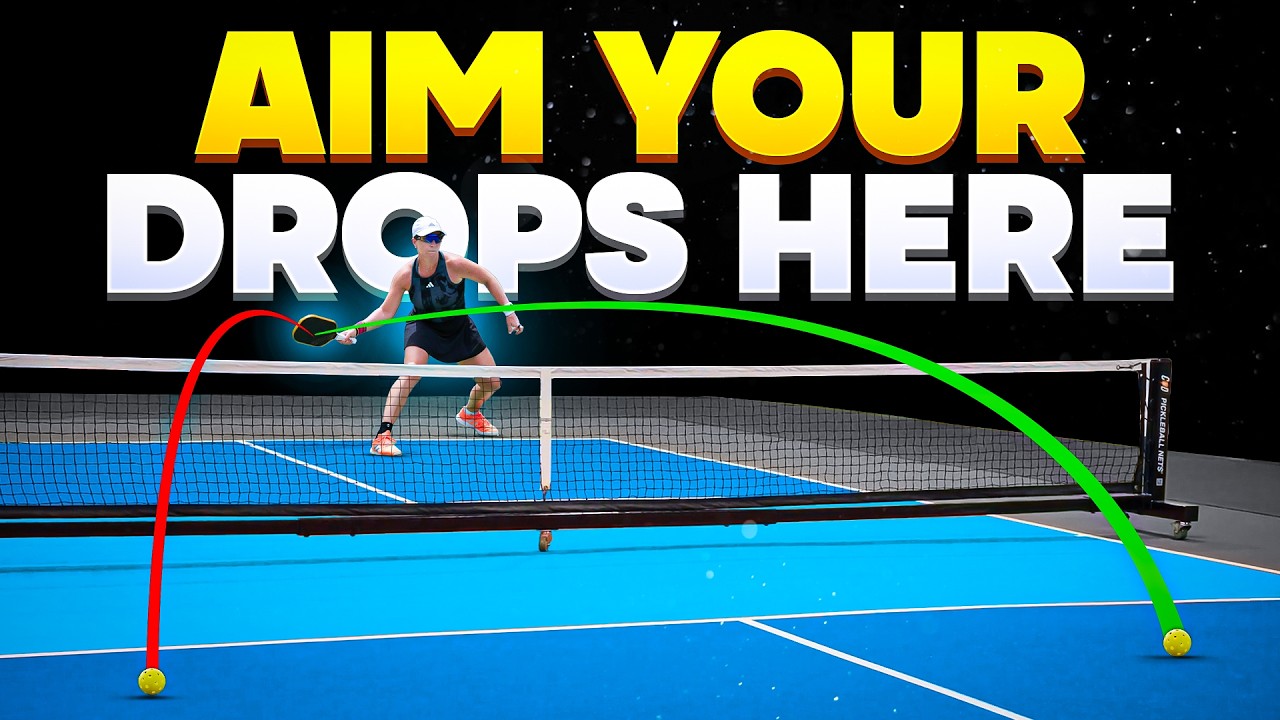
Does Paddle Tip Angle Actually Matter That Much?
Yes. This is one of the most overlooked mechanics in the reset and it is very easy to fix once you know what to look for.
The rule is simple:
- When the ball is beside your body, your paddle tip angles slightly sideways (more diagonal, not straight up)
- When the ball is in front of your feet, your paddle tip points fully down, no matter which side you are hitting from
Most players try to keep the paddle vertical on every ball. That works fine for balls at chest height, but it fails on low balls at your feet.
A paddle tip that stays up when the ball is low forces you to swing under the ball incorrectly and usually produces a pop-up.
Pointing the tip down on balls in front of your feet is the correction that lands low resets into the kitchen instead of floating them up to be attacked.
Drilling this in the transition zone with specific attention to paddle tip position will accelerate your improvement faster than almost anything else.
 The Dink Media Team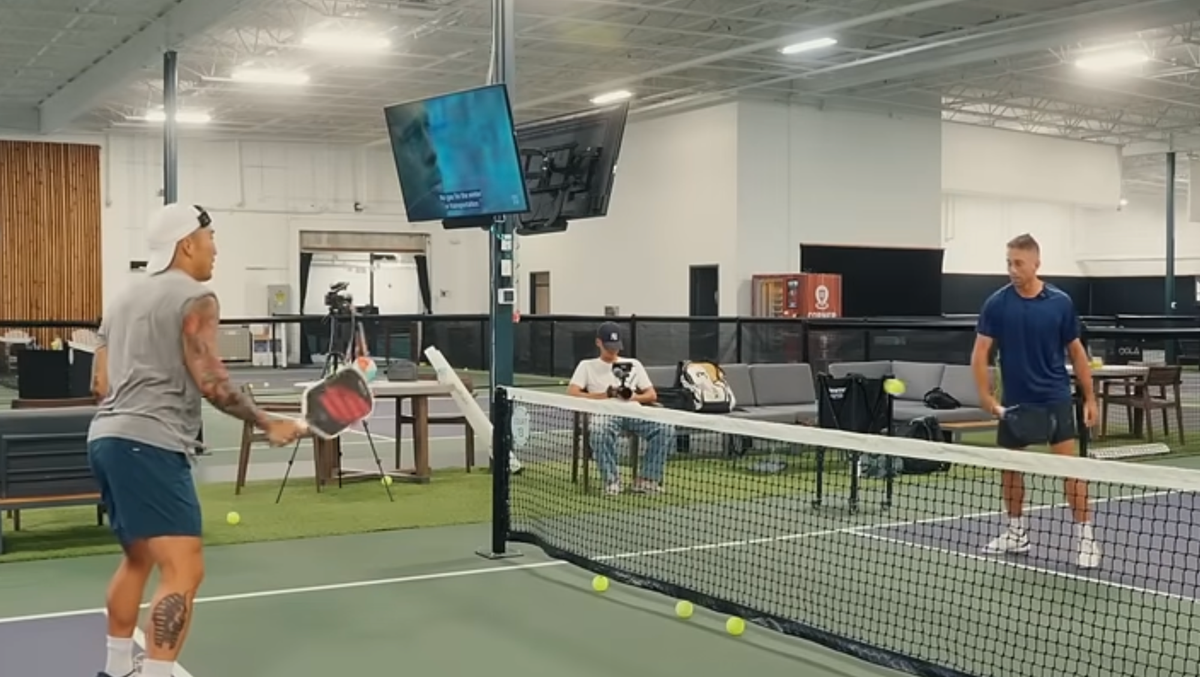
Forehand or Backhand: Which Should You Use?
The honest answer is both, with one hard boundary. Do not cross your body's midline with a forehand reset.
Your arm has to come across your torso awkwardly, your paddle face opens up, and you lose control of the angle.
The backhand crosses the midline much more naturally and with better control.
For backhand resets, one hand or two both work.
The grip style does not override the paddle tip rule. Ball beside your body, tip slightly sideways. Ball at your feet, tip down.
Some players strongly prefer the backhand reset and that's completely fine.
Tennis habits can interfere here, especially the instinct to run around a backhand when it isn't necessary.
 The Dink Media Team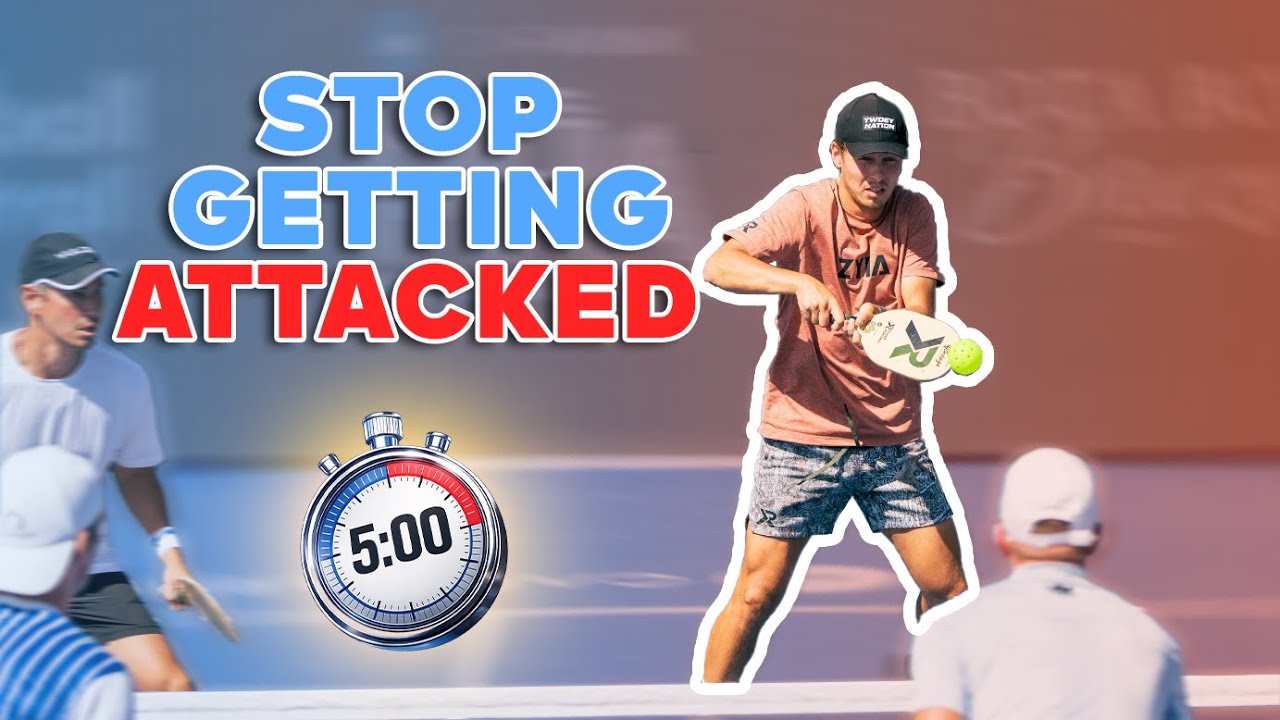
What Does a Good Reset Actually Feel Like?
A well-executed reset is a push or a block, not a swing. This is the part that trips up players who come from tennis or other racket sports.
Short, compact strokes. Controlled contact. No big backswing and no follow-through that sends the ball sailing long.
Think of it as a punch, not a drive. The goal is to absorb pace and redirect the ball softly into the kitchen, not to generate pace of your own.
Taking pace off the ball is the core skill here, and the reset is one of the clearest examples of when that applies.
A reset that is executed well does two things: it lands low enough that your opponent cannot attack it, and it gives you time to move forward toward the kitchen line.
Both of those outcomes depend on keeping the swing short and the contact controlled.
 The Dink Media Team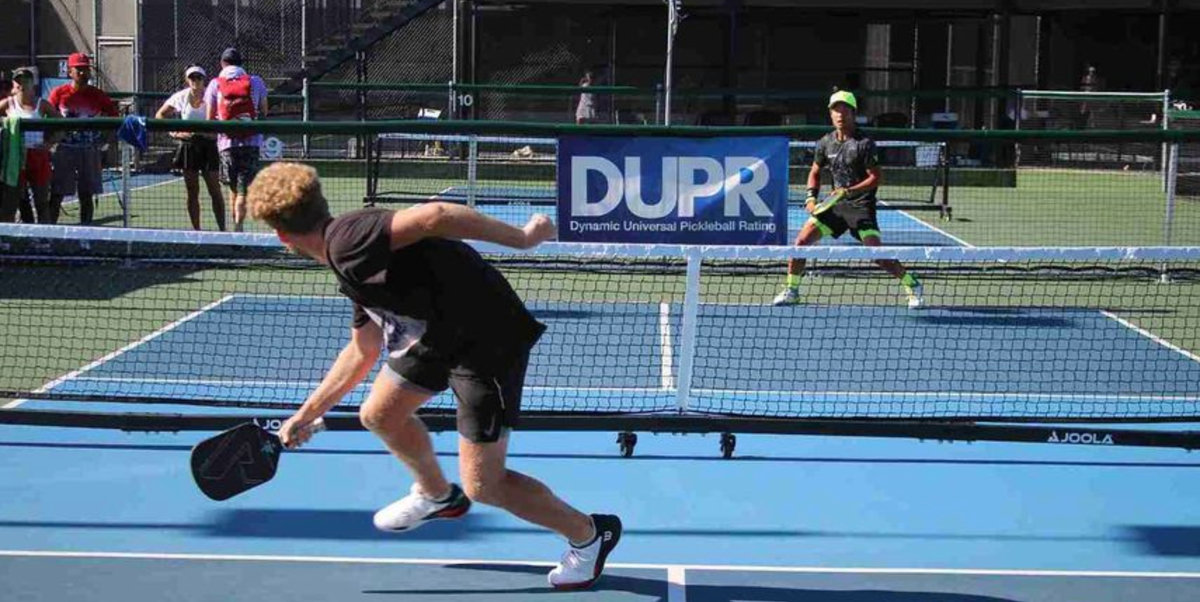
How to Put It All Together in a Real Point
Here is how the three layers connect in a live rally situation:
- Watch your opponent's paddle and commit to air or bounce before the ball crosses the net
- Pick a target zone based on the ball's incoming direction, defaulting to middle when unsure
- Set your paddle tip angle based on where the ball is landing relative to your feet, then use a short punch stroke to redirect it into the kitchen
This sequence has to become automatic. Right now it probably feels like too many things to think about at once. That is normal and it goes away with repetition.
The best way to build it is the verbal cue drill described earlier.
Saying "air" or "bounce" out loud forces you to commit early and your body will eventually start moving into the right position without the mental checklist.
Targeted drilling is what turns concepts like this into reflex.
One more thing worth repeating: after a good reset, move forward. The reset is not your final destination in the point.
It is a neutralizing shot that buys you time to reach the kitchen line.
The kitchen line is where you want to be, and a well-placed reset is the bridge that gets you there.
The transition zone is hard. Resets are the hardest part of it. But both become much more manageable when you stop reacting and start deciding.
Better decision making in pickleball is a skill you can train, and this is one of the highest-value places to start.
Take one piece at a time. Start with the timing decision. Add the target selection. Then clean up the paddle tip angle.
Fixing your reset under pressure is completely doable with the right framework and the right reps.
If you want to see how this applies in real rally situations, a ladder drill for the transition zone is one of the most practical ways to build both footwork and reset mechanics at the same time.
Put in the reps. The transition zone does get easier.
Your reset will not fix itself, but it will improve faster than you expect once you know exactly what to work on.
Frequently Asked Questions
When should you take a pickleball reset out of the air versus off the bounce?
The decision should be made when the ball leaves your opponent's paddle, not when it reaches you. Taking the ball out of the air is often better when it gives you more time to advance toward the kitchen. Off the bounce is the right call when the ball is dropping fast to your feet and you need more control.
Where should you aim a pickleball reset?
The easiest option is to reset in the same direction the ball is coming from, either down the line or cross court. Middle is always a reliable choice because it requires less directional adjustment and puts the ball in a low-value spot for your opponents.
What is the paddle tip rule for pickleball resets?
When the ball is beside your body, your paddle tip angles slightly sideways. When the ball is in front of your feet, your paddle tip should point fully down. This applies to both forehand and backhand resets regardless of whether you use one or two hands.
Should you use a forehand or backhand for a pickleball reset?
Use whichever side the ball comes to, but never cross your body's centerline with a forehand reset. The backhand crosses the midline much more naturally and with better paddle control. Forcing a forehand past the middle of your body leads to inconsistent contact and weak angles.
What does a proper pickleball reset swing look like?
A reset is a short punch or block, not a full swing. You want minimal backswing, controlled contact, and no big follow-through. The goal is to absorb the incoming pace and redirect the ball softly into the kitchen, not to add your own power to the shot.

Love Pickleball? Join 100k+ readers for free weekly tips, news & gear deals.
Subscribe to The Dink