
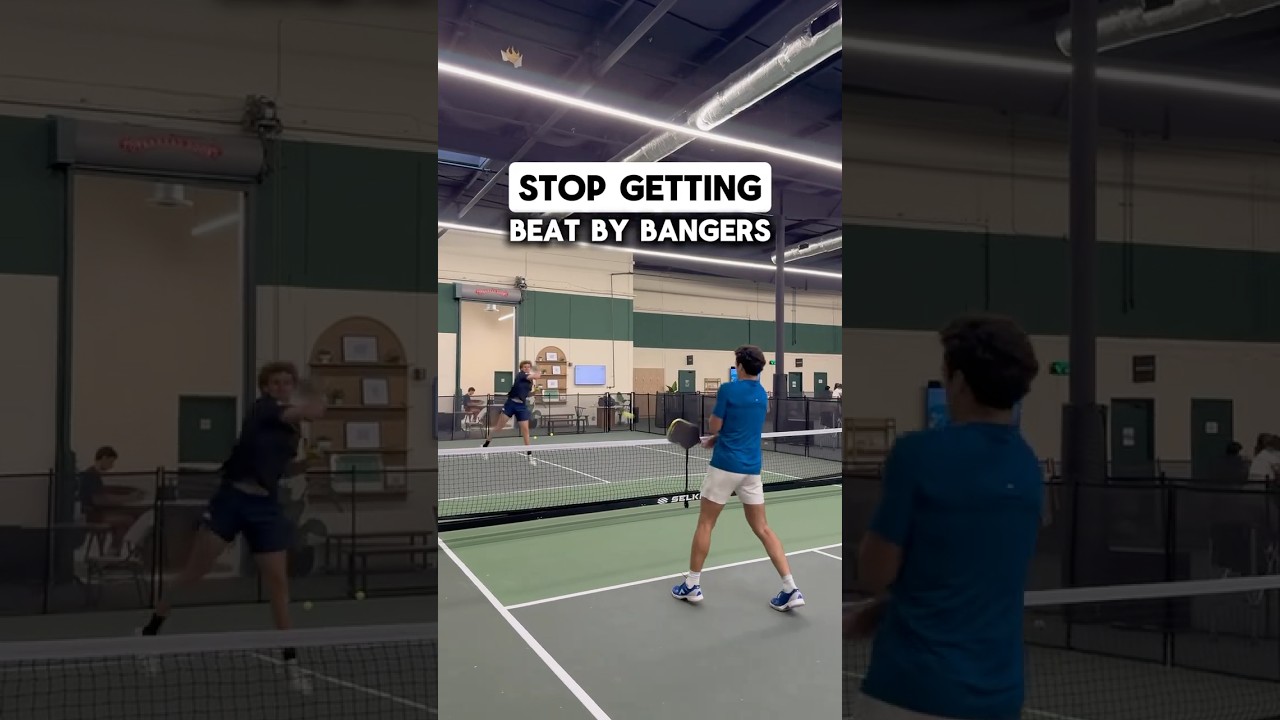
Most players try to out-drive a banger and lose every time. Here is how to beat bangers in pickleball by taking pace off and making them come to you.
If you want to beat bangers in pickleball, the worst thing you can do is try to out-bang them.
That sounds obvious, but watch what actually happens on the court.
The banger drives a third shot, you panic, you swing hard back, and now you are in a pace war you cannot win.
This breakdown covers exactly what to do instead, including how to chip, block, and neutralize drives so that you control the point rather than react to it.
This tip comes from Richard Pickleball on YouTube, and it targets one of the most common ways recreational players give away free points every single game.
Love pickleball? Then you'll love our free newsletter. We send the latest news, tips, and highlights for free each week.
Why Hitting Hard Back Is the Wrong Answer
When someone drives the ball at you hard, your instinct is to match that energy. It feels like you need to respond with power or you will get run over.
But that instinct is working against you. Bangers thrive on pace exchange. The harder you swing, the more ammunition you are handing them.
Good tennis players especially are dangerous in this situation. They have been trained for years to handle pace, redirect it, and use your own swing against you.
Tennis habits can quietly destroy your pickleball game, and swinging through drives is one of the most common ones.
The fix is not a harder swing. The fix is a softer one.
What Does "Taking Pace Off" Actually Mean?
Taking pace off means absorbing the ball's energy rather than adding to it.
Instead of meeting a hard drive with a full swing, you contact the ball with a soft, controlled face and redirect it into the kitchen.
Think of it like catching an egg. You do not stick your hand out rigid and let the egg smash into it. You move your hand back slightly to absorb the impact.
Your paddle face does the same thing. You are not swinging through the ball.
You are guiding it, softening it, and dropping it somewhere your opponent cannot attack.
This concept is closely related to the reset, which is one of the most underused tools at the recreational level.
If your resets keep failing, here is a breakdown of why that happens and how to correct it.
The Two Shots That Stop Bangers Cold
You have two primary tools when a banger is driving at you repeatedly. Both of them work by removing pace and forcing your opponent into a difficult position.
1. The Chip Short Into the Kitchen
Chipping the ball just beyond the kitchen line is one of the most effective responses to a hard drive.
You are not trying to go deep or hit a winner. You are trying to land the ball as short as possible so your opponent has to come forward.
Here is why this works so well against bangers. Most players who love to drive are uncomfortable at the kitchen. They want to stay back, wind up, and rip the ball.
When you chip it short, you pull them forward and force them into a soft game they have not practiced.
To execute this shot correctly:
- Keep your grip pressure light so you do not add pace on contact
- Use a short, compact backswing with no follow-through past the contact point
- Angle the paddle face slightly open to create a soft, higher-arcing ball that falls short
- Aim for just past the kitchen line, not deep into the court
The goal is not a perfect drop. The goal is a ball that lands short enough that your opponent has to move forward and hit up on it.
2. The Block Down at Their Feet
Blocking the ball down at your opponent's feet is your second weapon.
This is especially effective when a banger is camping in the midcourt and driving repeatedly from no-man's land.
The block is not a defensive panic shot. Done correctly, it is an offensive move disguised as defense. You are not just keeping the ball in play.
You are forcing your opponent to dig a ball out from their ankles, which is one of the hardest shots in pickleball to hit with pace or precision.
To block down effectively:
- Position your paddle out in front of your body before the ball arrives
- Do not swing. Let the ball come to the paddle face and guide it downward
- Keep the paddle face slightly closed to angle the ball toward the ground in front of your opponent
- Aim for the space between your opponent's feet and the kitchen line
A banger standing in the midcourt who has to hit a drive from ankle height is going to pop that ball up or net it. That is the point.
 The Dink Media Team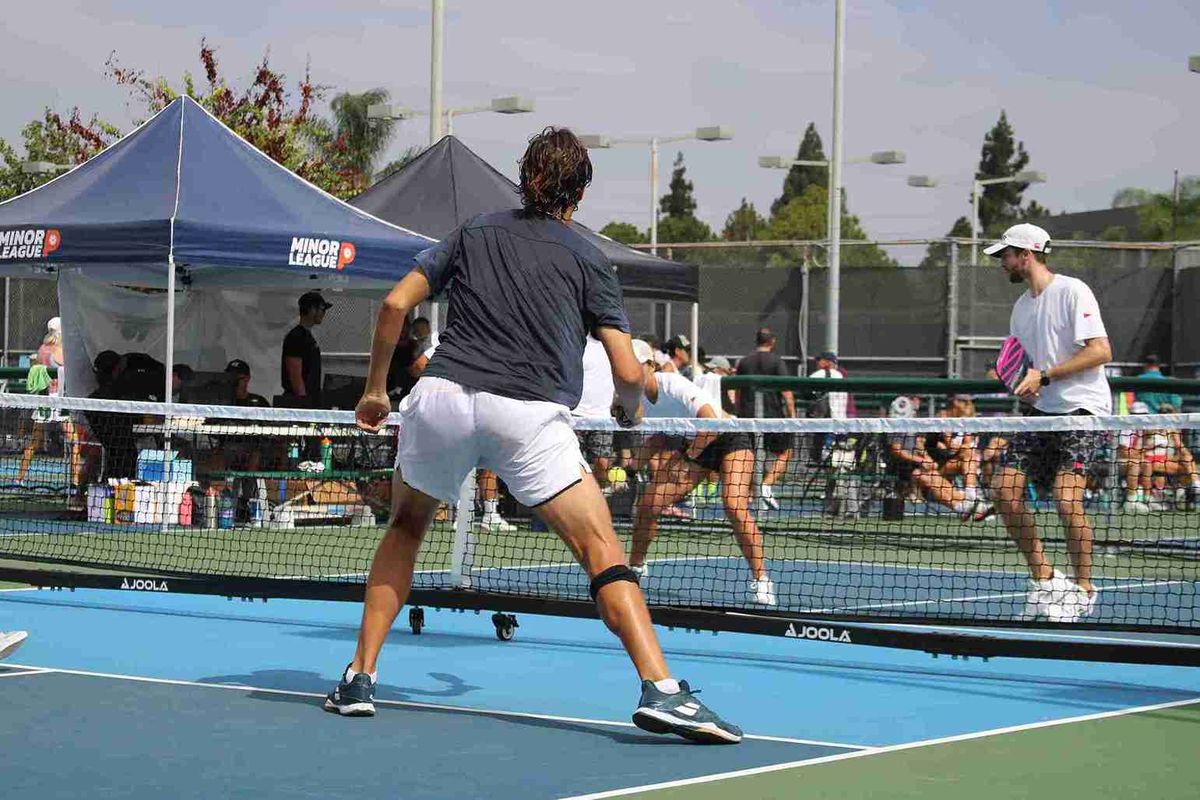
Why This Forces Bangers to Change Their Game
Here is the strategic logic behind both of these shots.
You are not just returning the ball, you are changing what your opponent is forced to do next.
If you chip or block successfully, your opponent has two bad options.
They can stay back and try to hit a drive from ankle height in the midcourt, which is extremely low percentage.
Or they have to come forward and try to drop the ball, a skill most bangers have not developed.
Either way, you win. You have taken their best weapon away by removing the pace they needed to use it.
This is exactly what pro players like Mari Humberg do when handling drives, and it is not complicated.
It is just a matter of understanding what the banger needs from you and refusing to give it to them.
 The Dink Media Team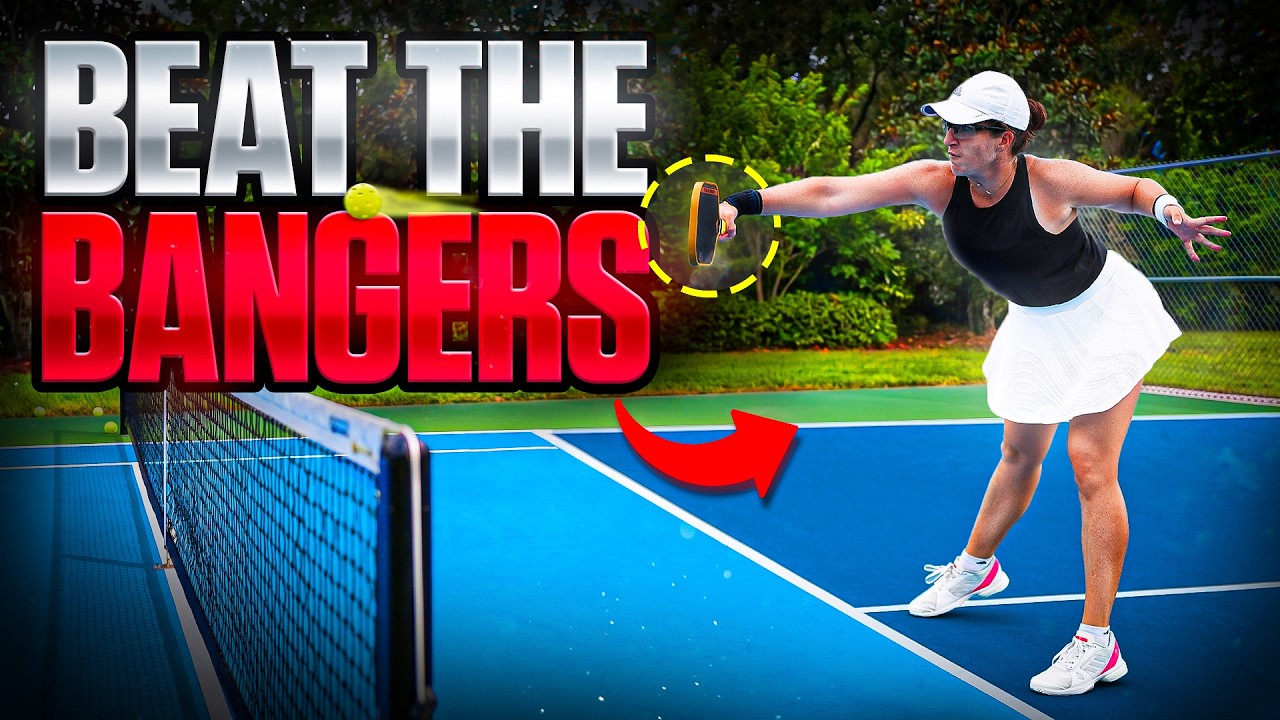
What Happens After You Neutralize the Drive?
Once you chip or block the ball effectively, your job is not done. You need to move forward immediately.
This is the part most players miss. They make a great chip or block, then stand there and watch. Your opponent is now scrambling to deal with a difficult ball.
That is your cue to get to the kitchen line and take control of the net.
Getting to the kitchen changes everything about the point. You are no longer reacting from deep in the court.
You are the one who controls the angles, the pace, and the pressure. Mastering the transition zone is what turns a good chip or block into a point-winning sequence.
If you stay back after a neutralizing shot, you give the banger time to reset, wind up again, and repeat the cycle.
Move forward after every good chip or block. That is how you close out the point.
 The Dink Media Team
Is This Just About One Shot, or a Whole Strategy?
Think of it as a complete system. Every piece connects.
The banger drives. You chip short or block down. They are forced to come forward or hit a low-percentage shot.
You move to the net. Now you are in control of a soft game at the kitchen where your patience and touch give you the advantage.
This is the core of pickleball strategy that pros use every single game. They do not let opponents dictate the style of play.
They force opponents into uncomfortable positions and then capitalize.
You do not need to be a 5.0 player to do this. You need to stop swinging hard at hard balls and start thinking one shot ahead.
 The Dink Media Team
How to Practice This So It Works in a Real Game
The chip and the block both require soft hands, and soft hands come from repetition.
You cannot just read about this and expect it to show up when someone is driving at you at full pace.
Start by practicing the block at the kitchen line. Have a partner feed you hard drives and focus only on absorbing the pace with a still paddle.
Do not swing. Just redirect. These volley fixes at the kitchen line will help you build the mechanics faster.
Then work the chip from the transition zone.
Have a partner drive from the baseline while you stand at mid-court and practice chipping the ball just over the net into the kitchen.
Focus on keeping it short, not on speed or spin.
Once both shots feel comfortable in isolation, combine them in drilling.
Simulate a banger scenario: partner drives, you chip or block, you move to the net.
Run that sequence until it becomes your automatic response.
Stopping a banger takes more than one trick, and drilling these two shots is what makes the strategy stick.
One thing worth noting: grip pressure matters more than most players realize during these shots.
Tight grips kill soft shots. If your chip or block keeps flying long, loosen up your grip before you change anything else.
 The Dink Media Team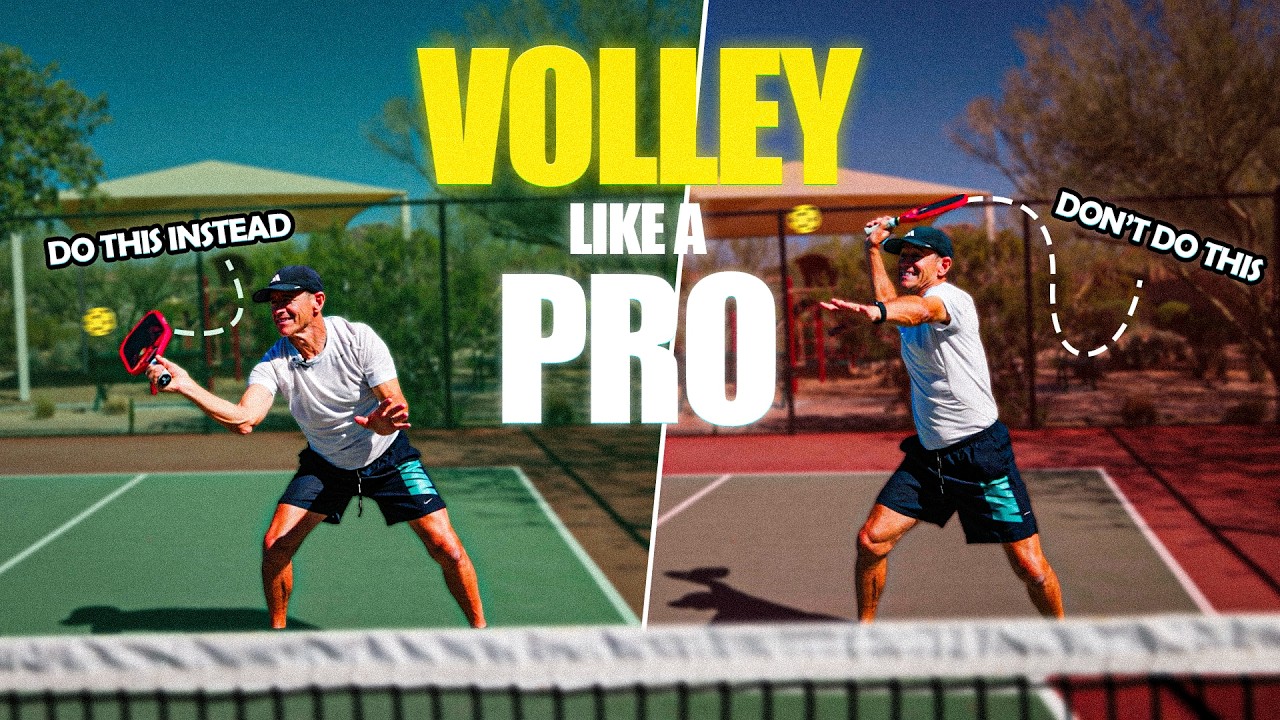
The Mindset Shift That Makes This Work
The hardest part of beating bangers is not technical. It is mental.
When someone is driving at you repeatedly, it feels like you need to fight back.
Matching their energy feels assertive. Going soft feels passive or even scared.
Flip that thinking. Chipping and blocking is not passive. It is strategic.
You are refusing to play the banger's game and forcing them to play yours instead. That is what pressure actually looks like in pickleball.
The banger wants pace. They trained for pace. They are comfortable with pace. The moment you take it away, they are uncomfortable.
And uncomfortable players make mistakes. Understanding how to counter a drive rather than just block it is the next step once you have the basics dialed in.
Stop giving bangers what they want. Chip it short. Block it down.
Get to the net. That is the whole strategy, and it works at every level of the game.
Frequently Asked Questions
Why does hitting hard back against a banger usually fail?
Bangers are built for pace exchange. When you match their drive with your own hard swing, you are playing into their strength and giving them a ball they know how to handle. Taking pace off removes the energy they need to keep attacking effectively.
What is the difference between a chip and a block in pickleball?
A chip is a short, soft shot typically aimed just past the kitchen line to pull your opponent forward. A block is a still, redirecting contact that angles the ball down at your opponent's feet in the midcourt. Both remove pace but are used in slightly different situations depending on your position and your opponent's location.
Where should I aim when chipping against a banger?
Aim just past the kitchen line, as short as possible without going into the net. The goal is to make your opponent move forward and hit a ball that is rising low, which is extremely difficult to drive with power or accuracy.
When should I chip versus block against a drive?
If the banger is staying deep and driving from the baseline or midcourt, a chip short into the kitchen pulls them forward and disrupts their rhythm. If they are already close and the ball is coming fast, a block angled down at their feet is more reliable because it requires less movement and paddle work.
How do I stop popping the ball up when I try to block a hard drive?
Popping up usually comes from either a tight grip or a swing motion creeping into your block. Keep your grip loose, meet the ball out in front of your body, and do not add any forward swing. Deadening pace and spin at your feet takes focused repetition, but fixing your grip pressure first will fix most pop-ups immediately.

Love Pickleball? Join 100k+ readers for free weekly tips, news & gear deals.
Subscribe to The Dink