
4 Pickleball Strategies That Separate Good Players From Great Ones
Most players focus on individual shots, but advanced pickleball strategy is about sequencing, positioning, and ownership. These four concepts pros use every game will change how you think on the court.
Most recreational players think pickleball strategy means hitting the right shot. It doesn't.
It means knowing what shot is coming two balls before it arrives and already being in position to handle it.
That gap between good and great is rarely about raw skill. It's about the concepts nobody puts on a sign at the recreational court, the stuff that takes years to absorb just from playing.
These four strategies come from PlayPickleball.com on YouTube, a channel dedicated to breaking down what actually moves the needle for competitive club players.
Every concept here is something the pros do by default but most 3.5 to 4.5 players have never heard explained clearly.
Love pickleball? Then you'll love our free newsletter. We send the latest news, tips, and highlights for free each week.
Strategy 1: The Drive-Drop Combo (And Where to Aim That Fifth Ball)
You've probably heard of the drive drop combo. What nobody tells you is where to aim the fifth ball, and that's where most players leak points.
The concept is straightforward. You hit a 60 to 70 percent drive, not a full-power rip.
The goal is to get the ball to dip over the net and generate a weaker response, setting you up for an easier drop on the fifth shot as you move forward.
To execute the drive correctly, keep your upper body loose and relaxed.
The power and the spin come from your lower body and a smooth whipping motion through contact. Tension in your arms kills the dip.
Now here's the part that matters. When you get that fifth ball and it comes back toward the middle of the court, do not drop it crosscourt.
That's the single biggest mistake players make after they've done the hard work of setting up the combo.
When you drop crosscourt on the fifth, you're putting the ball in front of your partner.
That opens the door for a flick or attack that stretches you wide and pulls you off position. Ben Johns almost never does this.
Watch him: when the fifth ball lands in the middle, he either drops it straight to the middle of the net (where the net is lowest and margin is highest) or he scoops it back to his side of the court to keep the ball in front of himself.
Keeping the ball in front of you as you move forward lets you apply pressure and stay balanced.
Giving it to your partner pulls them into a situation they weren't ready for.
If you want more detail on the drop Ben Johns uses to get to the net every time, that breakdown goes deep on the mechanics behind this exact concept.
Strategy 2: Deciding Your Return Target Before the Point Starts
The best returners aren't just hitting it deep. They're coordinating with their partner before the point even begins.
The idea is simple. You and your partner decide before the game or before a specific return who you're targeting.
That one decision changes everything about your positioning on the next ball.
Here's why it works. If you both agree you're returning to the right side player, your partner at the kitchen line can start hugging the sideline.
You can automatically shift middle as you come in.
Both of you are already balanced and positioned for your opponent's highest percentage third shot response, before the ball is even struck.
 Alex E. Weaver
You're also taking away the easiest spots on the court.
That makes their third shot harder and your fourth shot easier, without either of you having to react in real time.
One step further: your partner at the kitchen line can give you a signal before the serve.
They point to a location or a player, you confirm or shake it off, and now you're both locked in.
It's the same read system that good doubles teams in tennis have used forever, and it applies directly here.
There's another benefit that doesn't get mentioned enough. Pre-deciding the return target eliminates confusion on the middle ball.
If you tell your partner you're going down the line and you run your line, they already know they own the middle.
If you return down their line, they cover their line and you take middle. No hesitation, no collision.
This is one of the clearest examples of doubles strategy fixes that make you a real threat. Communication before the point removes the guesswork during it.
Here's what a solid return communication system looks like in practice:
- Agree on a default target before the match starts (right side, left side, or middle)
- Use simple hand signals at the kitchen line for in-game adjustments
- Returner confirms or rejects the signal before the serve is hit
- Both players adjust their starting position based on the agreed return direction
- Middle ball ownership is automatically assigned based on return direction
How Does the Triangle Theory Work at the Kitchen Line?
The triangle theory is the most underused anticipation tool in recreational pickleball.
Once you understand it, you'll stop being caught flat-footed after your own speed up.
The concept: when you speed the ball up at an angle, the counter almost always comes back in a triangle pattern.
The geometry of the shot and your opponent's positioning make the return angle highly predictable. Good players don't just hit the speed up.
They're already sliding to intercept the next ball before it's struck.
Two scenarios define this:
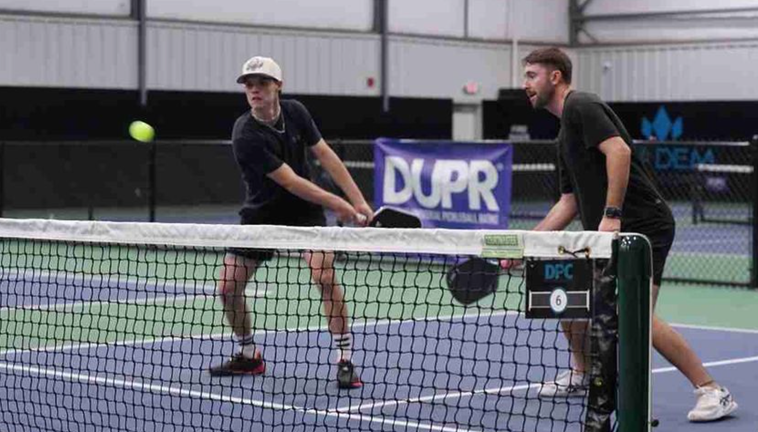
- Speed up toward the middle: Slide and anticipate the counter coming back at a triangle angle. Your partner should be crashing middle in case the opponent tries to redirect there.
- Speed up down the line: Expect the return to come back down the line. If you give a line, you get a line. Slide toward that side and be ready to keep the pressure going.
The principle behind this is that your opponent rarely has the time or position to change the angle dramatically on a hard counter.
They're reacting, not setting up. That predictability is your advantage.
This connects directly to when and how to hit a speed up off the bounce, because shot selection and anticipation are part of the same decision.
If you want to practice this pattern, this wall drill for the triangle pattern will build the muscle memory fast.
The broader skill here is thinking one shot ahead. Not just about what you're hitting, but about where you need to be when the counter comes back.
That's what separates players who create combos from players who just react.
Understanding what 6.0 players see that 4.0 players miss comes down to exactly this kind of anticipatory thinking built into every rally.
 The Dink Media Team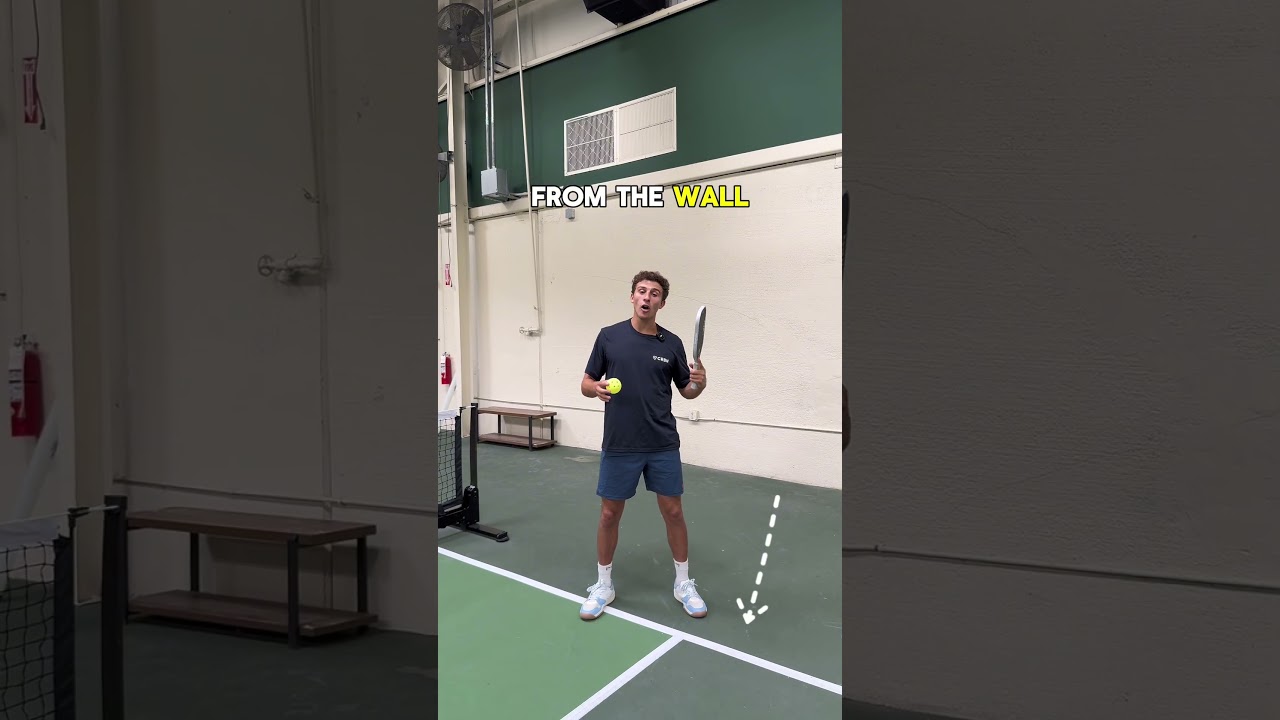
Strategy 4: Why You Should Clean Up Your Own Mess
This last strategy sounds simple. It's also the one most players completely ignore.
The rule is this: if you created the chaos, you're responsible for the next ball. Not your partner. You.
When you pull the trigger on a speed up, you already know what's coming. Your partner doesn't. They're reacting to something they didn't initiate.
So if you speed the ball up and then stand there waiting to see what happens, you're leaving your partner to deal with a situation you caused.
The better approach: the moment you speed up, mentally commit to owning the counter.
Move toward where the response is most likely coming and get your paddle there. You were the one who knew the ball was coming.
Use that head start.
 The Dink Media Team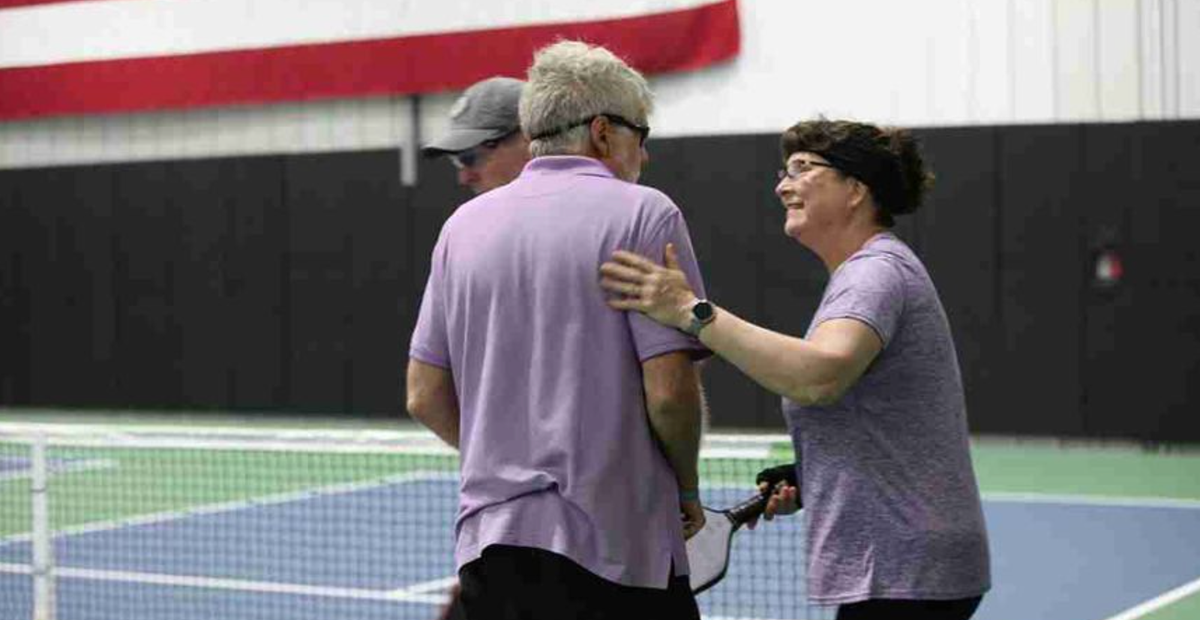
The second version of this happens with bad dinks. Say you float a dead dink into the middle of the court. That's your error.
Don't stand there hoping your partner bails you out. You already know a speed up is likely coming.
Slide toward the middle and get your paddle up before the opponent even strikes it.
This habit does two things. It covers your mistakes before they become lost points.
It also forces you to take ownership of your shot quality, because you're the one who has to deal with the fallout.
Players who do this consistently win more points than their skill level should allow. It's not about being flashy.
It's about being accountable on the court in real time.
This kind of ownership thinking is closely related to why one pickleball mistake turns into three when players don't take responsibility for cleaning things up quickly.
Here's a quick checklist for applying this strategy during a match:
- After every speed up, immediately ask: where is the most likely counter?
- Start moving toward that zone before the counter is struck
- After every bad dink, scan for where a speed up is most likely coming from
- Never wait for your partner to make a decision on a ball you caused
- Reset your position after cleaning up so you don't leave a new gap open
The players who apply this consistently rarely look scrambled, even when things go sideways. That's not luck. That's anticipation built on ownership.
Combine this with the drive drop combo, the pre-planned return, and the triangle anticipation, and you have a complete system for playing smarter pickleball at any level.
These aren't tricks. They're the baseline habits of anyone playing at a high level.
For more on how point construction works at higher levels, Anna Bright's breakdown of 5 pickleball IQ decisions pros make every point covers the decision layer behind each rally.
And if you want to see how these strategies stack up against the complete picture of what top players do, 7 things every 4.5 pickleball player does right is worth reading back to back with this one.
Start with one. Pick the strategy that matches the biggest gap in your current game.
The drive drop combo placement is usually the fastest win for players in the 3.5 to 4.0 range.
The clean up your mess habit tends to have the biggest immediate impact at 4.0 and above.
Either way, the point is the same: stop thinking about single shots and start thinking about sequences, positioning, and ownership.
That's the actual difference between good and great.
Frequently Asked Questions
What is the drive drop combo in pickleball?
The drive drop combo is a two-shot transition strategy where you hit a controlled 60 to 70 percent drive to generate a weak response, then follow it with a drop on the fifth ball as you move to the kitchen line. The key is keeping that drive loose and spinny so it dips over the net rather than sitting up. Most high-level players use this as their primary way to get to the net consistently.
Why shouldn't you drop the fifth ball crosscourt in pickleball?
Dropping crosscourt on the fifth puts the ball in front of your partner instead of in front of you, which lets the opponent attack toward your side of the court and pull you out of position. Keeping the ball in front of you as you move forward lets you stay balanced and apply pressure. Ben Johns almost always drops the fifth to the middle or back to his own side for exactly this reason.
What is the triangle theory in pickleball?
The triangle theory states that when you speed the ball up at an angle, the counter will almost always come back in a triangle motion following the geometry of your shot. Good players use this to slide and pre-position before the counter is even struck. It turns a reactive moment into a proactive one because you're anticipating based on shot geometry, not just waiting to see what happens.
How do you use hand signals for return strategy in pickleball doubles?
The player at the kitchen line gives a signal pointing to a target (a specific player or zone on the court) while the returner is still behind the baseline. The returner either confirms or rejects the call, and both players shift their starting position accordingly before the serve is hit. This removes real-time confusion about middle ball ownership and pre-sets your positioning for the most likely third shot.
What does "clean up your mess" mean in pickleball strategy?
It means that if you created a dangerous situation, like a bad dink or an aggressive speed up, you are responsible for covering the most likely response, not your partner. Your partner is reacting to something they didn't cause, while you already know what's coming. Moving toward the danger zone immediately after creating it turns a potential lost point into a won one far more often than waiting to see what happens.
Love Pickleball? Join 100k+ readers for free weekly tips, news & gear deals.
Subscribe to The Dink