
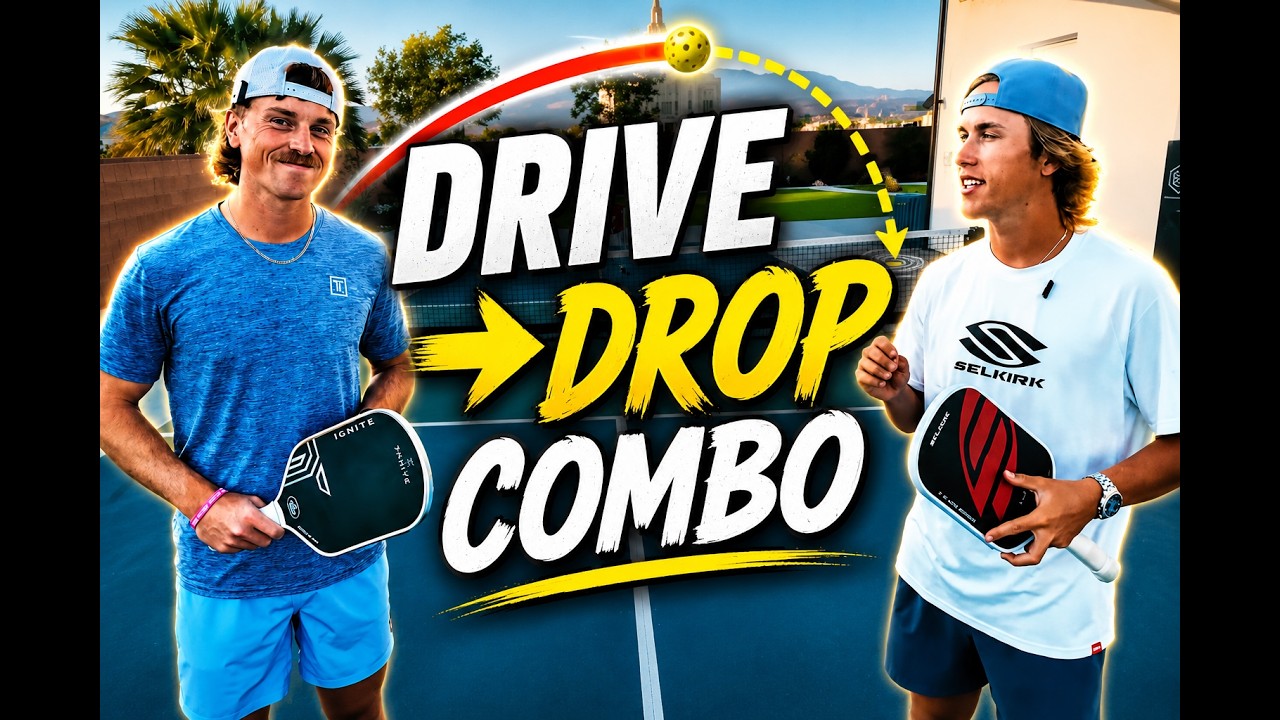
The drive-drop combo is the number one way to get to the kitchen line consistently in pickleball. Learn how to execute this high-percentage strategy that even world number one players rely on.
The drive-drop combo is the number one way to get to the kitchen line in pickleball, and it's not even close.
If you're serious about improving your game, this is the strategy you need to master.
Unlike the traditional third-shot drop that dominated pickleball for years, the drive-drop combo creates a higher-percentage play by forcing your opponent into a difficult position before you even hit your fifth shot.
Love pickleball? Then you'll love our free newsletter. We send the latest news, tips, and highlights for free each week.
Why the Game Has Shifted Away From Third-Shot Drops
Here's what changed: paddle technology evolved, players got better, and the sport adapted.
Back in the day, everyone relied on hitting a soft third-shot drop to neutralize the point and work their way to the net.
But that approach became increasingly difficult as opponents developed better hands and more aggressive positioning.
This shift is exactly why understanding modern pickleball shot sequencing matters more than ever.
If you've been wondering why professional pickleball players abandoned the slice shot in 2025, the same evolutionary pressure is reshaping the third-shot drop.
Nicholas Wade, a leading pickleball instructor, explains the shift clearly.
"Sometimes on that third shot, it's really hard to hit the drop," he says.
"So what we want to do is hit that 50% drive that's going to allow us to have that easier drop shot on the fifth."
The logic is simple: instead of forcing a difficult drop on your third shot, you hit a controlled drive that puts pressure on your opponent and sets up an easier, more consistent drop on your fifth shot.
This is why Ben Johns and Gabe Tardio, widely considered the best team in professional pickleball, use this drive-drop combo strategy consistently in their matches.
What Exactly Is the Drive-Drop Combo?
The drive-drop combo works like this: you serve, your opponent returns, and on your third shot, instead of dropping the ball softly, you hit a controlled drive.
This drive forces your opponent to pop the ball up, giving you an easier fifth-shot drop that allows you to move into the kitchen line with confidence.
The key word here is "controlled." You're not trying to hit a winner or crash the net.
You're hitting about 50% power, keeping the ball low, and forcing a mistake.
Once your opponent pops that ball up, you step in and hit a soft drop into the kitchen.
 Alex E. Weaver
Now you're at the net, and you've done it with a much higher success rate than trying to hit a perfect drop on your third shot.
Think of it as a two-step process rather than a one-shot gamble.
The first step (the drive) sets up the second step (the drop), and together they create a sequence that's far more reliable than either shot alone.
If you're working on building a complete point-construction system, pair this with a simple 4-step system to win more pickleball games in 2026.
The Drive-Drop Combo: Stance and Mechanics Matter
The biggest mistake most players make when hitting a drive is using an open stance.
When you're facing the court with your shoulders square to the net, you lose power and consistency.
Your shots drift left, and you can't generate the rotation your body needs.
Instead, use a closed stance.
Position your feet so they're pointing toward the sideline, not the net.
This allows your upper body to rotate, and your lower body to drive forward through the shot.
As Wade explains, "You're combining your lower body and upper body and that's becoming one whole unit."
Here are the mechanical keys to a solid drive in the drive-drop combo:
Your backswing should be compact, not loopy.
Create a small "C" shape with your paddle and arm, then focus on pushing your body weight forward through the court.
As you initiate the swing, your front leg should come forward, transferring energy from your lower body into the shot.
Keep your wrist loose and fluid.
Wade uses a helpful analogy: "I like to imagine my body as a whip. The end of the whip is going to be this paddle, and I need that end of the whip to be nice and loose."
This wrist lag at the end of your swing creates extra power and spin without requiring you to muscle the ball.
The difference between a closed stance and an open stance is dramatic. In closed stance, you're getting more power, more spin, and more consistency.
In open stance, you're relying too much on your arm and losing the kinetic chain that your body provides.
Mastering this mechanical foundation is one of the 5 pickleball shots you must master before 2026.
 The Dink Media Team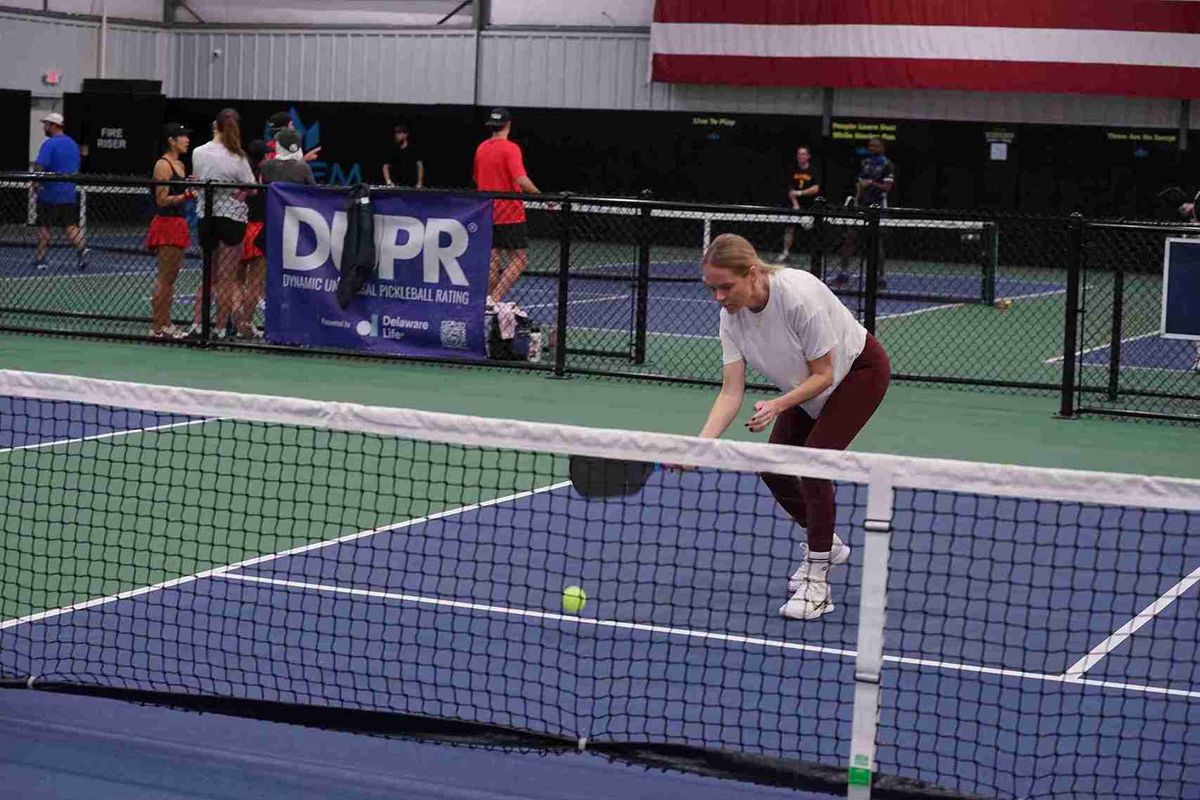
Forehand or Backhand: Which Drive Should You Hit?
This is a practical question that comes up constantly on the court. The answer is straightforward: hit your forehand whenever possible.
The forehand is more natural, more powerful, and more consistent for most players.
More importantly, if you hit a forehand drive, you can transition directly into a forehand drop on your fifth shot.
This keeps your stroke simple and your mind clear.
When you switch from forehand to backhand (or vice versa), you're adding complexity to your game.
And complexity is the enemy of consistency.
As Wade points out, "Anytime that we can make the game as simple as possible, that's when you're able to get into your flow state the easiest."
Of course, if the ball is on your backhand side and you have time to move around it, take that extra step and hit your forehand.
The court is small enough that one or two steps can set you up for a much better shot.
These simple decisions are what separate intermediate players from those who've mastered essential pickleball shots for 2026.
 The Dink Media Team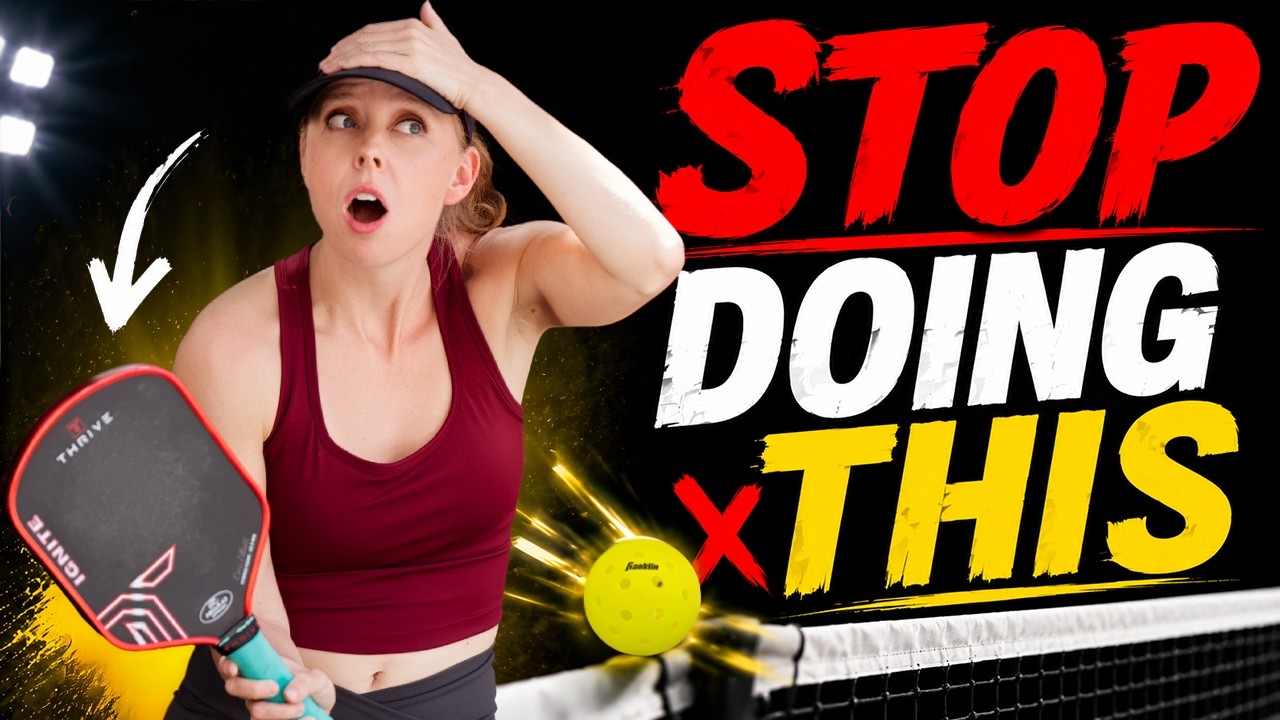
The Fifth-Shot Drop: Preparation Is Everything
Once your opponent pops up that ball, you're moving into the kitchen to hit your drop. This is where preparation becomes critical.
If you can set yourself up properly, the actual execution becomes much easier.
Start with your legs. Keep them bent in what Wade calls a "soft yoga knee bend."
Your feet should be shoulder-width apart, and you should be getting down in front of the ball. This low, athletic position gives you control and stability.
Next, keep your paddle out in front of your body.
This is non-negotiable.
When your paddle is out front, you can see what you're doing and control the shot.
If your paddle drifts to the side, your shoulder tightens up, and you lose touch on the ball.
For the actual swing, use your shoulder, not your wrist. Your shoulder is connected to the largest, most stable muscles in your body.
A big backswing or excessive wrist action will make the shot inconsistent.
Instead, focus on a smooth shoulder rotation and a follow-through toward your target (the kitchen).
Building this fifth-shot consistency is central to the drive-drop combo, and it's best ingrained through structured repetition.
The 12 drills you need to play your best pickleball in 2026 include progressions designed specifically for this kind of shot-sequence training.
 The Dink Media Team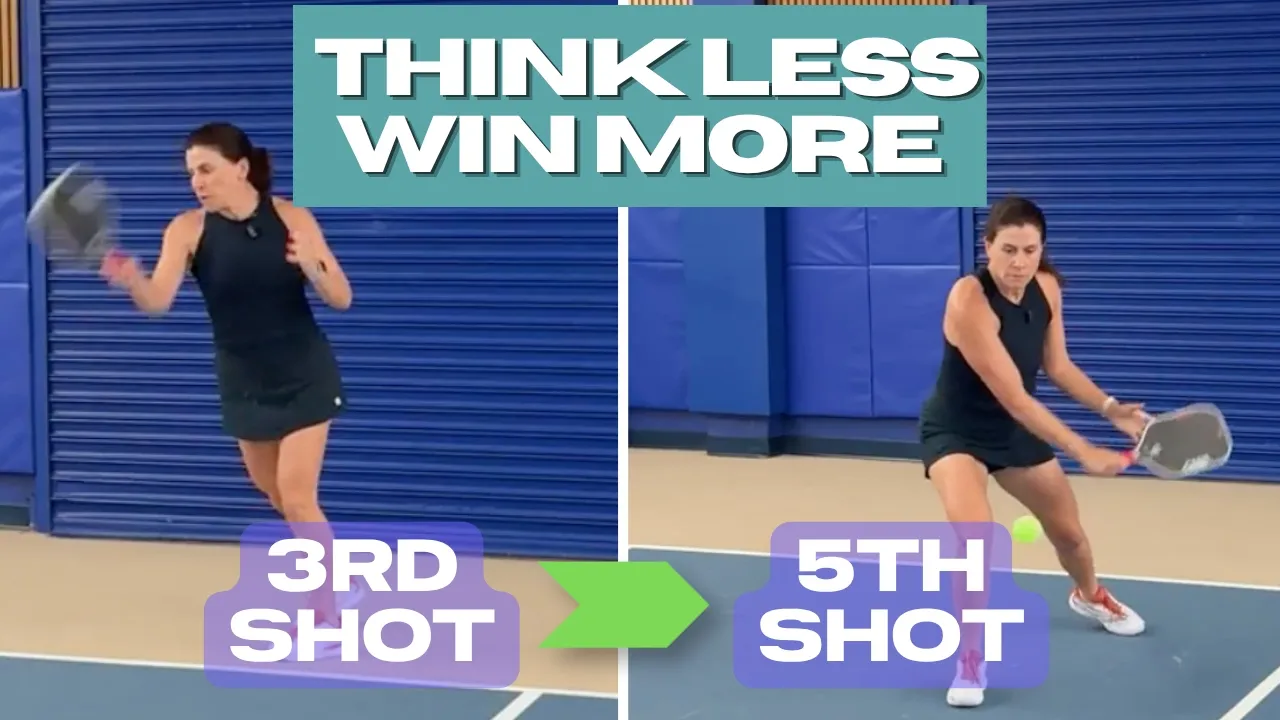
Where Should You Aim Your Drop Shots?
This is where high-percentage pickleball thinking comes in. Aim for the middle of the court, not the sidelines or corners.
Why? Because the net is two inches lower in the middle than on the sides, giving you more margin for error.
More importantly, when you hit the middle, your opponent has fewer angles to work with.
If you pop up the ball in the middle, they still have to hit a good shot to put you away. If you pop it up near the sideline, they can angle it away for a winner.
Think of it this way: the middle of the court is a huge target. The sidelines are a tiny target.
You're going to hit the huge target almost every single time, which builds your confidence and gets you into a flow state.
You're going to miss the tiny target frequently, which kills your confidence and leads to mistakes.
Liam Duffin, a collegiate pickleball player and national champion, describes the high-percentage zone as "the middle of the right side all the way over to the middle of the left side."
This is your primary target. Everything outside that zone is bonus.
 The Dink Media Team
Timing Your Drive-Drop Combo: Apex vs. Bounce vs. Descent
When should you actually hit your drop shot? You have three options: off the bounce, at the apex (the highest point), or on the descent.
The best choice is the apex. Here's why: it's the most comfortable and natural sweet spot for your stroke.
You're also taking time away from your opponent by getting up to the ball and hitting it at its highest point.
This puts pressure on them and gives you more time to get to the net.
Avoid taking the ball on the rise.
As Wade explains, "It's just too much power and spin. As it's bouncing and rising, there's too much juice on it."
You want to let the ball fall off after it hits the apex, then put your own controlled power through it.
This kind of timing discipline is what the four key strategies to winning modern pickleball in 2026 all have in common.
 The Dink Media Team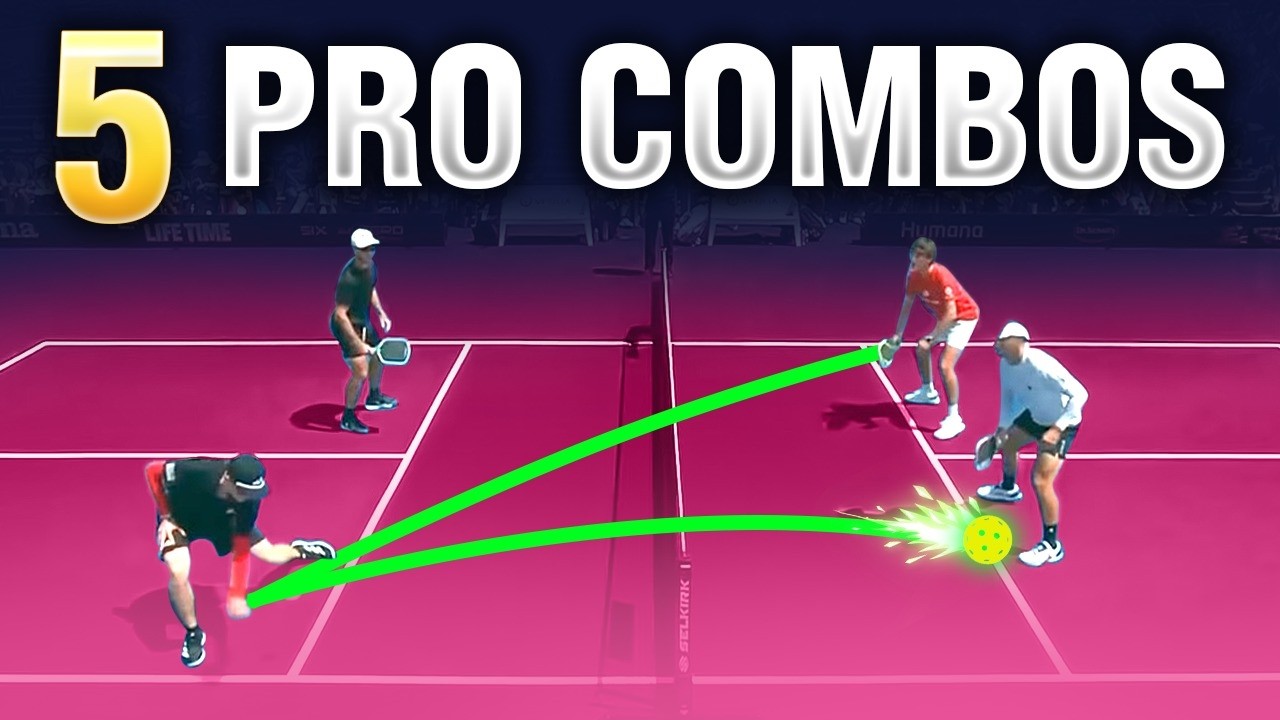
The Positioning Game: When to Drive vs. When to Drop
Here's a critical decision point: where should you be standing on the court when you decide to hit a drive versus a drop?
If your body is behind the baseline, you're driving. If you're inside the baseline (even just a foot or two), you're dropping.
This simple rule keeps your decision-making clear and your execution consistent.
The reason is practical. When you're standing behind the baseline, the kitchen line looks small and far away. You need an aggressive shot to get there.
When you step inside the baseline, the kitchen suddenly looks much bigger and more reachable. A soft drop makes sense.
 Eric Roddy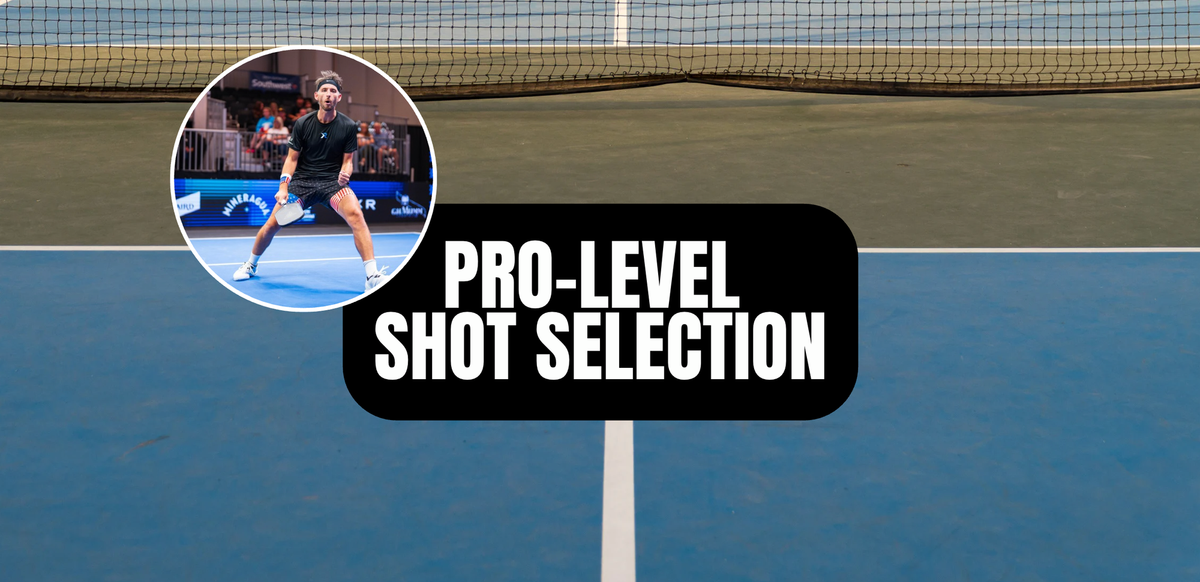
The Two-Ball Drill: Putting the Drive-Drop Combo Together
Now that you understand the mechanics, here's how to practice the drive-drop combo in a structured way.
Set up a two-ball drill where you hit a drive first, then a drop. For the drive, remember: 50% power, keep it low, and force a pop-up.
After you hit the drive, plant your feet behind the baseline and wait. See what your opponent gives you.
Most of the time, you'll get a nice juicy pop-up that you can step in and drop. But occasionally, they'll catch a good volley at the baseline.
That's why you need to be ready to hit a second drop from back there if necessary.
Don't rush forward after your drive. Wait, react, and execute.
The beauty of this approach is that even when things don't go perfectly, you're still in a good position.
You're not getting caught at the net with a ball at your feet. You're staying patient, staying low, and staying ready.
For more structured practice frameworks, check out who Ben Johns could play men's doubles with in 2025 for insight into how elite players think about court construction.
 The Dink Media Team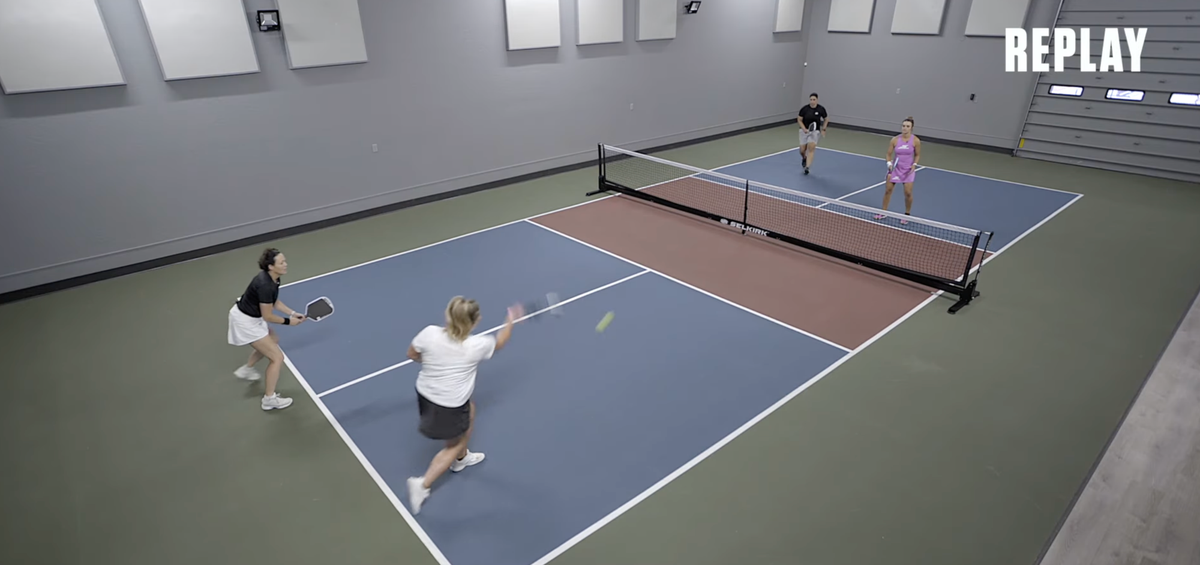
Why the World's Best Players Use the Drive-Drop Combo
Ben Johns, the world number one, uses the drive-drop combo consistently because it works.
It's not flashy. It's not exciting. But it's effective, and it's repeatable.
The reason is simple: it's a higher-percentage play than trying to hit a perfect drop on your third shot.
You're giving yourself two chances to get to the net instead of one. You're forcing your opponent into a difficult position.
And you're building a sequence that feels natural and flows from one shot to the next.
This is the kind of strategic thinking that separates good players from great ones. It's not about hitting harder or faster.
It's about making smarter decisions and setting yourself up for success.
Dive deeper into how the best in the game are evolving their shot selection with our 26 pro pickleball predictions for 2026.
Understanding how the rules shape shot strategy also matters.
The 2025 USA Pickleball rule changes are worth reviewing if you want to make sure your drive-drop sequencing stays within legal serve and return guidelines.
Frequently Asked Questions
What is the drive-drop combo in pickleball?
The drive-drop combo is a two-shot third-and-fifth-shot sequence where you hit a controlled 50% power drive on the third shot to force a pop-up, then follow it with a soft drop on the fifth shot to advance to the kitchen line. It's a higher-percentage alternative to the traditional third-shot drop because it gives you two opportunities to reach the net instead of one.
What's the difference between a drive-drop combo and a drive crash?
A drive crash is when you hit an aggressive drive and immediately rush the net, trying to put away a volley. The drive-drop combo is different: you hit a controlled drive at about 50% power, then wait behind the baseline to see what your opponent gives you. You're not trying to crash the net. You're trying to force a pop-up so you can hit an easy, high-percentage drop into the kitchen.
Can I use a backhand drive in the drive-drop combo?
Yes, but forehand is preferred. If you hit a forehand drive, you can transition smoothly into a forehand drop without switching grips or adding complexity to your stroke. If the ball is on your backhand side, take a step or two and hit your forehand whenever possible to keep your shot sequence clean and consistent.
How much power should I use on the drive portion of the drive-drop combo?
About 50% power. You're not trying to hit a winner. You're trying to keep the ball low and force your opponent to pop it up. A controlled, low drive is far more effective than a hard drive that sails long or gives your opponent an easy volley to put away at the baseline.
Is the drive-drop combo suitable for beginners?
Absolutely. In fact, beginners should learn this strategy early. It's more forgiving than trying to hit a perfect third-shot drop, and it teaches you to think strategically about point construction rather than just grinding on individual shots. The drive-drop combo builds patience, sequencing awareness, and court positioning habits that will compound as your game improves.

Love Pickleball? Join 100k+ readers for free weekly tips, news & gear deals.
Subscribe to The Dink