Why One Pickleball Mistake Turns Into Three (And How to Stop It)
One pickleball mistake can quickly snowball into a lost game if you're not careful. Here's the simple fix that stops errors from stacking up before they start.
Every pickleball mistake feels worse when it immediately leads to another one.
You miss a shot, rush back into position, serve too fast, and suddenly you've dropped three points in a row without understanding what happened.
The error didn't beat you. The pace between errors did.
This article breaks down exactly why mistakes compound, and what you can do between points to stop the bleeding before it starts.
Love pickleball? Then you'll love our free newsletter. We send the latest news, tips, and highlights for free each week.
The Real Reason Mistakes Compound
Most players think compounding errors are a technique problem. They're not. They're almost always about pace and mental recovery.
When a game runs hot and everyone is moving fast, your brain never gets a moment to reset.
You walk fast, grab the ball fast, serve within five seconds, and carry every unforced error straight into the next point with zero processing time.
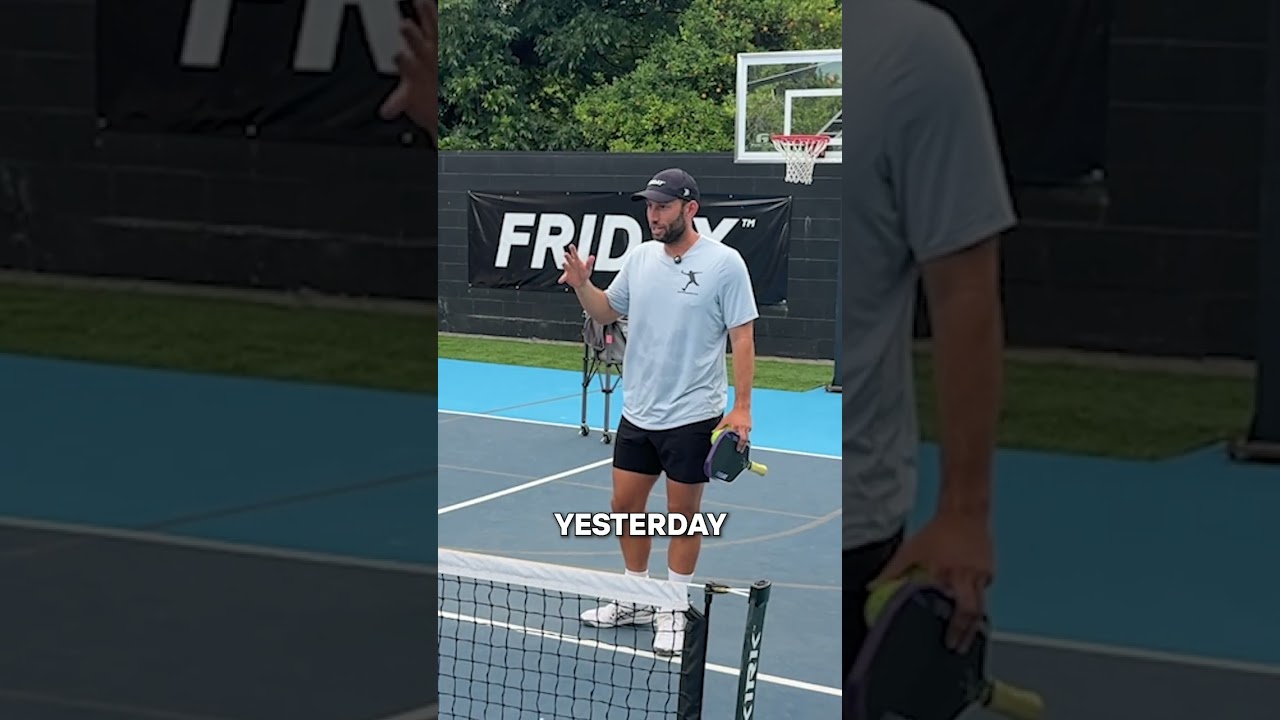
This insight comes from Kyle Koszuta of ThatPickleballGuy, who noticed it during a recent game where the compressed pace of play between points reliably turned one error into two, and two into three.
The fix isn't technical. It's behavioral.
You need to deliberately slow down between points, and you need that habit locked in before the pressure moments arrive.
Why Does Speed Between Points Hurt You?
When you rush, you skip the mental reset your brain actually needs.
Think about the load a single rally puts on you: the score, your positioning, your partner's positioning, shot selection, and your own anxiety about performing.
Move straight into the next point and all of that unresolved tension comes with you.
One pickleball mistake feels bigger than it is, your next decision gets clouded, and errors start to feel inevitable instead of correctable.
That's especially true for players working through in-game mistakes they don't even realize they're making.
The errors aren't random. They're the residue of pressure that never got released.
There's a reason experienced players look unshakeable after a bad point. It isn't that they don't care.
It's that they have a routine that stops one mistake from becoming a mindset.
Rushing reads as urgency, and urgency reads as threat.
Threat narrows your thinking, so you stop seeing creative solutions and default to the same shot that just failed you.
If you've ever hit one of those mental walls mid-match, you know the feeling. Think of your between-point routine as a circuit breaker.
It stops the current before it builds into something damaging.
What Slowing Down Actually Looks Like
Slowing down isn't vague advice. It has specific, physical components you can practice and repeat, the same way you'd rep out drills on a Tuesday night.
Here are the behaviors to change immediately:
- Walk slower to retrieve the ball. Not dramatically slow, just intentionally unhurried. Give your body a moment to downshift.
- Take more bounces before serving. Most recreational players bounce the ball once or not at all. Bounce it three to five times. It gives your brain a rhythm to lock onto.
- Breathe before you serve. One deliberate exhale resets your nervous system more than any pep talk will.
- Say the score out loud. This forces you to be present instead of replaying the last point in your head.
- Reset your grip pressure. Tension builds in your hand without you noticing. Consciously loosening your grip is a fast way to regain control through grip awareness.
None of these take more than ten seconds. All of them work.
 The Dink Media Team
How One Error Becomes Three
The compounding pattern is predictable. You make an error, feel the sting of it, rush to get the next point started, and serve before you're ready. The serve is weak.
Now you're defending. You make another error under pressure, feel worse, and the spiral tightens.
This is not bad luck. It is a predictable chain reaction that begins with the pace between points, not the errors themselves.
Players who struggle with this often have other habits holding them back too.
Check out this breakdown of 15 bad pickleball habits you don't know you have, because rushing between points is almost never the only issue.
The moment you can interrupt that chain at the first link, the whole pattern falls apart. One error stays one error.
 The Dink Media Team
Does Slowing Down Actually Make You Play Better?
Yes, and the reason goes beyond feeling calmer. Slowing down buys you time to make a better decision before the next point starts.
You remember where your opponent has been attacking. You recall which side of the court they keep targeting.
You choose what you want from your serve instead of just putting the ball in play to get it over with.
That's the difference between reactive pickleball and intentional pickleball.
Decision making is a learnable skill, and slowing down is what gives you room to use it, the same way the key strategies separating winners from everyone else depend on space to think.
 The Dink Media Team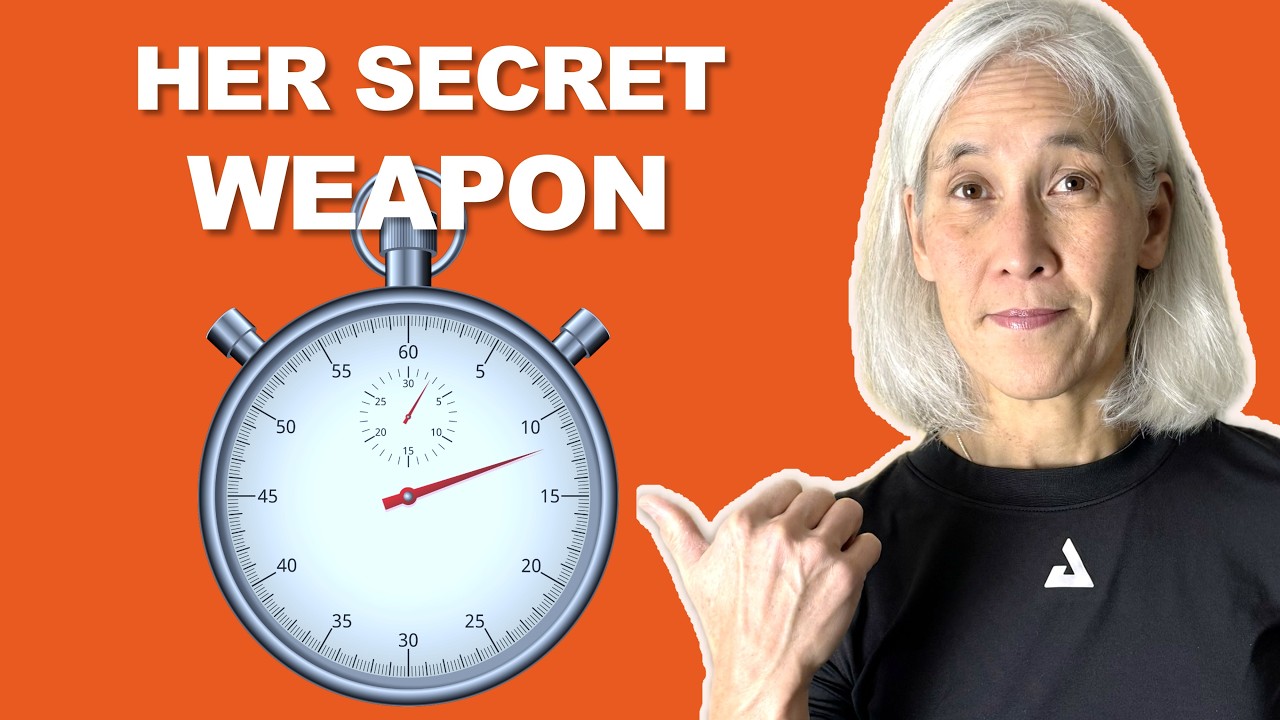
The Mental Side of Compounding Errors
There's a reason experienced players seem unshakeable after a bad point. It's not that they don't care.
It's that they have a routine that prevents one mistake from becoming a mindset.
When you rush, your brain interprets the hurry as urgency, which reads as threat. Threat responses narrow your thinking.
You stop seeing creative solutions. You default to the same shot that just failed you. You get tight.
If you've ever felt what players call a panic attack on the court, you know exactly what this feels like.
Stopping that panic response is a skill, and slowing down between points is the most accessible way to build it.
Think of your between-point routine as a circuit breaker. It stops the current before it can build into something damaging.
 The Dink Media Team
Building Your Between-Point Routine
A routine doesn't need to be complicated. It needs to be consistent. Here is a simple three-step structure to use between every point:
- Physical reset. Walk to retrieve the ball at a relaxed pace. Let your body slow down before your brain tries to.
- Mental reset. Say the score. Breathe. Let the last point go. You can analyze it after the game, not now.
- Intention setting. Decide one thing you want to do with the next serve or return. One thing. Not a full strategy, just a clear target.
That's it. Three steps. Thirty seconds or less. Done consistently, this routine will do more for your mental game and skill progression than almost any technical drill.
 Alex E. Weaver
What Happens When Your Partner is Also Rushing?
This is where it gets tricky in doubles. If your partner is rushing and they're the one serving, your ability to slow things down is limited. But it is not zero.
You can make eye contact before the serve. You can say the score out loud as a cue.
You can physically position yourself more slowly and let that signal to your partner that there's no rush.
The goal isn't to control your partner's behavior. It's to keep yourself out of the panic loop regardless of what's happening around you.
Staying composed in tight moments is a skill you build independently, not one that depends on everyone around you doing the same thing.
 The Dink Media Team
Why This Matters More for Newer Players
If you're newer to pickleball, the pace of the game can feel genuinely overwhelming.
Your brain is tracking too many things at once, and it defaults to speed as a coping mechanism. Faster feels like control.
It isn't.
Slowing down actually lets you play faster when it counts.
When you've mentally reset and set a clear intention, your reaction time improves because you're not second-guessing every movement.
If you're still figuring out where you fit on the skill spectrum, this guide on how to find your pickleball level for open play is a useful starting point.
Understanding your current level makes it easier to set realistic expectations and stop being so hard on yourself after errors.
 The Dink Media Team
Common Mistakes Players Make When Trying to Slow Down
Slowing down sounds easy. But most players do it wrong at first.
- They only slow down after big errors. The routine needs to happen after every point, good or bad. Selective slowing down doesn't build the habit.
- They slow their body but not their mind. Walking slower while mentally replaying the error doesn't help. The physical slowdown is a tool to trigger the mental reset, not a replacement for it.
- They feel guilty for taking time. You are allowed to take your time. The serve clock in recreational play is generous. Use it.
- They abandon the routine when they're winning. Momentum shifts in pickleball are fast. Keeping your routine locked in even when you're up prevents complacency errors.
The between-point routine is not a reaction to failure. It's a standard operating procedure for every single point, win or lose.
 The Dink Media Team
How This Connects to Your Long-Term Development
Players who build a between-point routine early develop a ceiling that's significantly higher than those who don't.
You can have great technique and poor composure and still lose to players with average technique and strong routines.
This is one of the reasons cutting unforced errors is so closely tied to between-point behavior. The errors themselves are often fixable.
The behavior that lets those errors stack up is what actually costs you games.
If you want to move up a level, composure between points is not optional.
It's one of the clearest separators between players who plateau and players who keep improving.
Pair this with better momentum management during points and you'll find that your game becomes far more consistent without changing a single stroke.
Frequently Asked Questions
Why do I keep making multiple errors in a row during pickleball games?
Compounding errors almost always come from rushing between points rather than a technical breakdown. When you don't give your brain time to reset, you carry the stress of each mistake directly into the next point. Slowing down your walk and adding a breath before serving breaks that cycle fast.
How long should I wait between points in pickleball?
You don't need to count seconds, but aim for long enough to say the score, take one breath, and decide on one intention for the next point. In recreational play, that's usually 15 to 20 seconds, which feels longer than it is but is well within any informal time expectation.
Does slowing down between points actually improve performance?
Yes. Slowing down between points gives your brain time to process what just happened, reset your stress response, and make a clearer decision for the next rally. Players who use a consistent between-point routine make fewer unforced errors and recover from mistakes faster.
What is a between-point routine in pickleball?
A between-point routine is a short, repeatable sequence of behaviors you perform after every point, regardless of the outcome. It typically includes walking at a relaxed pace to retrieve the ball, resetting your breath, and setting one clear intention for the next point. The purpose is to prevent errors from compounding by giving your mind a deliberate pause.
How do I stop a losing streak during a pickleball game?
The fastest way to interrupt a losing streak is to physically slow everything down between points. Walk slower, bounce the ball more before serving, and say the score out loud to anchor yourself in the present moment. This won't fix every technical problem, but it stops the mental spiral that turns one bad point into five.

Love Pickleball? Join 100k+ readers for free weekly tips, news & gear deals.
Subscribe to The Dink