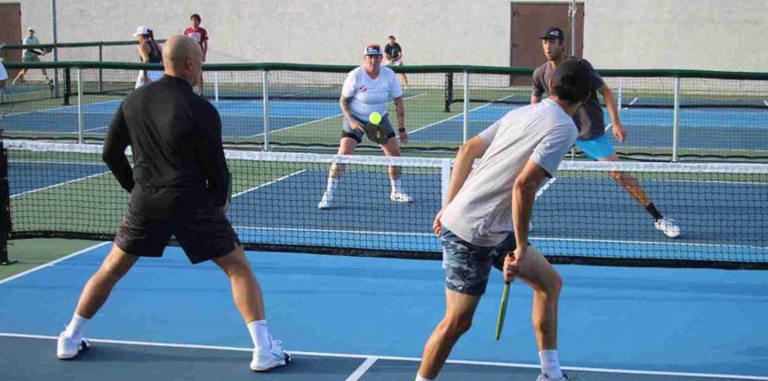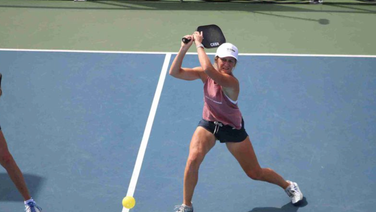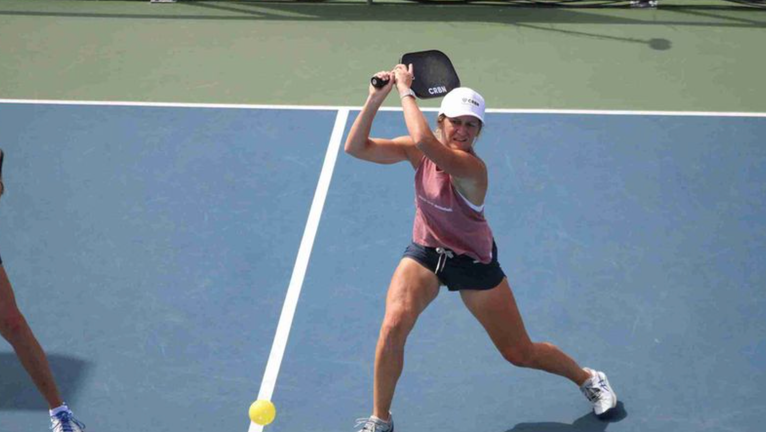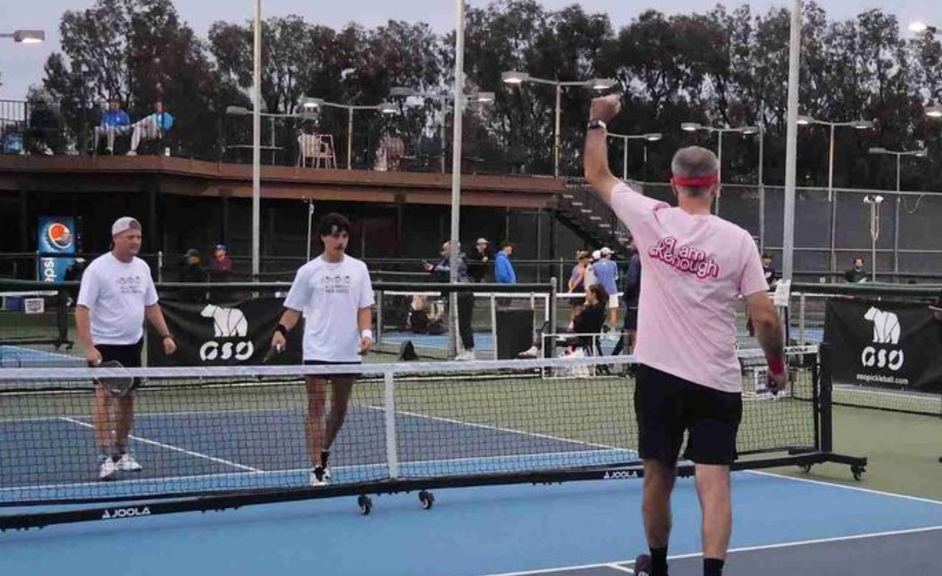
A focused pickleball workout routine is the fastest way to close the gap between where your game is and where you want it to be. These 5 agility drills target the exact movement patterns that win points.
A sharp pickleball workout routine is the difference between a player who gets to the ball and a player who gets there first.
Everyone can hit a decent third shot drop from a static position. The real separators are the players who arrive balanced, composed, and ready .
Their footwork already did the work before the paddle even moved.
That's what these five drills target. Not your cardiovascular base. Not your grip strength.
Specifically, the agility patterns that pickleball demands: lateral explosiveness, split-step timing, and rapid direction changes inside a compact court.
Love pickleball? Then you'll love our free newsletter. We send the latest news, tips, and highlights for free each week.
Why Your Pickleball Workout Routine Needs an Agility Focus
The most underrated skill in pickleball is getting there.
Technique matters enormously, but technique at full sprint, off-balance, is completely different from technique standing still.
Agility is your ability to start, stop, and change direction quickly without losing control.
Pickleball is essentially an agility test wrapped in a sport.
Here's a stat worth sitting with: the average recreational pickleball rally lasts between 3 and 8 seconds, according to data published by USA Pickleball's coaching resources.
In those seconds, you might cover 5 to 12 feet of court multiple times. The athletes winning those exchanges aren't doing so because they hit harder.
They win because they move faster and recover sooner.
 The Dink Media Team
What agility means in a pickleball context: It's not sprinting speed. The court is too small for that.
Pickleball agility is reactive quickness: your nervous system's ability to read a ball, commit to a direction, and load properly before contact.
It's the split step that gets you set before your opponent strikes. It's the lateral shuffle that keeps you out of the cramped, awkward spots where errors happen.
If your pickleball training is all dinking and third shots, you're building the car but skipping the engine.
Research published in the Journal of Aging and Physical Activity found that sport-specific agility training improved reactive movement speed in recreational players by up to 18% within six weeks.
That's significantly more than general aerobic conditioning alone. That's the argument for putting agility drills front and center.
How to Warm Up Before Your Pickleball Workout Routine
Before you touch a cone or ladder, spend 5 to 8 minutes on a dynamic warm-up. Static stretching before explosive movement increases injury risk.
Dynamic movement primes the neuromuscular system. The difference matters.
A solid pre-drill warm-up for this pickleball workout routine includes:
- High knees: 2 x 20 yards. Drive the knee, stay tall, pump the arms.
- Lateral band walks: 2 x 15 steps each direction. Activate the glutes, which power every shuffle and split step you'll do.
- Inchworms with a thoracic rotation: 5 reps. Opens the hips and upper back.
- Quick-feet box taps: 30 seconds. Wake up the fast-twitch fibers before you need them.
The Bzer warm-up mini pickleballs are a useful addition here if you want a tactile warm-up on the paddle side too.
That said, these five drills are off-court body-weight exercises. No court required.
Drill #1: Lateral Shuffle to Split Step
The agility pattern it builds: Baseline-to-kitchen transitions and defensive recovery.
Set two cones 10 feet apart. Start in an athletic stance (feet slightly wider than shoulder-width, knees bent, weight on the balls of your feet).
Shuffle laterally to the right cone, plant, perform a split step (a small hop landing simultaneously on both feet), then shuffle back left.
The key coaching cue: The split step is not optional. This is the most common footwork error in recreational play.
Players who skip the split step are essentially frozen when their opponent hits. They have no reactive momentum loaded.
Every repetition of this drill should end with an active, deliberate split step.
Do 3 sets of 8 round trips. Rest 45 seconds between sets. As you progress, reduce rest time to 30 seconds to build conditioning alongside movement quality.
This is the cornerstone of any serious pickleball conditioning program.
 The Dink Media Team
Drill #2: T-Drill for Full Court Coverage
The agility pattern it builds: Multi-directional changes that mirror what happens in a real point.
This is a classic sports performance drill adapted for the pickleball context.
Set four cones in a T-shape: one at the base, one 10 feet ahead (center), and one cone 5 feet to each side of the center cone.
Start at the base cone. Sprint to the center. Shuffle left to the left cone. Shuffle all the way right to the right cone (don't cross your feet). Shuffle back to center. Backpedal to the base. That's one rep.
Why this drill works: It forces deceleration under load. Speeding up is easy. Stopping, loading, and going a different direction without stumbling.
That's exactly what happens when you're covering a poach or reacting to a sharp crosscourt dink.
According to the National Strength and Conditioning Association's 2025 sport-specific conditioning guidelines, T-drill variations are among the highest-validity agility protocols for court sport athletes.
Do 4 reps each direction. Time yourself. A 10-second T-drill is solid for recreational players. Under 8.5 seconds indicates strong court-sport agility.
Track progress weekly. That number tells you exactly where your pickleball fitness stands right now.
 The Dink Media Team
Drill #3: Figure-8 Cone Drill
The agility pattern it builds: Continuous movement, balance, and paddle readiness in tight spaces.
Set two cones about 6 feet apart. Move in a figure-8 pattern around both cones without stopping.
The goal is continuous, fluid movement, no pauses, no shuffling to a stop. Hold your paddle throughout the drill in a ready position.
This drill is already a staple of structured pickleball practice for a reason: it teaches your body to stay balanced and paddle-ready while moving, not just while standing still.
That mental and physical pairing is exactly what separates 3.5 players from 4.0 players.
The progression: Start slow for 30 seconds, working on form. Then go full speed for 20-second bursts with 20 seconds of rest. Do 5 intervals. As it gets easier, add a shadow swing at each cone to simulate a shot.
This drill translates directly to on-court performance, especially in dink exchanges where small footwork adjustments compound over a long rally.
 The Dink Media Team
Drill #4: Transition Zone Shadow Drill
The agility pattern it builds: The "no man's land" problem: moving from the baseline to the kitchen line without getting caught mid-court.
This is the drill most recreational players skip entirely. It directly addresses mid-court pickleball positioning, which is where most losing points are born.
Mark a start line 14 feet behind the kitchen line (roughly where your feet land after a return of serve).
On a timer or a partner's call, drive forward three steps and execute a split step in the transition zone.
Then either advance to the kitchen line or retreat to the baseline depending on your partner's signal.
Why it matters: The transition zone is where the game happens most and where players are most vulnerable.
A 2025 study in the British Journal of Sports Medicine on racquet sport injury patterns identified improper mid-court deceleration mechanics as the leading contributor to lower extremity injuries in paddle sports.
Training this movement pattern does double duty: it improves your game and protects your knees and ankles.
Do this drill for 5 to 8 minutes straight, mixing in shot selection decisions with the movement cues. Don't just move. Think while you move.
 The Dink Media Team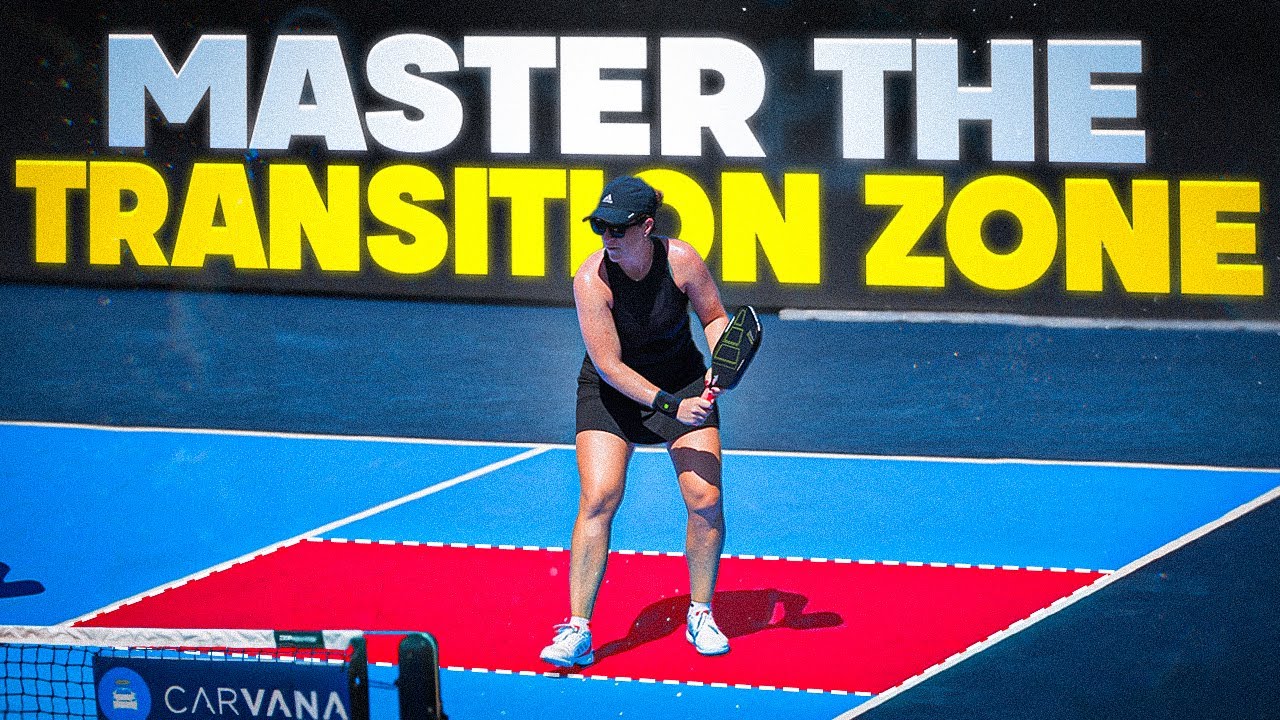
Drill #5: Agility Ladder Quick Feet with Paddle Ready
The agility pattern it builds: Fast-twitch foot speed and the coordination between footwork and paddle position.
The agility ladder is the most visually recognizable tool in any speed and conditioning program.
For pickleball, it works. But only if you do it right. Most players treat it as a pure footwork exercise.
The correct version keeps the paddle up and ready throughout every pattern.
Run these three patterns consecutively with 60 seconds of rest between full sets:
- Two-in, two-out: Both feet step into each box, then step out laterally. Stay low, stay quick.
- Icky shuffle: One foot in, one foot out, advance. This builds the cross-step mechanics used when covering a wide shot.
- Single-leg hops: Hop through each box on one foot. Builds single-leg stability for when you're loading off your stronger side during a swing.
Research from the Journal of Sports Sciences confirms that agility ladder training improves foot speed and reactive movement significantly in athletes who combine it with sport-specific movement patterns.
Doing the ladder while holding a paddle simulates that exact context.
Solo drilling and ladder work are the two off-court investments that pay the fastest on-court dividends.
Do 3 full sets of all three patterns. Total time: roughly 12 to 15 minutes. Add this as the cap to your complete pickleball workout routine.
 The Dink Media Team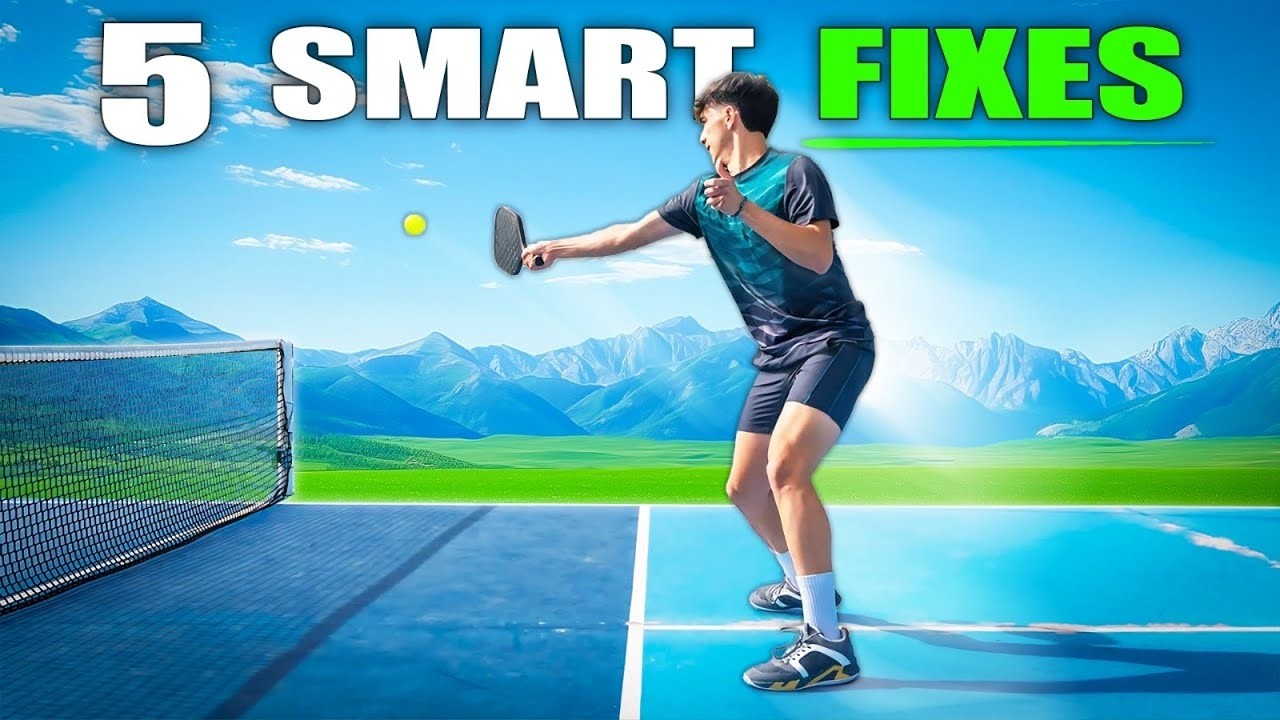
How Often Should You Do This Pickleball Workout Routine?
Two to three sessions per week is the sweet spot for most recreational and competitive players.
More than that, and your fast-twitch fibers don't have enough time to recover and adapt.
Less than twice a week, and the training stimulus fades before it can compound.
Pair this routine with your regular court time, not instead of it.
This training routine works best when the off-court agility sessions happen on off-days from full play, not immediately before or after a long session.
Think of it like this: court time builds your skill, these drills build your capacity to express that skill under real-game conditions.
You should notice meaningful improvements in 4 to 6 weeks. Your split step will feel automatic.
Your transition zone movement will stop being reactive and start feeling purposeful. And your opponents will notice before you fully do.
Check out these beginner upgrades for additional ways to level up your overall game alongside this routine.
 The Dink Media Team
Can This Pickleball Workout Routine Help Your Footwork?
Yes. This pickleball workout routine was designed specifically around the footwork patterns that occur most often in actual play.
The lateral shuffle drill targets defensive recovery. The T-drill builds multi-directional acceleration and deceleration.
The figure-8 drill trains balance in motion. And the shadow drill attacks the most-neglected movement pattern in the game: transition zone navigation.
Better footwork doesn't just make you look more polished.
It means you arrive at the ball earlier, which means you have more time to make a good decision, which means your shot quality goes up across the board.
Footwork is upstream of everything else. How you position yourself at the kitchen line is a footwork problem before it's ever a strategy problem.
If you're serious about your pickleball training and want to add more technical development alongside these drills, these skill investments are worth your time.
 The Dink Media Team
Key Takeaways
- A pickleball-specific workout routine should prioritize lateral movement and split-step mechanics, not just cardio or general strength.
- The five drills below build the exact agility patterns that pickleball demands: lateral shuffles, T-drills, figure-8s, transition shadows, and ladder work.
- Agility training 2-3 times per week alongside regular court time produces measurable improvements in court coverage within 4-6 weeks.
- Each drill should be performed at game-speed intensity, not casual warmup pace.
- Combining these drills with focused practice sessions maximizes their impact faster than either training mode alone.
Frequently Asked Questions
What is the best pickleball workout routine for improving agility?
The best pickleball workout routine for agility combines lateral shuffle drills, the T-drill, figure-8 cone work, transition zone shadows, and agility ladder patterns. These five movements directly replicate the start-stop, multi-directional demands of actual pickleball rallies. Performing them 2 to 3 times per week alongside regular court time produces noticeable results in 4 to 6 weeks.
How long should a pickleball workout routine session be?
A complete agility-focused pickleball workout routine, including dynamic warm-up, takes 35 to 50 minutes. The five drills outlined here run approximately 30 to 40 minutes at full intensity with proper rest intervals. Keep sessions focused and high-effort rather than long and casual. Quality of movement beats quantity of time every time.
Can a pickleball workout routine help prevent injuries?
Absolutely. A well-designed pickleball workout routine that includes split-step mechanics, transition zone deceleration training, and single-leg stability work significantly reduces the risk of knee, ankle, and hip injuries. These are the most common injury sites in pickleball, and they're primarily products of poor movement mechanics rather than contact or overuse.
Do I need equipment for this pickleball workout routine?
Minimal equipment only. You need cones or any flat markers (water bottles work fine), an agility ladder for Drill #5, and your paddle for Drills #3 and #5. All five drills can be done on any flat surface: a driveway, parking lot, or gym floor. No court access required.
How does agility training translate to actual pickleball performance?
Agility training builds the movement vocabulary your body needs to execute shots under real-game pressure. When your footwork is automatic, your brain has more processing capacity for shot selection, reading your opponent, and staying composed in long rallies. The physical and mental benefits compound: better movement produces better positions, and better positions produce better decisions.

Love Pickleball? Join 100k+ readers for free weekly tips, news & gear deals.
Subscribe to The Dink