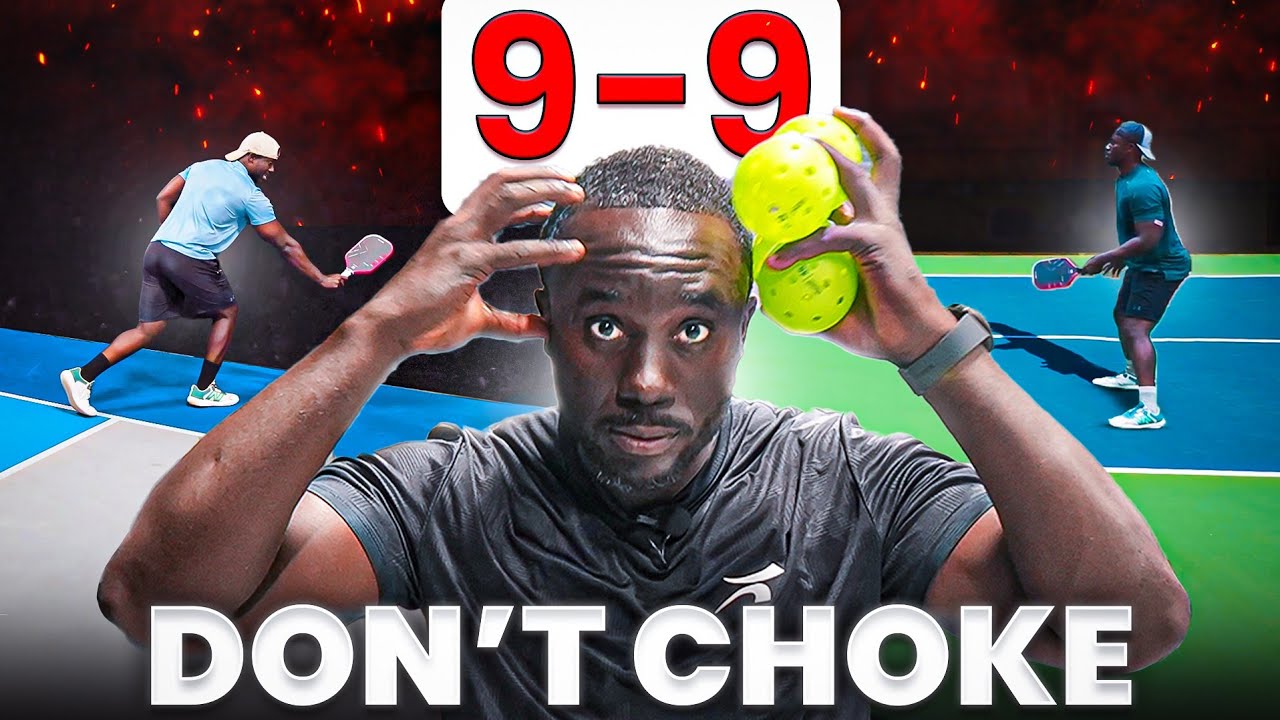
3 Rules That Stop You From Choking in a Tight Pickleball Point
Choking at 9-9 is not a mental weakness. It is a decision problem, and these 3 rules fix your pickleball pressure response before the next close game.
Pickleball pressure does not hit everyone the same way, but it hits almost everyone.
You play loose and clean during open play, then the score gets tight and suddenly you are speed-upping from neutral, going for lines you have no business targeting, and watching a winnable match slip away in four points.
You are not choking because you are weak. You are choking because you change what you do when the game matters most.
This breakdown comes from Cliff Pickleball on YouTube, who laid out three specific rules that high-level players follow at 9-9, plus one drill to train the response.
Here is what actually changes when the score gets loud.
Love pickleball? Then you'll love our free newsletter. We send the latest news, tips, and highlights for free each week.
Why Close Games Fall Apart So Fast
Most players who blow leads are not getting outplayed. They are getting out-disciplined.
You have seen it happen: up 9-3, feeling comfortable, and then the other team strings a few points together and the margin is gone.
The problem is not that your opponents got better. The problem is that you started playing a different game.
When the score tightens, most players panic and try to force the issue.
They speed up balls they should be resetting, go for highlight shots from neutral positions, and stop recovering after contact.
Under real pickleball pressure, the players who close out matches do the exact opposite.
They get quieter, tighter, and frankly more boring.
That boring consistency is a skill, and it is one you can train.
Understanding shot selection rules you keep getting wrong is a good place to start building that foundation, and the four key strategies driving modern doubles will tell you which patterns are worth defending in the first place.
The same thing happens with a big lead. When you are up 10-2, you feel like you have margin for error, so you get creative and try shots you would not normally try.
Creativity without discipline is how leads disappear. Your game plan does not change because the score is comfortable.
If deep returns work, keep hitting deep returns.
Rule 1: Shrink the Menu
At 9-9, you cut your shot options down to only the highest-percentage plays your body already executes well.
That is the whole idea behind shrinking the menu.
Early in a match, exploration makes sense.
You test angles, try a few creative third shots, see what your opponent dislikes. But late in a tight game, that exploration becomes a liability.
Here is what the menu looks like at 9-9:
- Deep returns when you can get them
- Body shots when the opportunity is clear
- Dinks from neutral, no attempted finishes
- Hard contact only on true put-aways
- No highlight attempts from equal-ball situations
The question to ask yourself is simple. Would you take this shot in a gold medal match? If the answer is no, do not take it now.
This is where most players blow winnable games. They feel the urgency of a tight score and decide to finish points faster.
But the closer the game gets to the end, the more you need to lean on what is already working, not invent something new.
If you want to understand how ball height should drive your decisions, that framework pairs directly with this pickleball pressure mindset.
The shots worth mastering this season are the ones that belong on a shrunken menu.
Rule 2: Earn the Green Light Before You Attack
You only attack when something has genuinely changed in the rally, not when you feel like it is time to go. That distinction is everything.
Most early speed-ups in pressure situations are not tactical. They are emotional.
The player feels anxious, wants to end the point, and rips a ball from a position that gives them no real advantage.
The opponent is balanced, ready, and positioned. The attack fails. The point is gone.
Before you pull the trigger, run through this checklist in your head:
- Is your opponent wide or out of position?
- Are they off balance?
- Did they hit a pop-up?
- Are they late getting to the ball?
If none of those conditions are true, the answer is simple: build. Keep the rally going, stay disciplined, and make them crack first.
The goal is to make your opponent make the mistake, not to force a winner on your terms. Fivers understand this.
They are patient enough to wait for the right ball rather than creating pressure by attacking the wrong one.
Check out how to read situations better with these pickleball IQ tips that help you outsmart better players.
 The Dink Media Team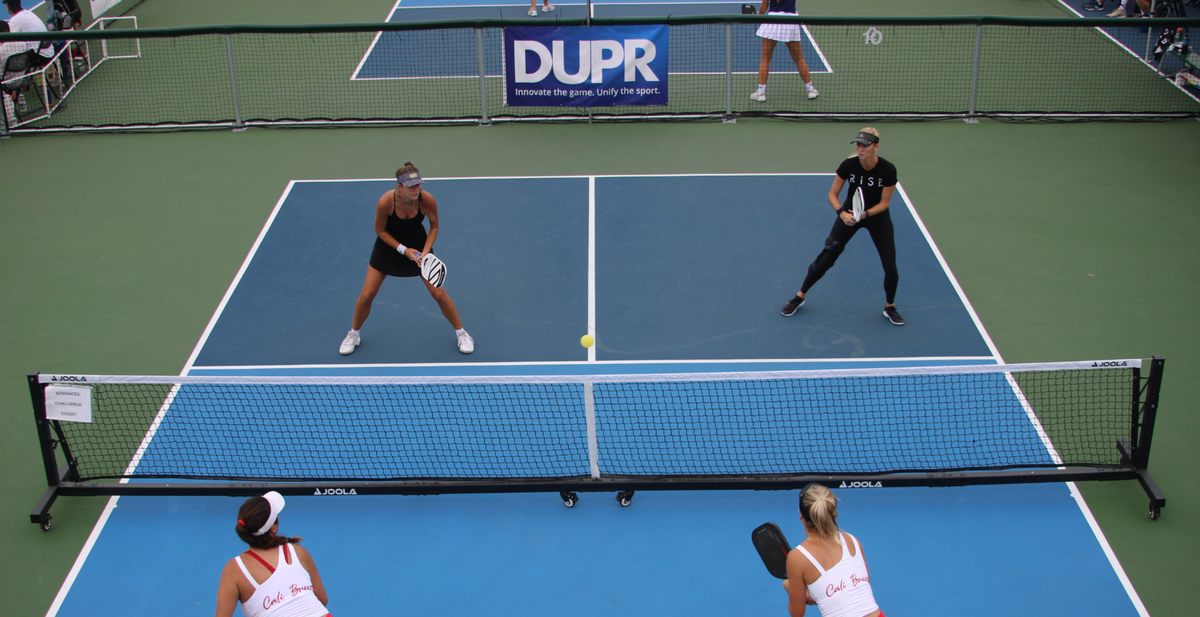
What Does "Nothing Changed" Actually Mean?
A lot of players hear "wait for the right ball" and still cannot resist going early. Part of that is not knowing what nothing changed looks like in real time.
Nothing changed means your opponent is balanced, centered, and hitting from a comfortable position.
The ball they gave you is manageable but not attackable. You are in a neutral rally.
When you are in that situation, extend the rally, keep your placement honest, and stay physically ready. Consistency under pressure is a weapon.
Most players at the recreational level will crack if you keep the ball in play with intention, which is why the mental side of pickleball matters as much as the physical execution.
 Eric Roddy
Rule 3: Next Ball Before Scoreboard
After every single contact, your job is to recover first and look at the score second. Every time. Not some of the time.
At 9-9, the most common breakdown happens right after a good shot.
You hit something clean, maybe a nice speed-up or a well-placed dink, and for a half-second you watch it instead of resetting your paddle and your feet.
That half-second is when the counter comes back and catches you completely off guard.
The recovery sequence after every shot looks like this:
- Paddle returns to neutral position immediately
- Feet reset to balanced, ready stance
- Eyes track the ball, not the outcome
- Stay prepared until the point is actually over
The point is not over when you hit a hard ball.
Under the official scoring and rally rules, it is over when the ball hits the net, lands out, or your opponent cannot return it.
Until one of those things happens, you are still in the rally. High-level players do not celebrate early. They reload.
That habit alone will save you multiple points per match in tight situations.
It connects directly to building better momentum control during points, and it is the same reason closing out matches fast requires a different mindset than simply playing well.
 The Dink Media Team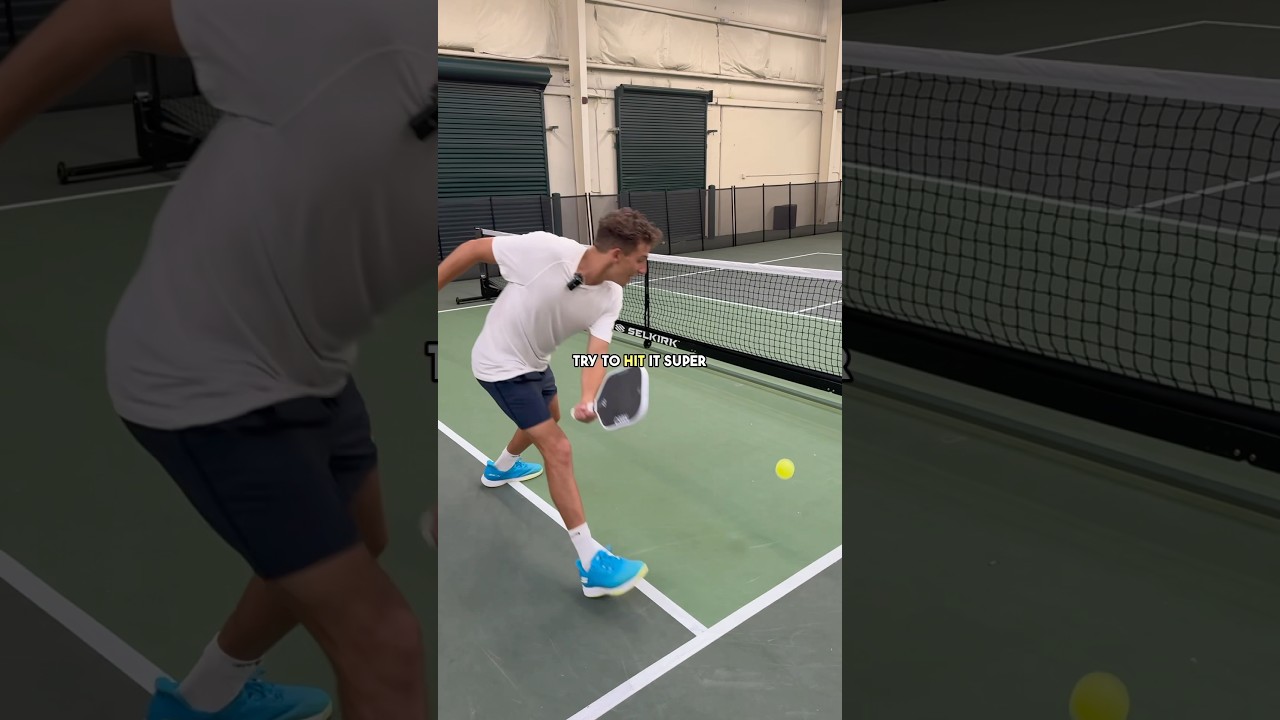
Is This Why You Keep Blowing Big Leads?
Yes, almost certainly.
The scenario Cliff describes is one of the most common in recreational pickleball: up big, feeling loose, and then suddenly losing control as the deficit shrinks.
When you are up 10-2 or 9-3, you feel like you have margin for error. So you get creative. You try shots you would not normally try.
The problem is that creativity without discipline is how leads disappear.
The solution is staying on the plan regardless of the score. Your game plan does not change because the score is comfortable.
If deep returns work, keep hitting deep returns. If body dinks are getting results, keep using body dinks.
This is the same reason closing out matches fast requires a different mindset than simply playing well.
Discipline is what separates players who convert leads from players who watch them disappear. It is not a talent issue. It is a decision issue.
 The Dink Media Team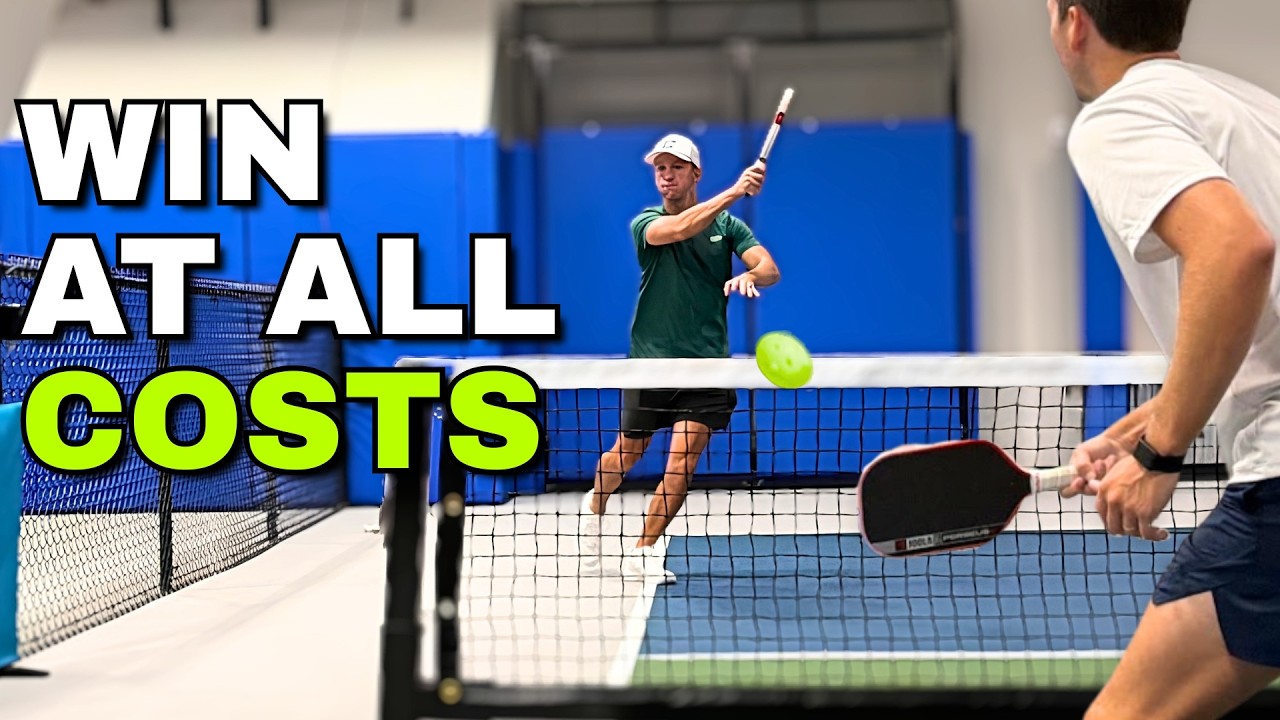
The Drill That Trains All Three Rules at Once
Play kitchen-heavy points to seven, starting every single game at 5-5 so it always feels late.
That structure forces you to practice pressure from the very first point of every game.
The rules inside the drill matter as much as the format itself:
- You can only attack if you name the advantage out loud before you go (wide, pop-up, off balance)
- After every shot, complete three full recovery steps before talking or celebrating
- Max power is 70 percent. Placement only
- If you break any rule, your opponent gets a point automatically
Run this for 20 minutes. The naming requirement is the key piece because it forces you to slow down the decision before the attack. You cannot go on instinct alone.
You have to justify the shot in real time.
That habit transfers directly into match play. At 8-8 or 9-9, the same internal checklist runs automatically.
Do I have an advantage? Yes or no? If the answer is no, you build.
For more structured training ideas, the progressive drills that take you from 3.0 to 5.0 are worth adding to your practice rotation.
And if you want solo work between sessions, wall practice drills that actually build real skills can sharpen your consistency without a partner.
 The Dink Media Team
The Mindset Shift That Makes It Stick
At 9-9, you do not need a hero. You need one more good decision.
Stop thinking about winning the point. Start thinking about making the right next play.
Deep when you can. Body when it is given. Recover every time. That sequence, repeated over and over, is how players stop losing tight games.
This is not about being passive or soft.
It is about being disciplined when the noise gets loud, and the tournament-tested tips for stopping unforced errors back up exactly this approach.
If you want to take your pickleball mental game further, the framework for competing against higher-rated players applies to high-pressure moments regardless of your opponent's skill level.
Quiet the menu, earn your green light, and reload before you react to the score. Three rules. That is the entire system.
Frequently Asked Questions
Why do I play worse when the score gets close in pickleball?
You play worse under pressure because you change your shot selection when it matters most. The anxiety of a close score pushes you toward early speed-ups and low-percentage shots instead of staying with what was already working. The fix is committing to a tighter menu of plays before the situation gets tense.
What does "shrink the menu" mean in pickleball?
Shrinking the menu means cutting your shot options down to only high-percentage plays at critical moments in a match. It means no creative attempts from neutral positions, no speed-ups unless you have a clear advantage, and no highlight shots under pressure. The concept is borrowed from how elite players limit risk when the score is tight.
How do I know when to speed up the ball in a close pickleball game?
You speed up only when your opponent is wide, off balance, late to the ball, or hitting a pop-up. If none of those conditions are present, you keep building the rally and wait for a better opportunity. Attacking from a neutral position during a close game is one of the fastest ways to give away points.
Why do I keep blowing big leads in pickleball?
Big leads disappear because players get creative when they feel comfortable and abandon the plan that built the lead in the first place. When you have a large margin, it is tempting to go for more, but that is exactly when discipline matters most. Stay on your game plan regardless of the score and the lead will hold.
What is the best drill to practice pickleball pressure situations?
Start every game at 5-5 and play to seven using kitchen-heavy points. Require yourself to name any advantage out loud before attacking, limit power to around 70 percent, and complete a full recovery after every shot or your opponent earns a point automatically. Running this format for 20 minutes trains the exact decisions that close games demand.

Love Pickleball? Join 100k+ readers for free weekly tips, news & gear deals.
Subscribe to The Dink