
Pickleball Strategy for Beginners: The Basics That Actually Win Points
Mastering pickleball strategy for beginners basics comes down to three things: getting to the kitchen, dropping the third shot, and winning the dinking rally. Do these right and you'll beat most players at your level without needing elite athleticism or a killer serve.
The pickleball strategy for beginners basics that actually matter have nothing to do with power, speed, or an elite serve.
They're about positioning, patience, and knowing which shot to hit when. Get those right and you'll start winning matches that used to frustrate you.
Love pickleball? Then you'll love our free newsletter. We send the latest news, tips, and highlights for free each week.
What Is Pickleball Strategy for Beginners, Exactly?
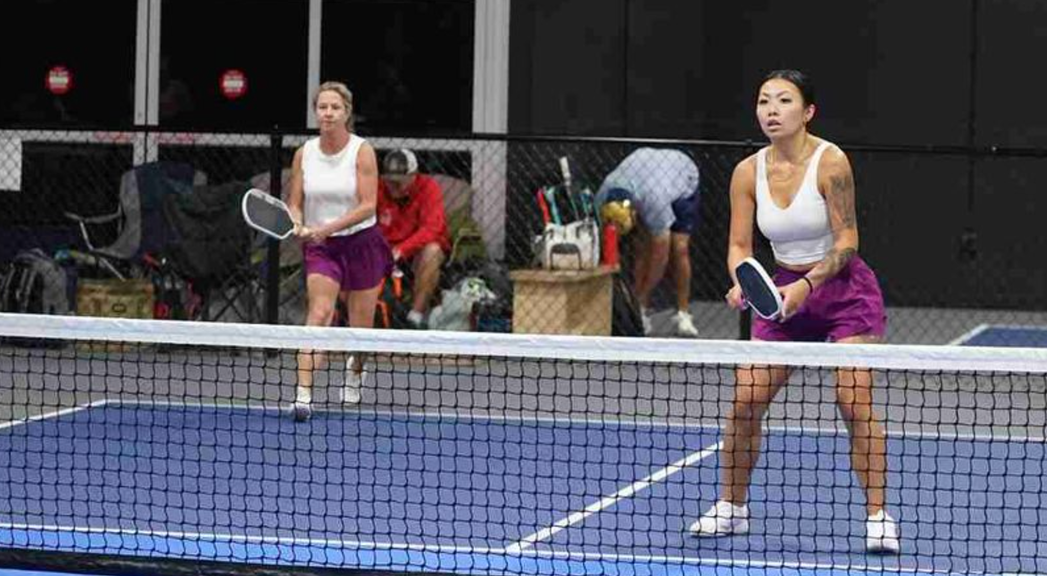
Pickleball strategy for beginners basics starts with one core idea: the team that controls the kitchen line wins most points. That's it.
Everything else (the third shot drop, the dink, the reset) exists to help you get there and stay there.
Unlike tennis, where baseline slugging is a viable game plan, pickleball punishes players who hang back.
According to USA Pickleball's official rulebook and player development resources, the non-volley zone (the kitchen) is the most contested real estate on the court for good reason: shots struck near the net are harder to attack, easier to control, and generate more errors from opponents.
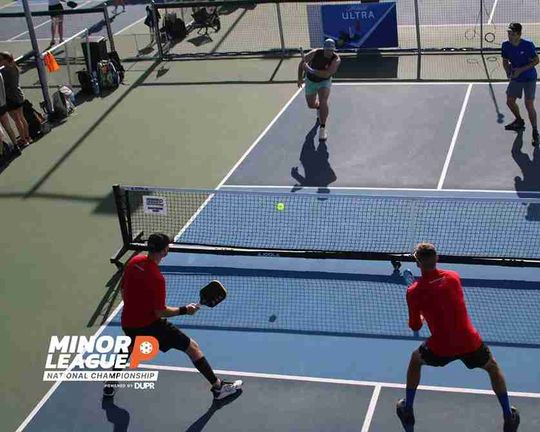
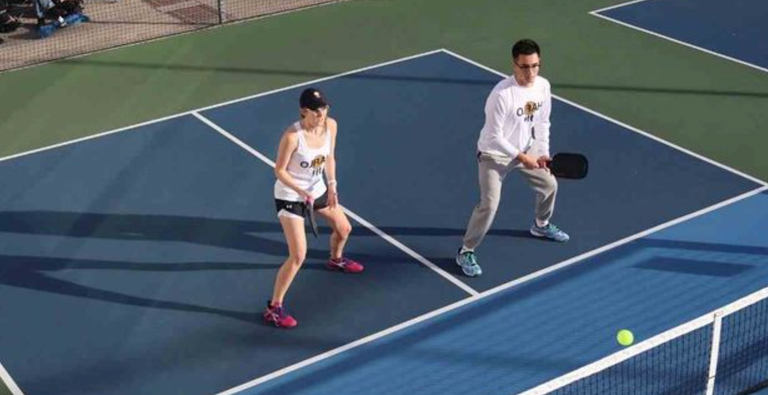
When both players on a team are at the kitchen, they're in command.
That positioning principle is the spine your whole game should hang on. Every other shot selection, every footwork pattern, every tactical choice comes back to it.
Why Position Beats Power Every Single Time
Here's the thing about beginner pickleball: most points aren't won by great shots. They're lost by bad positioning.
A 2025 analysis of recreational pickleball play patterns noted that unforced errors account for roughly 65–75% of all points lost at beginner and intermediate levels, and the majority of those errors come from players caught in no-man's land (the area between the baseline and the kitchen).
No-man's land is a trap. You're too far from the net to volley comfortably, and too far from the baseline to handle a deep shot.
The solution isn't faster reflexes. It's understanding that you should almost never be standing there voluntarily.
Move forward aggressively after every drop shot, and retreat only when you're forced back.
The other positional concept beginners undervalue is stacking your partner in doubles (an intermediate concept).
For now, just focus on: get to the kitchen, stay at the kitchen.
What Does "Playing the Kitchen" Actually Mean?
The kitchen (officially the non-volley zone) is the 7-foot area on each side of the net where you cannot volley the ball (hit it out of the air).
USA Pickleball Rule 9.A makes this clear: you can step into the kitchen to play a ball that has bounced, but you can't volley from it.
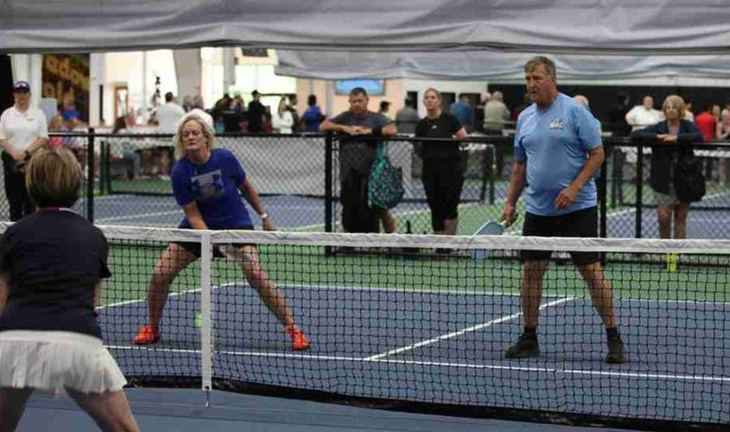
Playing the kitchen means setting up your feet right at the kitchen line and engaging in the soft, low-bouncing rallies (dinks) that characterize high-level pickleball.
It sounds simple. It's not. Which is exactly why mastering it separates beginners who plateau from beginners who improve fast.
Think of the kitchen line like the paint in basketball. Whoever establishes position there with better shot selection controls the whole rally.
 The Dink Media Team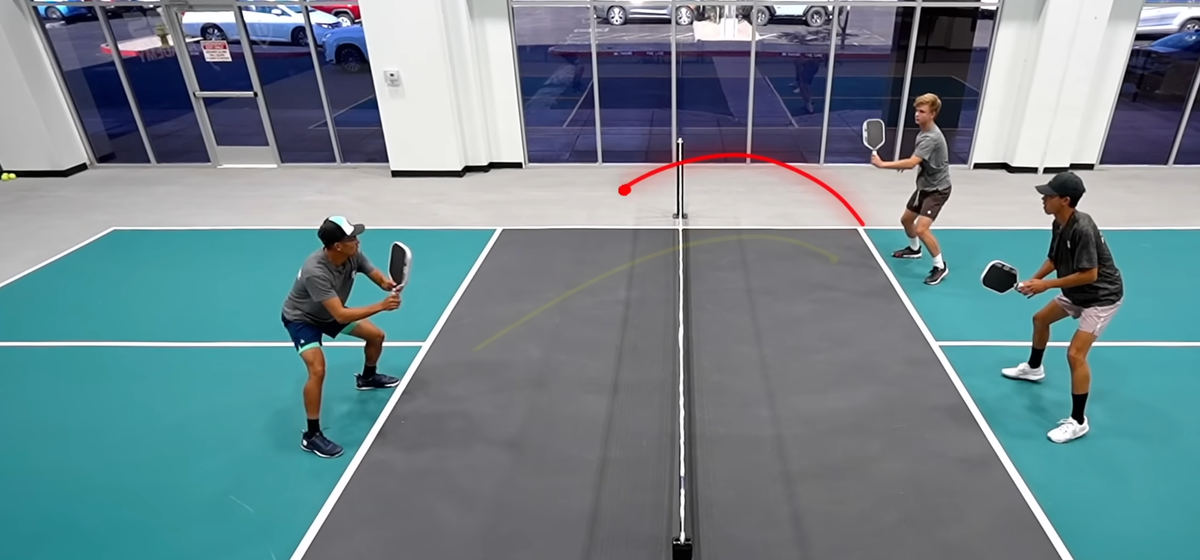
The Pickleball Strategy for Beginners That Wins the Most Points
The core pickleball strategy for beginners basics is a three-shot sequence: serve deep, return deep, and drop the third shot into the kitchen.
If you can execute that sequence consistently, you'll force your opponents into difficult positions on nearly every rally.
This matters because of the two-bounce rule: the serve must bounce, and the return must bounce before either team can volley.
That means the returning team gets to the kitchen first, every time. The serving team has to earn their way in.
The third shot drop is how you do it. This breakdown of the third shot drop mechanics is worth bookmarking.
 The Dink Media Team
Why Is the Third Shot Drop So Important?
The third shot drop is the single most important shot in pickleball strategy for beginners. It's the bridge between the baseline and the kitchen line.
Without it, you'll spend entire matches stuck at the back of the court, taking pace off balls you shouldn't be defending.
A good third shot drop lands softly in the opponent's kitchen, forcing them to hit upward. When they're hitting upward, they can't attack.
When they can't attack, you gain the time to walk forward and set up at the kitchen line. That's the whole point of the shot.
Here's what makes a third shot drop effective:
- Contact point: Hit the ball slightly in front of your body with a continental or soft grip
- Trajectory: Aim for an arc that peaks over the net and drops steeply into the kitchen
- Pace: Slow. The enemy of a good drop is too much pace. It pops up and gets put away
- Reset mindset: If your drop is too high and comes back fast, don't panic. Reset with another soft shot
Practicing this shot against a wall or with a partner for 15 minutes per session will do more for your rating than any other single drill. That's not an exaggeration.
How Do You Win a Dinking Rally Without Attacking?
Patience. That's the answer beginners don't want to hear, but it's right.
The dinking game, a series of soft, controlled shots placed low over the net into the kitchen. This is where most beginner-level matches are actually decided.
Here's why attacking too early is a mistake: when you try to speed up a ball that's still below net level, you're giving the ball an upward trajectory that makes it attackable.
Your opponents don't have to do much.
They just redirect it at your feet.
A 2025 study on rally dynamics in recreational pickleball found that premature attacks (balls sped up from below the tape) resulted in errors or put-away losses over 70% of the time at 3.5 rating and below. Journal of Sports Sciences, 2025
The better move: keep the ball low, vary your placement (crosscourt is safer than down-the-line), and wait for a ball that rises above net height before you speed it up.
That's the attackable ball. Everything below the tape goes back soft.
 The Dink Media Team
Common Mistakes Beginners Make (And How to Fix Them)
Most beginners lose points the same way. Knowing the pattern is half the fix. Avoiding these errors is foundational pickleball strategy for beginners.
- Mistake 1: Staying at the baseline after the third shot. You hit a decent drop, and then... you stand there. Don't. Move forward. The point of the drop is to buy you time to advance, not to stay put.
- Mistake 2: Attacking from below the net. If the ball is below the top of the net when you contact it, you cannot drive it aggressively without hitting it into the net or popping it up. This is physics, not opinion. Hit it back soft.
- Mistake 3: Hitting crosscourt inconsistently. Crosscourt dinks travel over the lowest part of the net and have the longest distance to land in, making them the highest percentage shot from the kitchen. Down-the-line is a lower percentage play unless you have a clear angle.
- Mistake 4: Ignoring the middle. In doubles, the middle of the court creates confusion between partners. Shots there land farthest from both sidelines. Target the middle when you're not sure where to go.
- Mistake 5: Serving short. A deep serve forces your opponent to return from behind the baseline, which makes their path to the kitchen harder. Land your serve within the last 3 feet of the service box.
 The Dink Media Team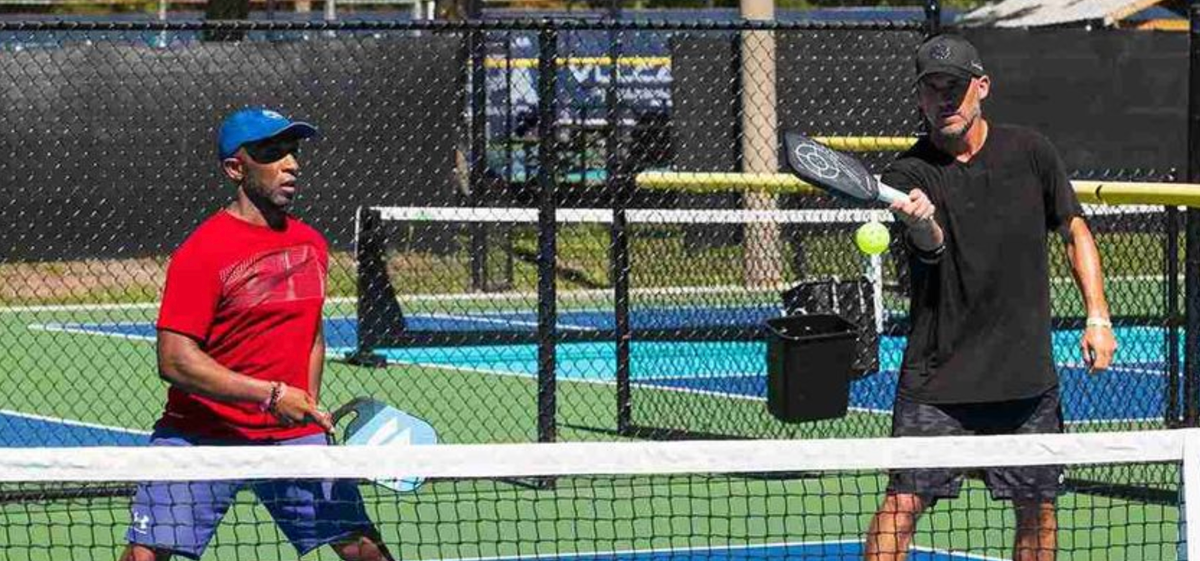
Pickleball Strategy for Beginners: Building Your Game Plan
Now you can connect the dots.
The pickleball strategy for beginners basics that wins real matches follows one repeating pattern: serve deep, return deep, third shot drop, move to kitchen, dink patiently, wait for the attackable ball, speed it up.
Every shot has a job. The serve neutralizes. The return pushes opponents back.
The drop gets you forward. The dink keeps pressure on. The speed-up finishes the rally.
A few structural points worth building into your game permanently:
- Always hit crosscourt from the kitchen unless you have a clear down-the-line angle
- Target the opponent's backhand: most beginners have a weaker backhand, forcing an uncomfortable body position
- Call the score before every serve: USA Pickleball rules require it, and it also resets your mental focus per USA Pickleball officiating guidelines
- Watch your opponent's paddle face, not just where they're standing. It tells you where the ball is going before they hit it
Developing better shot awareness between partners takes time, but that game-reading skill starts here, at the beginner level, by paying attention to these cues.
One more thing: the reset. When you're in trouble (out of position, under pressure, dealing with a fast ball at your feet) the reset is your escape hatch.
A reset is a soft, defensive shot that absorbs pace and redirects the ball back low into the kitchen, neutralizing the rally.
Learning to reset confidently under pressure is what separates plateaued players from improving ones.
The basics of pickleball strategy for beginners aren't flashy.
But executed consistently, they'll get you to a rating and a skill level where the more advanced concepts actually start to matter.
 The Dink Media Team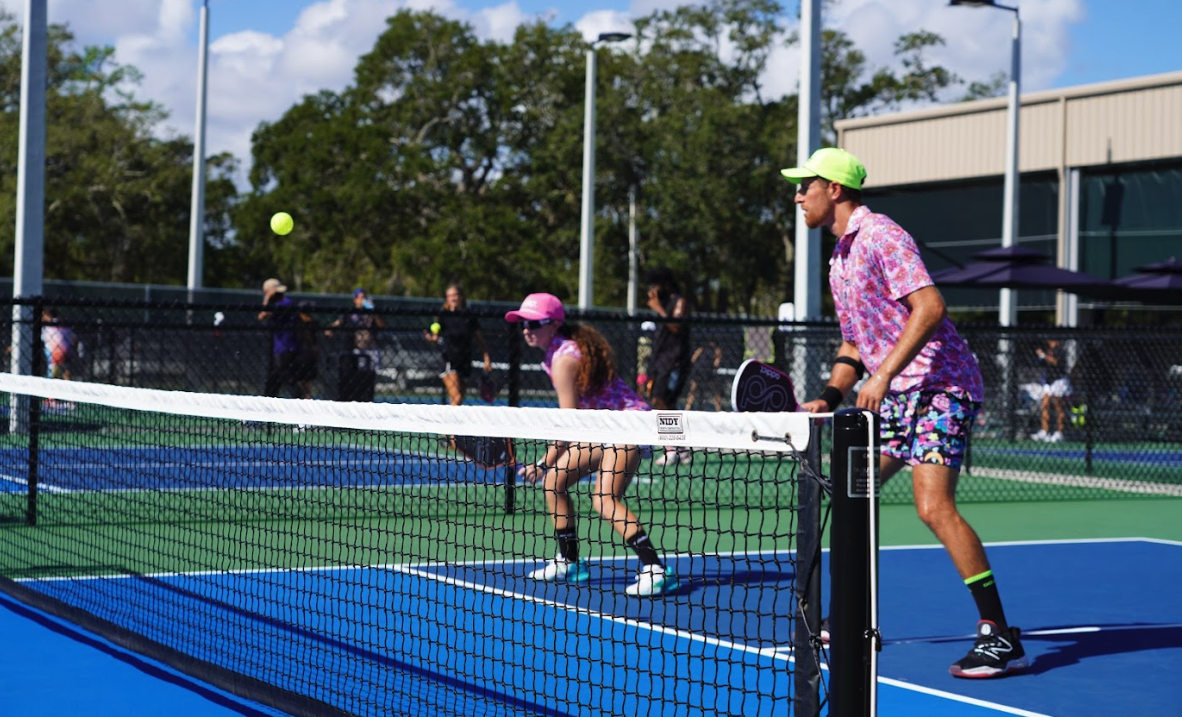
Key Takeaways
- Getting to the kitchen line is the single most important positional goal in beginner pickleball
- The third shot drop is the foundational shot that gets you from the baseline to the net
- Dinking beats attacking at beginner levels. Patience wins more points than power
- Unforced errors lose more rallies than good shots win them; cut mistakes first
- Pickleball rewards court geometry: hitting crosscourt, targeting the middle, and staying out of no-man's land are the three structural advantages every beginner should own
Frequently Asked Questions
What is the most important pickleball strategy for beginners to learn first?
The most important pickleball strategy for beginners is getting to the kitchen line and staying there. The team that controls the non-volley zone wins most points at every level of play. Before worrying about spin, power, or advanced shots, focus on moving forward aggressively after every third shot drop and establishing position at the net.
What is the third shot drop and why does it matter for beginners?
The third shot drop is a soft, arcing shot hit from near the baseline that lands low in the opponent's kitchen, forcing them to hit upward. It matters because the returning team gets to the kitchen automatically. The third shot drop is how the serving team earns their way in. Without it, beginners get stuck at the baseline all match.
How do you win a dinking rally in pickleball?
Win a dinking rally by keeping the ball low, targeting the opponent's backhand, and hitting crosscourt for the highest percentage placement. Don't attack until the ball rises above net height. That's your signal to speed it up. Patience wins dinking rallies far more often than aggression at the beginner level.
What are the most common pickleball strategy mistakes beginners make?
The biggest beginner strategy mistakes are: staying at the baseline after a third shot drop instead of moving forward, attacking balls that are below net level, and hitting down-the-line when crosscourt is the safer play. The other major error is serving short. A deep serve is a free tactical advantage every beginner should exploit.
How does pickleball scoring work and how does it affect strategy?
Pickleball uses rally scoring in most recreational formats, meaning every rally can score a point regardless of who served. In traditional side-out scoring, only the serving team scores. Understanding which format you're playing matters strategically. In side-out scoring, holding serve is critical, which puts extra pressure on the third shot drop as a serve-side tactical tool.

Love Pickleball? Join 100k+ readers for free weekly tips, news & gear deals.
Subscribe to The Dink