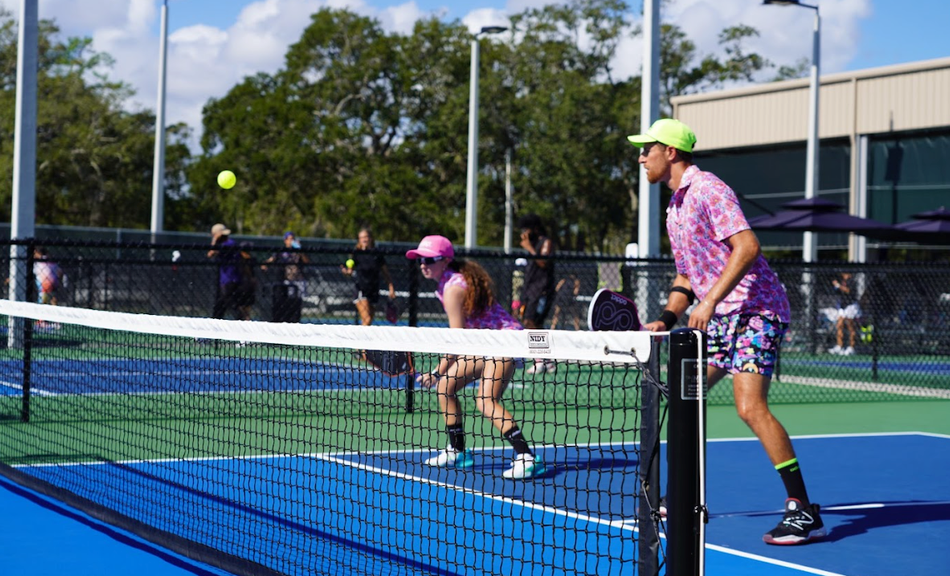
Pickleball for Beginners: 5 Things to Know Before Your First Game
These pickleball for beginners tips cover the five most critical concepts — from scoring to the non-volley zone — that every new player needs before stepping on the court. Skip the confusion, skip the bad habits, and start your first game actually knowing what you're doing.
The best pickleball for beginners tips aren't the ones that tell you to "just have fun." They're the ones that keep you from looking completely lost on your first point.
Pickleball is one of the fastest-growing sports in America, with over 13.6 million players as of 2024 according to USA Pickleball.
Many of them walked onto a court for the first time with zero context. Some figured it out. A lot of them developed habits that took months to unlearn.
This article exists so you don't have to do either.
Here are five things that will actually change your first game.
Love pickleball? Then you'll love our free newsletter. We send the latest news, tips, and highlights for free each week.
Why Does Pickleball Scoring Feel So Weird at First?
Pickleball uses a three-number scoring system — and yes, it trips up everyone. The score is called as: server's score, receiver's score, server number (1 or 2 in doubles).
A typical call sounds like "4-2-1." Weird? A little. Logical once it clicks? Absolutely.
Here's the thing that matters most: only the serving team scores points. If the receiving team wins the rally, they don't get a point — they get the serve.
This keeps games tighter than most players expect, and it means a comeback is never off the table.
Games are played to 11, win by 2. Tournament play typically goes to 15 or 21.
In doubles, each team gets two servers per rotation (hence the "1" and "2" in the score call), except at the very start of the game when the first serving team only gets one server.
USA Pickleball's official rulebook has the full breakdown, but for your first game, just remember: server's score first, you only score on your own serve.
Start practicing the three-number call immediately. Nothing slows down an open play session like a new player who doesn't know the score format.
Your playing partners will thank you.
For a full breakdown, check out The Dink's guide to pickleball scoring.
What Is the Kitchen and Why Can't You Stand in It?
The kitchen is pickleball's most important piece of real estate. Officially called the non-volley zone (NVZ), it's the 7-foot area on both sides of the net.
You can step into the kitchen — but you cannot volley (hit the ball out of the air) while standing inside it or while your momentum carries you into it after the shot.
That last part catches beginners constantly. You hit a crisp volley at the net, your momentum carries your foot past the kitchen line, and the point is dead. Fault.
It's a momentum violation, not just a foot-in-the-zone violation.
Even your hat falling into the kitchen after a swing is technically a fault per USA Pickleball rules, Section 9.B.
Why does the kitchen exist? It prevents both players from camping at the net and smashing everything. It forces patience, soft shots, and strategy.
The dink — a soft, controlled shot that lands in the opponent's kitchen — is the bread and butter of high-level pickleball precisely because it exploits the kitchen rule.
As a beginner, the simplest rule to internalize: don't volley from the kitchen.
Let the ball bounce first, then you can step in and hit it. Learn more about kitchen movement and kitchen strategy here.
The Two-Bounce Rule: What Makes Pickleball Different From Every Other Net Sport
This is the rule that shapes the entire pace of the game — and most beginners have never heard of it.
The two-bounce rule (also called the double-bounce rule) states that after the serve, both teams must let the ball bounce once before volleying.
The serve bounces on the return side. The return of serve bounces on the server's side. After those two bounces, either team can volley freely.
Why does this matter? It prevents the serving team from rushing the net and ending the point immediately with a put-away volley.
It gives the returning team a fighting chance to get positioned, and it forces the serving team to execute a quality third shot — which is why you'll hear the term "third shot drop" all over pickleball content.
The third shot drop is the most important shot in doubles because it's the serving team's path to reaching the kitchen line safely.
For pickleball for beginners tips, this one is non-negotiable: let those first two bounces happen. Volleying the return of serve is a fault.
It costs you the rally every time, and it will cost you the serve.
 The Dink Media Team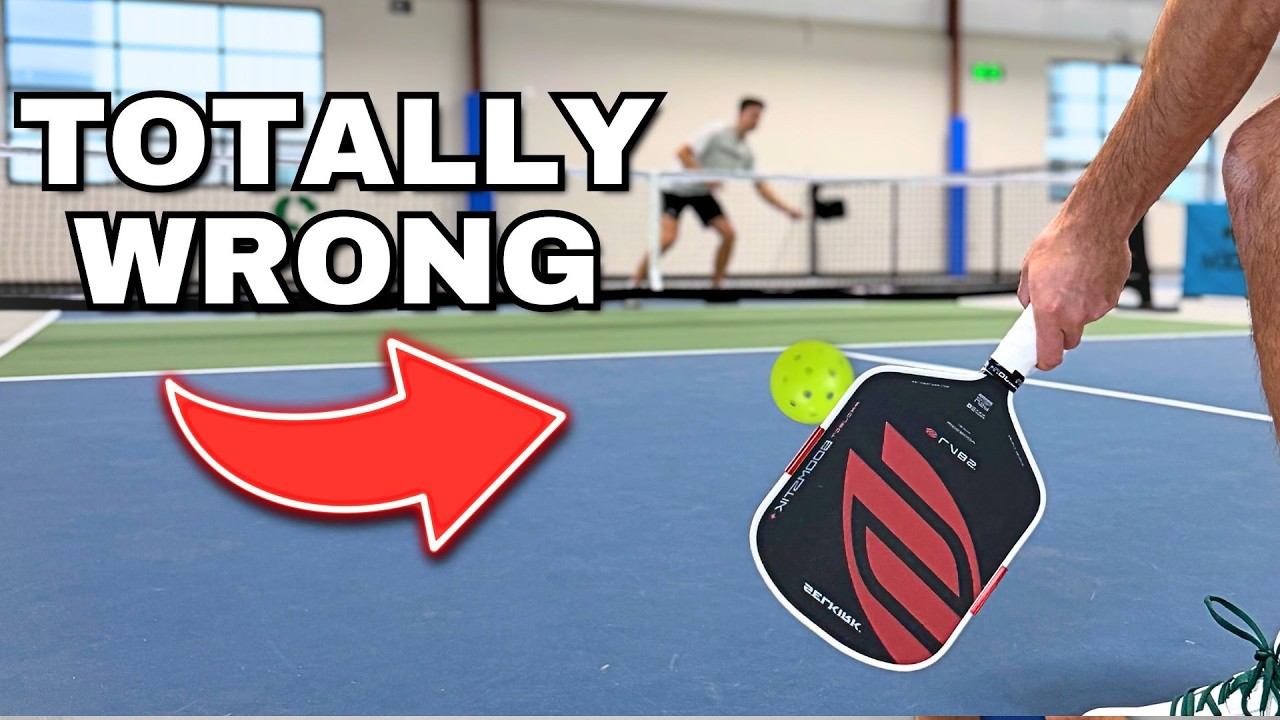
What's the Right Paddle for a First-Time Player?
Don't overthink this one.
The right beginner paddle is a mid-weight paddle in the $60-$100 range — one that gives you feedback without punishing your inconsistencies.
Here's what the specs actually mean:
- Weight: Most paddles run 7.5-8.5 oz. Lighter paddles (under 7.5 oz) are easier on the arm but less powerful. Heavier paddles generate more pace but fatigue the arm faster. For beginners, 7.8-8.2 oz is the sweet spot.
- Grip size: Measure from the middle crease of your palm to the tip of your ring finger. That number in inches is your grip size. Too-small grips lead to wrist issues. Too-large grips reduce wrist snap on shots.
- Core material: Most paddles use a polymer honeycomb core. It's forgiving, quiet, and gives you good control. Ideal for learning.
Avoid the temptation to buy a super-expensive paddle before you know what you like – those are precision tools built for players who have already developed swing mechanics.
Read The Dink's gear coverage for updated paddle recommendations as you move up in skill.
The Dink Media Team
Where Should You Be Standing on the Court?
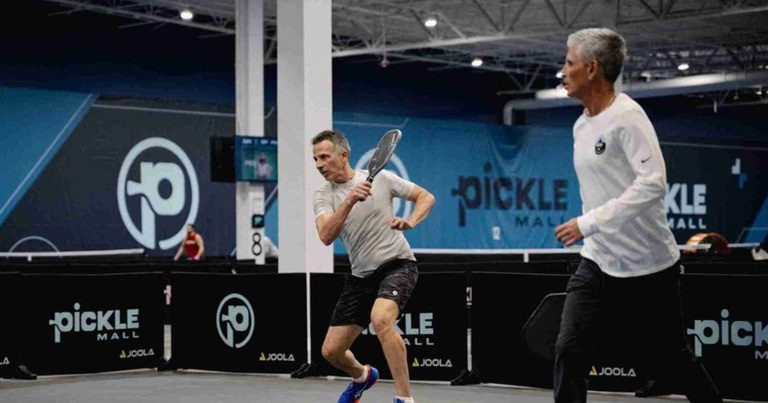
Most beginner mistakes aren't about shots. They're about positioning. Specifically, standing in the wrong place at the wrong time.
In doubles — the most common format — there's a clear hierarchy of court positions:
- The kitchen line is king. The team that controls the non-volley zone controls the match. The closer you are to the kitchen line, the more angles you cut off and the more pressure you put on your opponents. This guide to court positioning explains it in depth.
- Don't get stuck in no-man's land. The transition zone — roughly mid-court — is where rallies go to die. If you're camped there, you'll be taking shots at your feet all day. Move through it quickly to reach the kitchen.
- Move as a unit with your partner. Think of an imaginary rope connecting you and your doubles partner. When one person slides left, the other slides with them. Gaps down the middle get exploited by every player above a 3.0 level.
For serving, pickleball rules require the serve to be hit underhand, with the paddle contact below the wrist and below the waist.
The ball must land in the diagonally opposite service box. USA Pickleball's serve rules specify that the server must keep both feet behind the baseline until after contact.
Beginners who learn to serve deep and move immediately toward the kitchen after the two-bounce rule resolves will find their game accelerates faster than anything else.
Footwork matters more than shot-making at the early stages — build that habit first.
The Dink Media Team
Key Takeaways
- Scoring uses a three-number system (server score, receiver score, server number) and only the serving team earns points
- The kitchen (non-volley zone) is the 7-foot area at the net — you can't volley while in it or with momentum into it
- The two-bounce rule requires each side to let the ball bounce once before volleying; skip this and you lose the rally automatically
- Beginner paddles in the $60-$100 range (7.8-8.2 oz, polymer core) will serve you better than premium tour paddles until your fundamentals are locked in
- Position beats technique at the beginner level — get to the kitchen line, avoid mid-court, and move in sync with your partner
The Dink Media Team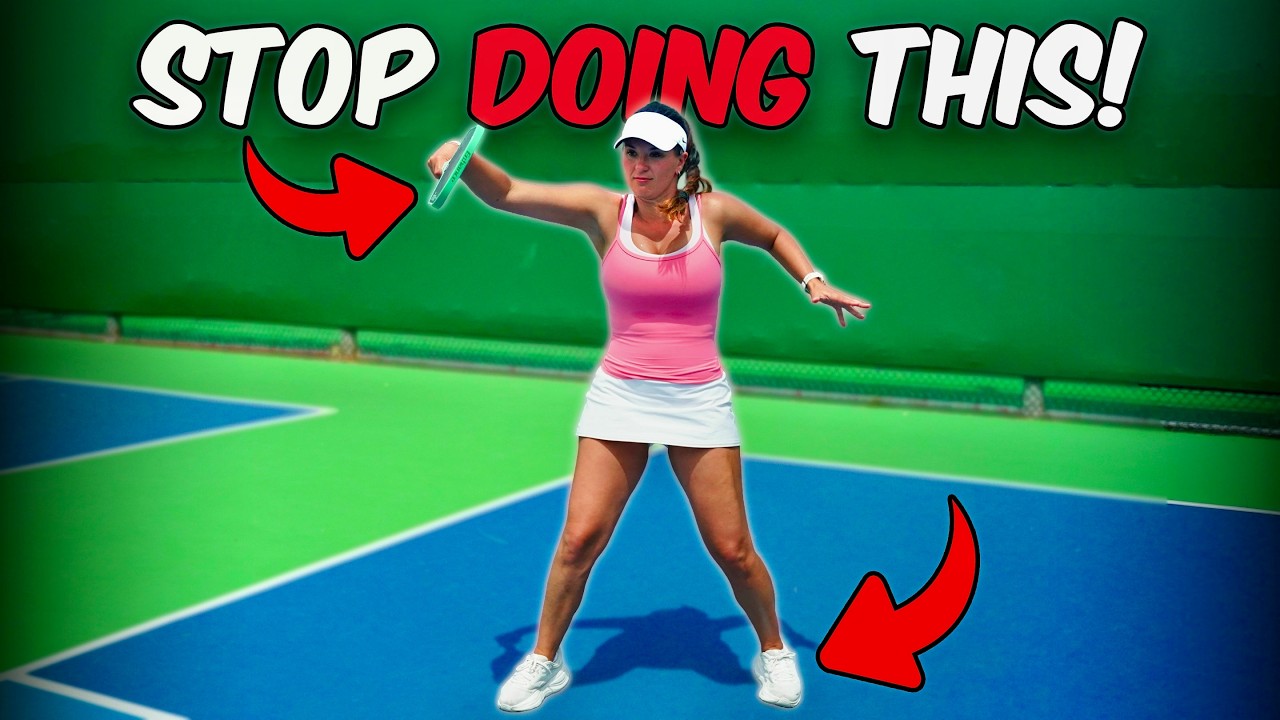
3 More Beginner Tips Worth Knowing Before Game One
Beyond the big five, a few quick ones that will make your first session smoother:
Call the score before every serve. It's required in competitive play, and it keeps disputes from happening. Make it a habit now.
Here's a list of pickleball etiquette standards that every new player should scan.
Keep it in play, not in the net. Most beginner unforced errors go into the net. Aim higher than you think you need to.
The net is 34 inches at the center and 36 inches at the posts — lower clearance than tennis, but beginners consistently underestimate how much net they're catching.
The dink is not a weak shot. It looks passive from the sideline.
It's actually a high-IQ play that forces your opponent out of position and resets dangerous rallies.
Learn why consistent dinking wins more games than power — you'll be ahead of 80% of beginners if you can simply keep the ball low over the net.
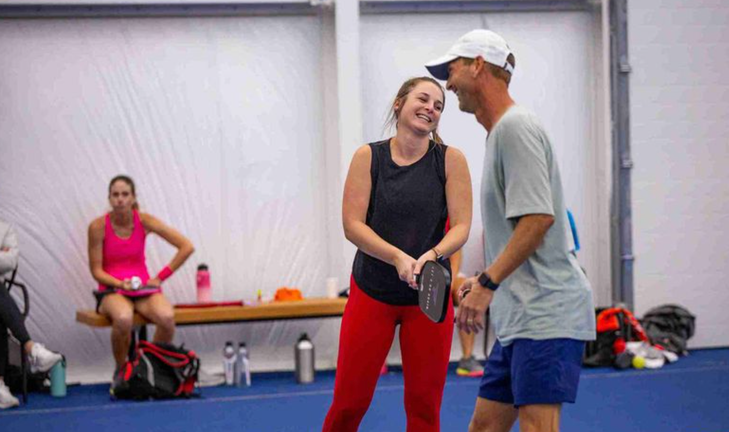
One more: every player at open play was once where you are now. Pickleball has a uniquely welcoming culture.
Ask questions. Watch the more experienced players on the court next to you. Even the pros started somewhere.
Frequently Asked Questions
What is the first thing a beginner should learn in pickleball?
The most important first concept for any new pickleball player is the non-volley zone (the kitchen) and the two-bounce rule. These two rules define how every rally begins and why the game plays the way it does. Understanding them before your first session will save you from constant faults and rule disputes.
How is pickleball scored for beginners?
Pickleball uses a three-number score: the serving team's score, the receiving team's score, and the server number (1 or 2 in doubles). Games go to 11, win by 2. Critically, only the serving team can score points — if the receiving team wins a rally, they earn the serve but not a point. This is the biggest adjustment for players coming from tennis or badminton.
What does "kitchen" mean in pickleball?
The kitchen is the informal name for the non-volley zone (NVZ), which is the 7-foot area on both sides of the net. Players cannot volley — hit the ball out of the air — while standing in the kitchen or while their momentum carries them into it after a shot. You can step into the kitchen to hit a ball that has already bounced there; you just can't volley from it.
What pickleball paddle should a beginner buy?
Beginners should look for a mid-weight paddle (7.8-8.2 oz) with a polymer honeycomb core in the $60-$100 price range. Avoid heavy carbon fiber paddles until your swing mechanics are developed. A grip size that matches your hand measurement (middle palm crease to ring fingertip) will prevent wrist strain. Most major paddle brands offer solid entry-level options worth starting with.
How long does it take to learn pickleball?
Most beginners are competitive in open play within 2-4 weeks of regular sessions. The rules click faster than the physical skills. Footwork and kitchen positioning take the longest to develop because they require pattern recognition during live play. Players who drill consistently, even 20-30 minutes a few times a week, progress significantly faster than those who only play casual games. Check out these skill investments to accelerate your development.

Love Pickleball? Join 100k+ readers for free weekly tips, news & gear deals.
Subscribe to The Dink