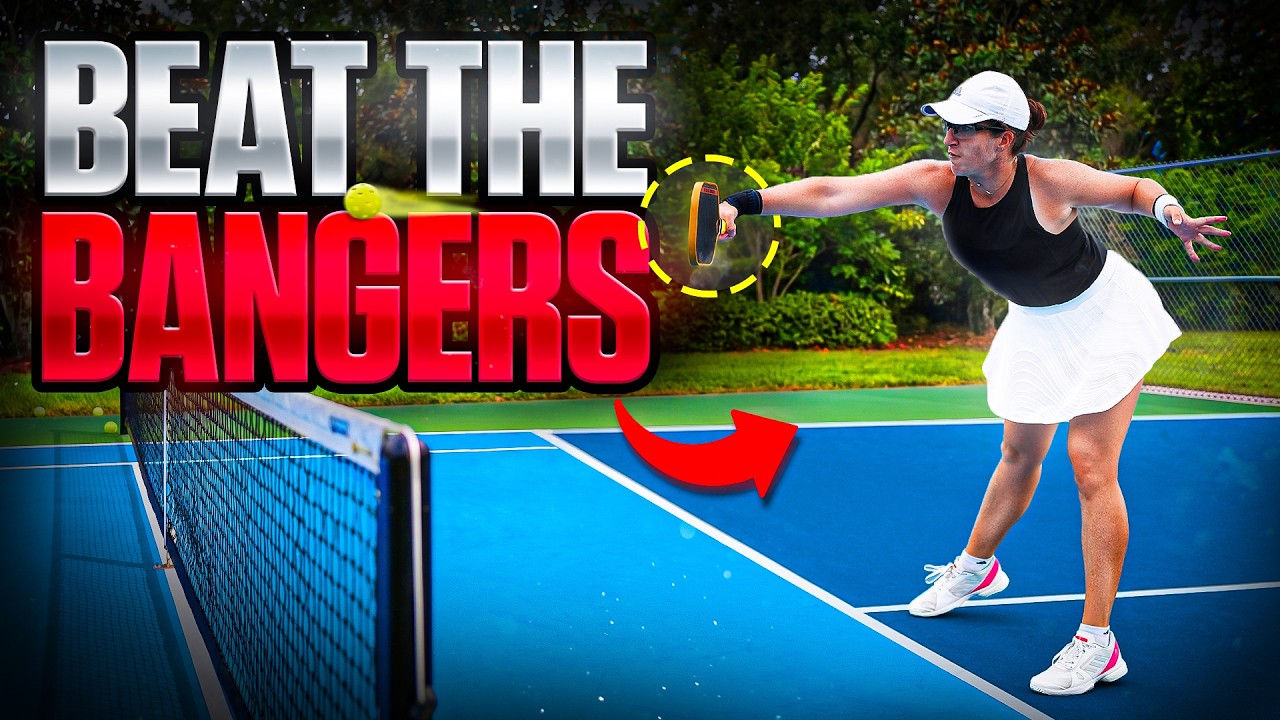
Handling drives in pickleball is the key skill separating players who lose to bangers and players who neutralize them. These four steps fix the most common mistakes players make when a hard drive is coming their way.
Handling drives in pickleball is where most recreational players fall apart, and it almost never comes down to athletic ability.
You watch the return you just hit instead of moving forward. You sprint to the kitchen line without a split step.
Then a banger fires one at your chest and you either swing too big, try to soften it up, or simply accept the hit.
These mistakes are fixable.
This breakdown comes directly from Mari Humberg Pickleball on YouTube, where she and her partner AB walk through every step of handling the drive and expose some genuinely bad advice that's been making the rounds.
Love pickleball? Then you'll love our free newsletter. We send the latest news, tips, and highlights for free each week.
Step 1: Stop Watching Your Return and Move In Immediately
The single most common mistake against bangers is standing at the baseline admiring your return shot instead of moving forward.
It sounds obvious when you say it out loud.
But when asked in clinics why they didn't advance after the return, players actually say things like, "It was a bad return, so I stayed back."
That reasoning is backwards.
A bad return is more reason to move in, not less, because a weak return gives your opponent free time to tee up whatever they want.
The fix is simple: go in after every return, no matter what.
Whether the return is perfect or barely clears the net, your job is to get up to the kitchen line as fast as you can.
This is the foundation for everything else in this system. If you're not moving in, the other three steps don't matter.
If you want to understand why this is also a positioning issue, read about how a weak return gives your opponent free time to set up their next shot.
Why Does Your Footwork Break Down When You're Running In?
Moving in is step one. But how you move in is step two, and most players get it wrong.
The typical mistake looks like this: player returns the ball, sprints toward the kitchen line, and arrives with no split step and the paddle dangling somewhere near their hip.
When the drive comes, they're mid-stride with no ability to react in any direction. The ball hits them, or they swing late, or they pop it up.
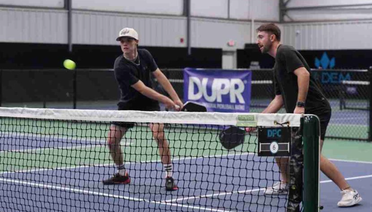
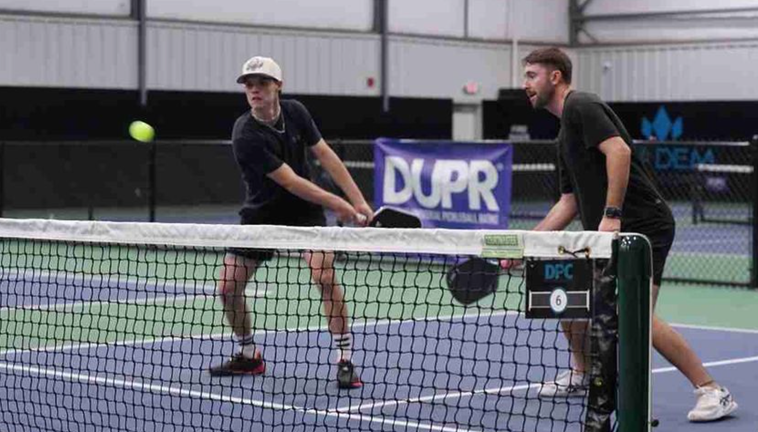
The split step is the fix. As your opponent makes contact, you stop, load onto the balls of your feet, and get the paddle out in front in ready position.
You don't need to be at the kitchen line when you split step. A couple of feet behind the line is fine.
What matters is that you are stopped and balanced at the moment contact is made.
- Return the ball and immediately move toward the kitchen line
- Watch your opponent as they prepare to strike
- Split step as they make contact, not after
- Hold your paddle in front of you at chest height
- Track the ball from that balanced, ready position
Getting this timing right is everything. A good resource on the mechanics here is this breakdown of fixing your split step timing.
Step 3: Recognize Which Balls Are Actually Going Out
Here's the part that will save you more points than any technique adjustment: most balls bangers drive at you above your belly button are going out.
Players say the drive is coming too fast to react. That is almost never true.
What's actually happening is they're panicking and swinging at balls that were never in play.
If a hard drive is sailing above your belly button with pace on it, do not swing. Let it go. Watch where it lands.
You'll be shocked how many bounce deep or long.
USA Pickleball's official rules put the line call in your hands, so every out ball you refuse to touch is a free point you already won.
The real cutoff for letting balls go is lower than most players think.
Learning to read ball trajectory under pressure is a skill you build through repetition, not instinct.
A good drill for this: have a partner drive balls at you repeatedly. Do not swing at anything. Just watch where each ball bounces.
After ten balls, you'll have a much clearer picture of which ones were actually landing in.
The banger's power becomes their own worst enemy when you stop chasing their out balls. They are already trying to hit at 100 percent. Mistakes will follow.
This is also directly connected to the mindset shift that helps you stop swinging at balls that are already out.
 The Dink Media Team
Why "Soften It Up" Is the Wrong Advice
You've probably seen videos telling you to dink or "soften up" the incoming drive. That advice is going to cost you points.
Softening a hard-driven ball requires elite touch and years of racket sport experience.
Most recreational players cannot consistently absorb a fast drive and redirect it softly over the net.
Attempting to do so usually results in popping it up or dumping it in the net.
The better move is to punch or block the ball.
Those are two words for essentially the same action: a short, firm swing that meets the ball in front of your body and redirects it with control.
Here's what that looks like in practice:
- Meet the ball out in front of your body. Do not let it travel into you.
- Use a compact swing. Short backswing, short follow-through. The power is coming from the ball itself.
- Aim for the middle of the court. Keep it low. You are not trying to win the point here, you are neutralizing it.
- Reset immediately into ready position for the next shot.
A big swing is the other common error on this step. When players feel the speed coming at them, they overreact with a full swing.
That leads to a miss or a ball that flies long.
Short swing. Contact out front. Middle of the court.
That's the entire formula.
For a deeper look at the mechanics behind blocking hard shots, this guide on blocking hard shots in pickleball covers the same principles with additional detail.
 The Dink Media Team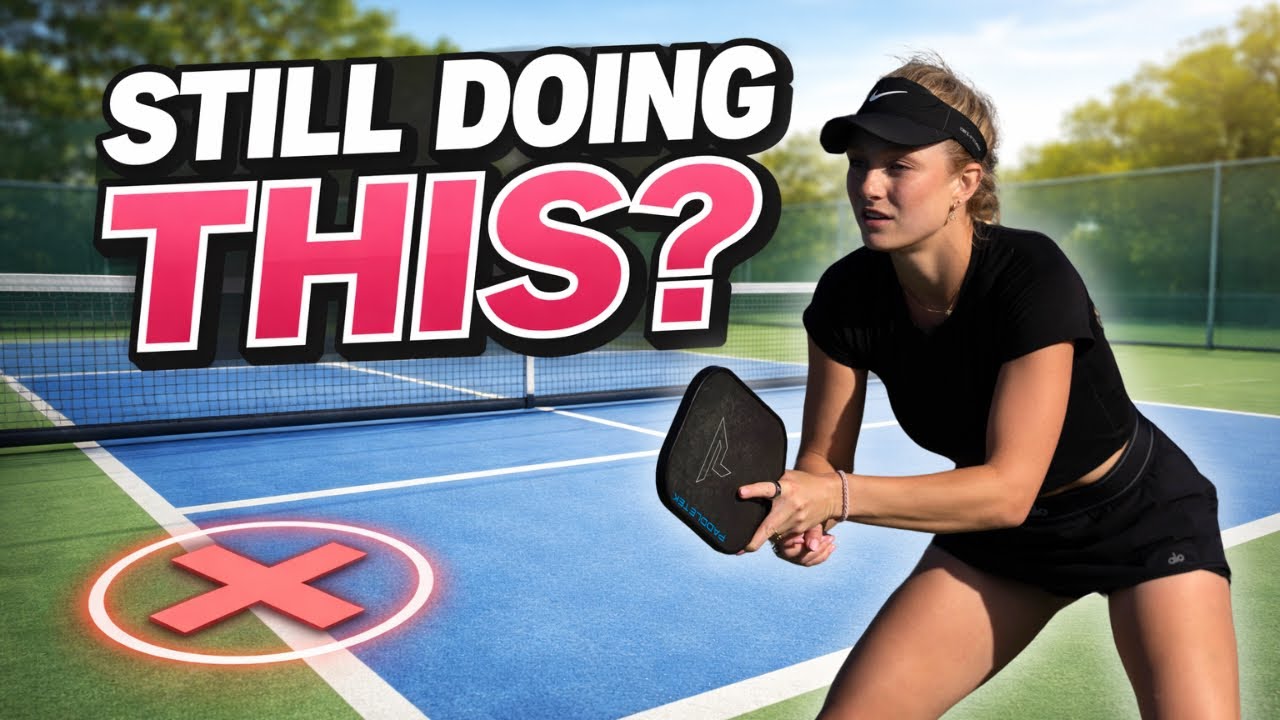
What Actually Happens When You Execute All Four Steps?
When you put all four steps together, something interesting happens to the banger: they start making errors.
They are already swinging at 100 percent. When you keep returning their drives back at them with a short punch, they have to keep generating pace from scratch.
That is exhausting and inconsistent.
Most bangers cannot sustain that output across an entire game.
They will miss into the net, sail one long, or start pulling back on their power without realizing it.
Your job is just to keep the ball in play and stay patient. You do not need to overpower them. You need to outlast them.
Understanding the real reason players lose to bangers almost always comes back to these same execution errors rather than any speed or strength disadvantage.
 The Dink Media Team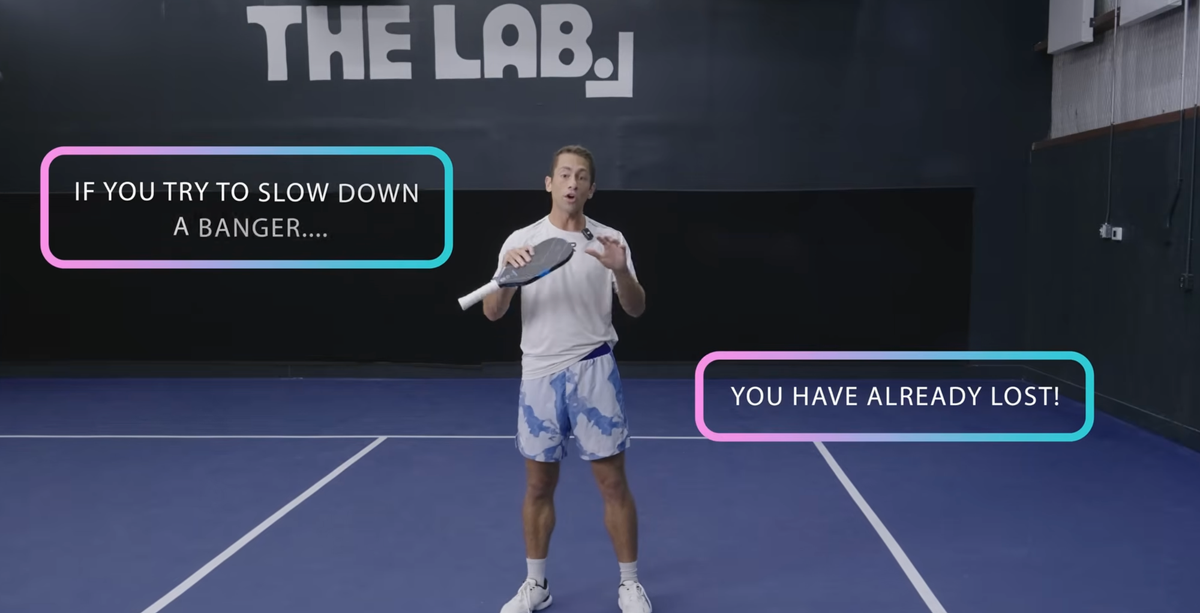
How Do You Practice This Under Pressure?
Reading about these steps is one thing. Training them under simulated pressure is another.
The best drill for handling drives is also the simplest.
Have a partner stand at the baseline and drive ball after ball at you while you practice the full sequence: split step, read the flight, decide to punch or let go, execute the block.
Do not alternate between different drills. Repeat this one situation until the responses become automatic.
The panic that most players feel against bangers comes from unfamiliarity, not inability.
You can also build your hand speed and reaction independently.
This resource on fast hands mechanics from a top 10 pro gives you specific techniques for improving your reaction at the net.
And if you want to connect this work to your broader shot selection habits, the 1 to 10 scale for shot selection gives you a framework for knowing exactly when to block versus when to attack.
One more point worth repeating: the forehand and backhand block are separate skills. Bangers will likely test both sides.
Make sure you practice receiving drives on your backhand specifically, since that tends to be the weaker side for most players.
A targeted approach to resetting speed-ups and drives can help you build that backhand response without needing a partner every session.
 The Dink Media Team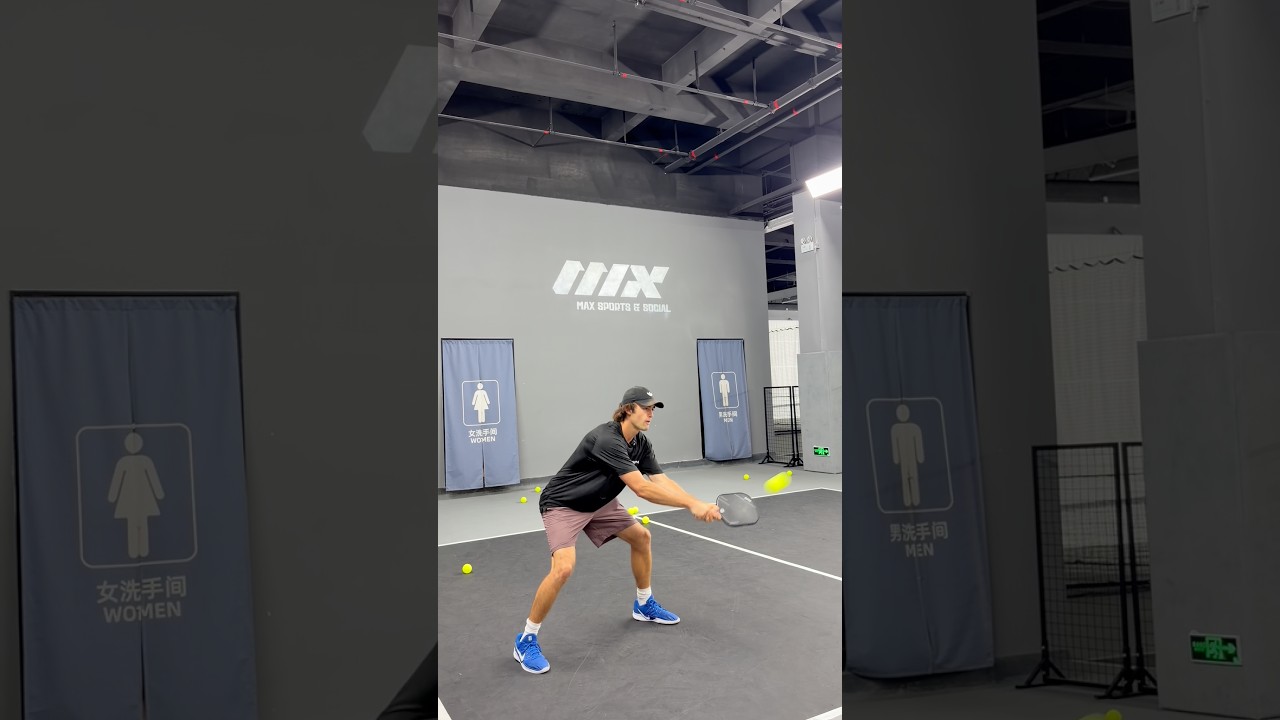
Quick Reference: The 4-Step System
- Step 1: Move in after every return, no matter how bad it is
- Step 2: Split step as your opponent makes contact, paddle up and ready
- Step 3: Read ball trajectory and let out balls go, especially anything above your belly button with pace
- Step 4: Punch or block the ball with a short swing, contact out in front, aim middle and low
That's it. No complicated footwork pattern, no advanced technique required.
These four steps will solve most of what goes wrong against bangers at the recreational and intermediate level.
If you want to take this further, look at how your positioning and court coverage play into your ability to stay calm under pressure.
Stopping the panic reflex in tight rallies is a skill that ties directly into handling pace.
Frequently Asked Questions
What is the best way to handle a hard drive in pickleball?
The best way to handle a hard drive is to split step as your opponent swings, hold your paddle in ready position, and punch or block the ball out in front of your body with a short swing. Avoid big backswings and do not try to soften the ball unless you have significant racket sport experience. Aim your block toward the middle of the court and stay low.
Should I let banger drives go out or try to hit them?
Any hard drive arriving above your belly button with pace on it is likely going out, and you should let it go. The key is training yourself to read the ball's trajectory before reacting, which requires repetition with a drilling partner. Players who chase out balls give bangers free points.
Why does trying to soften a drive usually fail?
Softening a hard drive requires elite touch that most recreational players have not developed. The incoming pace overwhelms a passive paddle face and often results in a net error or a pop-up the opponent attacks. A compact punch block is a much more reliable response at most skill levels.
What is a split step and when should I do it in pickleball?
A split step is a small hop or weight shift that gets you balanced and ready to move in any direction. In pickleball, you should split step exactly as your opponent makes contact with the ball, not before and not after. Doing it at the right moment lets you react to any angle the drive takes.
How do I stop panicking when a banger hits hard at me?
Panic against hard drives almost always comes from lack of repetition in that specific situation. Drill the four-step sequence regularly with a partner who is driving at full pace so the response becomes automatic. Managing panic in tight rallies is a trainable skill, not a personality trait.

Love Pickleball? Join 100k+ readers for free weekly tips, news & gear deals.
Subscribe to The Dink