

6 Hands Battle Habits That Beat Hard Hitters Without Hitting Harder
The best way to win a pickleball hands battle is to get the ball back over the net, not down at your opponent's feet. These six habits and drills show you how to out-last hard hitters without swinging harder.
You are in a fast exchange at the net, the ball is coming at your hip, and you try to crush it down through your opponent's shins.
The ball hits the tape, and the point is over.
That is the most common way to lose a pickleball hands battle, and it happens at every level. The fix is not faster hands or a harder swing.
These ideas come from Zane Navratil Pickleball on YouTube, where he works through hands drills with Ryan Dawidjan, coach of Anna Bright's partner Kate Fahey and Armaan Bhatia.
We broke down the habits, the drills, and the technique so you can use them at your next open play session.
Love pickleball? Then you'll love our free newsletter. We send the latest news, tips, and highlights for free each week.
Why Should You Get the Ball Back Instead of Down?
Getting the ball back over the net beats trying to hit it down, because the net is the only place on the court where you have a 0% chance of winning the point.
Ryan Dawidjan put it plainly: two or three balls back over the net, making your opponent play, is far more advantageous than going for a clean winner and missing into the tape.
Even at the pro level, most firefights end with the ball in the net, not with a winner through someone’s shin.
The data backs that up. A 2025 notational analysis of elite pickleball found that 63.7% of points ended on unforced errors rather than clean winners.
You are only 12 to 14 feet from your opponent at the kitchen line, since the non-volley zone runs seven feet off the net on each side.
At that distance and at that pace, hitting down at the feet is close to an impossible task.
If you are playing optimally, your errors should flip. Most rec players put about 90% of their hands errors in the net, with 5% wide and 5% long.
You want the opposite, with the bulk of your misses sailing a little long. For more on this mindset, read why not to try to hit a pickleball winner.
What Does "Pop Pop" Mean in a Hands Battle?
Pop pop means staying ready for the next ball in the exchange instead of treating every volley as a one-off winner attempt.
It is a rhythm of two or three compact punches, flicks, or blocks that keep the ball alive and keep you in position.
You are not trying to end the point with the first contact. When you make your opponent hit again, you force decisions.
They have to coordinate with their partner, they might blast one long, or they might hit an out ball.
If the ball goes into the net, none of that happens. The point is over no matter how well you were set up.
Dawidjan does say there is a time for down. If the ball is high and you are tall and on top of it, down is the natural motion.
Otherwise, get it back through the court and reset to a ready position. That single habit decides more of the hands battle than your paddle speed ever will.
6 Habits That Win Hands Battles
- Track the net as the worst miss. A ball into the tape is always worse than a ball that travels a little long. Send a high one back to your opponent's chest before you accept a net error.
- Stay athletic. Bent knees, a balanced base, and moving feet matter as much as your hands. Dawidjan and Zane agree that hands is as much about the feet as the paddle.
- Get comfortable blocking. A block gets the paddle in front of the ball without adding pace. It frees you from the need to hit hard, and hitting hard is how most net errors happen.
- Vary your targets. Hit forehands, backhands, and body shots instead of trading at the chest. This trains the variety you see in real games.
- Match the swing to the ball height. A ball at the hip needs an out and forward path, not a slap straight across.
- Counter selectively. Do not spam the counter on every ball. Block first, and counter when you are in position.
Treat these as a checklist you run through every time you start a hands session. Each one shows up in the consistency work below.
 The Dink Media Team
How Do You Run the Hands Drill Without Building Bad Habits?
The best hands drill uses a loose 70 to 80% pace, varied targets, and a scoring rule that punishes net errors.
Standing tall and trading chest-high balls is the most common way people practice hands, and it builds the wrong habits.
It trains a backhand dominant ready position and a stiff, upright posture that will not hold up in a real game.
Here is a better setup:
- Play cooperative rallies where you both aim for different spots, not winners.
- First player to hit three to five volleys into the net loses the round.
- Rotate modes so one player is defensive (blocking, jabbing, resetting) while the other leans in and stays aggressive.
- Keep the pace around 70 to 80% so you get more touches and more decisions.
Zane and Dawidjaneven added a penalty round: miss into the net, and your partner gets to hit you with a ball while you turn around.
Push-ups work as a less painful alternative. The point is to make net errors feel expensive.
Zane noted that after the push-ups, he was far more likely to miss more into the net, which shows how fast fatigue and tension creep in.
If you want more drills to run, check out 5 pickleball practice drills for any skill level.
 The Dink Media Team
What Is the Right Forehand Counter Swing Path?
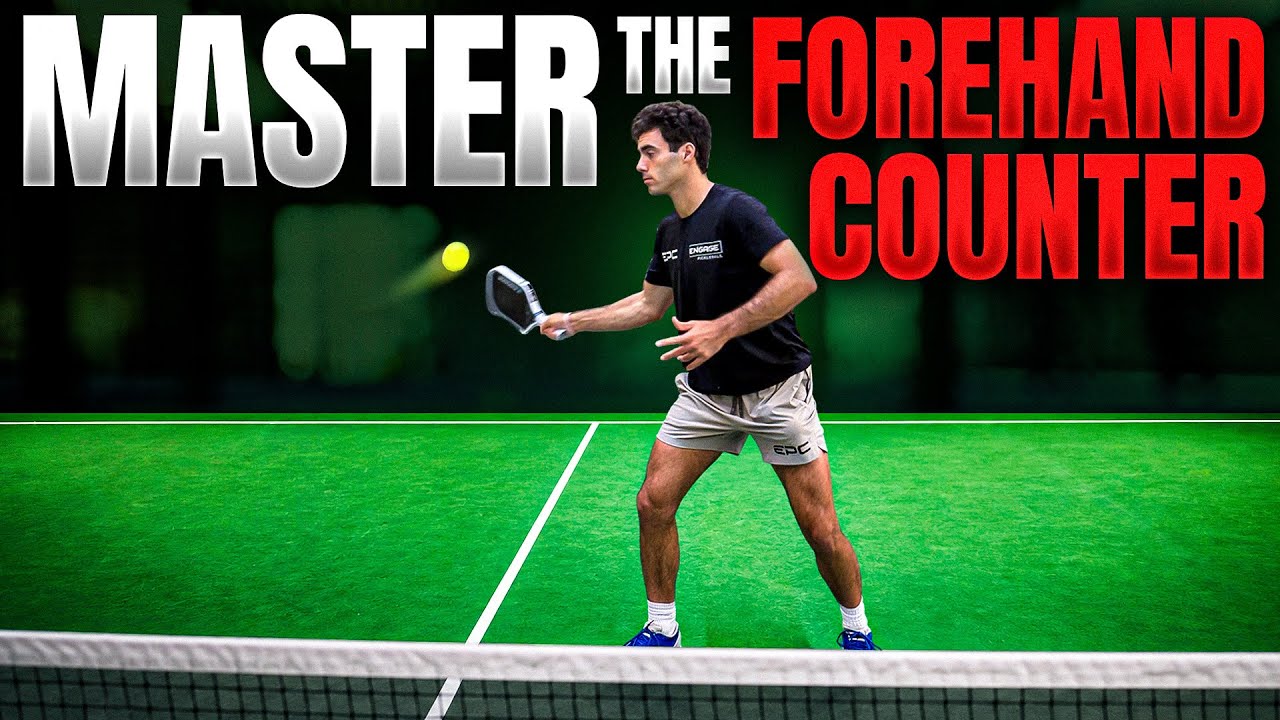
The right forehand counter starts at ball height and moves out and forward, finishing up by your right side, not slapping linearly across the ball.
Dawidjan pointed to Ben Johns as the model. Johns is very comfortable blocking on the backhand, but he loads his forehand and finishes high, even when the ball arrives in the hip slot.
The mistake most players make is the straight slap. If you swing linearly into a ball at net height or lower, you are aiming it into the tape.
Here is the difference:
- The slap: The paddle goes straight across the ball with no lift. It feels natural, and it sends a lot of balls into the net.
- The Ben Johns path: The paddle starts behind the ball at ball height, then moves out and forward with some lift, finishing high on your right side.
Zane noticed something important when he tried it. He felt crisper, and he caught the ball a little later in his stance, closer to his body.
That later contact point gives you more reaction time.
Dawidjanadvice was that unless you are Jorja Johnson, getting the ball out in front is a luxury, and catching it slightly later is often better for mere mortals.
One caution: do not drop the paddle below the ball. This is not a topspin dink. Keep your paddle preparation behind the ball, and swing out and forward.
The paddle face direction matters more than spin. Keeping the elbow attached to your body also helps.
It keeps you compact, lets you use core rotation instead of a floppy wrist, and avoids the chicken wing when you have to shift between forehand and backhand.
You can pair this with fixing your two-handed backhand volley if the backhand side needs work too.
 The Dink Media Team
Should You Block or Counter?
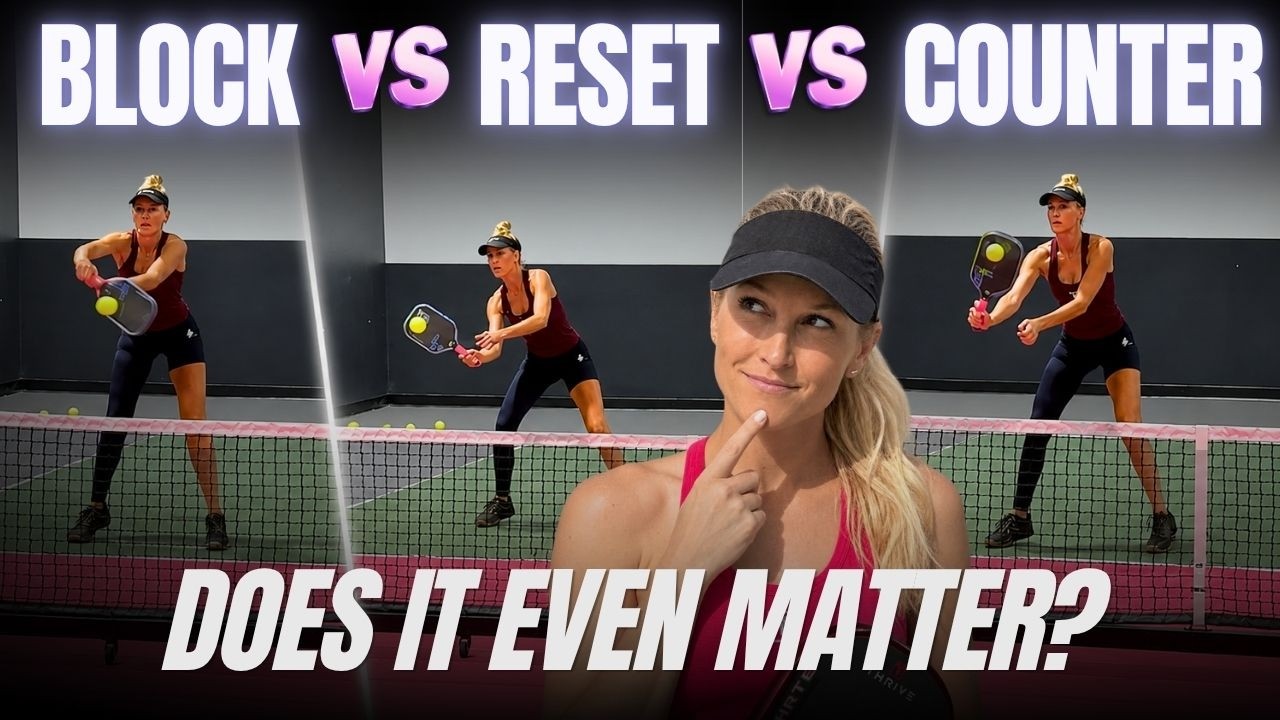
You should block by default and counter only when you are in position, because spamming the counter on every ball is the most common mistake from 5.0 players down to 3.5s.
Dawidjan sees players hit the “A button” on every ball when they could be blocking or resetting from the backhand.
A block extends the rally and gets you out of a tricky spot without gambling.
Notice how Ben Johns and Andrei Daescu handle a ball sped up at the body when they are slightly out of position.
They do not go for an outright counter, they soft block to set up for the next one.
A block is not the same as a reset. A reset is a carved, soft ball that you are trying to land in the kitchen.
A block puts your paddle in front of the ball without adding pace, and the goal is simply to make your opponent hit up. Here is the practical rule:
- Ball at your backhand or body, and you are not set: block.
- Ball cross body to your forehand, and you are loaded: counter.
- Ball is out of the air and you are in range: sit on it and attack.
For more on this, see 5 pickleball block fixes to stop popping up balls.
 The Dink Media Team
How Do You Practice Blocks Versus Counters?
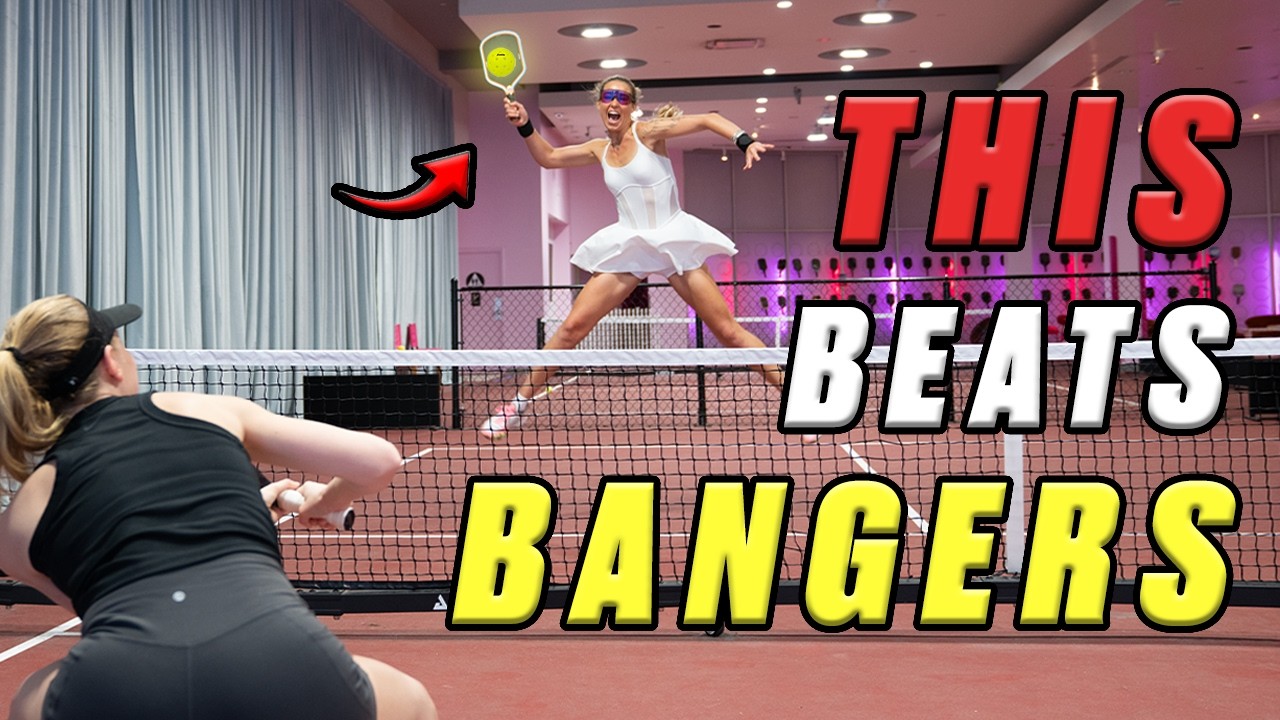
You practice them with a dead dink feed, where one player blocks at the body and tees off on forehand opportunities.
Dawidjan feeds Zane soft dead dinks that would never be hit at the kitchen line in a real game. Zane holds, then speeds up to the forehand or the body, and the pair plays the rally out cooperatively.
The key is the decision.
If Zane goes to the forehand, Dawidjan wants to punish it, and if Zane pulls it into the body, Dawidjan blocks away and makes him hit another ball.
That mirrors the new meta on both sides of the court. Players are sliding less, holding ground more, and tying their counters to the best pocket they have.
Dawidjan was honest about his own game: he does not have a snappy backhand counter on the body side, so he blocks there.
He wants his forehand to be the weapon and his backhand to be the consistent groove.
Your answer will depend on your skill set. A player with a two-handed backhand might counter more from that side, while a one-handed player might block more.
Know what you do well, and invite your opponent to hit into it.
 The Dink Media Team
Why Do Pros Look So Good Letting Balls Go?
Pros look good letting balls go because of survivor bias: you only see the balls they leave, not the ten they did not leave that would have sailed 30 feet out.
Zane pointed out that in their own cooperative rally, roughly one in four balls was heading out. In the moment, you do not even think about it.
Even players with the best hands in the world hit balls that would have traveled two feet long.
It is hard to lay off when you are tight, in hit mode, or just got beat cleanly.
That is still a better outcome than a ball in the net. A long ball at least required you to commit to the shot, and sometimes the ball does come back in.
Watch your next pro match with this in mind. Count how many volleys collide in the net and how many opponents never had to hit a ball at all.
If you want to see how top players think about aggression, read 5 punch volley keys that shut down aggressive attacks.
 Augustus Ge
What Is the Simplest Way to Start Today?
The simplest way to start is to pick one rule for your next hands drill: no net errors allowed, and clear the tape by a foot.
Keep your knees bent and your feet moving. Block more, counter less, and finish your forehand swing high on your right side.
If you are working on the soft game too, how to win a pickleball hands battle every time is a good companion read. It builds on the same footwork and positioning ideas.
Pair it with pickleball kitchen strategy: 7 principles to win dinks so your hands game and your dinking game support each other.
Frequently Asked Questions
How do you win a hands battle in pickleball?
Win by getting the ball back over the net instead of trying to hit it down. Use blocks, stay athletic with bent knees, and make your opponent hit two or three more balls.
Why do I keep hitting the net in hands exchanges?
You are likely swinging linearly or trying to hit down on balls at net height. Swing out and forward, and accept a ball that travels a little long over one that hits the tape.
What is the difference between a block and a reset in pickleball?
A block puts your paddle in front of the ball without adding pace, and it does not need to bounce. A reset is a soft, carved ball aimed to land in the kitchen.
Should I counter or block when a ball is sped up at my body?
Block first, especially from the backhand side or when you are out of position. Counter only when you are loaded and have the ball in your best hitting zone.
What is a good hands drill for beginners?
Play a cooperative rally at 70 to 80% pace, varying targets between forehand, backhand, and body. Lose a round if you hit three to five balls into the net.

Love Pickleball? Join 100k+ readers for free weekly tips, news & gear deals.
Subscribe to The Dink