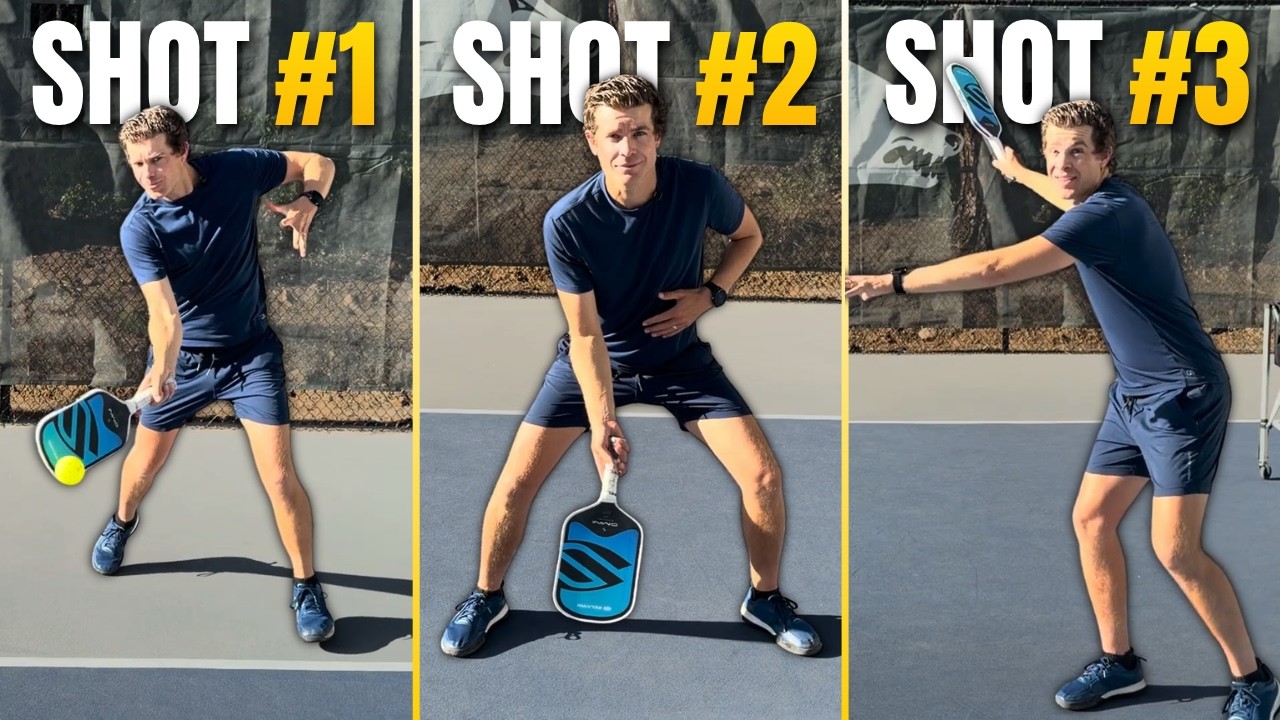

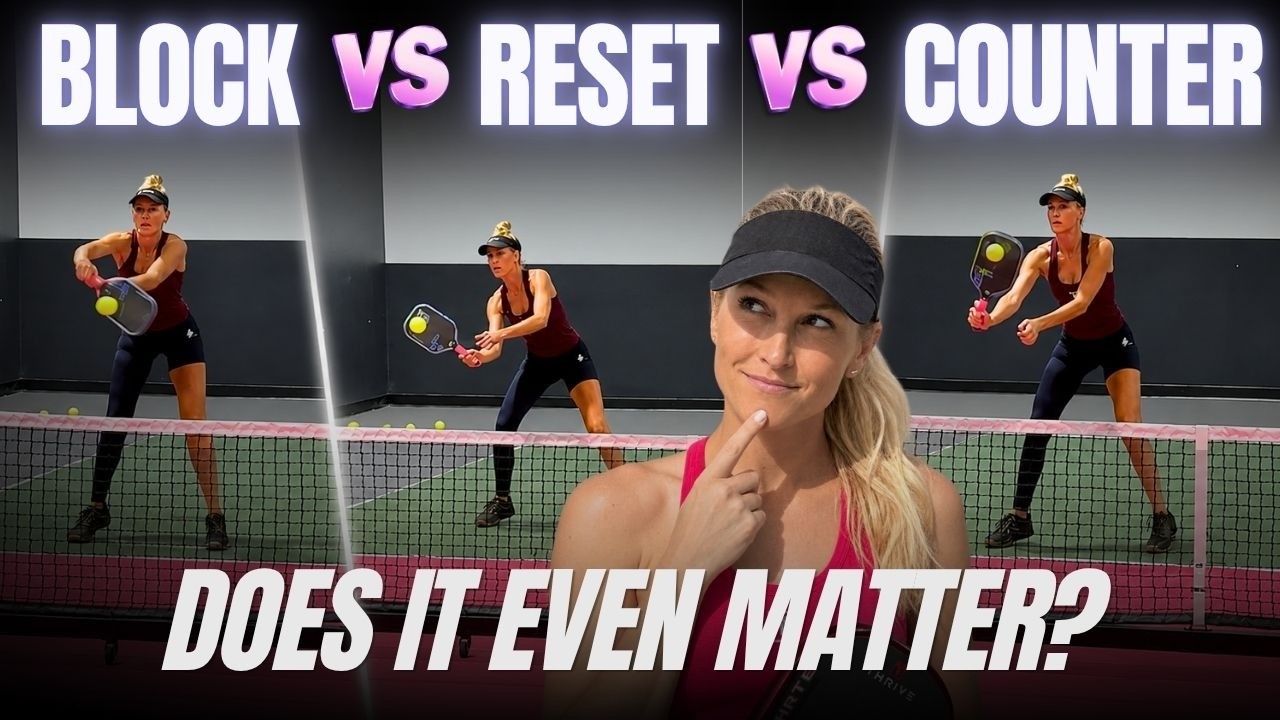
3 Shots That Are Actually 1: The Truth About Blocks, Resets, and Counters
Most players treat the pickleball reset, block, and counter as three completely different shots. A 6.0 national champion explains why that thinking is costing you points.
You are standing at the kitchen line, getting driven at, and your brain is trying to decide: do I reset this, block it, or counter it?
That split-second confusion is costing you the point before you even swing.
Here is the uncomfortable truth. The pickleball reset, the block volley, and the counter attack are not three separate skills.
They are the same shot wearing different labels, and until you understand that, you will keep overthinking your way into errors.
This breakdown comes from Jilly B Pickleball on YouTube, a 6.1 DUPR rated, two-time national champion who has coached hundreds of players through this exact confusion.
The fix starts way before the ball gets to your paddle.
Love pickleball? Then you'll love our free newsletter. We send the latest news, tips, and highlights for free each week.
Why the Labels Are Getting in Your Way
Stop thinking about which shot to hit. Start thinking about one thing only: finding your opponent's feet.
The phrase Jilly B uses is "break ankles, not hearts."
You aren't trying to blast winners. You're trying to get the ball down low so your opponent has no comfortable attack option.
A good pickleball reset does that. A good block does that. A good counter does that.
The goal never changes, so why treat these shots like they require entirely different mechanics?
Most players get stuck because they're still trying to hit through people.
That's a 4.0 mentality. At 5.0 and above, the priority is placement over power, and the posture that produces that placement is identical across all three shots.
What Matters Most Before Any Pickleball Reset?
Your posture. Not your grip. Not your swing.
Your spine angle.
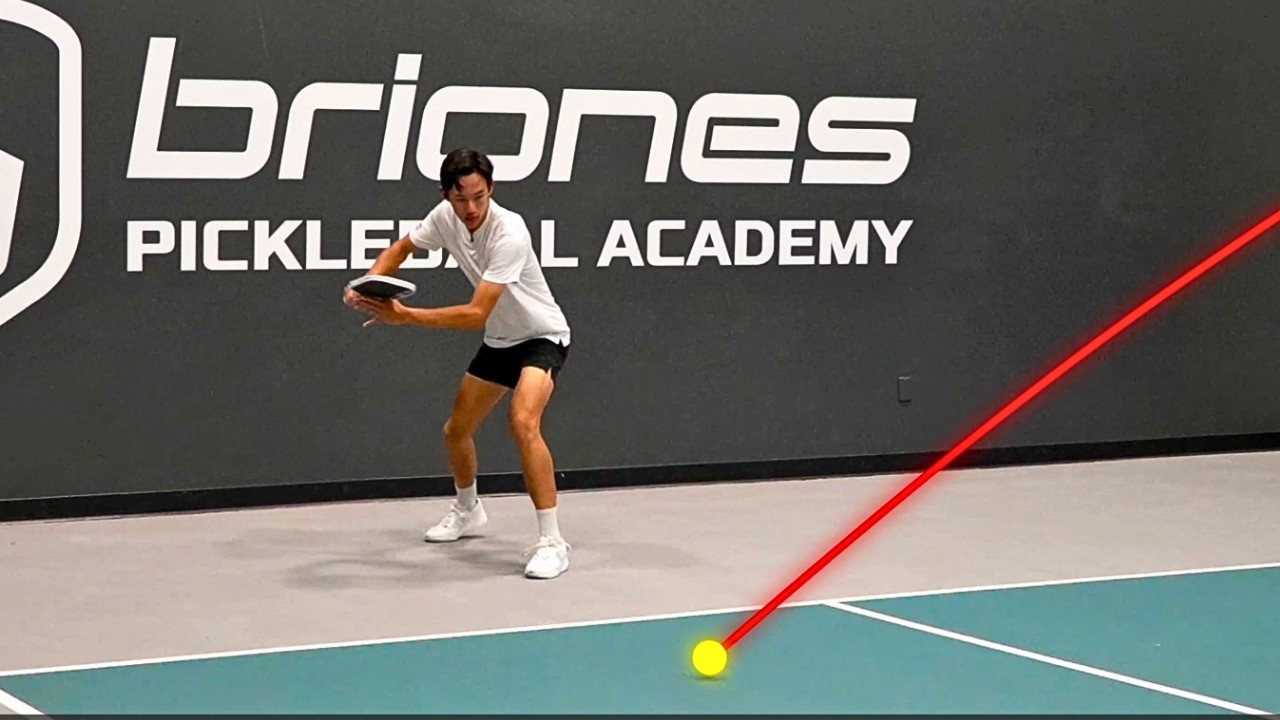
Look at the best players in the world at the kitchen. They look almost hunched over, and that's not an accident.
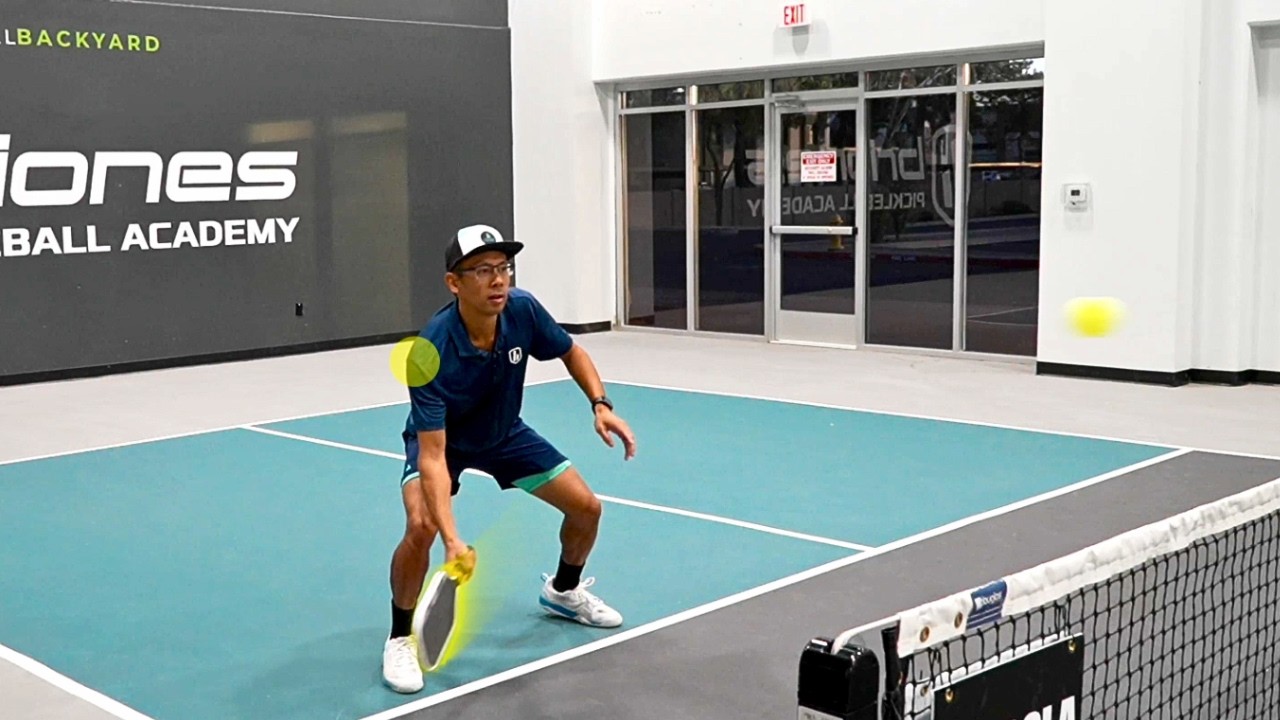
That forward lean with your chin in the kitchen, your butt back, and your paddle up is the athletic position that lets you generate power, absorb pace, and react to anything coming at you.
Here's what the wrong posture looks like. You stand tall, your paddle drifts close to your body, and you try to slice the ball with a limp arm.
That's how most 4.0 players hit a reset, and it's exactly why their resets float back up and get crushed again.
The reason your pickleball reset keeps failing usually has nothing to do with your hands. It has everything to do with your spine collapsing before contact.
When your spine goes up, the ball goes up. When your spine goes down, the ball goes into the net.
Spine stable means the ball goes where you want it. That's the entire equation.
The Butt Is Your Power Source
This might be the single most useful mechanical cue in pickleball that nobody talks about enough.
Your backside firing backwards is what creates power on every single one of these shots.
It is not your arm. It is not your wrist snap. Your hips loading back is the engine, and your stable spine is what keeps that power directed toward the target.
Alex Emery, another 6.0 DUPR player, put it this way to a student: "Your butt is your power source."
That cue works because it immediately stops players from reaching forward with their arms and breaking their posture in the process.
Practice this at home in front of a mirror. Get into that hunched posture with your paddle up and move around without letting your spine angle break.
If you can hold that, you can hit a pickleball reset, a block, and a counter from the exact same ready position.
 The Dink Media Team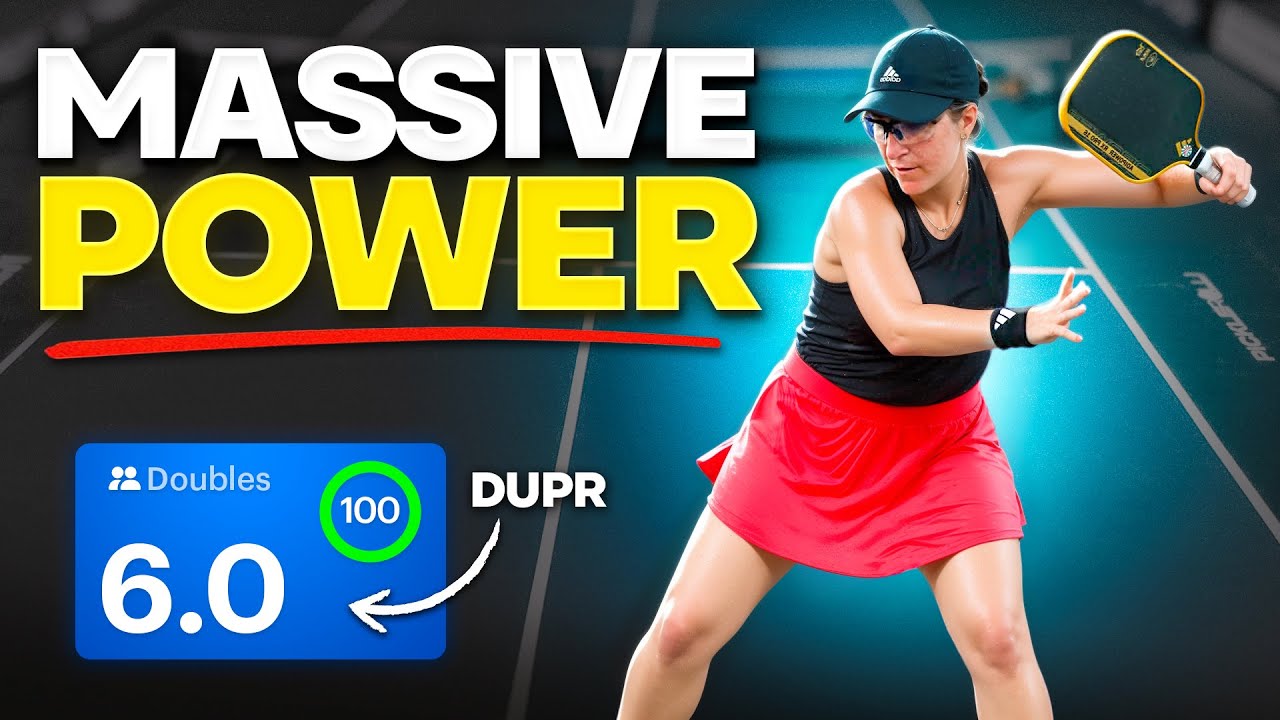
So What Actually Changes Between the Three Shots?
The direct answer: almost nothing. The posture stays the same. The target stays the same.
The only real variable is how much power you put into the ball.
Here is a breakdown of what each shot looks like when the mechanics are correct:
- Pickleball reset: Used most often in the transition zone or when a ball is low and fast at the kitchen. You're absorbing pace and redirecting the ball downward with minimal shoulder rotation. Your weight stays forward. The butt fires back to control the shot, not to generate offense.
- Block volley: Used when you're already established at the kitchen line and being driven at. The swing is short and linear, almost a push, and the goal is smart defense that keeps your opponent back. There is slightly less shoulder rotation than a counter, but the spine angle is identical to the reset.
- Counter attack: Used when the ball sits up enough to redirect aggressively. You're still finding feet, but you're putting more pace on the ball. Your weight finishes forward. The butt fires back harder. A small two-inch punch, not a big swing.
Notice what is not on that list: a big backswing. No backswing on any of these shots. Party is in the front, not in the back, as one coach puts it.
A two-inch punch on the counter is all you need when your posture is doing the real work.
If you want to see what this looks like when it breaks down on the counter, this comparison of the counter versus the block shows the exact moment players let weight fall backward and why that kills the shot.
 The Dink Media Team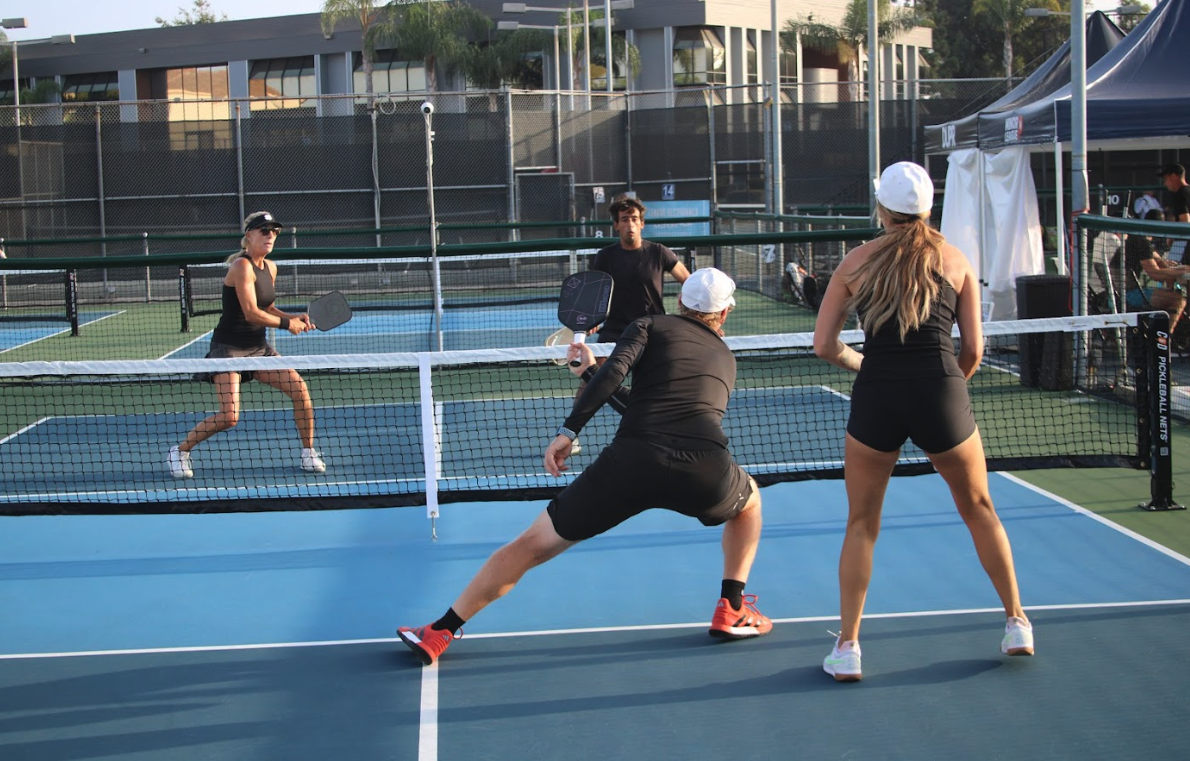
Where Should Your Paddle Live?
Keep the paddle in front of you with the tip pointing up. That's your sword and your shield.
What you can't do is let the ball get inside your body.
When you get chicken winged, or what Jilly B calls T-Rexy, with your elbows pulled in close to your ribs, you lose all leverage.
Some top players like Anna Leigh Waters, Anna Bright, and Georgia Johnson keep the paddle close to their face. Others extend it farther out.
Both work. What doesn't work is letting it collapse behind you or drop below your waist before the ball arrives.
Find the paddle position that gets you to the ball as early as possible.
Early contact is one of the most underrated advantages in winning hands battles at the kitchen.
It's also worth knowing exactly where you can legally take that volley, since the official rules governing the non-volley zone decide whether your best counter counts or costs you the point.
 The Dink Media Team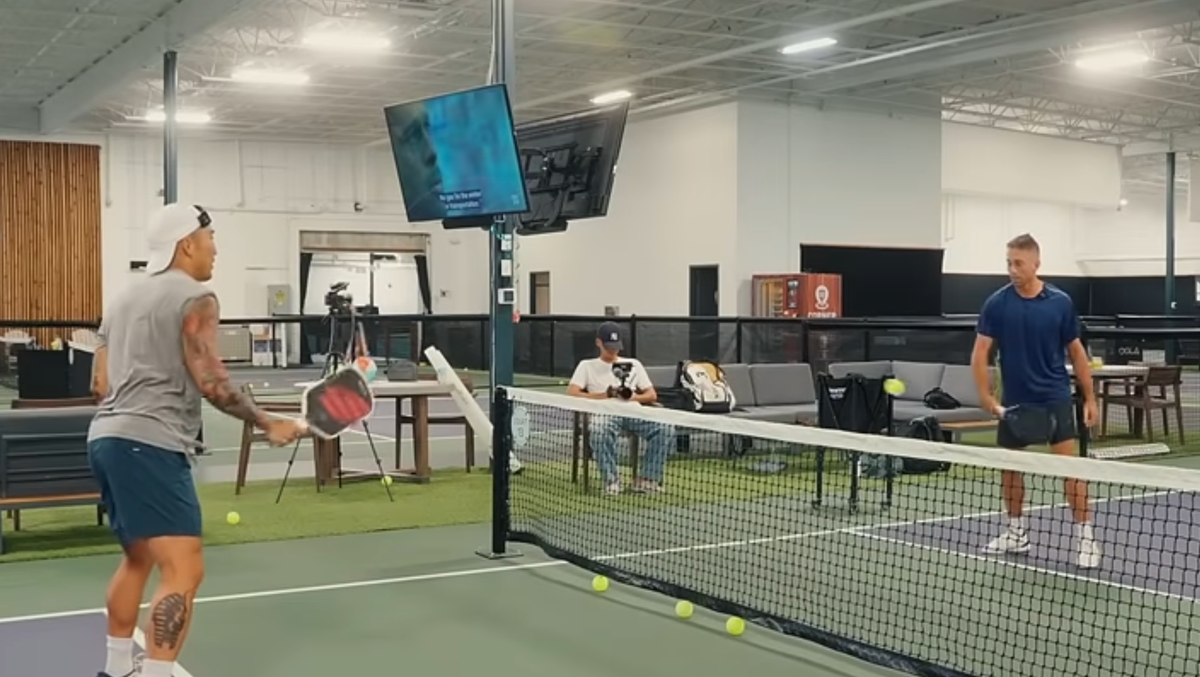
When Should You Reset vs. Counter?
This is the million-dollar question, and the answer is simpler than you think. Let the ball decide.
If the ball is low and fast and you are in the transition zone, reset it.
If the ball is low and fast at the kitchen line, reset it. If the ball sits up and you are in a good position at the line, counter it.
If you are being driven at with a flat hard drive at the kitchen, block it.
But here is what actually helps you make that decision faster and more automatically:
- Get into the correct posture before the ball comes. If you wait until the ball is on you to get low, it is already too late.
- Keep your paddle up. Not at your hip, not at your waist. Up and in front.
- Ask one question: where are their feet? Not what shot do I hit, not how hard do I swing. Just find the feet.
- Let the amount of power you apply be the only variable. Everything else stays the same.
This is also why the most common reset mistakes are mechanical, not mental. Players know they should reset.
They just cannot execute it because the posture has already broken down before the paddle even moves.
 The Dink Media Team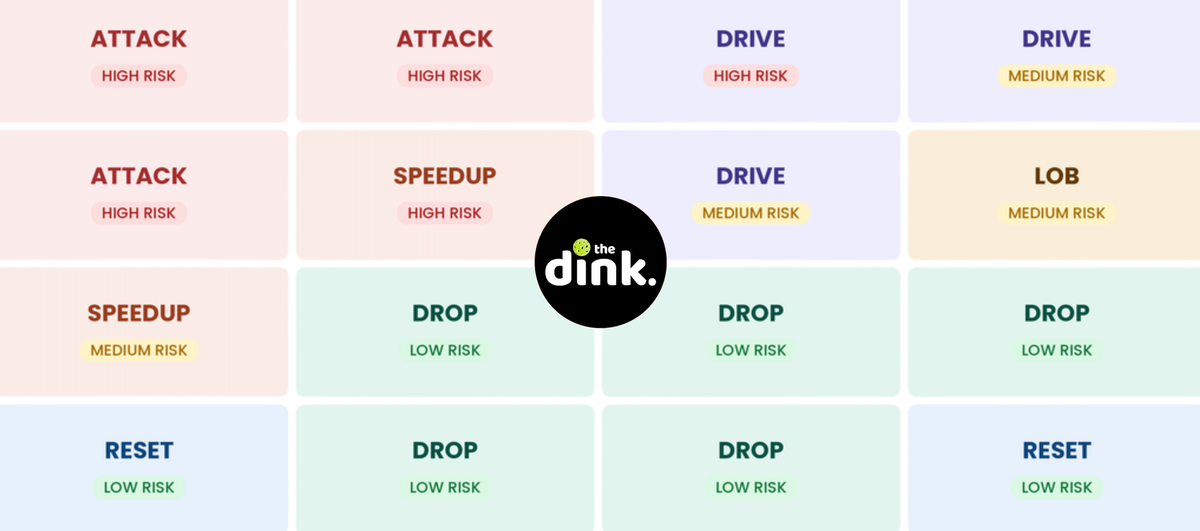
The Static Weight Problem Nobody Talks About
At a recent camp, one student got the posture right on her counter but her weight was completely still. The shot had no direction. It just kind of existed.
Your weight needs to finish moving forward on the counter. That does not mean lunging. It means your momentum ends up toward the net, not behind you.
Think of it as pushing backwards with your hips so that your torso and hands can travel forward into the shot.
Static weight is one of the bad habits that cost players points at 4.0 and above.
The mechanics look fine until you slow down the video and realize nothing is actually moving forward at contact.
Weight back with a big swing is the fastest way to pop up a counter or spray a reset wide.
Weight forward with a compact punch is how the best players make these shots look effortless.
 The Dink Media Team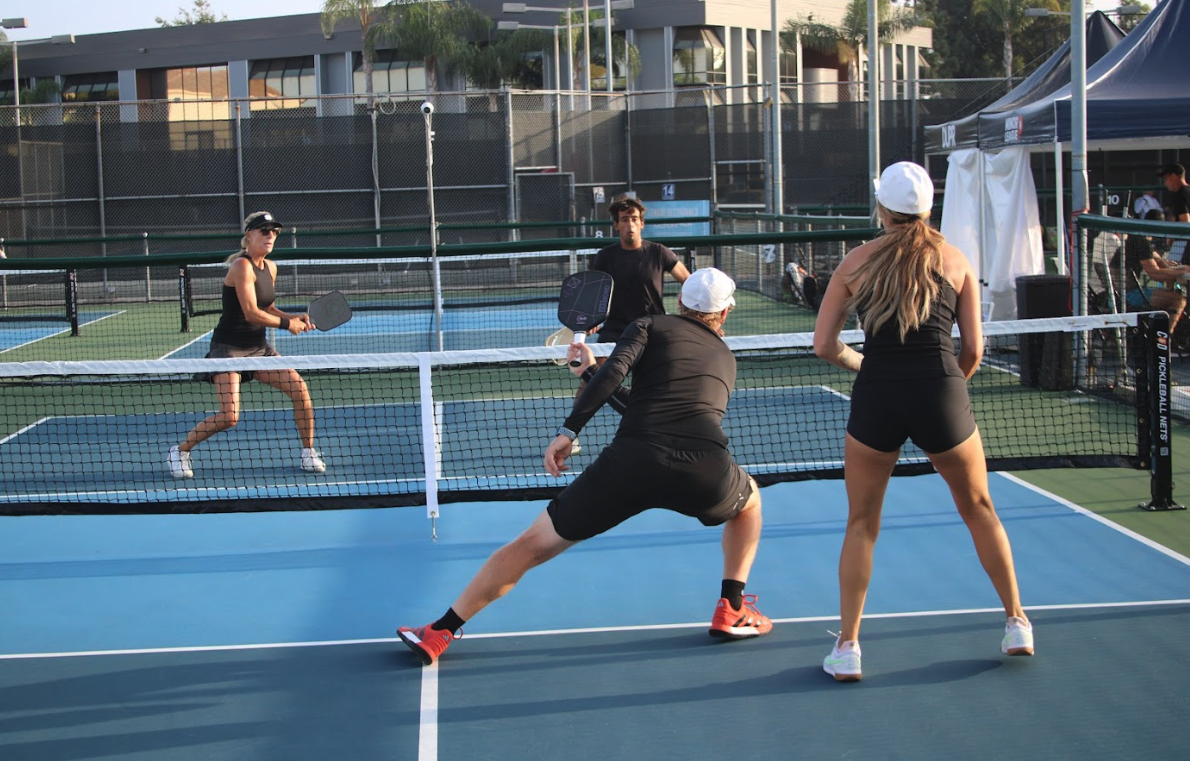
Can You Practice This at Home?
Yes, and you should. Posture work requires no court, no partner, and no ball. Just a mirror.
Get into your athletic stance with that chin-forward, butt-back position and move around without letting your spine angle change.
Can you shuffle left and right while holding it? Can you simulate a counter punch without your back collapsing?
This kind of at-home rep rewires your movement patterns faster than you'd think.
It's also where you catch your paddle position drifting, which is one of the easiest things to lose without noticing.
Once the posture is locked, everything else becomes repetition. Get into position, find the feet, and let pace be the only decision left.
That's the whole system.
The kitchen line volley fixes that make the biggest difference all come back to this same foundation. Posture first, target second, power last.
Forget block. Forget reset. Forget counter. Find the ankles.
Frequently Asked Questions
What is the difference between a pickleball reset and a block volley?
The mechanics are nearly identical. A reset is used most often in the transition zone or against a low fast ball at the kitchen, while a block volley is used when you are already established at the kitchen and being driven at with a flat drive. Both require the same spine angle, the same forward weight finish, and the same target: your opponent's feet.
Why does my pickleball reset keep floating back up?
Your posture is breaking before contact. When your spine straightens up, the paddle face opens and the ball travels upward. Stay hunched with your chin forward and your butt back, keep the paddle in front of you, and let your hips do the work rather than your arm.
How hard should I swing on a counter attack?
Think of it as a two-inch punch, not a full swing. You are not taking a big backswing or throwing your weight backward. Your hips fire back, your weight moves forward, and the punch is short and compact.
The power comes from your lower body, not your arm.
When should I counter instead of reset at the kitchen line?
Counter when the ball sits up and you have time and position to redirect it aggressively toward your opponent's feet. Reset when the ball is low, fast, or you are out of position. The posture is the same for both.
The only thing that changes is how much pace you apply.
How do I stop overthinking block, reset, and counter decisions during a point?
Replace the three-way decision with one question: where are their feet? When your only job is to get the ball to your opponent's ankles, the shot selection takes care of itself. Get your posture right before the ball arrives and let the incoming pace tell you how much to give back.

Love Pickleball? Join 100k+ readers for free weekly tips, news & gear deals.
Subscribe to The Dink