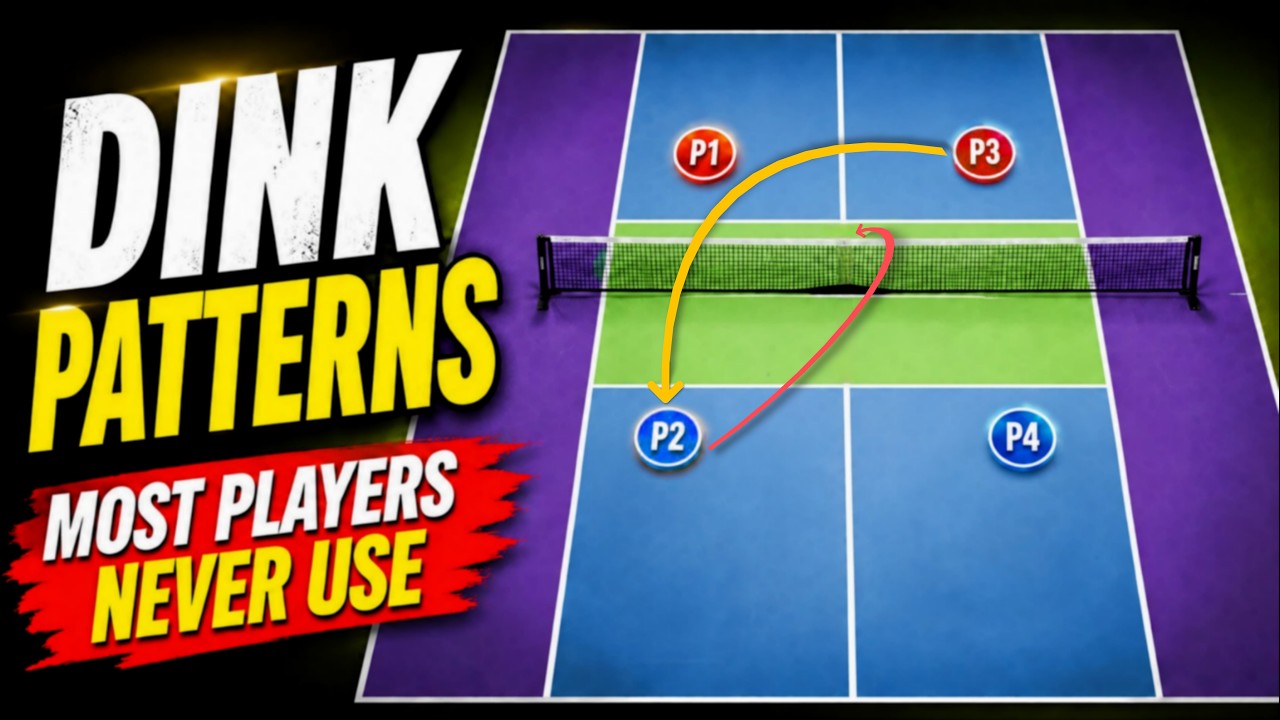
Most pickleball players default to the same cross-court dink pattern over and over, which actually hurts their game. Master these three dink patterns instead to force more errors and win more points.
If you've been stuck in endless cross-court dink rallies, unable to create mistakes from your opponent, the problem might not be your technique.
It might be your dink pattern.
Most recreational pickleball players fall into the same trap: they default to pulling their opponent wider and wider, hoping that eventually the ball will go out or pop up.
But here's what actually happens. You lose control. The ball travels further from the net.
You leave gaps between you and your partner that your opponents exploit. And you end up making more mistakes than they do.
C.J. Johnson, founder of Better Pickleball and a coach focused on helping players over 50 improve their game, recently broke down three dink patterns that work far better than the standard cross-court approach.
The video demonstrates how changing your pattern forces opponents off balance and creates the errors you've been chasing.
Love pickleball? Then you'll love our free newsletter. We send the latest news, tips, and highlights for free each week.
Why the Cross-Court Dink Pattern Isn't Your Friend
Let's start with the problem. The cross-court dink pattern is the most common pattern at the non-volley zone, and for amateur players, it's the default move.
You hit it cross-court. Your opponent hits it back cross-court. You try to pull them wider. They try to pull you wider. Repeat until someone makes a mistake.
The issue is that wider isn't always better. When you keep pulling the ball further from the net, you sacrifice control.
You need more energy to get the shot back over, and most players miscalculate that energy and either hit it wide or into the net. That's mistake number one.
Mistake number two happens because you're so focused on the cross-court rally that you don't reposition yourself to a neutral position on the court.
You stay planted, expecting the ball to come back in the same direction.
This leaves space open between you and your partner, and your opponents will absolutely take advantage of it.
"The cross-court dink isn't the problem," Johnson explains in the video. "Having that as your only pattern is."
Pattern 1: Foot to Foot (The Simplest Dink Pattern)
The first alternative dink pattern is probably the easiest to implement, and it's devastatingly effective. It's called foot-to-foot, and here's how it works.
Instead of hitting cross-court, you target your opponent's feet.
- First shot goes to their left foot.
- Next shot goes to their right foot.
You're not moving them dramatically across the court. You're making them alternate between forehand and backhand constantly.
The beauty of this approach is that your opponent can't anticipate where the ball is going.
In a traditional cross-court rally, they know the ball is coming back cross-court, so they can position themselves accordingly.
With foot-to-foot, they have to react to each shot individually.
The more you move them between forehand and backhand, the greater the chance they'll make a mistake.
Johnson demonstrates this with his partner Susie Hartfield, a skilled pickleball player and golf professional.
Even when Hartfield knows the pattern is coming, the constant adjustment creates opportunities for errors.
In real match play, your opponent won't see it coming at all.
Pattern 2: Cross-Court to Middle (The Underused Dink Pattern)
Here's something that might surprise you: the middle of the court is the most underused dink pattern target at the non-volley zone.
Most players use the middle effectively with ground strokes and returns of serve. You've probably heard the saying:
"Middle solves the riddle."
It works because players don't know who's going to take the shot. The same principle applies at the net.
In this dink pattern, you alternate between hitting to the outside and hitting to the center.
One shot goes to the sideline (about 12 inches inside to avoid going wide). The next shot goes right down the middle. Then back to the outside. Repeat.
 The Dink Media Team
What happens is that your opponents have to move side to side, and that's where mistakes happen.
Anytime they're moving, they're more likely to add extra energy to the shot, creating a pop-up.
Or they might make a footwork mistake, which throws off their foundation and causes the ball to go up or into the net.
Johnson sets up targets on the court to show exactly where to aim.
- The red target marks the safe zone on the sideline.
- The yellow target marks the center.
By hitting between these two zones, you create constant adjustment and stress without bringing the sideline into play.
The Dink Media Team
Pattern 3: The Bailout (Your Escape Route)
Now, what happens when you're the one getting pulled out of position? You need a bailout option, and Johnson provides two.
When you're under stress and pulled wide, the temptation is to hit it back wide. Don't. Instead, hit the ball back to the center of the court.
Yes, it has a longer distance to travel, but it buys you time to get back to a neutral position.
It might also cause problems for your opponents because they won't know who's taking the shot.
If the center shot isn't available, your second option is to hit it down the line.
This is the more difficult shot because the ball is coming to you at an angle, and you have to change that angle with your paddle.
But it works. You take the long shot and reposition your body so you can hit down the line, buying yourself time to recover.
Now, some players worry about the Ernie. If your opponent can Ernie (jump around the net and hit a putaway), then hitting down the line is risky.
But here's Johnson's argument:
Most players over 50, including top pros over 50, don't Ernie.
If you're playing against someone who does, then the bailout might not be your best option.
But for most matches, hitting down the line is a smart way to reset the rally and get back to neutral.
The Dink Media Team
How to Practice These Dink Patterns
The key to implementing these patterns is repetition. You can't just watch a video and expect to use them in a match. You need to drill them.
Set up targets on your court, just like Johnson does in the video. Use cones, water bottles, or circles.
Mark the safe zone on the sideline (about 12 inches inside) and mark the center. Then practice each dink pattern with a partner.
Start with foot-to-foot until it feels natural. Then move to cross-court to middle. Finally, practice your bailout options.
The goal isn't perfection. The goal is to build muscle memory so that when you're in a match and stuck in a dink rally, you can change your pattern without thinking about it.
The Dink Media Team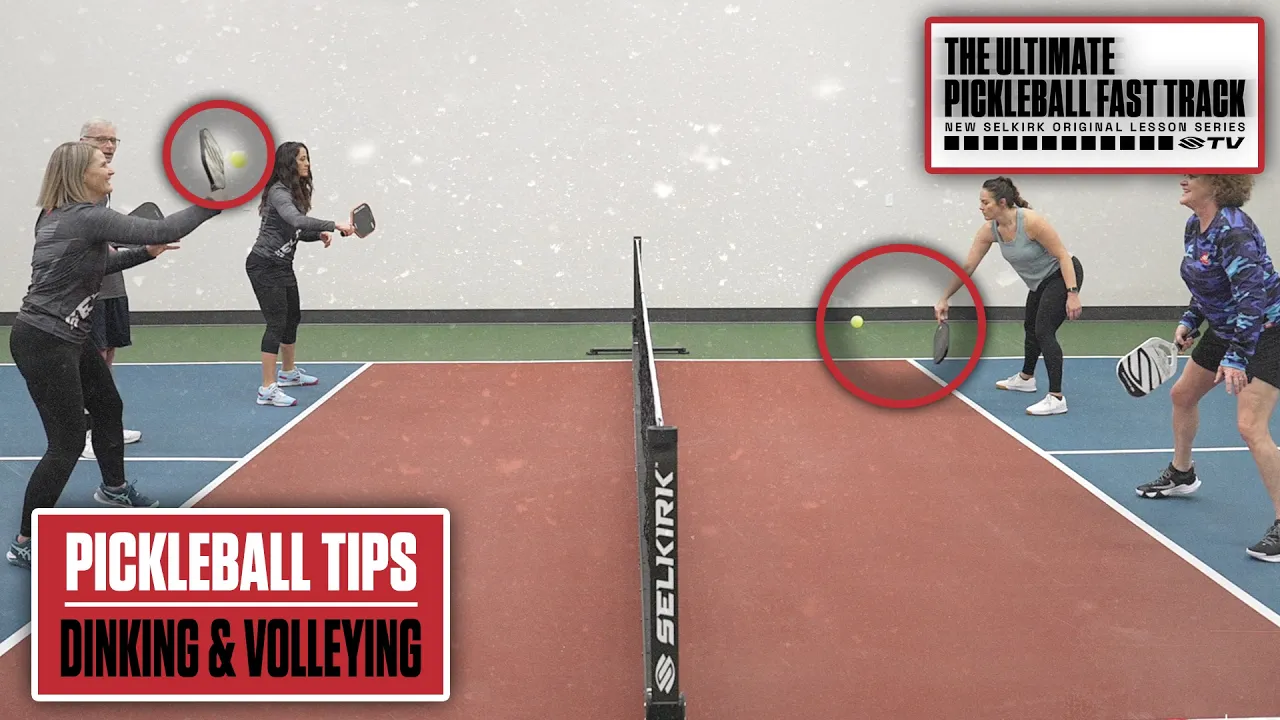
The Bigger Picture: Pattern Recognition in Pickleball
Understanding dink patterns is part of a larger skill in pickleball: pattern recognition. The best players don't just hit the ball.
They think about where they're hitting it, why they're hitting it there, and what their opponent is expecting.
When you master multiple dink patterns, you become unpredictable. Your opponent can't settle into a rhythm.
They have to stay alert and reactive. That's when mistakes happen. That's when you win points.
Johnson's approach is grounded in the idea that pickleball is a game of positioning and movement, not just stroke production.
If you can move your opponent around and force them to make adjustments, you'll create more opportunities than if you just try to hit winners.
Frequently Asked Questions
What's the difference between a dink pattern and a dink shot?
A dink shot is a single soft shot hit from the non-volley zone. A dink pattern is a sequence of dink shots with a strategic purpose. For example, foot-to-foot is a pattern where you alternate between your opponent's left and right foot. The pattern creates movement and forces mistakes.
Can I use these dink patterns in doubles?
Absolutely. In fact, these patterns are designed for doubles play. The foot-to-foot pattern works because your opponent has to move between forehand and backhand. The cross-court to middle pattern works because your opponents don't know who's taking the shot. The bailout options are essential in doubles when you're pulled out of position.
How long does it take to master these dink patterns?
It depends on how much you practice. If you drill these patterns regularly with a partner, you should feel comfortable using them in matches within a few weeks. The key is repetition and building muscle memory so you can execute them without thinking.
What if my opponent keeps hitting the ball back to the same spot?
That's actually a good sign. It means your pattern is working. They're reacting to your shots instead of controlling the rally. Keep the pattern going, and eventually they'll make a mistake. If they do start hitting to a specific spot, you can adjust your pattern or use your bailout option.
Are these dink patterns only for advanced players?
No. These patterns are designed for players at all levels, especially recreational players who are stuck in the cross-court dink trap. The foot-to-foot pattern is simple to learn. The cross-court to middle pattern just requires you to aim at two different targets. Even beginners can benefit from understanding and practicing these patterns.

Love Pickleball? Join 100k+ readers for free weekly tips, news & gear deals.
Subscribe to The Dink