Pickleball Strategy Evolution: What's Changed in 9 Years of Tournament Play
Jordan Briones breaks down his gold medal match from 9 years ago, revealing how pickleball strategy has fundamentally shifted. From dinking dominance to aggressive drives, the evolution of pickleball strategy shows why the game looks completely different today.
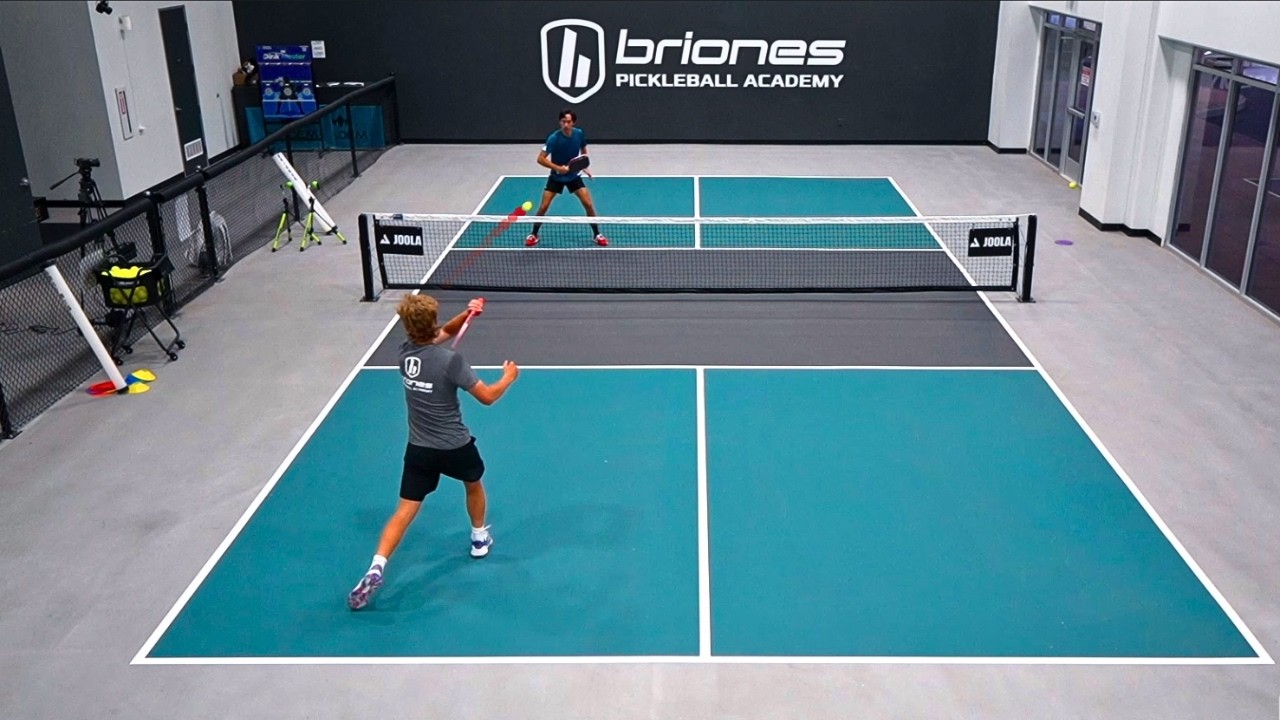
When Jordan Briones won his 5.0 gold medal match in Surprise, Arizona, nearly a decade ago, the pickleball strategy that carried him to victory looks almost unrecognizable compared to today's pro game.
In a recent breakdown video, Briones analyzes that championship match point-by-point, revealing how dramatically the sport has evolved and why the tactics that dominated tournaments back then would struggle against modern competition.
The shift in pickleball strategy isn't just about individual skill improvement.
It's about fundamental changes in equipment, player innovation, and the collective understanding of what wins matches at the highest level.
Love pickleball? Then you'll love our free newsletter. We send the latest news, tips, and highlights for free each week.
The Dinking Era: When Consistency Beat Everything
Nine years ago, pickleball strategy revolved around one core principle: don't miss.
Briones drilled dinks relentlessly before that tournament, knowing that his consistency and backhand control would be his competitive edge.
In the match footage, you can see him grinding opponents down with cross-court dinking patterns, rarely venturing down the line, and playing almost exclusively to his opponent's backhand.
"I wanted to be the player that just didn't miss," Briones explains in the video. That mentality won him the gold medal.
The reason dinking dominated wasn't laziness or lack of aggression. It was physics.
The paddles back then had zero grit, minimal power, and poor dwell time. Hitting topspin from a low position was nearly impossible.
Aggressive drives were unreliable. So the best pickleball strategy was to keep the ball low, force errors, and win through attrition.
This approach worked brilliantly in 2017. But it's become a liability in 2026.
Why Modern Pickleball Strategy Demands Aggression
Today's pickleball strategy looks nothing like Briones's championship match. Modern paddles have grit, spin potential, and power.
Two-handed backhands are standard. Topspin dinking is expected. Aggressive third-shot drives are common at the 5.0 level.
The equipment revolution forced a strategic revolution.
When everyone can hit harder, spin more, and attack from anywhere on the court, grinding opponents down with slice dinks becomes a losing strategy.
You have to be ready to speed up, transition aggressively, and finish points at the net.
Briones himself has adapted.
Watching his old match, he notes how flat his serves were, how he never used two-handed backhands, and how he lacked the aggressive volleys that define modern play.
"The game has evolved so much," he says.
"It definitely took five to 10 years for pickleball to get bigger and bigger, for players to innovate new shots."
The Technology Shift That Changed Everything
Understanding modern pickleball strategy requires understanding why the old strategy worked.
Nine years ago, the softer yellow "Pure" balls had just arrived, and top players didn't even like them.
Paddles were underpowered. The game was slower, more methodical, more about positioning than athleticism.
"The technology has changed so much," Briones observes.
Harder serves, better ball technology, and paddle innovation didn't just make the game faster.
They fundamentally altered what pickleball strategy could accomplish.
When you can reliably hit topspin from low positions, dinking becomes a setup tool rather than a winning tactic.
When serves have real pace and spin, you can't just float them in. When paddles have grit, you can manipulate the ball in ways that were impossible before.
The old pickleball strategy of error-free grinding still matters. But it's now the foundation, not the entire structure.
 Alex E. Weaver
What the 7-11 Drill Reveals About Strategy Evolution
One detail stands out in Briones's breakdown: he still uses the 7-11 drill today, and he used it nine years ago.
The drill (seven dinks, one drop, one reset) teaches the exact transition skills that matter now more than ever.
Back then, the 7-11 drill was about developing consistency and footwork. Today, it's about practicing the explosive transition from dinking to attacking.
The drill hasn't changed. The context has.
This reveals something crucial about pickleball strategy evolution: the fundamentals remain.
Getting to the net line, controlling the kitchen, managing positioning.
But the tempo and aggression required to execute those fundamentals have accelerated dramatically.
The Dink Media Team
Why Aspen Kern's Misdirection Still Matters
Briones's partner in that gold medal match was Aspen Kern, a national champion and one of the sport's original innovators.
Watching Kern play, you see something that transcends equipment and era: shot placement and deception.
Kern had incredible wrist manipulation and misdirection even when paddles couldn't spin the ball. He'd set up a middle dink and flick it up the line.
He'd position himself one way and hit it another.
The difference is that modern players combine Kern's deception with aggressive finishing. They don't just move you around with placement.
They move you around and then attack the open court.
The Dink Media Team
How Cramping Reveals the Pace of Play Then vs. Now
A small but telling detail: Briones cramped during that match.
He was in his 20s, in tournament shape, and still his legs gave out during what he estimates was the fifth or sixth round of the day.
Modern tournament pickleball is more intense, but players are better conditioned because the game demands it.
The pace is faster. The rallies are longer. The athleticism required is higher. That's not just a skill difference. It's a pickleball strategy difference.
You have to be ready to move explosively, transition quickly, and sustain that intensity for hours.
The Dink Media Team
The Serve: From Floating It In to Aggressive Placement
Watch Briones's serve in the old match. It's flat, slow, and designed simply to get the ball in play.
Modern pickleball strategy treats the serve as an offensive weapon.
You're trying to set up your third shot, control the returner's position, and establish pace from the start.
This shift matters because it changes how you think about the entire point. Nine years ago, the serve was neutral. Today, it's the first aggressive decision you make.
The Dink Media Team
What This Means for Your Game
If you're studying pickleball strategy, Briones's breakdown offers a crucial lesson: the game evolves, and your strategy has to evolve with it.
What won gold medals in 2017 won't win matches in 2026.
- But the principles endure.
- Get to the net.
- Control the kitchen.
- Force errors.
- Read your opponent.
- The tactics change.
- The fundamentals don't.
The real insight is that pickleball strategy isn't static. It's responsive to equipment, to player innovation, and to the collective understanding of what works. The players who adapt fastest are the ones who stay competitive.
Frequently Asked Questions
What was the main pickleball strategy used 9 years ago?
Nine years ago, the dominant pickleball strategy was grinding opponents down with consistent dinking, especially to the backhand. Players prioritized error-free play and relied on patience to force mistakes. Aggressive shots were less common because paddle technology didn't support reliable topspin or power from low positions.
How has pickleball strategy changed since then?
Modern pickleball strategy emphasizes aggressive transitions, topspin dinking, two-handed backhands, and powerful serves. Equipment improvements made these shots reliable, forcing players to adapt. The game shifted from a grinding, patience-based strategy to one that rewards aggression and athleticism.
Why did paddle technology change pickleball strategy so much?
Old paddles had no grit and poor dwell time, making topspin nearly impossible from low positions. Modern paddles with grit allow players to hit aggressive shots from anywhere on the court. This equipment evolution forced a complete rethinking of how to win matches.
Is dinking still important in modern pickleball strategy?
Yes, dinking remains fundamental. But it's now a setup tool rather than a winning tactic. Modern players use dinking to control the point and set up aggressive finishes, whereas nine years ago, dinking was often the entire strategy.
What can amateur players learn from this strategy evolution?
Amateur players should focus on mastering fundamentals like net positioning and dinking, but also develop aggressive finishing skills. The game rewards players who can transition smoothly from defensive dinking to offensive attacks. Adaptability and continuous improvement matter more than relying on one tactic.
Love Pickleball? Join 100k+ readers for free weekly tips, news & gear deals.
Subscribe to The Dink