Pickleball Health Benefits for Seniors: What the Research Shows
The pickleball health benefits seniors are seeing go far beyond just getting outside and moving. Studies show real gains in cardiovascular health, balance, mental sharpness, and social wellbeing.
The pickleball health benefits seniors are experiencing aren't just feel-good anecdotes, they're showing up in peer-reviewed research, hospital partnerships, and doctors' offices across the country.
This isn't your rec center hobby anymore. It's a legitimate prescription for aging well.
Love pickleball? Then you'll love our free newsletter. We send the latest news, tips, and highlights for free each week.
Why Doctors Are Actually Recommending Pickleball to Senior Patients
Here's the short answer: it checks almost every box.
Most exercise prescriptions for older adults target four domains , cardiovascular fitness, muscular strength, balance, and mental engagement.
Pickleball, uniquely, hits all four in a single 60-minute session.
A 2018 study published in the International Journal of Research in Exercise Physiology found that recreational pickleball players aged 50+ met moderate-intensity aerobic exercise guidelines set by the American Heart Association.
That's not a small thing.
Players averaged a heart rate of about 68-71% of maximum during recreational play , well inside the moderate aerobic zone.
Compare that to walking, which typically hits 40-50%, and the picture becomes clear. Pickleball isn't just movement. It's real exercise, dressed up in a fun package.
What's also telling: Mount Sinai partnered with CityPickle to actively promote pickleball as a health and physical activity tool.
That's a major research hospital putting its name on a sport. That doesn't happen by accident.
What Does Cardiovascular Research Actually Show?
Pickleball raises your heart rate, lowers your blood pressure, and improves cholesterol , and we have the numbers to prove it.
A landmark 2019 study by researchers at Western State Colorado University followed adults aged 50+ through a 6-week pickleball program.
The results were striking. Participants showed significant decreases in resting blood pressure, improved VO2 max (a measure of cardiovascular capacity), and better cholesterol profiles.
Six weeks. That's it.
For context, VO2 max is one of the single strongest predictors of longevity in older adults. The higher it is, the longer and healthier you tend to live.
The fact that recreational pickleball can move that needle after just six weeks should have every cardiologist paying attention.
The court dimensions matter here too. A pickleball court is 44 feet long and 20 feet wide , significantly smaller than a tennis court.
That means shorter bursts of lateral movement, quick direction changes, and near-constant engagement without the full-field sprinting that can be brutal on aging joints.
It's interval training you don't realize you're doing.
 Alex E. Weaver
Is Pickleball Actually Good for Your Joints and Bones?
Short answer: yes, especially compared to the high-impact alternatives.
The repetitive pounding that comes with running or tennis is a legitimate concern for adults over 60. Pickleball largely sidesteps this.
The smaller court means shorter distances per rally, and the underhand serve eliminates the overhead shoulder stress that sidelines so many older tennis players.
Low-impact doesn't mean low-intensity. That's the key distinction people miss.
The lateral shuffles, split-step positioning, and quick arm volleys all build functional strength , the kind of strength that helps you catch yourself before a fall, carry groceries up stairs, or get up from a chair without thinking about it.
Good pickleball posture actively reinforces the same spinal and hip alignment that physical therapists spend months trying to restore.
There's also a bone density angle. Weight-bearing activity stimulates osteoblast activity , the cells responsible for building new bone tissue.
This is critical for seniors at risk of osteoporosis.
Pickleball isn't running, but it involves enough footwork, weight shifting, and ground contact to qualify as a meaningful stimulus for bone maintenance.
Alex E. WeaverThe Mental Health Benefits Are Just as Real as the Physical Ones
This is where pickleball pulls away from most other senior fitness options. Gym treadmills don't give you this.
A 2023 study covered by Psychology Today found that pickleball players reported significantly lower rates of depression and higher scores on measures of life satisfaction compared to non-players.
A separate study, highlighted in this Dink piece, confirmed the pattern: more pickleball, better mental health outcomes.
The mechanism isn't complicated , social connection, physical exertion, and skill-based focus are three of the most powerful antidepressants in existence, and pickleball delivers all three simultaneously.
The cognitive engagement piece is worth lingering on.
Every rally requires real-time decision making: shot selection, court positioning, partner communication, reading your opponent.
This isn't passive movement.
The brain is active throughout, processing spatial information, anticipating ball trajectories, and executing fine motor skills under mild competitive pressure.
Research from the Alzheimer's Association links exactly this kind of cognitive load , challenging, socially engaged activity, to meaningfully reduced dementia risk.
Think of it this way: pickleball forces your brain to work the same way learning a new language does, but you get to be outside in the sun and trash-talk your doubles partner at the same time.
How Pickleball Health Benefits Seniors Through Social Connection
Loneliness is a health crisis. Full stop.
The U.S. Surgeon General declared a loneliness epidemic in 2023, citing research that chronic isolation carries health risks comparable to smoking 15 cigarettes a day.
For seniors in particular , who often face retirement, loss of peers, and reduced mobility , social engagement becomes one of the most vital health interventions available.
Pickleball addresses this directly. The format is inherently social. Doubles play requires a partner. Most recreational play happens in groups.
The culture at courts is famously welcoming; "open play" sessions mean you're regularly meeting new people, rotating partners, and building a community around a shared obsession.
AARP launched a nationwide pickleball clinic tour specifically to capitalize on this dynamic, calling it "active aging" for a reason.
The social infrastructure of pickleball is baked into the sport. It's not an afterthought. It's the reason people keep showing up.
The Dink Media Team
What Makes Pickleball Easier to Stick With Than Other Exercise?
Most senior fitness programs fail on adherence. Pickleball doesn't.
Adherence is the dirty secret of exercise research. The most effective workout is the one you actually do consistently.
Walking programs, resistance training, yoga , all of these have strong evidence bases, but dropout rates are high when the activity feels like a chore.
Pickleball's retention rates are exceptional because it doesn't feel like exercise. It feels like a game you're getting better at.
That skill progression element matters more than most people realize.
When you improve at pickleball , when your third shot drop starts landing consistently, or your return of serve gets sharper , you get a dopamine reward that pulls you back to the court.
That feedback loop is self-sustaining in a way that lap swimming just isn't.
The senior-specific resources available for players have also expanded dramatically in the past few years.
From tactical guides to movement tips to safe mobility strategies for older players, the infrastructure for seniors to play well and stay healthy on the court has never been stronger.
The Dink Media Team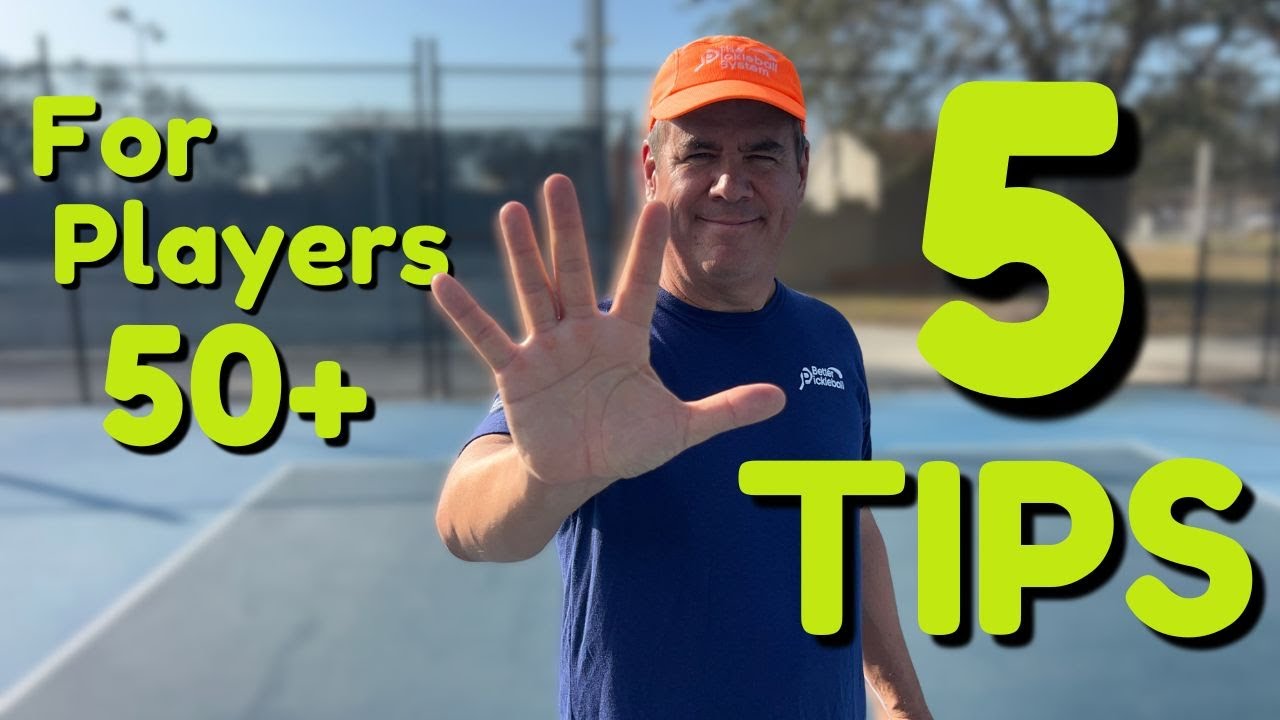
Key Takeaways
- Pickleball health benefits seniors through all four core domains of fitness: cardiovascular, strength, balance, and cognitive engagement
- A 6-week pickleball program has been shown to lower resting blood pressure and improve VO2 max in adults over 50
- The sport's smaller court and underhand mechanics make it significantly easier on joints than tennis while still delivering real aerobic work
- Mental health benefits are documented: lower depression rates, higher life satisfaction, and reduced cognitive decline risk
- Social connection through pickleball addresses the loneliness epidemic directly, with real health consequences
- Adherence is the key differentiator , pickleball's game-based structure keeps seniors coming back in ways that traditional exercise programs don't
Frequently Asked Questions
Is pickleball good exercise for seniors?
Yes, and the research confirms it. Studies show recreational pickleball keeps players in the moderate-intensity aerobic zone , meeting American Heart Association guidelines , while also building balance, functional strength, and fine motor coordination. It's a full-body workout that doesn't feel like one.
What are the pickleball health benefits seniors experience most?
The most well-documented pickleball health benefits seniors report include improved cardiovascular fitness, lower blood pressure, better balance and fall prevention, reduced depression and anxiety, and stronger social connections. The combination of physical and mental benefits in one activity is what makes it uniquely effective for older adults.
Is pickleball safe for seniors with joint pain or arthritis?
For most seniors with joint issues, pickleball is actually a smart choice. The smaller court limits total distance traveled per session, the underhand serve reduces shoulder strain, and the paddle absorbs much of the impact. That said, anyone with significant joint conditions should consult their doctor before starting and consider investing in quality court shoes with good lateral support.
How does pickleball help with mental health in older adults?
Pickleball addresses mental health through three well-established mechanisms: physical exertion (which releases endorphins and reduces cortisol), social engagement (which combats loneliness and isolation), and cognitive demand (shot selection, positioning, and real-time decision-making stimulate the brain). Studies have found pickleball players report lower depression rates and higher life satisfaction scores compared to non-players.
How many times a week should seniors play pickleball for health benefits?
Most research points to 3-4 sessions per week as the sweet spot for meaningful health benefits in older adults. This aligns with standard aerobic exercise guidelines of 150 minutes of moderate-intensity activity weekly. Even two sessions per week shows measurable improvement over sedentary behavior. The best number is the one you'll actually stick to consistently.

Love Pickleball? Join 100k+ readers for free weekly tips, news & gear deals.
Subscribe to The Dink