5 Court Coverage Mistakes That Cost You Easy Points in Doubles
Pickleball court coverage in doubles breaks down the same way every time: one player covers the line, one covers the middle. Here are the five mistakes that expose both.
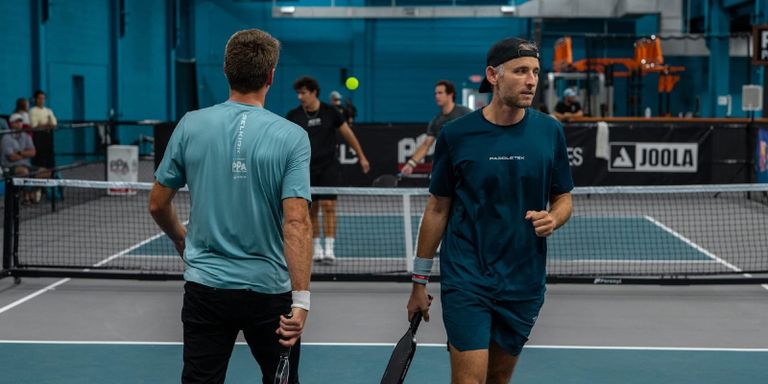
If you play doubles pickleball, you already know the feeling: a ball splits you and your partner right down the middle, and you both watch it go by.
It is not bad luck. It is a court coverage problem, and it shows up the same way almost every time someone is not shading correctly, not communicating their responsibility, or is simply standing in the wrong spot after the ball moves.
This breakdown covers exactly how to fix your pickleball court coverage in doubles, including what to do at the kitchen line and what to do when you are transitioning in off a return.
The framework comes from Briones Pickleball Academy on YouTube, and coach Jordan walks through every scenario with live demonstrations.
Love pickleball? Then you'll love our free newsletter. We send the latest news, tips, and highlights for free each week.
Start Here: What Shading Actually Means
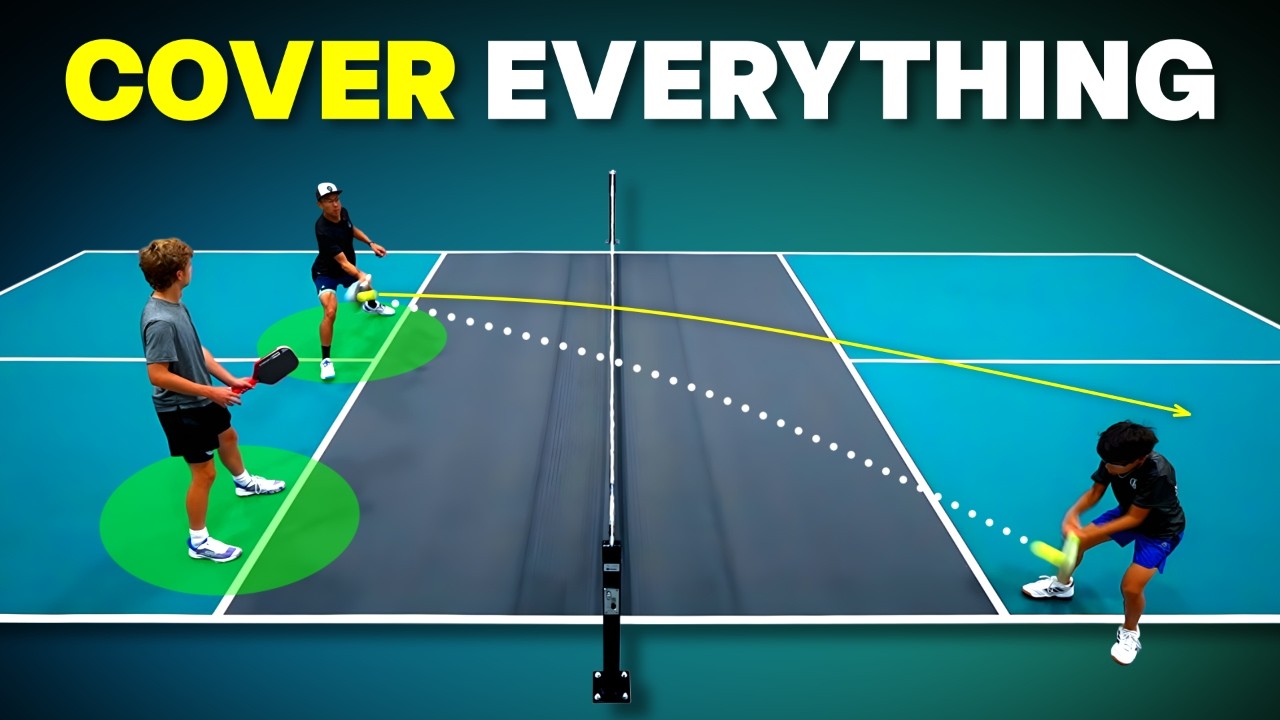
Shading is the practice of following the ball so that you and your partner always cover the highest percentage of court together.
It is not standing still in the middle of your half. It is not guessing where the next ball will go.
It is a deliberate, coordinated shift in positioning that happens every time the ball moves to a new location.
The core rule is simple. If you are the crosscourt player from the ball, you are responsible for the middle.
If you are straight on from the ball, you are responsible for the line. That assignment does not change based on whether you are a righty or a lefty.
It changes based purely on where the ball is.
If you can internalize that one rule, the rest of this gets much easier.
But most players have not internalized it, which is why the same five mistakes keep showing up.
Mistake 1: The Line Player Does Not Move Over
This is the most common coverage breakdown at every level of recreational play.
Here is how it happens. You dink wide to your opponent's crosscourt corner and move over correctly to shade the middle.
Your partner, who is straight on from the ball and responsible for the line, does not budge.
They stay parked in the middle of their side.
The down the line shot is completely open, often by 12 to 24 inches, and that gap is enough for any competent opponent to exploit.
The fix is small in distance but large in impact.
The line player only needs to shift enough to hit a strong counter down the line, not to camp on the sideline.
Just close enough that the opponent cannot thread a winner without risk.
Mistake 2: The Crosscourt Player Does Not Shade the Middle
This one is the mirror image of Mistake 1, and it is just as costly.
You dink wide. Your partner moves over and covers the line correctly. You stand still.
Now there is a massive hole right in the center of the court because the player with middle responsibility has not moved to claim it.
Your opponents can see that gap. They will hit it every time. Doubles strategy at any serious level is built around finding and attacking exactly that kind of gap.
The crosscourt player's first instinct after dinking wide should always be to close toward the center line with the inside foot and be ready to step toward any middle ball.
You do not have to be there yet. You just need to be positioned to get there fast.
 The Dink Media Team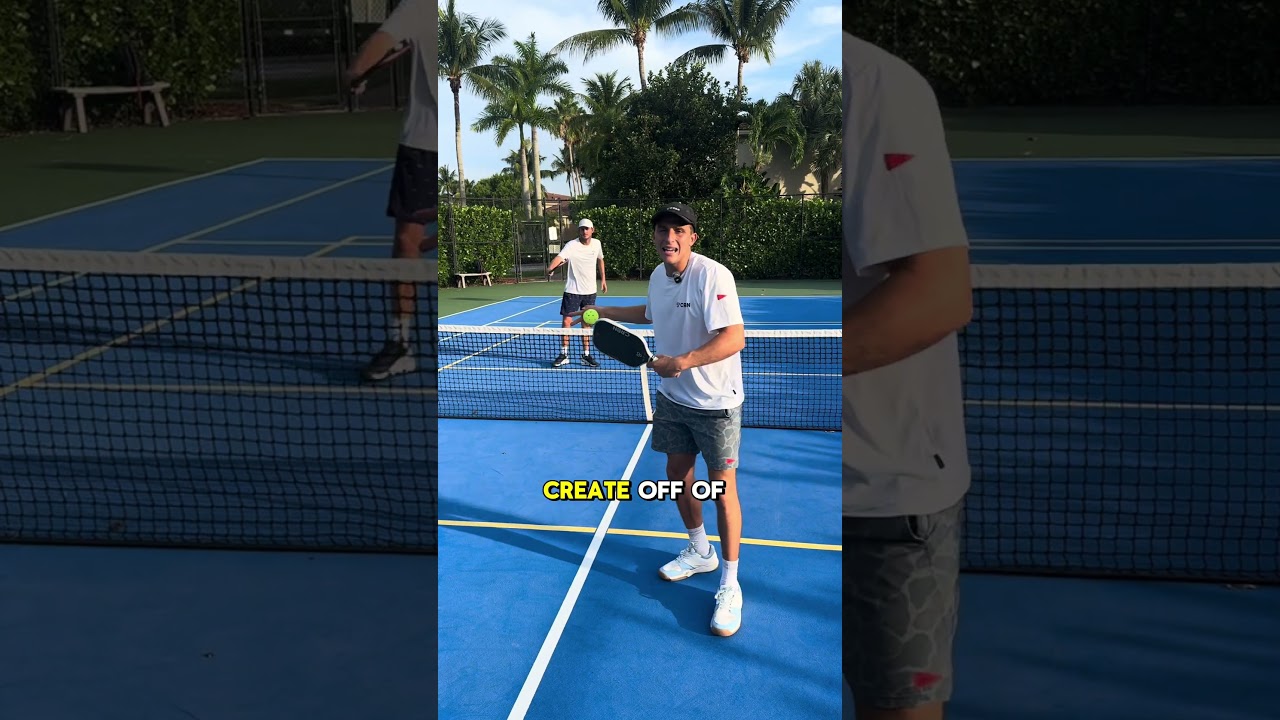
Mistake 3: You Are Moving in Different Directions
This one causes the most visible chaos on court because it produces a very specific outcome: clashing paddles.
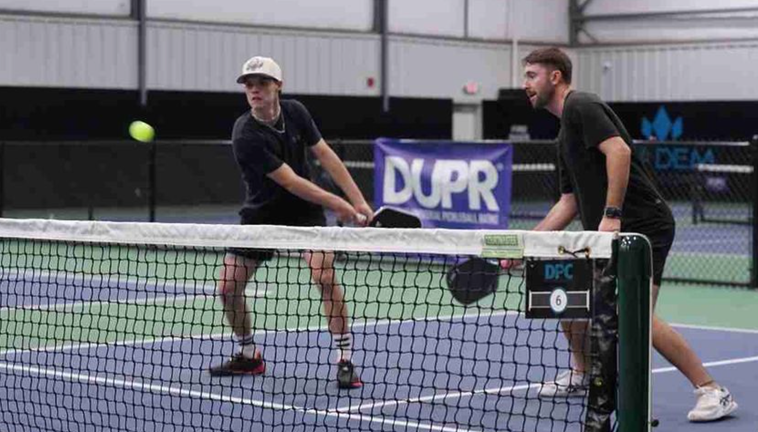
If you shade correctly but your partner does not, you end up crowded together in the wrong spot.
There is no one covering the line, and the two of you are essentially fighting for the same ground in the middle.
Moving in tandem is not optional. If one player moves and the other does not, you have not covered more court. You have just relocated the hole.
Think of it like a sliding door. Both panels have to move together or the opening stays exposed.
Pros use pre-match communication to make sure both players know their roles before the point starts, not during it.
 The Dink Media Team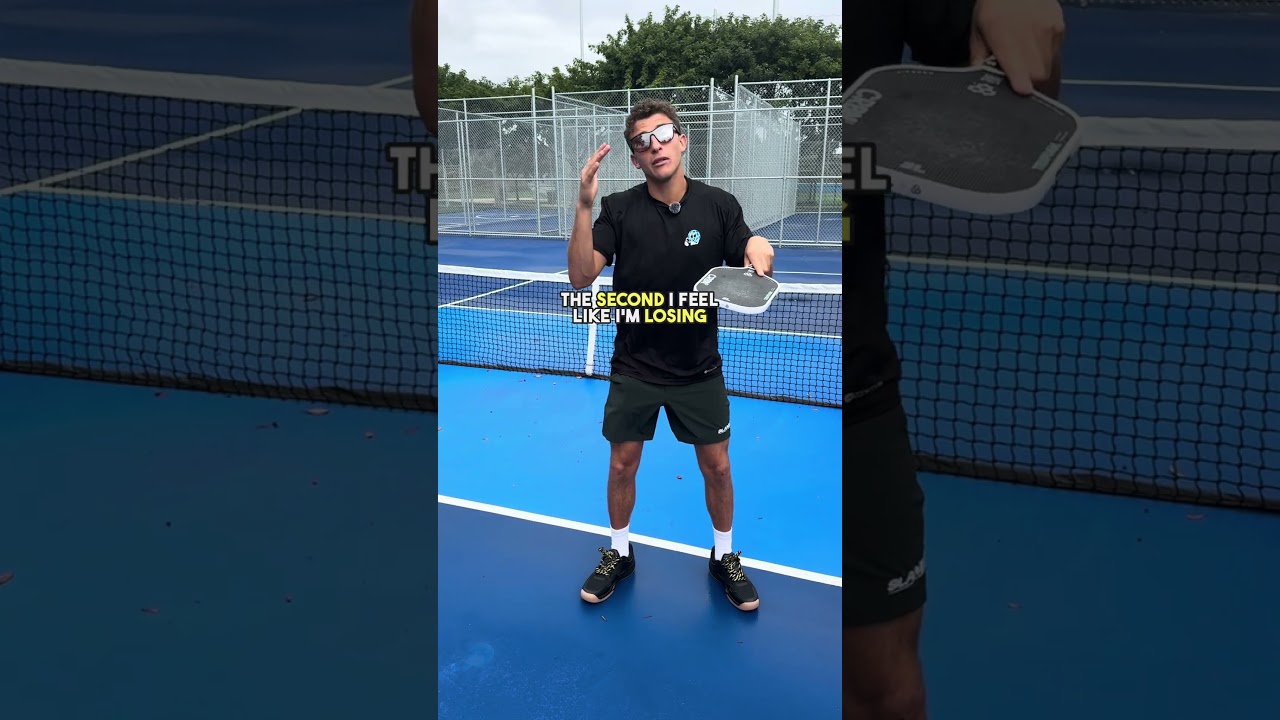
What Does Over Coverage Look Like?
Not every coverage problem comes from not moving enough. Some players overcorrect, and that creates just as many problems.
Over coverage happens in two common ways.
- The line player gets their outside foot on or past the sideline. This seems like aggressive line coverage, but it actually opens a huge gap in the middle that the crosscourt player cannot realistically close alone.
- The crosscourt player slides so far toward the center that the angle back toward their own side is completely open. If the opponent has a dead ball with plenty of time, a shot back to the wide open side becomes a clean winner.
The rule of thumb for the crosscourt player is to keep your inside foot near the center line and be ready to step, not to already be standing at the center line with your weight committed there.
For the line player, only move as far as you need to to cover the line shot with a strong counter.
Every extra inch toward the sideline is an inch of middle coverage you are giving up.
 The Dink Media Team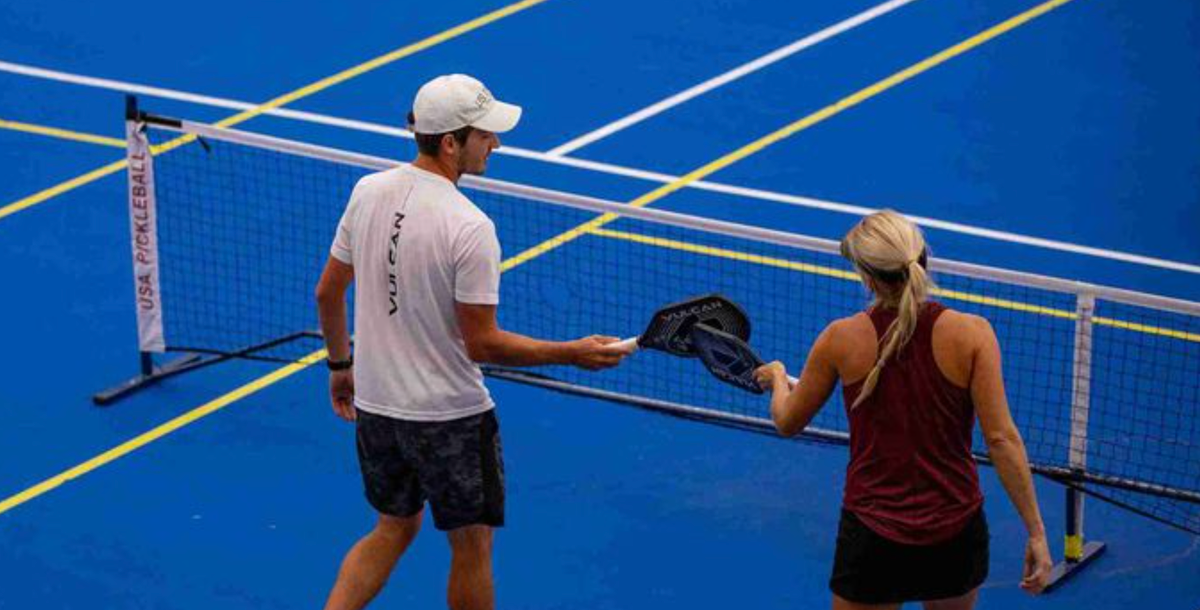
Mistake 4: Ignoring Coverage on the Return
Everything above applies when all four players are at the kitchen line.
But the same principles apply when your team is coming in off a return, and this is where recreational players lose the most easy points without realizing why.
When you return crosscourt and then move toward the kitchen, you are the crosscourt player from your own shot.
That means your responsibility is the middle, not the line. Your partner, moving in from the other side, covers the line.
If you return wide and then run straight forward without shading toward the center, you have exposed the middle during the most vulnerable moment of the rally: the transition.
Here is what good return coverage looks like step by step:
- You return wide crosscourt.
- As you move toward the kitchen, you shade toward the middle, not straight ahead.
- Your partner, who is the straight on player from the shot, takes a position that covers the line.
- If the server drives middle, both players are already squeezing middle and can handle it.
- If the server drives down the line, your partner is positioned to respond with a strong counter.
This is also why many experienced players return middle by default. A middle return eliminates the extreme angles entirely.
There is no down the line drive to worry about because the ball is not near the sideline.
Both players can squeeze toward the center on their approach, and coverage becomes much simpler.
 The Dink Media Team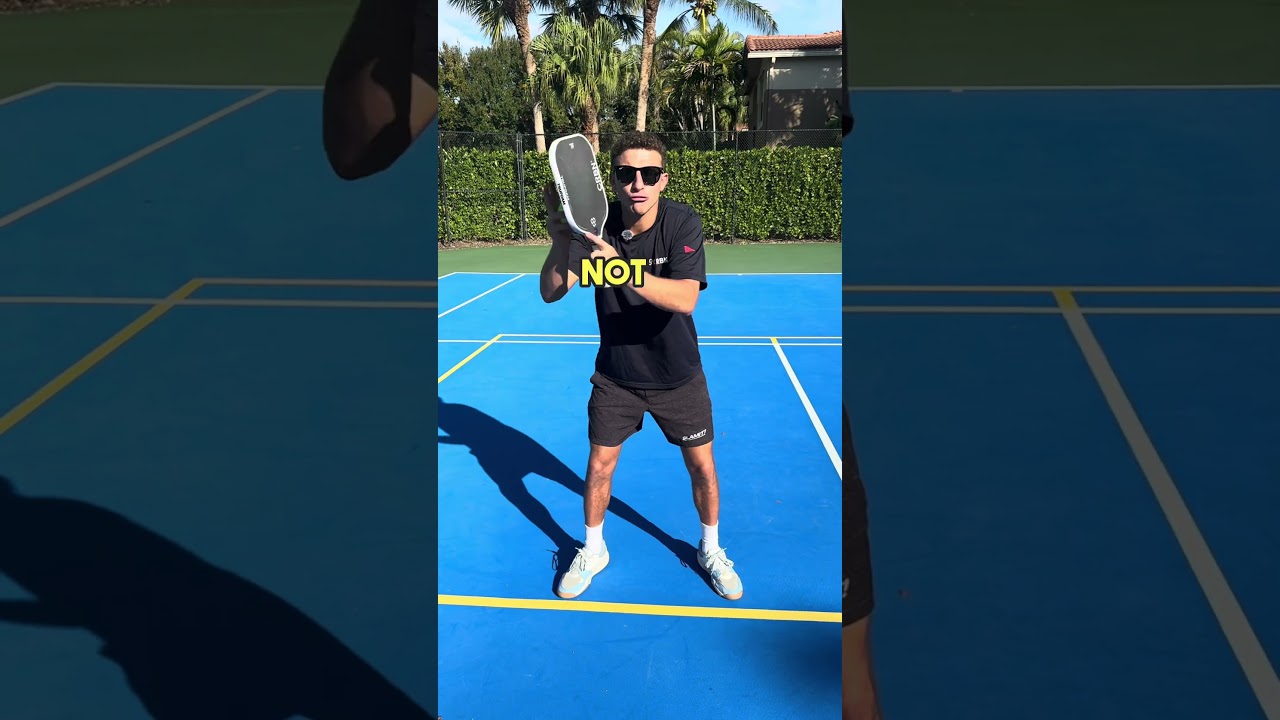
Why Returning Middle Is the Smarter Default
This is a strategy tip higher level players use constantly but rarely explain to newer ones.
Return to the middle and you force your opponent to strike from the center.
That kills the severe crosscourt angles and the down the line drive in one move.
Your court positioning gets simpler because both of you can pinch the middle without leaving a dangerous gap on either side.
A wide return works if you have the control and your team communicates on coverage.
But if drives keep splitting you and your partner, returning more toward the middle is the fastest fix available.
 The Dink Media Team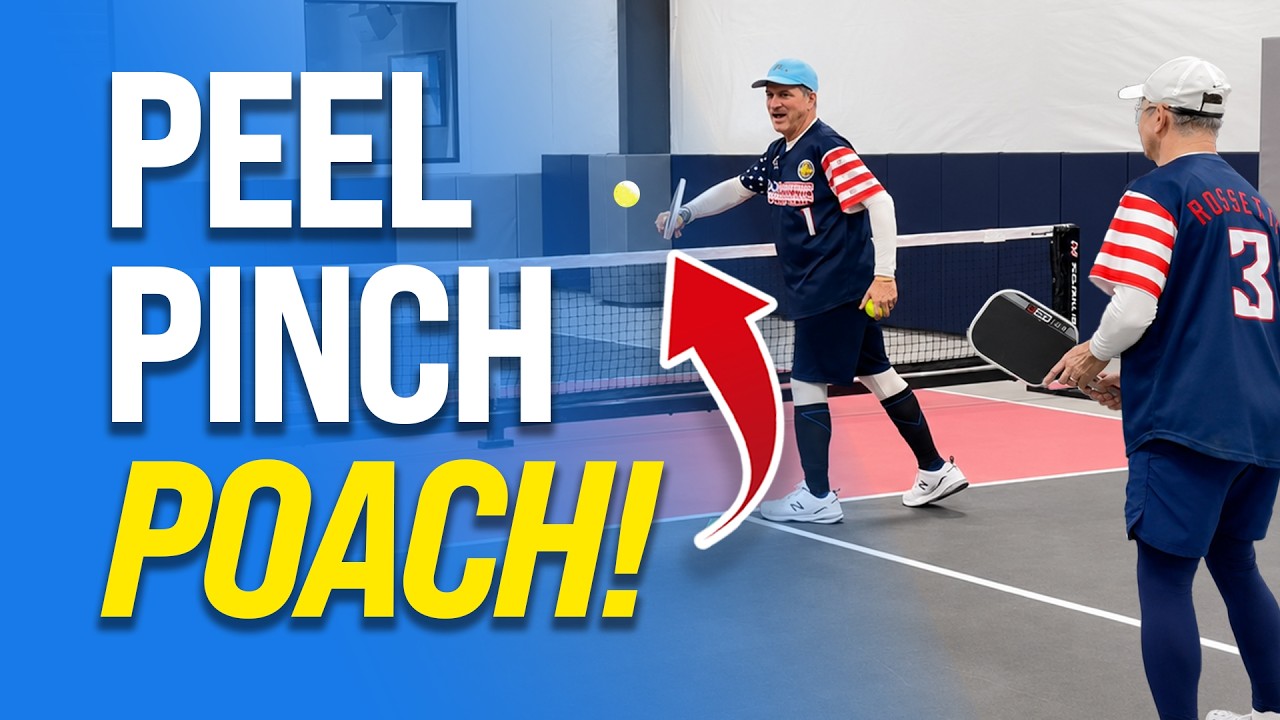
How to Practice This With a Partner
Knowing the rules is one thing. Moving correctly under pressure is another.
Here are four specific ways to drill court coverage so the movement becomes automatic:
- Shadow shading drill: One player calls out where they are dinking and both players move into the correct positions without a ball. Repeat for every court location. The goal is instant, automatic movement.
- Live dinking with accountability: Rally crosscourt and hold each other accountable for coverage in real time. Stop the rally whenever a coverage mistake happens and reset.
- Three shot coverage drill: Server dinks wide, receiving team covers correctly, server attacks the expected gap. If the receiver covered correctly, the gap should not be there.
- Return transition drill: One player returns crosscourt, both players transition in while shading correctly. Server drives the ball to test whether coverage holds.
If you want a fuller set of structured drills that build real game skills, work through them with a partner.
The drill has to put you in realistic coverage situations, not just feed balls to a stationary target.
Good coverage is a habit built through repetition.
Pickleball footwork and lateral movement matter here too, because fast coverage depends on fast feet first.
Worth knowing before you drill: positioning and non-volley zone responsibilities are governed by the official rulebook maintained by USA Pickleball, and the 2026 rule updates changed a few things worth reviewing.
 The Dink Media Team
The One Mindset Shift That Fixes Most of This
Most coverage breakdowns come from one thing: players are thinking about their shot, not their position after their shot.
The moment you strike the ball, your job is not done. Your next job is immediate: where do I need to be right now based on where the ball just went?
If you can make that a habit, you will cover more court, have fewer miscommunications, and give your opponents far fewer easy opportunities.
Players who move to 4.5 consistently are not hitting harder shots. They are making smarter positioning decisions, faster, every single rally.
Start with shading. Get your partner on the same system. Most points are not lost on bad shots.
They are lost because someone was standing in the wrong place at the wrong time.
Frequently Asked Questions
What is shading in pickleball doubles?
Shading means following the ball so that you and your partner always cover the highest percentage of the court together. When the ball moves wide to one side, both players shift in that direction: the closer player covers the line, the farther player covers the middle. It is a coordinated movement, not an individual decision.
Who covers the middle in pickleball doubles?
The player who is crosscourt from the ball is responsible for covering the middle. The player who is straight on from the ball covers the line. This assignment is based on ball location, not player position or handedness.
Why do my partner and I keep clashing paddles in the middle?
Paddle clashing usually means one player shaded correctly and the other did not move at all. When both players crowd the same area, there is overlap in the middle and an open gap on the sideline. The fix is making sure both players move together every time the ball shifts.
Why should I return middle in pickleball?
Returning middle eliminates the most dangerous response angles from the serving team. It removes the threat of a severe crosscourt drive or a hard down the line ball because neither shot has enough angle from the center. It also makes your approach to the kitchen simpler since both you and your partner can shade toward the center without exposing a sideline.
What is over coverage in pickleball and why is it a problem?
Over coverage happens when a player moves too far toward one side of the court, leaving a gap on the other side that their partner cannot realistically close. Common versions include the line player stepping past the sideline or the middle player sliding so far to the center that the wide angle becomes a free winner. The goal is to move just enough to cover your responsibility, not to crowd the extreme edge of the court.
Love Pickleball? Join 100k+ readers for free weekly tips, news & gear deals.
Subscribe to The Dink