Pickleball Tips for Beginners to Understand What Actually Wins Points
The best pickleball tips for beginners have nothing to do with hitting harder. Points are won by cutting unforced errors, taking the kitchen line, and outlasting the person across the net.
Most pickleball tips for beginners are built around a lie: that you win points by hitting winners.
You don't. Not at 3.0. Not at 3.5.
Watch any rec game for ten minutes and count how many rallies end with a jaw-dropping put-away versus how many end with somebody popping a ball into the net or sailing one long.
It isn't close. The scoreboard rewards the player who makes fewer mistakes and stands in better spots, and that's it.
Sound pickleball strategy at this level is mostly a list of things you stop doing, which is why the 3 tips every beginner needs to know are all restrictions, not permissions.
Here's the thing. That's actually great news, because error reduction and positioning are learnable in a weekend. Power isn't.
Love pickleball? Then you'll love our free newsletter. We send the latest news, tips, and highlights for free each week.
So What Actually Wins Points Out There?
Unforced errors decide roughly two out of every three rec-level rallies. Nobody is hitting a clean winner past you.
They're waiting for you to hand them the point, and most beginners oblige within four shots.
Most pickleball tips for beginners skip this part entirely.
Once you accept it, your whole approach shifts from "how do I end this rally" to "how do I stay in it one more ball than my opponent."
Every real piece of beginner pickleball advice comes back to that same idea. Keep the ball in play. Get to the net. Let the other team blink first.
Pickleball Tips for Beginners: Cut the Errors Before You Add Anything
Start by removing shots, not adding them.
The fastest rating jump in this sport comes from deleting the three or four low-percentage swings you take every game, and the players who went from 3.0 to 3.5 almost always did it by subtraction.
What Is an Unforced Error, Exactly?
An unforced error is any ball you miss when you had time, balance, and a reasonable shot available.
Nobody pressured you. You just went for too much.
A backhand drive from your shoelaces at the baseline is an unforced error waiting to happen.
A slow dink you push six inches past the kitchen line is not, usually, because the pressure was real.
The distinction matters because unforced errors are the only category you fully control.
You can't stop a good player from ripping a winner. You can absolutely stop yourself from swinging at a ball below your knees.
Pickleball Tips for Beginners Who Keep Dumping Balls in the Net
Aim higher and slow down.
Most net errors come from swinging too fast on a ball that was never meant to be attacked, which is the exact mistake you didn't know you were making in half your rallies.
Three fixes, in order of how much they'll help:
- Never attack a ball below the top of the net. If you have to lift it, you can't drive it. Reset instead and reset better than you did last week.
- Hit your return deep and get moving. A deep return buys you the two seconds you need to reach the line, and where you return serve matters as much as how hard you hit it.
- Take pace off when you're stretched. Reaching wide? Block it back soft and rebuild the point.
That second one deserves more credit than it gets.
Learning how to make the most of your return of serve is probably the single most valuable habit on this list of pickleball tips for beginners, because it's the one shot where you have all the time in the world and almost no excuse to miss.
 The Dink Media Team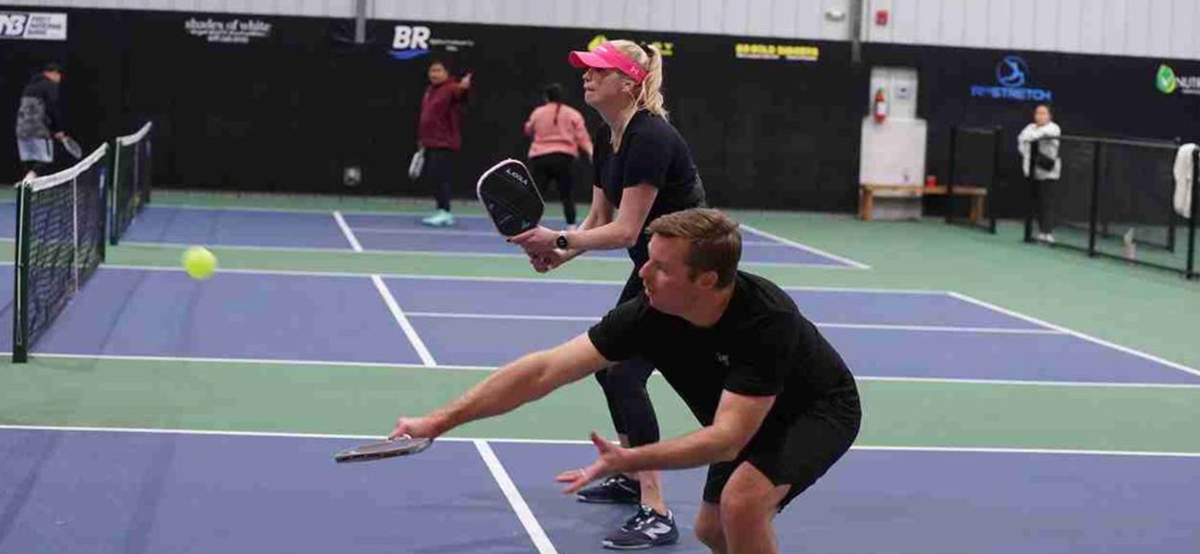
How Do Pickleball Tips for Beginners Change Where You Stand?
They move you forward, fast.
The team at the kitchen line wins the overwhelming majority of rallies at every level of this sport, and the biggest gap between a 3.0 and a 4.0 isn't the swing, it's how quickly they get to the net and how well they stay there.
Your default position is both feet just behind the non-volley zone line.
Not mid-court. Not the baseline.
USA Pickleball's official rulebook defines that seven-foot zone on each side of the net, and the whole geometry of the game bends around it.
Standing in the middle of the court, the dreaded no-man's land, is where good shots go to die.
It's the difference between a good shot and bad positioning, and beginners confuse the two constantly.
Why Does the Kitchen Line Win So Many Points?
Because angles. From the line, you can hit down. From the baseline, you can only hit up, and every ball you hit up is a ball your opponent gets to hit down.
That's the entire sport compressed into two sentences.
Almost all useful pickleball tips for beginners eventually collapse into that one instruction: get to the line. Getting there is the tricky part.
Your third shot is the vehicle, whether you drop it soft or make your third shot spicy with a drive, and the transition zone in between is where most beginners freeze.
Don't. Keep moving through it, split-step, and understand that talking transitions is half of what separates decent players from stuck ones.
Once you arrive, position yourself at the kitchen with your paddle up and your weight forward.
Pickleball Tips for Beginners Playing Doubles With a Partner
Move as a unit, always. If your partner shifts left, you shift left. Picture an invisible rope, about eight feet long, tying you together.
That single habit closes the middle, which is where most beginner points leak out, and it's the foundation of any real doubles strategy.
The other half is communication, and it costs nothing.
Call "mine," call "yours," call "bounce it."
Teams that talk win more, and a few simple tips to improve teamwork will do more for your record than a new paddle.
Honestly, if you change the way you think about doubles as a two-person system instead of two solo players, your win rate jumps before your technique does.
 The Dink Media Team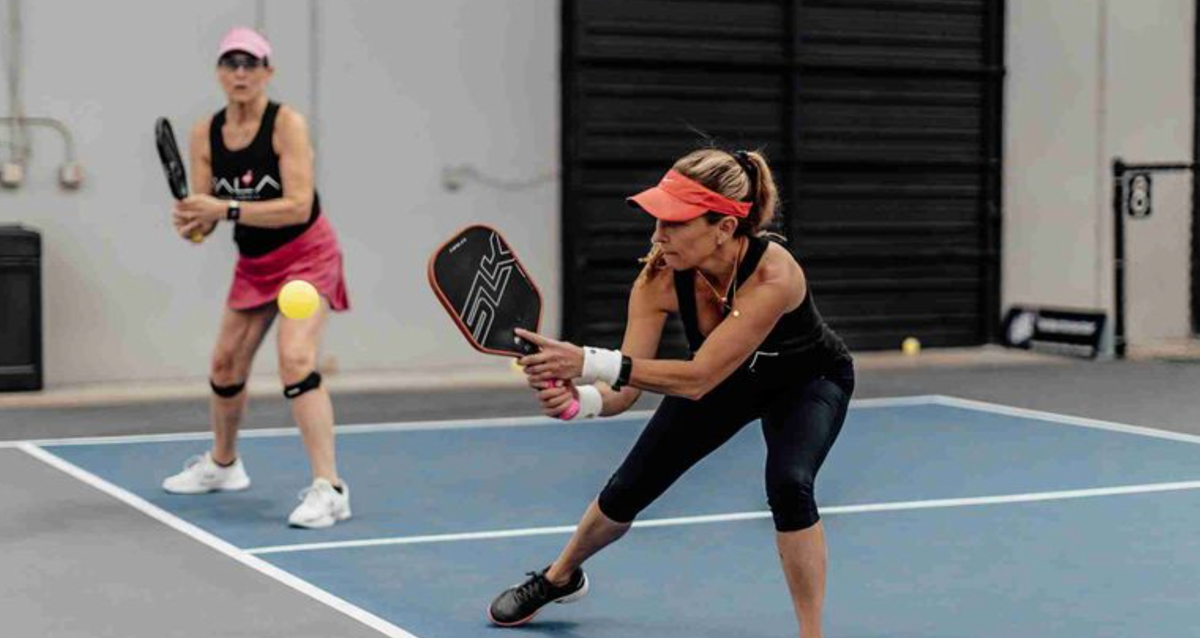
Patience Is a Shot, Not a Personality Trait
The best pickleball strategy for a beginner is refusing to attack until the ball gives you permission.
It's setting a trap and waiting for the other team to walk into it, usually within six or seven balls, because most rec players cannot resist swinging at something they shouldn't.
Stay unattackable by keeping your dinks low and your paddle in front of your body.
Watch your opponent's paddle face instead of the ball on their side, since the backhand volley indicator tells you what's coming before it's hit.
And when you do get a high ball at the kitchen, that's your green light. Not before.
Simple Pickleball Tips for Beginners Who Can't Get Court Time
Practice alone. Most pickleball tips for beginners assume you have a partner and a free court, and most of us have neither.
Ten minutes against a wall builds more consistency than an hour of rec games, and a good set of solo pickleball drills needs nothing but a paddle and a flat surface.
When you do get a partner, pickleball's hardest dinking drill is worth the frustration, and the fridge and toaster drill sharpens the reflexes you'll need at the line.
One more thing worth stealing from better players: they think about the fourth shot before they hit the third.
A little fourth shot and court coverage awareness turns a scramble into a plan, and mid-court is where that plan usually gets tested, so a few mid-court pickleball tips belong in your back pocket too.
 Eric Roddy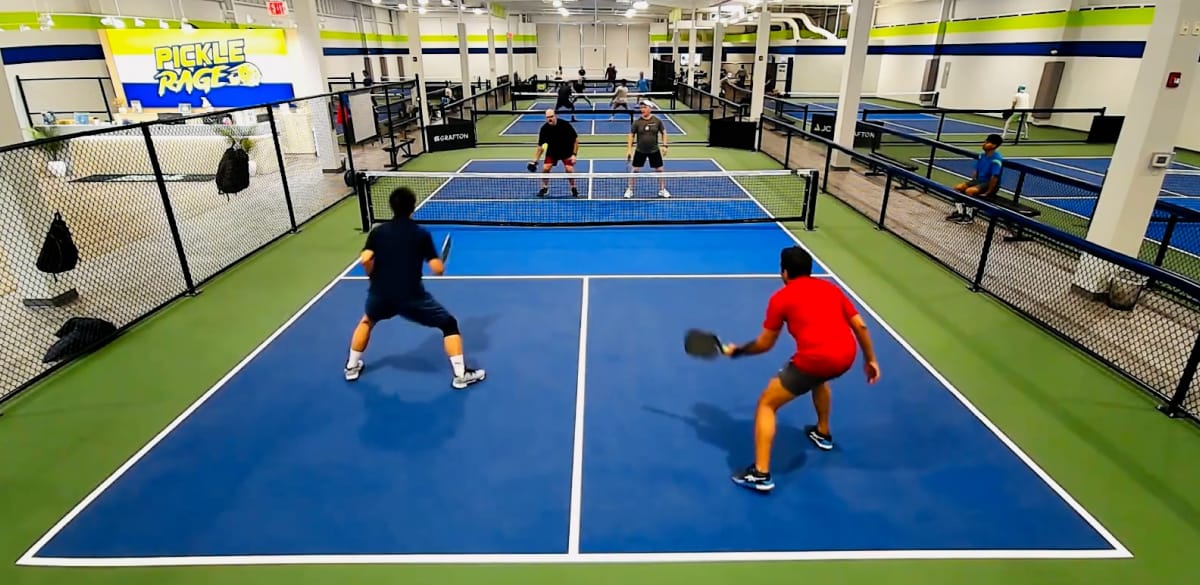
Key Takeaways
- Two out of three rec-level points end in an unforced error, not a winner. Miss less and you win more.
- Never attack a ball below the top of the net. Reset it instead.
- Deep returns buy you time to reach the kitchen line, which is the highest-value real estate on the court.
- Move with your partner like you're tied together with an eight-foot rope.
- Dinking is a trap, not a stall. Wait for the high ball, then attack.
Frequently Asked Questions
What's the most important pickleball tip for beginners?
Get to the kitchen line and stay there. The team at the non-volley zone line wins the large majority of rallies because they're the only ones who can hit down on the ball. Everything else, including your serve and your third shot, exists mainly to get you there.
How long does it take a beginner to get decent at pickleball?
Most players reach a solid 3.0 level within two or three months of playing twice a week. Getting to 3.5 usually takes six months to a year and depends almost entirely on whether you drill or just play games. Drilling is faster, and something structured like the figure 8 drill beats another night of rec games.
Should beginners hit hard or soft in pickleball?
Soft, most of the time. Beginners lose far more points to overhitting than to being outpowered, so a controlled drop or reset beats a hard drive in almost every situation. Save the power for balls that sit up above net height at the kitchen, and think hard before you target your opponent's strength.
What is the two-bounce rule and why does it matter?
The serve must bounce once, and the return must bounce once, before either team can volley. It matters because it stops the serving team from rushing the net immediately, which is why the third shot exists at all. USA Pickleball's official rules spell out the full requirement.
Do I need an expensive paddle as a beginner?
No. A mid-range paddle in the $80 to $130 range will not hold you back at any beginner level. Your positioning and shot selection are costing you far more points than your equipment is.

Love Pickleball? Join 100k+ readers for free weekly tips, news & gear deals.
Subscribe to The Dink