
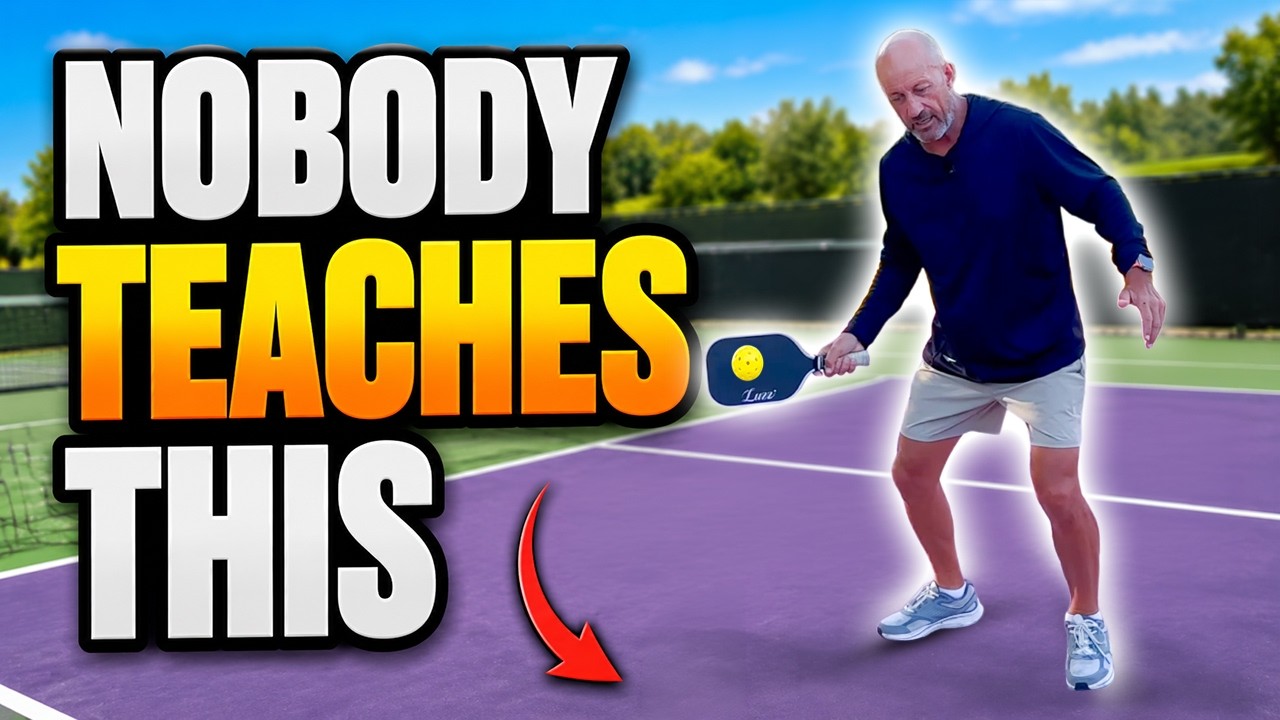
The third shot drop doesn't have to be complicated. The push drop is one simple motion that keeps the ball low, gets you to the kitchen, and works at every level of play.
The third shot drop is the shot that separates players who control rallies from players who just react to them.
If you've been trying to master it and keep hitting it into the net, floating it too high, or just guessing every time, you're probably using the wrong technique.
The good news is there's one version of the drop that is easier to learn, easier to repeat, and more forgiving when you don't hit it perfectly.
This breakdown comes from Still Got Game on YouTube, where the focus is on smart, effective pickleball for players who want to win without grinding through hours of complicated technique work.
Love pickleball? Then you'll love our free newsletter. We send the latest news, tips, and highlights for free each week.
Why Most Players Struggle With the Third Shot Drop
Most players know they're supposed to hit a drop after the serve. What they don't know is why the shot keeps going wrong.
The problem usually isn't effort or practice. It's using a technique that has a very small margin for error.
When you use a looping, tip-down swing to generate the drop, a tiny mistake in timing or angle sends the ball into the net or floating up at chest height for your opponent to attack.
What Is the Push Drop and Why Does It Work?
The push drop, sometimes called the forehand push drop, is built on one simple motion: closing a drawer.
Instead of dropping the tip of your paddle down and swinging through the ball, you hold your paddle horizontal and push it forward.
The swing path stays mostly flat, and you adjust the angle of the paddle face to control height. That's the entire technique.
Here's why this matters.
When your swing path is consistent and horizontal, you only have one variable to manage: the paddle angle. Tilt it too open and the ball goes high.
Too closed and it clips the net. Once you understand that, fixing your drop becomes a simple adjustment instead of a full rebuild of your stroke.
Ben Johns uses this approach almost exclusively. When the best player in the world defaults to the simplest version of the shot, that tells you something.
How Do You Actually Hit the Push Drop?
The mechanics are straightforward. Here is the step-by-step breakdown:
- Start position: Hold your paddle horizontal, roughly side-on to the court. Think of your hand as if you're about to push a drawer shut.
- Paddle start point: Begin the swing just in front of your back foot. Don't reach back. You wouldn't close a drawer from behind your body.
- Swing path: Push forward with a flat, horizontal motion. The path stays consistent every time.
- Weight transfer: Shift your weight into your front foot as you push through the ball. You want momentum moving toward the kitchen, not staying back.
- Angle adjustment: If the ball goes high, close the paddle face slightly. If it clips the net, open it a touch. The swing stays the same.
That's it. There's no wrist flip, no brush, no complicated follow-through to manage.
For players who want to understand how small third shot drop tweaks get you to the kitchen faster, that swing-path consistency is exactly what makes the difference.
 The Dink Media Team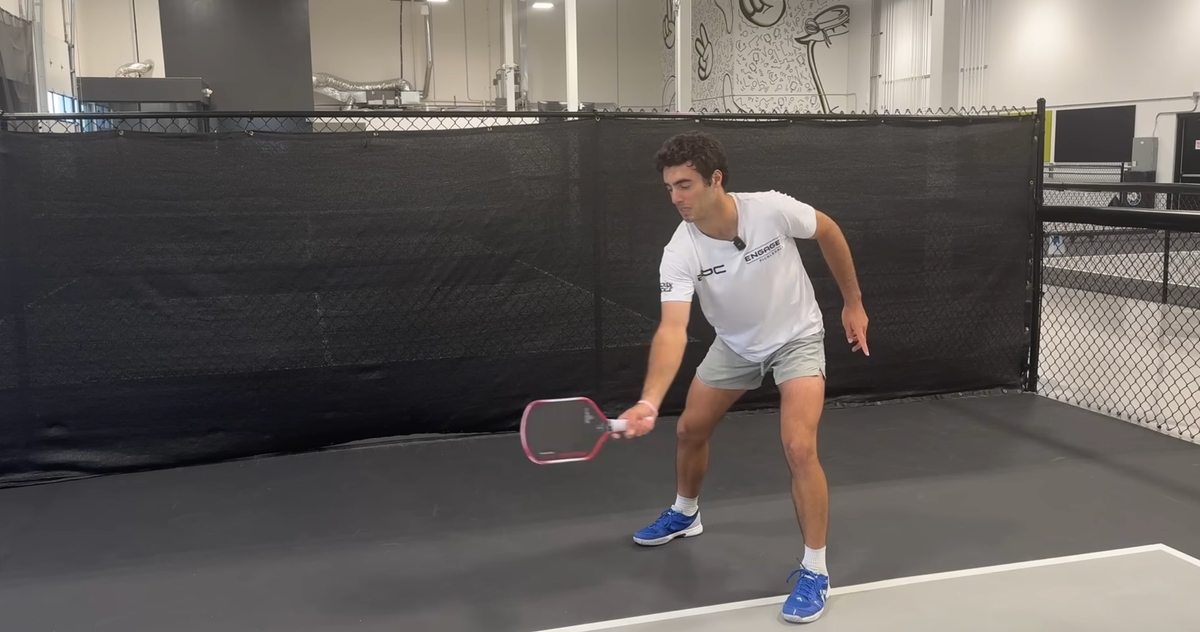
Where Should You Actually Aim Your Drop?
Target the kitchen area, specifically the center of the court. You don't need to land it perfectly in the non-volley zone every time.
What you need is to force your opponent to hit up on the ball. If they're hitting up, you hit a successful drop. Full stop.
Starting in the center is the safest play. Once you're consistent there, you can start pushing drops toward the opponent's backhand corner.
Just don't go so wide that you're putting the sideline in play.
There's also a smart tactical move worth knowing.
If the ball comes down the middle and your partner would have to use their weaker backhand, step in and take it yourself with your forehand push drop aimed into the center.
This is one of the most underused plays in recreational doubles.
Understanding third shot placement rules that work every time will sharpen your targeting even further.
 The Dink Media Team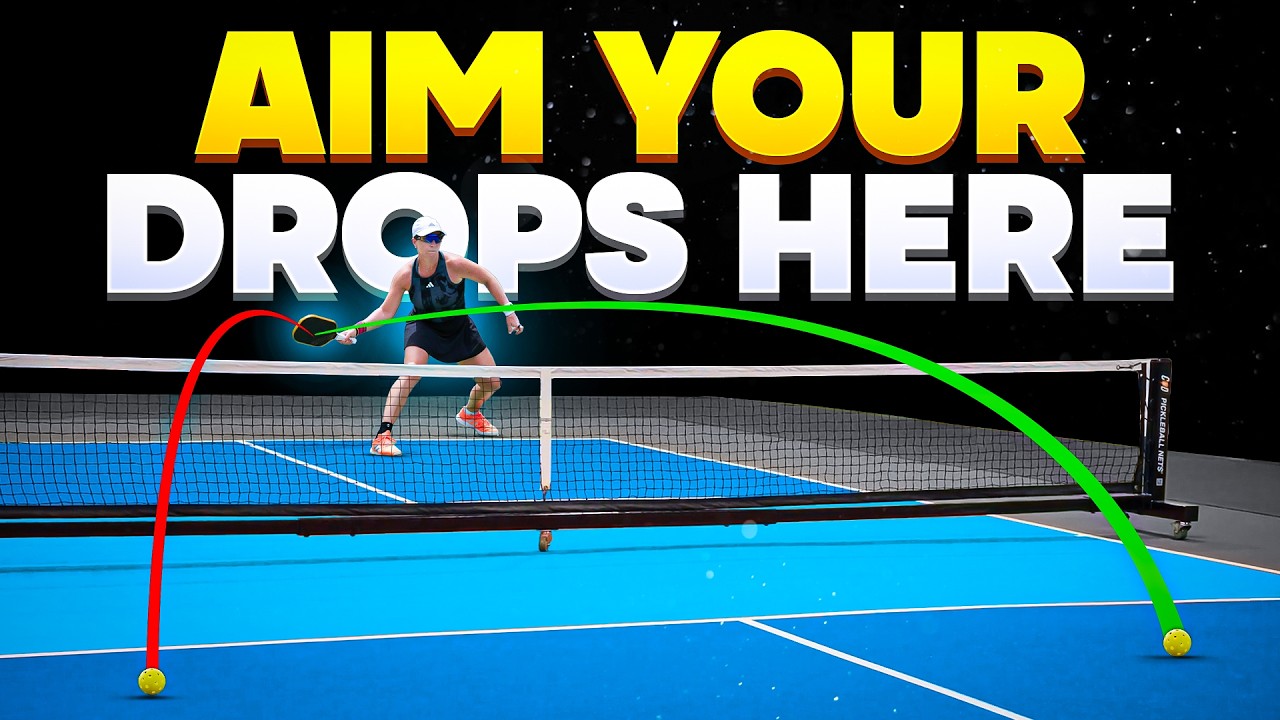
What Makes the Push Drop More Forgiving Than Other Drops?
This is the part most players miss, and it's worth being direct about.
Traditional drops with a looping swing have one major flaw: if you hit long, the ball arrives at a height your opponent can punish. It's a floater. They attack it.
With the push drop, even a slightly long shot stays low because the swing path is horizontal. Your opponent still gets a low ball.
They might get an easier shot than if you'd landed it perfectly, but they're not getting a free smash.
That error tolerance is everything at recreational and senior levels, where consistency wins far more points than perfection.
 The Dink Media Team
What About Topspin Drops and Slice Drops?
You've probably seen pros hit drops with heavy topspin or a sharp slice.
They look great. They're also the product of hours of daily practice on top of an already mastered foundation.
Here's the reality: adding spin to a drop makes an already difficult shot significantly harder.
If you're not already comfortable hitting topspin drives and slice groundstrokes with real consistency, you have no business adding spin to your third shot drop.
Skip them. The push drop does everything you need without the added complexity.
For players curious about why topspin so often backfires, this breakdown of why topspin fails in pickleball is worth reading.
 The Dink Media Team
What's the Biggest Mistake Players Make Even After a Good Drop?
Hitting a perfect drop and then losing the point anyway is one of the most frustrating things in pickleball.
It happens constantly, and it comes from one mistake: moving while the opponent is hitting.
Most players learn "return and run" early and never unlearn it.
They keep charging toward the kitchen even as the opponent is striking the ball, which means they're off balance and reacting late to wherever it goes.
The fix is the split step. As soon as you see your opponent about to make contact, you stop.
Both feet hit the ground, you get balanced, and then you read the ball and move. This applies whether you just hit a third shot drop, a drive, or anything else.
Here's what that looks like in sequence:
- Hit your push drop and start moving toward the kitchen
- Watch your opponent's paddle and body for the strike cue
- Stop and split step the moment they're about to hit
- Read the ball, then move to it with balance
Players who skip the split step after a good drop are giving up the point for free.
Rushing the kitchen is one of the most common transition zone errors and it's a simple fix once you're aware of it.
For players wanting to sharpen movement overall, this footwork drill that fixes lateral movement fast is a practical next step.
 The Dink Media Team
How Do You Practice the Push Drop Efficiently?
You don't need a partner to start building this shot. The motion itself can be drilled in your living room. Literally practice closing a drawer.
On the court, start from the transition zone rather than the baseline.
Hit drops into the kitchen, keep your swing path flat, and only adjust the paddle angle if the ball goes too high or too low. Don't change the swing.
Once you're landing them consistently from the middle of the court, move back to the baseline.
Then work on adding your split step after each drop so the movement pattern becomes automatic.
For structured practice options, this third shot drop target drill is one of the fastest ways to build real accuracy.
You can also use wall drills to build consistency without a partner, which is useful for working on the push motion itself.
 The Dink Media Team
Why Does This Approach Work for Players Over 50?
The push drop removes a lot of the physical demands that make other drops unreliable as you age.
You're not generating a big swing, you're not relying on fast wrist action, and you're not asking your shoulder to do complicated work under time pressure.
The motion is compact, controlled, and repeatable.
That's the exact profile of a shot that holds up when your reaction time is a little slower and your joints need a break from impact stress.
It also fits naturally with senior pickleball strategy focused on moving less and playing smarter.
You spend less energy on the shot itself and more energy getting into position to win the point.
For players managing shoulder concerns, a regular stretching routine is a real part of building a sustainable pickleball game.
 The Dink Media Team
Quick Reference: Push Drop Checklist
Before you go out and play your next session, run through this list:
- Paddle horizontal, not tip-down
- Think "close the drawer" for the swing path
- Start the paddle just in front of your back foot
- Push forward, shift weight to front foot
- Adjust paddle angle (not swing path) for height
- Aim for the center kitchen area first
- Split step when opponent is about to strike
- Only then move toward the kitchen
Keep it simple. Missing the third shot drop is almost always a complexity problem, not an effort problem. Remove the complexity and the shot takes care of itself.
Frequently Asked Questions
What is the push drop in pickleball?
The push drop is a forehand third shot drop where you hold the paddle horizontal and push it forward with a flat swing path, like closing a drawer. Instead of using a looping swing with the tip down, you control the ball's height by adjusting the paddle face angle. It's simpler to repeat and more forgiving on off-center hits.
Where should I aim my third shot drop?
Aim for the center of the kitchen area first. Your goal isn't to land it in a perfect spot but to force your opponent to hit up on the ball. Once you're consistent in the center, you can work toward the opponent's backhand corner.
Why does my third shot drop keep going too high?
If your drop keeps floating high, your paddle face is too open at contact. With the push drop, your swing path stays flat and consistent. Simply close the paddle angle slightly and the height will come down without changing anything else about the stroke.
Do I need to learn topspin or slice drops?
No. Topspin and slice drops are advanced variations that require a strong spin foundation to execute reliably under pressure. The push drop is effective at every level, including among pros like Ben Johns, and it's significantly easier to repeat consistently.
What is a split step and why does it matter for the third shot drop?
A split step is when you briefly stop with both feet on the ground as your opponent is about to hit the ball. It resets your balance so you can react in any direction. Skipping the split step after a good drop is one of the most common reasons players lose points they should have won.

Love Pickleball? Join 100k+ readers for free weekly tips, news & gear deals.
Subscribe to The Dink