
Most players lose their pickleball dink under pressure because of two mechanical errors they don't even notice. This breakdown fixes both of them fast.
Your pickleball dink probably feels fine during warmups and falls apart the moment a real rally starts.
That's not a focus problem. That's a mechanics problem.
Two specific things go wrong for most players: the ready position is too high and upright, and the swing motion relies on wrist instead of arm.
Fix both and your dink becomes something you can actually trust under pressure.
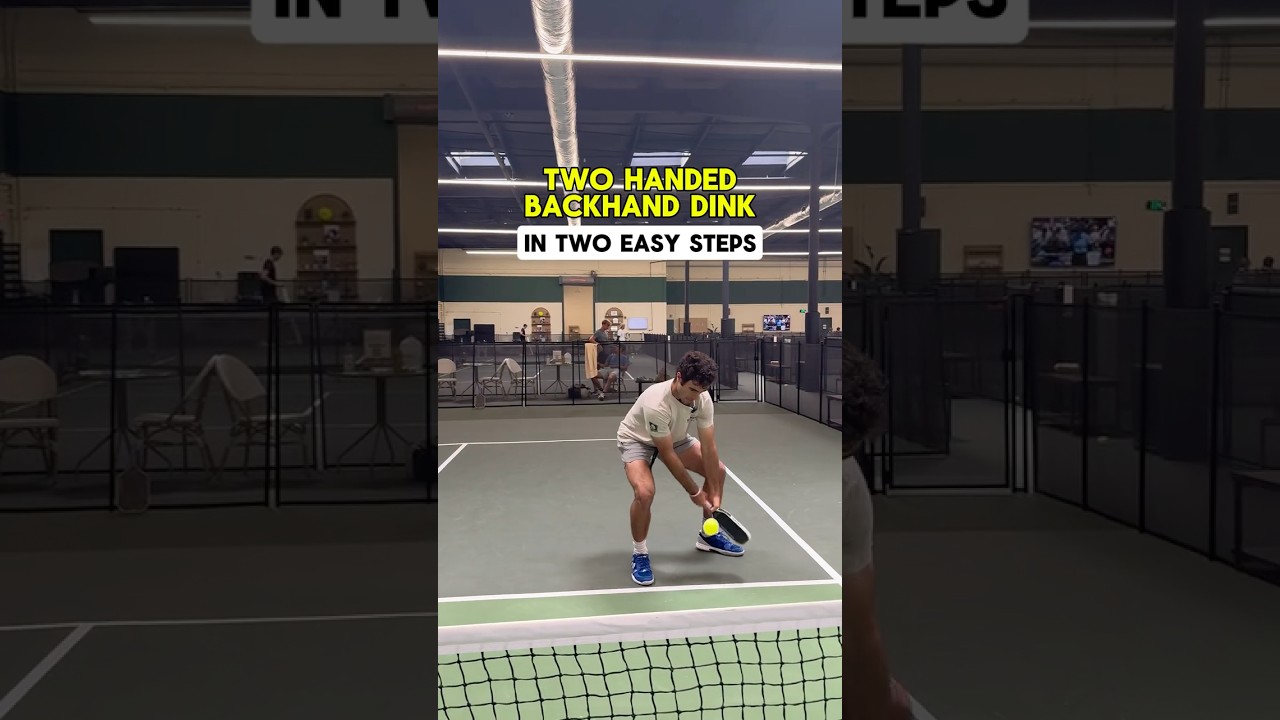
This breakdown comes directly from Richard Pickleball on YouTube, who laid out this two-step technique in a clean, no-fluff format that's easy to apply right away.
Love pickleball? Then you'll love our free newsletter. We send the latest news, tips, and highlights for free each week.
The Problem With How Most Players Dink
Here's what you're probably doing wrong: standing too tall, holding the paddle too high, and using your wrist to guide the ball over the net.
It feels natural. But it's the reason your dinks float, sail long, or pop up and invite attackers. The wrist is inconsistent by nature.
It changes angle under fatigue and pressure, and that's exactly when your dinks need to be most reliable.
The arm is a much more stable unit. When you swing from the arm and let the body do the work of generating the upward path, you get repeatability.
That's what separates players who dink well in drills from players who dink well in games.
If you've been wondering why your pickleball dink fails in games, this mechanical gap is almost always the reason.
Step One: Sink Down and Drop the Paddle
The first thing you need to do is get low. Not slightly low. Actually bend your knees and drop your weight into your legs.
This isn't just about balance.
When you sink into your legs, you lower your center of gravity and bring your paddle naturally into a position where it can work with the ball's trajectory instead of fighting it.
The paddle drop is just as important as the knee bend. Your paddle should hang below the ball, not hover at waist height.
If your paddle is already at the level of the incoming ball, you have nowhere to swing upward from.
Think of this as your ready position. Every dink starts here. You're not reacting from a neutral standing position.
You're already loaded, already low, already in a posture that sets the next movement up for success.
Players who struggle with their ready position at the kitchen line often also struggle with their overall hard drive ready position fix.
The same principle applies across shot types:
- Bend your knees until you feel your weight shift into your legs
- Let the paddle drop below the ball's incoming path
- Keep your weight slightly forward on the balls of your feet
- Relax your grip so the arm can move freely
Most players only do one of these things. The combination of all four is what creates a stable, repeatable starting point for every dink you hit.
Why Does Timing Matter So Much in the Dink?
Timing is where this technique gets specific, and it's where a lot of players miss the mark even when their stance is correct.
You don't swing the moment the ball crosses the net. You wait. You let the ball travel to its apex, the highest point of its bounce, and that's when you begin the upward swing.
At the apex, the ball has slowed down. It's not accelerating anymore. That gives you a cleaner contact point and makes it far easier to control where the ball goes.
Swinging early means you're hitting a ball that's still rising fast. Swinging late means you're digging up a ball that's already dropped below the net line.
The apex is your window. Learn to see it, and your dink contact becomes dramatically more consistent.
This is also why popping up dinks happens so often.
Players make contact too early, before the ball has settled, and the result is a dink that floats up instead of staying low and controlled.
 The Dink Media Team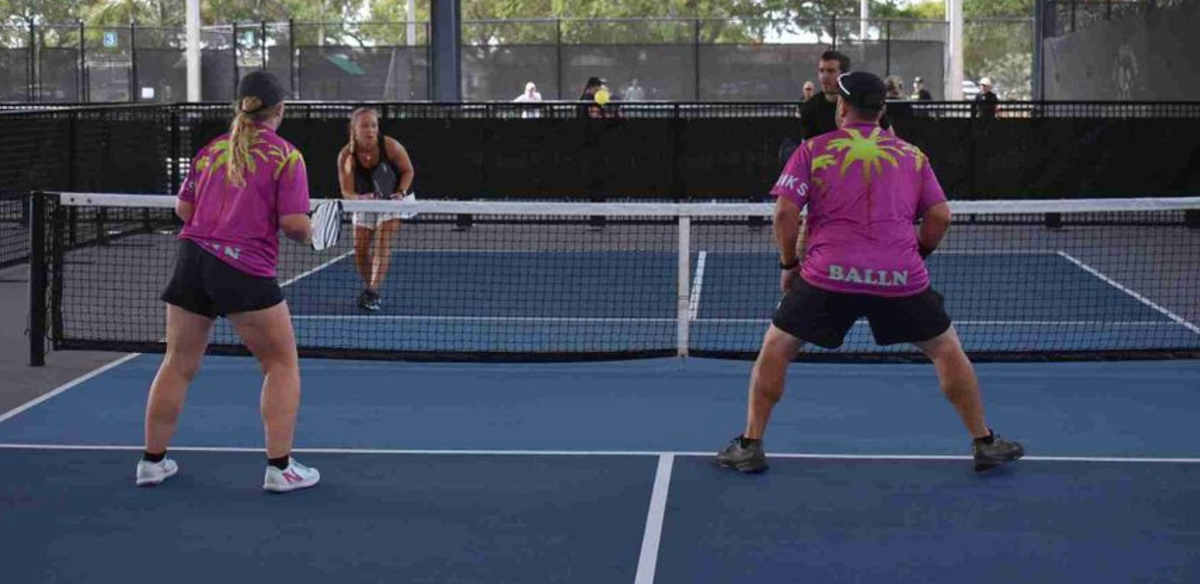
Step Two: Swing Up to the Opposite Shoulder Using Your Arm
Once the ball hits its apex, you swing upward. The target for your swing path is your opposite shoulder.
This is not a wrist flick. It is not a push. It is an arm-driven upward swing that follows a consistent arc from low paddle position to the opposite shoulder.
The arm moves as one connected unit.
When you use your wrist, the paddle face angle changes slightly with every swing.
That inconsistency shows up as dinks that go too long, clip the net, or veer off target. The arm doesn't have that problem.
It moves in a fixed path that you can repeat hundreds of times without drift.
Here's exactly what the swing motion should look like:
- Start with the paddle dropped below the ball at the apex
- Drive the arm upward as one unit, no independent wrist action
- Follow through toward the opposite shoulder
- Keep the paddle face stable throughout the entire motion
- Let the upward path of the swing create the lift over the net
The opposite shoulder finish is the checkpoint. If you're finishing somewhere else, your swing path is off and your dink trajectory will be unpredictable.
 The Dink Media Team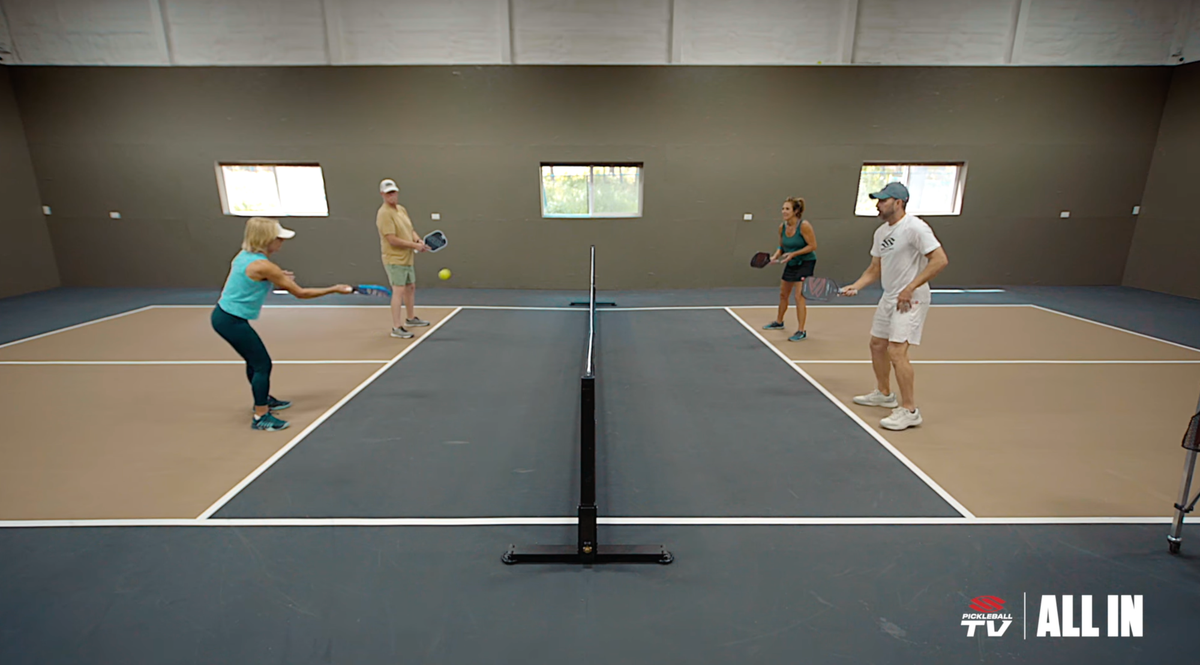
What Does the Arm Actually Do That the Wrist Can't?
The arm creates a fixed lever. The wrist creates a variable one.
When you swing with your arm, the relationship between your paddle face and your swing path stays constant.
That means your dink goes where you aim it even when you're tired, even when you're moving, even when you're in a long rally and your focus starts to slip.
The wrist is useful in other situations. It's great for backhand flick shots and attacking opportunities.
But the dink is a precision shot, not a power shot, and precision rewards the arm every time.
A lot of players who come from tennis backgrounds struggle with this because the wrist is so central to tennis groundstrokes.
If that sounds like you, check out how tennis habits hurt your pickleball game across multiple shot types.
The arm-driven dink is also much easier to train.
You can isolate the motion, repeat it cleanly, and build muscle memory without fighting the variability that wrist-based swings introduce.
 The Dink Media Team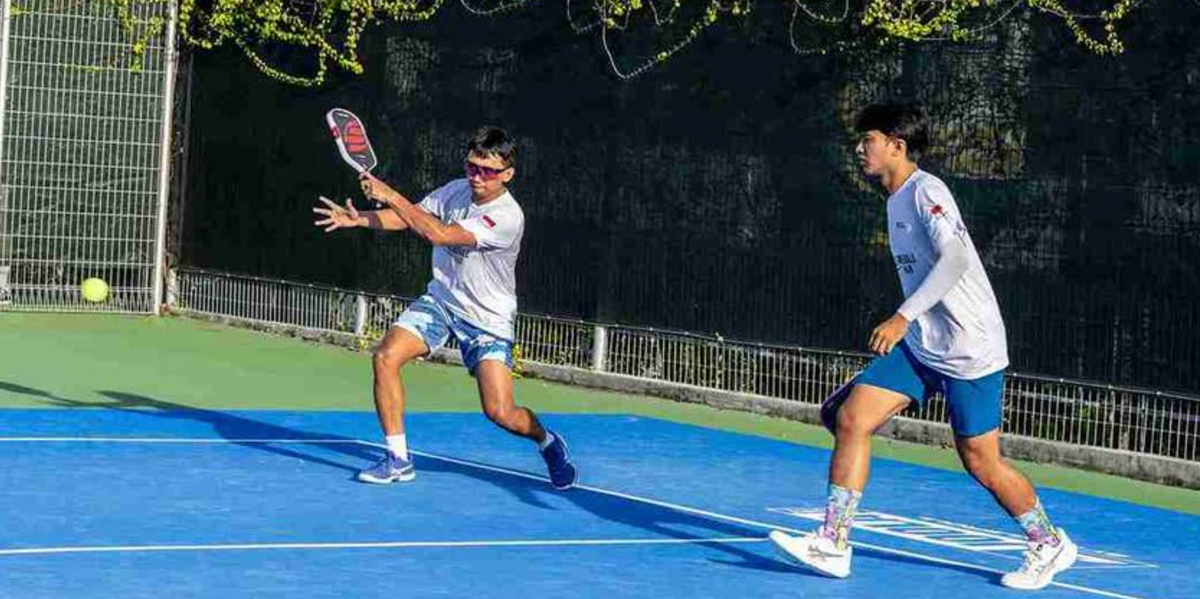
How Do You Practice This Until It Sticks?
Slow repetition first. Stand at the kitchen line with a partner and focus only on the two steps.
Sink down, drop the paddle, find the apex, swing to the opposite shoulder with the arm.
Don't worry about placement yet. Get the motion right and placement will follow.
When you start chasing targets before the mechanics are solid, you start compensating and the wrist creeps back in.
A structured dinking drill routine is one of the fastest ways to make this stick.
These two dinking drills a senior pro swears by are a great starting point for building that muscle memory without needing a full team or court.
You can also use wall practice to isolate the arm swing and get a feel for the correct follow-through path.
Wall practice drills that actually work are underrated for dink mechanics specifically because the ball returns fast and forces you to reset your ready position quickly.
 The Dink Media Team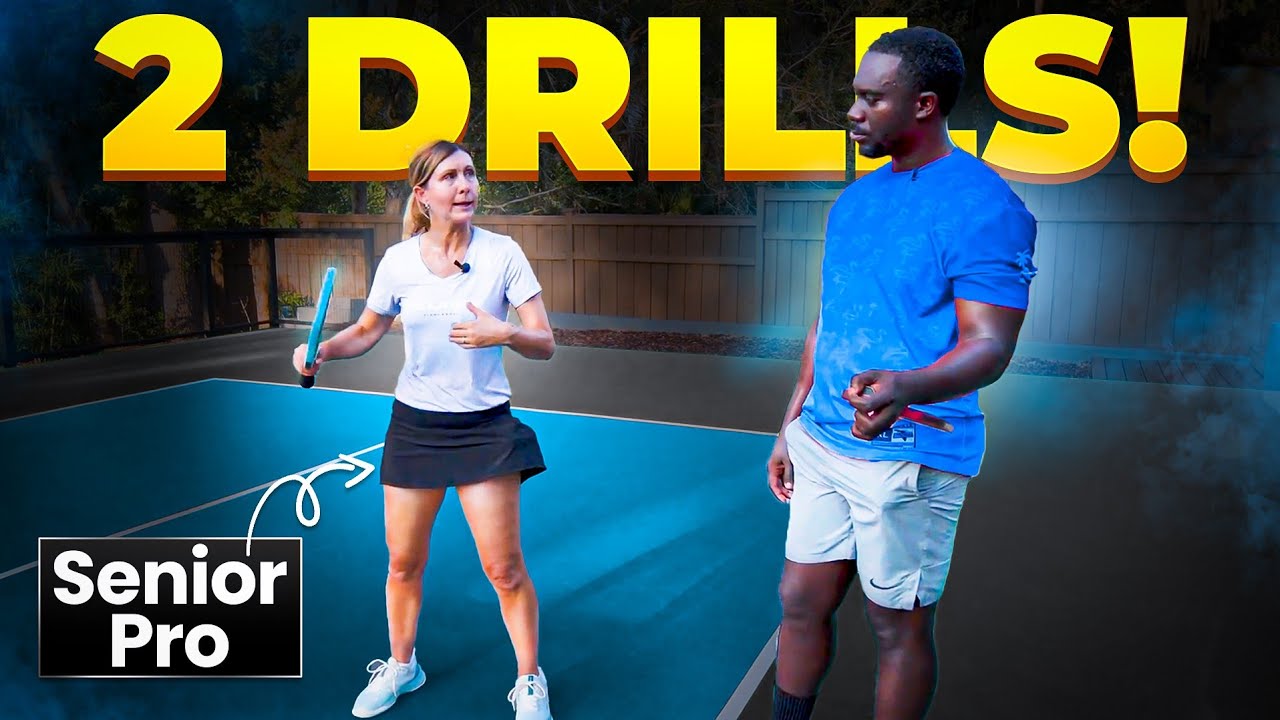
Common Mistakes to Watch For
Even players who understand the two steps still fall into predictable traps. Here are the ones to check for:
- Standing back up between dinks. Once you're low, stay low. Coming up and resetting your height between every shot wastes time and breaks rhythm.
- Swinging before the apex. Patience is the skill. Wait for the ball to stop rising before you start the arm swing.
- Wrist creep on wide balls. When the ball pulls you wide, the wrist instinctively tries to steer it back. Resist that. Move your feet instead and keep the arm swing intact.
- Short follow-through. If your swing stops early, the ball drops into the net. Commit all the way to the opposite shoulder on every rep.
Wide dink errors in particular come from a combination of footwork failure and wrist compensation.
Wide pickleball dink mistakes and how to fix them fast covers that specific situation in detail.
If your forehand dink is giving you more trouble than your backhand, that's also worth addressing separately.
Why your forehand dink fails and how to fix it fast breaks down the distinct mechanics differences between the two sides.
 Alex E. Weaver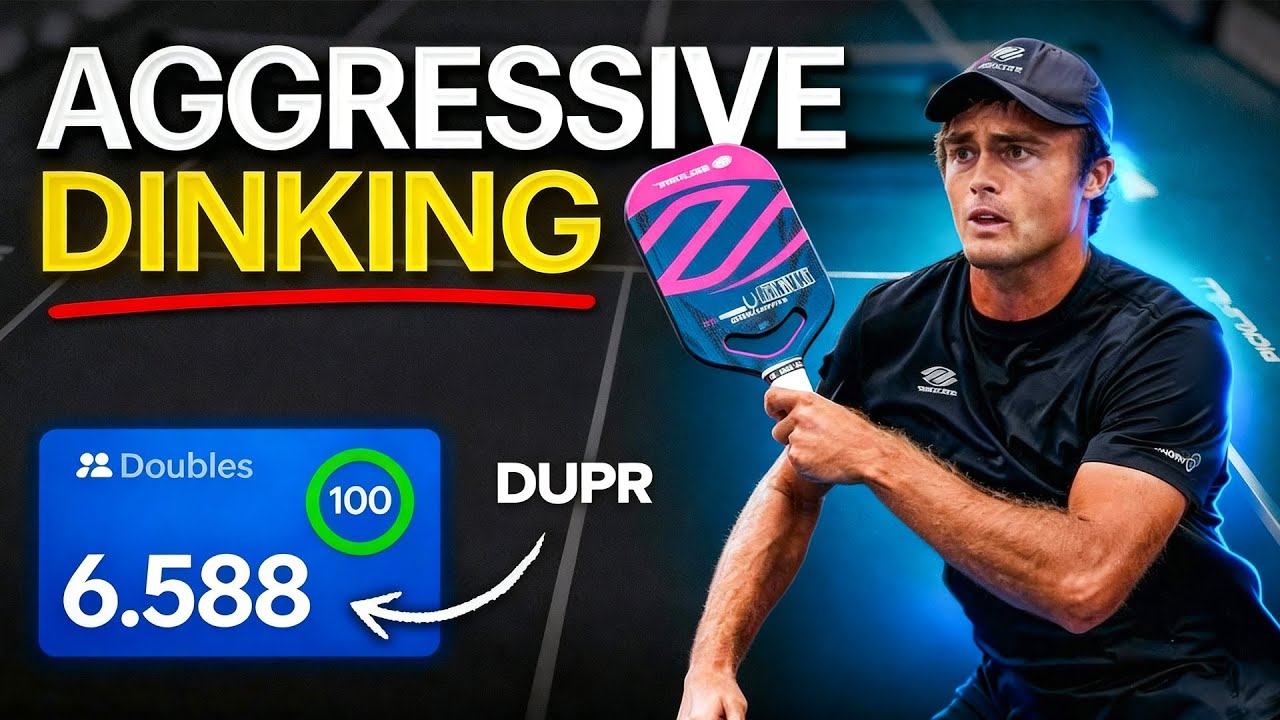
Putting It All Together
Two steps. That's the whole thing.
Sink down and drop the paddle into the ready position, then swing up to the opposite shoulder with your arm, timed to the ball's apex.
Neither step is complicated on its own.
The challenge is doing both simultaneously under pressure in a live rally, which is why repetition matters more than understanding here.
Get the motion into your body through slow, deliberate practice and then trust it when the game speeds up.
Your pickleball dink will stop being the weak link and start being the shot that keeps you in rallies.
Once the arm swing mechanics feel solid, these three backhand dink drills for real consistency are the natural next step.
Frequently Asked Questions
What is the correct ready position for a pickleball dink?
The correct ready position for a pickleball dink is a low, athletic stance with your knees bent and your paddle dropped below the incoming ball's path. This gives you the room to swing upward through the ball instead of pushing or guiding it. Standing too tall is one of the most common reasons dinks lack control.
Should I use my wrist when dinking in pickleball?
No. The dink should be driven by your arm as a single connected unit, not by your wrist. Wrist-based dinks change angle slightly with every swing, which creates inconsistency over long rallies.
The arm swing gives you a fixed, repeatable path that holds up under pressure.
When should I make contact with the ball during a dink?
Make contact at the apex of the ball's bounce, the highest point it reaches before it starts dropping. The ball is moving slowest at its apex, which gives you the most control over where it goes. Swinging too early or too late leads to dinks that float long or clip the net.
Why does my pickleball dink keep popping up?
Popping up usually happens because you're making contact before the ball reaches its apex, when it's still rising fast. The upward momentum of the ball combines with your swing and sends it too high. Wait for the apex and use an arm-driven swing for a much flatter, controlled result.
How do I stop using my wrist when I dink?
Focus your practice on the follow-through: your swing should finish pointing toward your opposite shoulder every single time. If it finishes somewhere else, the wrist has taken over. Slow reps with deliberate attention to the finish position will retrain the motion faster than any amount of match play.


Love Pickleball? Join 100k+ readers for free weekly tips, news & gear deals.
Subscribe to The Dink