
Why Your Forehand Dink Keeps Failing (And the One Footwork Fix That Works)
If your forehand dink keeps going wide or getting behind you, your footwork is the problem. The drop step is a simple one-move fix that puts the ball back in front of you every time.
Your forehand dink is not failing because of your grip or your swing. It is failing because the ball is getting behind your body before you ever make contact.
This is the most common breakdown at the kitchen line, and it shows up at every level from beginner to competitive intermediate.
You reach, you lunge, you lean, and the ball pops up or sails wide.
The fix is a single footwork move called the drop step, and once you feel it, you will wonder how you ever played without it.
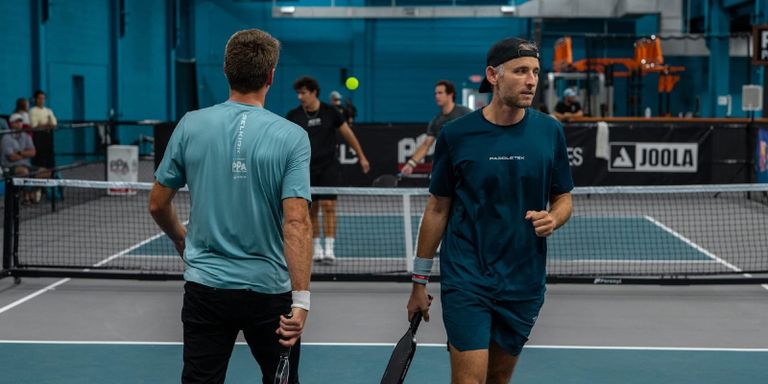
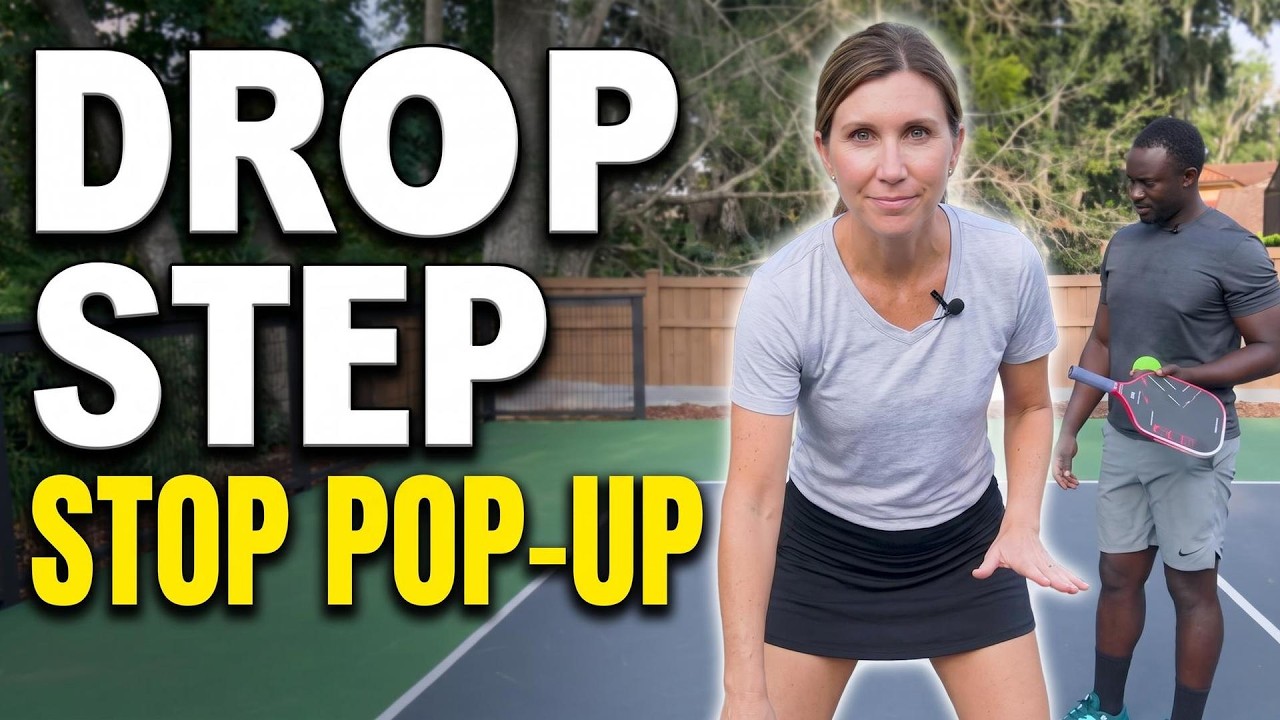
This breakdown pulls directly from a session with Cliff Pickleball on YouTube, where senior pro Heather Lovett walks Cliff through exactly how to stop reaching and start controlling the crosscourt dink.
Love pickleball? Then you'll love our free newsletter. We send the latest news, tips, and highlights for free each week.
The Real Problem With Your Kitchen Line Footwork
Most players only move in a few directions at the kitchen line. They step forward, step sideways, or back up straight.
None of those options work well for a wide crosscourt forehand dink.
When the ball is pushed out to your right side and slightly behind you, stepping sideways puts the ball next to your body.
Making contact there destroys your control.
What Cliff discovered in this session is something most players never hear: you have to move backward on a diagonal to keep the ball in front of you.
That is the core problem. Players move parallel to the ball when they should be moving away from it.
As Heather put it plainly during the session, the lunge happens because your footwork moved parallel.
You went straight over to the ball instead of stepping back from it. That one mistake causes the pop-up, the wide miss, and the loss of control every time.
What Is the Drop Step?
The drop step is a short diagonal backward step with your right foot (for a right-handed player hitting a forehand) that creates space between you and the ball.
Think of it like bicycle spokes radiating out from a center point. You can go forward on a spoke, sideways on a spoke, or backward on a spoke.
For the wide crosscourt forehand dink, the spoke you want is the one going diagonally backward.
Here is what the drop step looks like broken down into its key elements:
- Small movement: This is a half step, not a full stride. You are shifting weight, not sprinting.
- Backward and diagonal: Your right foot moves back and outward, not sideways parallel to the net.
- Weight shift: Your weight transfers to your right foot while your left foot stays on the ground for balance.
- Low base: Your knees stay bent and your balance stays down throughout the entire movement.
- Ball stays in front: The whole goal of the drop step is to ensure contact happens in front of your body, not beside it or behind it.
That last point is the one that matters most.
Anytime you make contact in front of your body, you gain control, consistency, and placement.
The drop step is just the mechanism to get you there.
Why Do Players Refuse to Move Their Feet?
Cliff made an observation during the session worth repeating: players act like they have glue in their shoes.
They stay planted and reach instead of moving, or they move in the wrong direction entirely.
In everyday movement and in most sports, humans go forward and sideways, so stepping backward is never the first instinct.
Pickleball footwork drills that make the game feel slower can rewire that instinct over time.
But first you have to understand why the backward step matters so much.
The other half of the problem is weight transfer. Many players know they should move but never shift their weight while doing it.
You cannot just pick up your foot and tap it backward. You have to drop your weight onto that back foot so your left foot stays free to adjust.
 The Dink Media Team
How to Set Up Your Body for the Crosscourt Forehand Dink
Before you think about the drop step, your starting position has to be right. Here is the correct ready position at the non-volley zone:
- Parallel to the net: Your shoulders and hips face the net. Do not angle your body toward the crosscourt direction before the ball arrives.
- Shoulder-width stance: Your feet are roughly hip-width apart. Not too wide, not too narrow.
- Low balance: Your knees are bent. Your weight is centered. You are ready to move in any direction without having to reset first.
- Paddle ready: Your paddle is in front of you, not resting at your side.
From this base, you can respond to whatever ball comes your way. If it is tight to your body, you handle it one way. If it is wide and behind you, you drop step.
One thing Heather added that players often overlook: your toe line and waist should align with the angle you want the ball to travel.
For a crosscourt dink, that means after your drop step, your body is naturally angled to send the ball diagonally.
Your footwork creates the direction, not just your arm.
 The Dink Media Team
What Happens When You Get It Wrong?
Cliff ran live dinks during the session and you could see the exact moment it broke down.
When the ball got slightly behind him, his instinct was to lunge forward and to the side.
The result was a pop-up. Every time.
Heather paused to explain it: the footwork moved parallel, which put the ball beside his body instead of in front of it.
Contact from the side means no control over the angle, no ability to lift with topspin, and no chance of keeping the ball low into the kitchen.
You are guessing at that point.
This is also where the short hop mistake creeps in, because players try to take the ball early before they have recovered position.
Taking the drop step before the ball arrives buys you the time and space for clean contact.
If you keep popping up wide balls, look at your feet first. The swing is almost never the issue, and understanding why your dink fails in games usually starts right here.
 Alex E. Weaver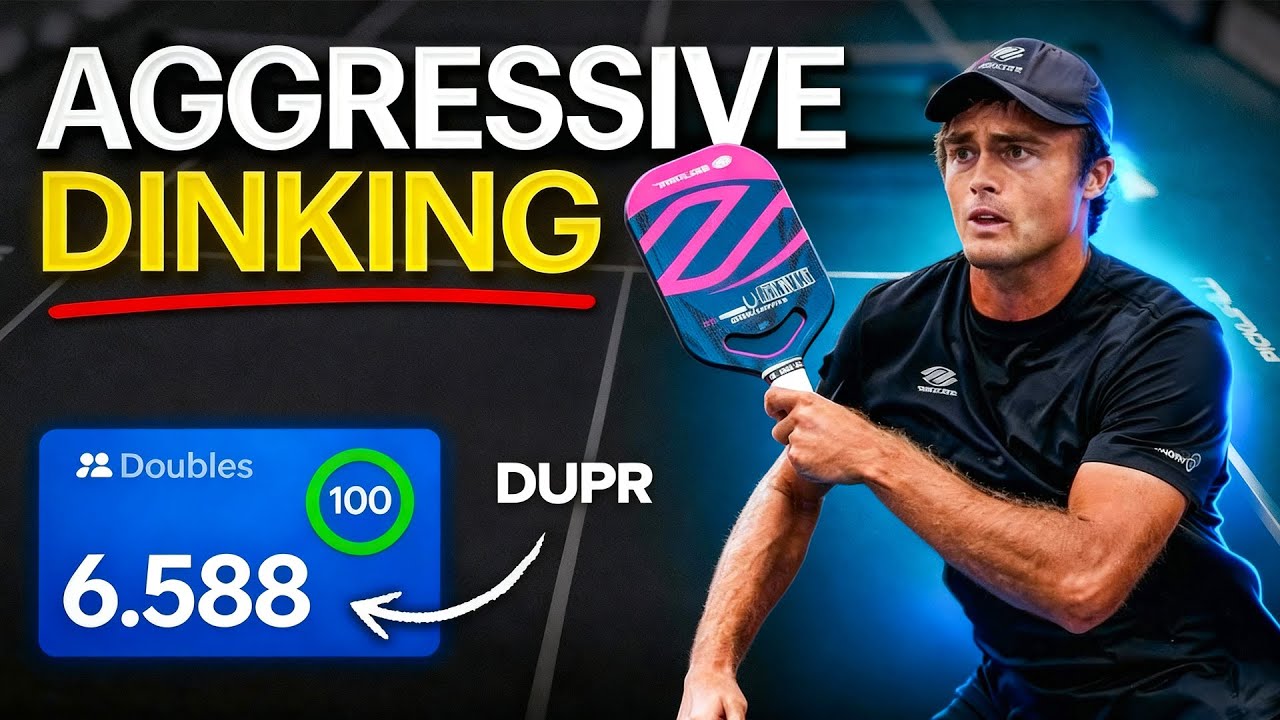
How Do You Actually Practice This?
The drop step has to become automatic, which means drilling it deliberately instead of hoping it shows up during a game.
Here is a simple way to build the movement into your practice:
- Shadow drill alone: Stand at the kitchen line and rep the drop step with no ball. Right foot back and diagonal, weight shifts, knees stay bent. Do 20 before you ever pick up a paddle.
- Feed drill with a partner: Have a partner feed wide balls to your forehand side, slightly behind where you are standing. Your only job is to drop step before contact. Do not worry about placement yet.
- Recovery emphasis: After each drop step dink, focus on recovering back to center before the next ball arrives. The step is only half the equation. Getting back is the other half.
- Add topspin last: Once the movement feels natural, lift with topspin to keep wide balls in the kitchen instead of sailing long.
The dinking drills that senior pros swear by almost always include wide ball recovery.
This is not an advanced concept. It is a foundational one that gets skipped.
Pairing the drop step with other two-person pickleball drills that build real skills will speed up how fast it becomes second nature.
 The Dink Media Team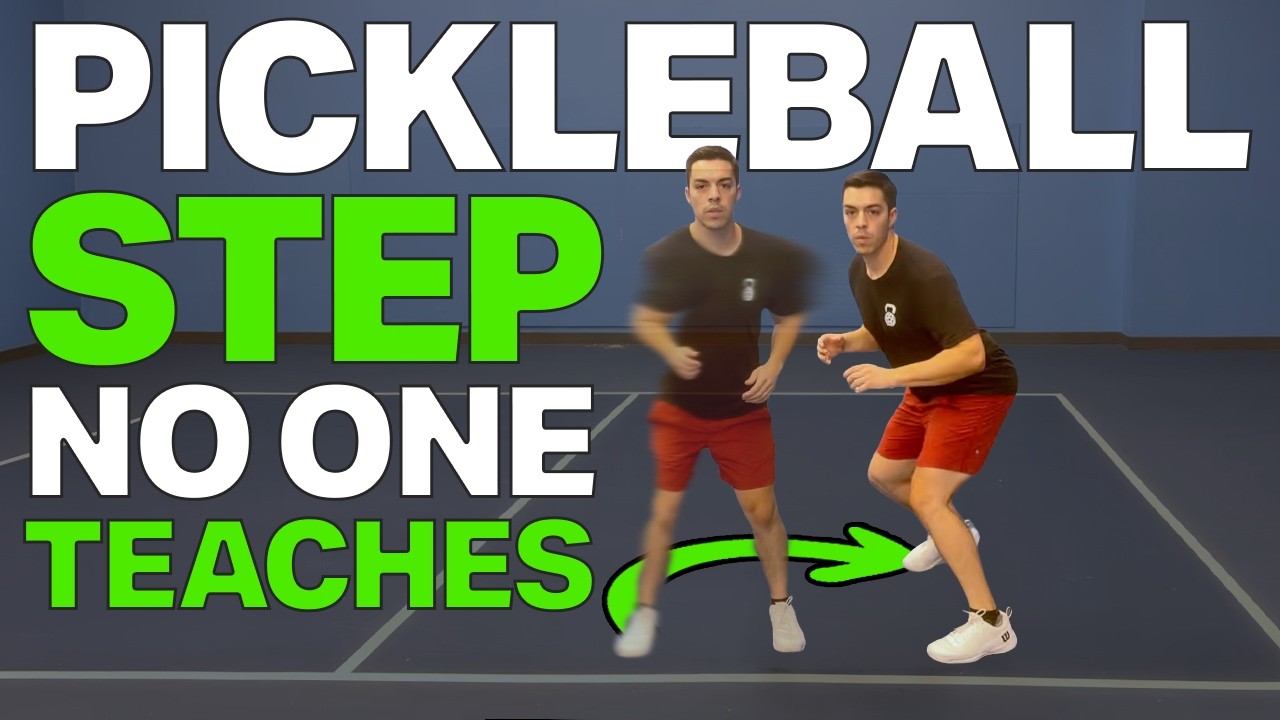
The Balance Principle That Ties It All Together
Balance is not something you find after you move. It is something you maintain while you move.
That subtlety separates players who drop step correctly from players who drop step and still end up off balance. The left foot has to stay grounded as an anchor.
You are not jumping backward. You are sliding and shifting.
Watch the best players at the kitchen line and their feet rarely leave the ground by more than an inch.
They are not picking up and replanting. They are gliding and adjusting.
Heather used a line during the session that stuck: learn how to dance. Dancing is small controlled weight shifts, precise foot placement, and constant balance adjustment.
That is exactly what kitchen line movement demands.
If you want to go deeper, wide dink mistakes and how to fix them covers the full range of errors that come from poor body positioning.
And for seniors especially, playing smarter and moving less lines up perfectly with the drop step philosophy of efficient movement over extra movement.
The crosscourt forehand dink does not have to be a problem shot. One small backward step changes everything.
Dinking technique fixes from top players all point to the same truth: contact in front of your body is non-negotiable. The drop step is how you get there.
Do it once in practice with real intention and you will feel it immediately. Kitchen line fixes like this one stick because the feedback is instant.
You either made contact in front, or you did not.
Frequently Asked Questions
What is a drop step in pickleball?
A drop step is a short diagonal backward step used at the kitchen line to create space between your body and the ball. It allows you to keep the ball in front of you during a wide forehand dink instead of letting it get beside or behind you. The result is more control and a cleaner contact point.
Why do I keep popping up my forehand dink?
You are most likely making contact with the ball beside your body or behind your front hip, which removes your ability to control the angle. The fix is to step backward before you swing so the ball stays in front of you. A drop step solves this problem without changing your swing at all.
How do I stop lunging at wide dinks?
Lunging happens when your feet move parallel to the ball instead of stepping backward away from it. Practice the drop step in shadow drills first so the backward diagonal movement becomes your default reaction. Once that instinct is built, the lunge disappears naturally.
Should I use the drop step on every forehand dink?
No, the drop step is specifically for balls that are wide and slightly behind your ready position. For balls that are right in front of you, your normal ready stance handles it fine. The drop step is a response to a specific situation, not a default stance you hold.
How does footwork affect dink consistency?
Footwork determines where your contact point is, and contact point is the single biggest factor in dink consistency. When your feet are in the wrong place, even a technically sound swing will produce an erratic ball. Getting your feet right first means your hands have a reliable platform to work from every time.

Love Pickleball? Join 100k+ readers for free weekly tips, news & gear deals.
Subscribe to The Dink