Getting better at pickleball is not just about drilling more or finding a coach. The players who improve fastest share one trait: they stay curious about the game.
Getting better at pickleball is not just a question of hours logged on the court.
The players who actually improve, month after month, tend to share one trait that has nothing to do with athleticism or natural talent.
They stay curious. They ask "what if" constantly. They treat every session as a chance to discover something, not just repeat what they already know.
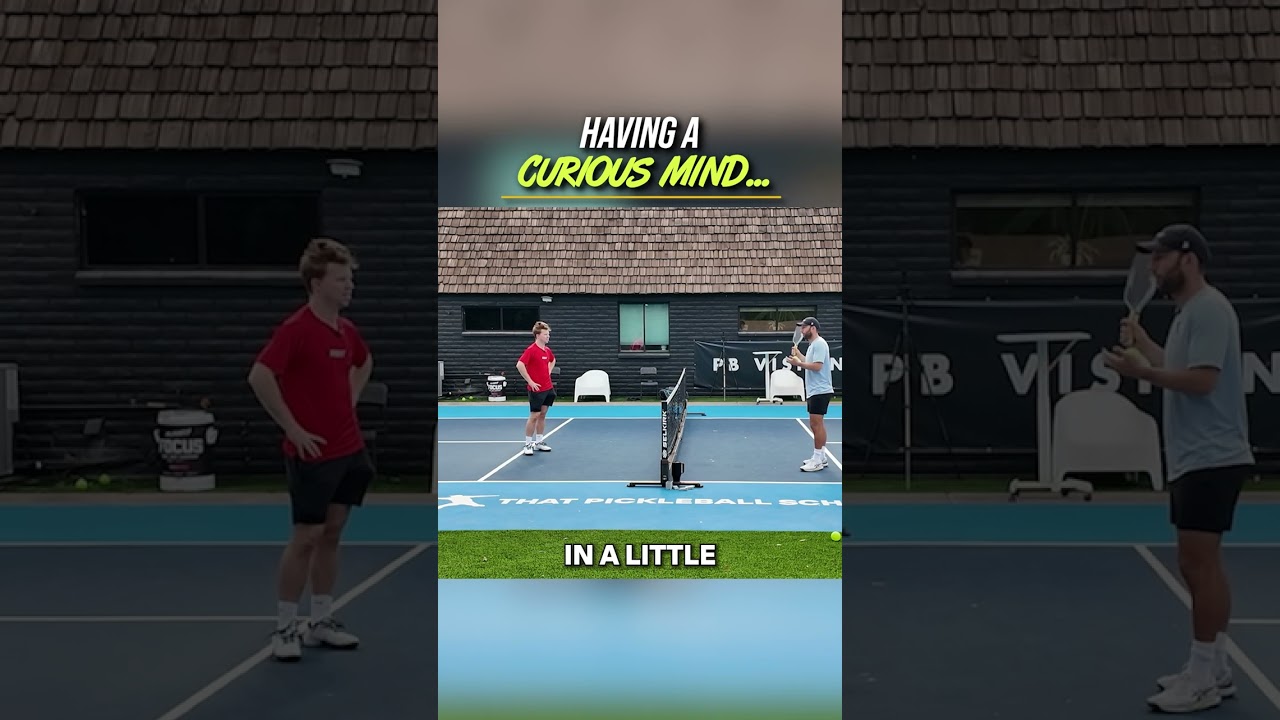
This idea comes straight from ThatPickleballGuy Kyle Koszuta on YouTube, where he and a guest who has been playing for 23 years make the case that curiosity, not just repetition, is what drives real growth in this game.
Love pickleball? Then you'll love our free newsletter. We send the latest news, tips, and highlights for free each week.
Why Curiosity Is a Real Skill, Not Just a Nice Idea
Most players think pickleball improvement is about finding the right drill or the right coach. That matters, but it is not the whole picture.
The missing piece is your mental posture going into every session.
Are you trying to confirm what you already do, or are you genuinely open to discovering a better way?
A player with 23 years of experience said it plainly: he still has more to learn. That is not false modesty.
That is the pickleball mindset that kept him improving for two decades.
Here is the thing most players get backwards when they ask how to improve at pickleball. They think they need certainty before they experiment.
In reality, the experimentation is how the certainty gets built.
1. Ask "What If" Before Every Session
The single most useful habit you can build is asking one "what if" question before you step on the court.
What if you hit your dink a little flatter? What if you stood six inches closer to the line? What if you slowed your swing on the third shot drop instead of muscling it?
These are not random thoughts. They are low-stakes experiments that give you real data about your own game.
You learn more from one honest experiment than from 50 repetitions of something you already do on autopilot.
This is exactly how the best time to learn a new shot tends to arrive: not when you are forced to, but when you go looking for it deliberately.
2. Stop Treating Unsolicited Advice as an Insult
Someone at the park gives you a tip you did not ask for. Your first instinct is probably to dismiss it.
Here is a better frame: treat it as raw information. You do not have to apply every piece of advice you hear.
But if you filter it through curiosity instead of defensiveness, you will occasionally find something genuinely useful.
Better players especially tend to share freely. That is actually a gift, even when the delivery is clunky.
The key is separating your ego from the feedback. The advice might be wrong for your game. It might be exactly right.
You will not know unless you actually try it.
This connects directly to the mindset shifts that break players out of a plateau. Staying open is not weakness. It is strategy.
 Eric Roddy
Is Experimenting During Games a Bad Idea?
This deserves a straight answer: yes, some experimenting is better saved for practice. But even in games, a curious mindset helps.
You start noticing patterns. You start asking why a shot worked or failed instead of just moving on.
That kind of active attention is what separates players who grind for years without improving from those who improve steadily.
The goal is not to tinker recklessly. It is to stay awake to what the game is actually telling you.
 The Dink Media Team
3. Treat Unconventional Shots as Data, Not Mistakes
If you try something different and it fails, that is useful information. If you never try anything different, you have no information at all.
Most recreational players are so afraid of looking bad that they never experiment.
They play the same shots in the same situations, then wonder why their game feels stuck.
Curiosity means being willing to look a little lost for a while. That discomfort is not a sign something is wrong. It is a sign you are actually learning.
Here is a short list of low-risk places to experiment during casual play:
- Try a different paddle grip pressure on your dink rallies
- Attempt a cross-court angle you normally avoid
- Experiment with your split step timing on the return
- Hit your third shot drop to a different landing zone than usual
- Try a backhand dink from a position where you would normally run around to your forehand
None of these will cost you much in a casual game. All of them will teach you something real.
Understanding the 1 to 10 scale for shot selection helps you identify which moments in a match are lower stakes and better suited to testing something new.
 The Dink Media Team
4. Learn From Better Players Without Copying Them Blindly
Watching a 5.0 player and immediately trying to replicate everything they do is a trap.
Their mechanics are built on thousands of hours of context you do not have yet.
But watching them with genuine curiosity is extremely valuable. Ask yourself what they are doing that you are not. Then ask why.
Then ask whether it might apply to your game.
That sequence, observe, question, test, is a real learning loop. It works for beginners and it works for players with decades of experience.
This is also why what 6.0 players see that 4.0 players miss is worth studying. The gap is often not physical. It is perceptual.
 The Dink Media Team
Does Having More Experience Make You Less Curious?
It can, and that is exactly the danger. The longer you play, the more habits calcify.
You stop questioning things that could actually be improved because they feel familiar.
The 23-year player in this video is proof that experience and curiosity are not mutually exclusive. He is still asking questions. He is still finding things to refine.
If anything, more experience should give you more to be curious about, because you can see finer details.
Beginners do not know enough yet to ask the right questions. Advanced players who stay curious ask better and better questions over time.
Knowing when you are ready to move up a skill level is partly a matter of curiosity too.
Players who are ready tend to be actively looking for what they do not know yet.
 Alex E. Weaver
5. Build a Practice Habit Around Questions, Not Just Reps
Repetition without reflection is how you groove bad habits, not good ones. The curious player does not just drill. They drill with a specific question in mind.
Here is a practical framework for adding curiosity to your practice:
- Pick one thing to explore before you start. Not ten things. One.
- Set a rough number of attempts so you actually get enough data. Twenty to thirty reps on a specific variation is a reasonable starting point.
- Notice what changes when you adjust one variable. Grip. Stance. Swing path. Timing. Change one thing at a time or you will not know what actually worked.
- Decide what to keep based on what you felt and what happened, not just what looked right.
- Ask a new question at the end of each session. Something you noticed that you want to explore next time.
This is a completely different mindset from showing up and just playing games. It makes every session more productive, even if it is only 30 minutes.
If you want to build this into a real practice structure, a 90-minute drilling blueprint from a PPA pro is a great place to start.
Staying curious also means noticing your own patterns more clearly.
The bad habits you do not know you have are usually invisible until you start watching yourself with fresh eyes.
 The Dink Media Team
The Real Reason Curiosity Beats Talent Over Time
Talent gets you to a certain level fast. Curiosity is what keeps you moving after that initial jump.
Most players plateau not because they lack ability, but because they stop asking questions. They find a comfort zone and they stay there. The game passes them by.
The players you see consistently improving at the park, at local tournaments, at every level, are the ones who are genuinely interested in the problem of pickleball.
They treat it like a puzzle worth solving, not a performance to protect.
That is a learnable habit. It does not require natural ability.
It just requires that you stay a little uncomfortable, a little uncertain, and a little interested in what you do not know yet.
If you want a concrete starting point for changing how you think about your game, these decision-making fixes for 3.5 players will challenge assumptions you probably did not know you had.
And if you are looking for a smarter way to structure your practice week overall, why your drilling is not working is worth reading before your next session.
Frequently Asked Questions
How does staying curious actually help you get better at pickleball?
Staying curious keeps you experimenting, which is the only way to discover improvements specific to your own game. Players who stay curious ask better questions, try new things deliberately, and notice patterns that others miss. Over time, this compounds into a significant skill gap compared to players who just repeat the same habits.
Should I take advice from better players at my local courts?
Yes, but filter it. Treat advice as information to test, not instructions to follow blindly. Try it a few times and see if it actually improves the outcome for your specific style and body mechanics.
Is it okay to experiment during actual games or only in practice?
Low-stakes casual games are fine for small experiments. Competitive matches are better served by your established game. The curious mindset is always valuable, but save your biggest experiments for drilling sessions where the score does not matter.
How do experienced players stay curious after years of playing?
The best long-term players shift from big questions to finer ones. Instead of asking how to hit a third shot drop, they ask how to adjust it for different speeds of incoming ball or different court positions. Experience gives you more to be curious about, not less.
What is the fastest way to start improving if I feel stuck?
Pick one specific shot or situation that frustrates you and spend your next three sessions asking why it keeps failing. Try one adjustment per session and notice what changes. This focused curiosity is more effective than general drilling because it targets your actual weaknesses, not generic ones.

Love Pickleball? Join 100k+ readers for free weekly tips, news & gear deals.
Subscribe to The Dink