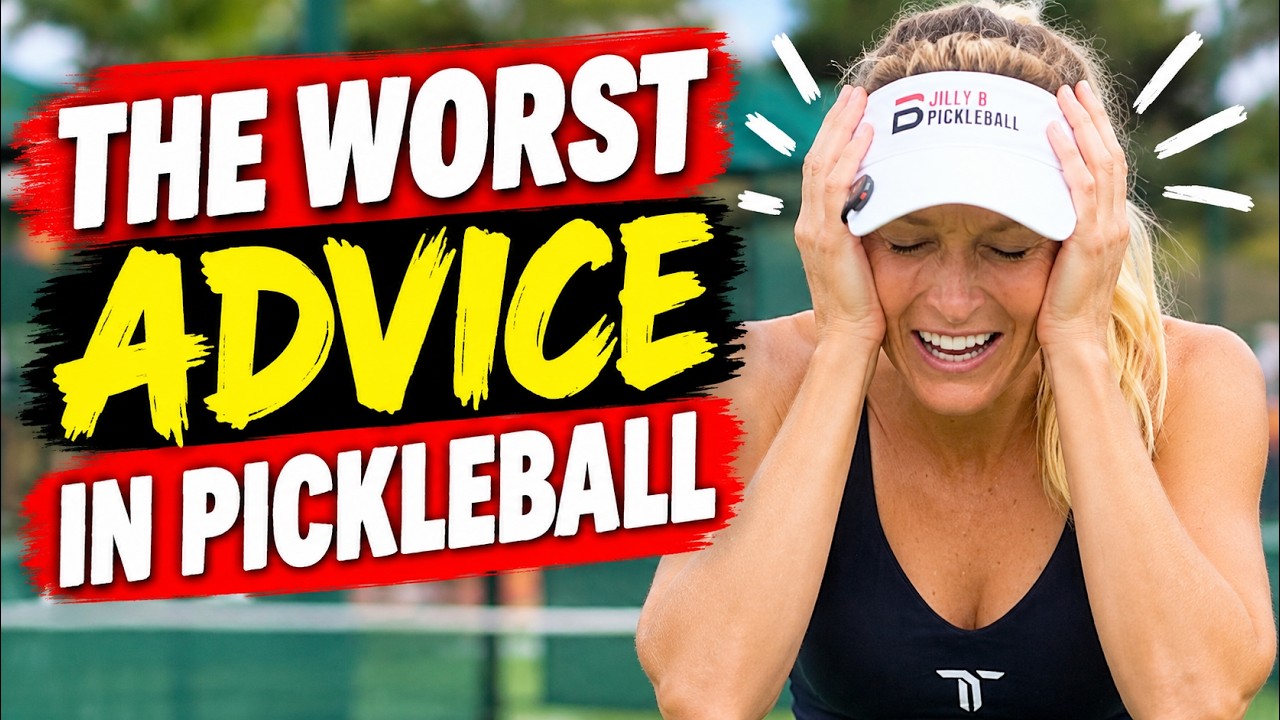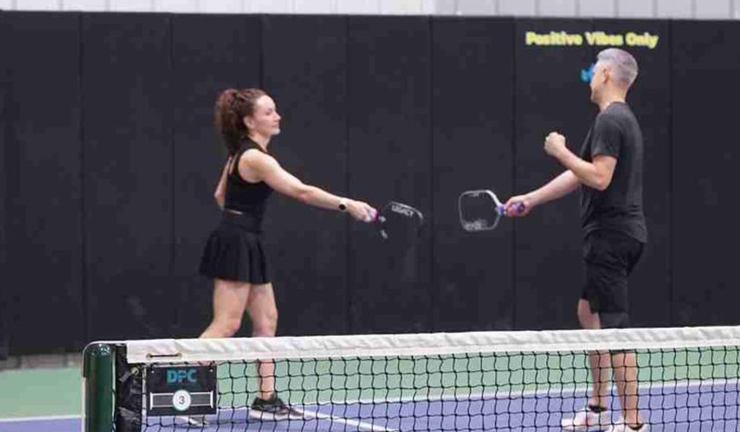
Not every pickleball player thinks or competes the same way. Learn the 4 pickleball player types and how knowing yours can sharpen your game and improve your partnerships.
Your pickleball player type shapes every decision you make on the court, from whether you attack a soft ball or reset it, to whether you go into a match with a game plan or just wing it.
Most coaches tell you how the game is "supposed" to be played. The problem is, that advice was built for one kind of player.
If your natural instincts pull you somewhere else, you end up fighting yourself as much as you fight your opponent.
 kyle Koszuta
This breakdown comes from ThatPickleballGuy - Kyle Koszuta on YouTube, who co-founded an online pickleball school and analyzed over 67,000 posts and comments from players to identify four distinct playing personalities.
Here is what each type looks like, where they thrive, and where they leave points on the table.
Love pickleball? Then you'll love our free newsletter. We send the latest news, tips, and highlights for free each week.
Why Knowing Your Type Actually Matters
The four player types are not boxes. You carry all four in your game to some degree.
What the test identifies is which one you naturally lead with, the style your instincts default to under pressure.
That default is your superpower. But your biggest opportunity for growth usually sits in whichever type lands third or fourth on your list.
Think of it like this: if you coach your partner the way you want to be coached, you will almost always get it wrong.
The same thing happens when you try to improve your own game by copying someone whose instincts are completely different from yours.
Knowing your type gives you a specific target. It tells you what to lean into and what to shore up, rather than just grinding through drills with no clear direction.
Type 1: The Rock
The Rock is built on consistency. This player makes one more ball, avoids unforced errors, and rarely attempts low-percentage shots.
If you follow the pro game, think Collin Johns or Tina Pisnick as players who carry strong Rock qualities.
They do not beat you with flash. They beat you by outlasting you.
On a shot quality scale, Rocks almost never hit a "3," meaning they are not going for shots with little chance of working.
They keep the ball in play, stay disciplined, and let the opponent make mistakes.
Where the Rock struggles
- Getting overwhelmed by aggressive attackers who apply sustained pressure
- Missing chances to finish points after earning an easy ball
- Spending too much time in the transition zone instead of closing to the kitchen
- Falling in love with the reset even when it creates no advantage
If you are a Rock who keeps getting punished by hard hitters, these four steps for handling drives and beating bangers are worth your time.
The fix for most Rocks is not to change who they are.
It is to recognize when a reset has created a real advantage, then close quickly and apply pressure instead of dinking the opportunity away.
Type 2: The Architect
The Architect wins with their brain first. They arrive with a plan, hunt for weaknesses, and adjust mid-match when something is not working.
This is the player who notices the opponent is weak on the backhand side and quietly starts feeding it every third ball.
Not the flashiest player on the court, but often the most prepared.
Kyle Koszuta identifies as an Architect.
He describes it as always searching for the strategic edge, especially against opponents who are physically stronger or more technically skilled.
Where the Architect struggles
- Overthinking fast exchanges and hesitating when a simple hard shot wins the point
- Coaching their partner mid-match without being asked, which kills momentum
- Getting frustrated when they see a solution their partner cannot execute
- Letting emotion creep in because they expect more than the game allows
That frustration is real. Architects see things others do not, and when execution does not match the vision, it spirals fast.
These six in-game mistakes hit especially close to home for this pickleball player type.
The strength worth stealing from the Architect, even if it is your lowest type: have a plan before you start, and look for one adjustment to make at each changeover.
 Eric Roddy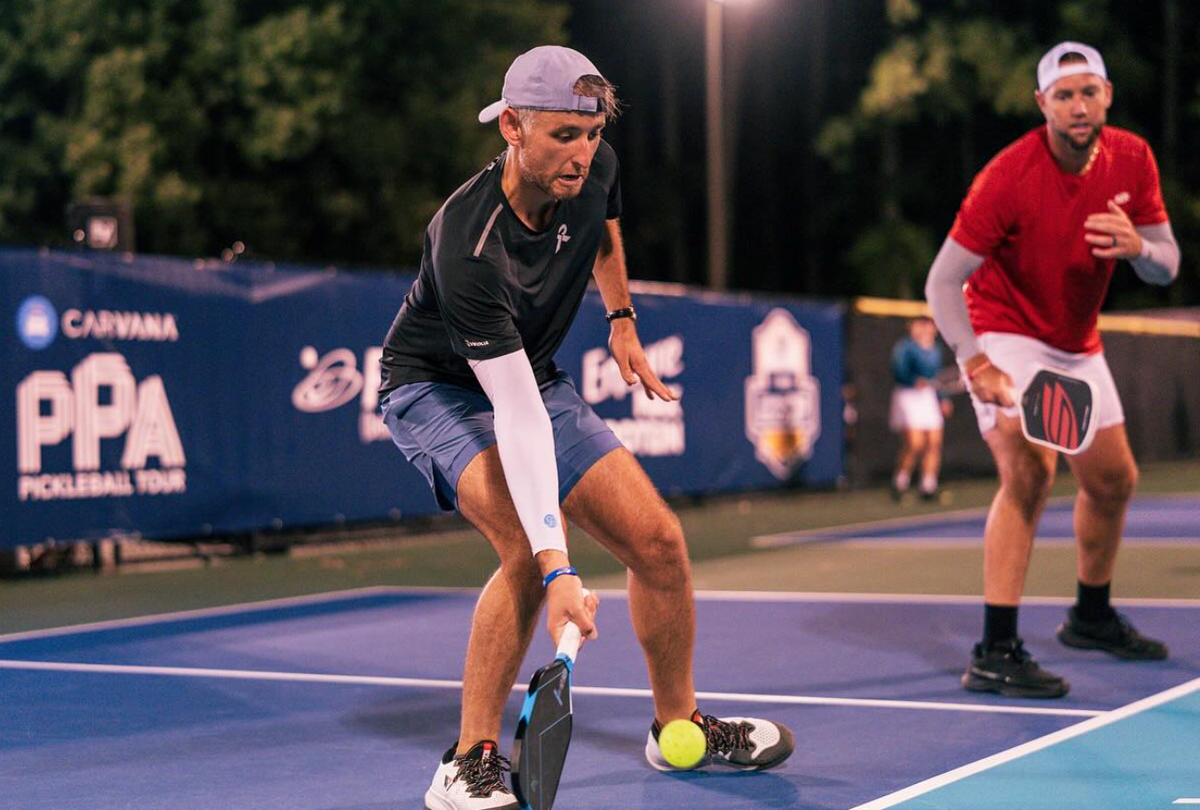
Type 3: The Attacker
No. And this distinction matters a lot.
The Attacker defaults to aggression, applies pressure early, and wants to be first mover in every exchange. That is not the same as mindlessly hammering the ball.
The banger swings hard and hopes. The Attacker swings hard because they identified a real opportunity and want to own the point.
At lower levels, this pickleball playing style wins a lot.
Speed up everything at 3.5 and you will win more points than you lose, which is partly why Attackers tend to move up in rating faster than other types.
The risk is that pure aggression stops working at higher levels without a soft game to set it up.
Here is why soft pickleball beats attackers when they refuse to adapt.
Watch Anna Leigh Waters for the best example of an Attacker who added every other tool to the kit. Most fans only remember the aggressive shots.
What they miss is how often she dinks patiently, resets, and earns her attack rather than forcing it.
If you lead with Attacker, you need more Rock. Not because aggression is wrong, but because a reliable reset is what creates the high-percentage chance to attack.
Going one speed makes you predictable. Changing pace is what makes you hard to read.
 The Dink Media Team
Type 4: The Artist
The Artist sees angles nobody else noticed. They play creatively, find unorthodox solutions, and are willing to try shots that others would not even consider.
This is the player who hits an Erne you did not see coming, or drops an impossible cross-court angle that leaves the opponent frozen.
They solve problems with creativity instead of strategy or brute force.
The Artist's gap is consistency. Always hunting the creative play means sometimes bypassing the simple, high-percentage shot that was right there.
Understanding shot quality on a scale helps Artists recognize when creativity costs more than it earns.
The strength worth stealing: take the unexpected angle when a point is stuck in a neutral pattern.
If your game has zero creativity, you are predictable even when you are consistent.
 The Dink Media Team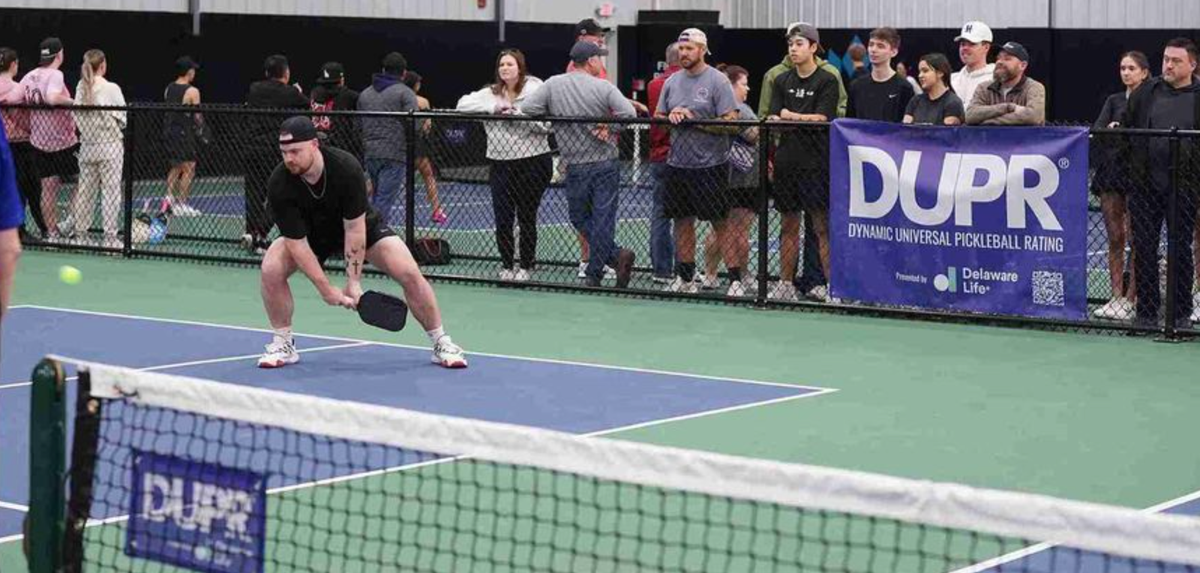
How These Types Interact in Doubles
This is where the framework pays off most. Most doubles problems are not technical. They are personality mismatches nobody has named yet.
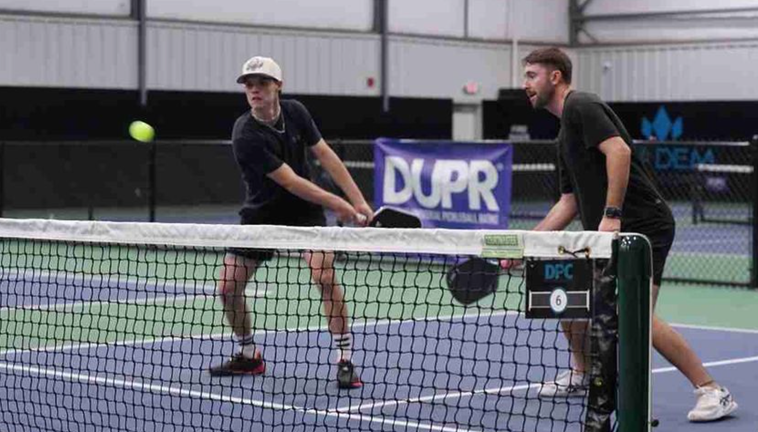
A Rock paired with an Attacker will feel constant tension. The Rock wants one more dink. The Attacker wants to speed up now.
Neither is wrong, but without knowing why they clash, they just keep fighting.
When you know your partner's type, you stop coaching them into playing your way.
You start having real conversations about when to attack and when to stay patient, which is a very different conversation than "just stop going for so much."
These doubles strategy fixes hit harder once you know which personality gap you are actually closing.
Worth noting: early in your career these types are extreme. A 3.5 Attacker is obviously an Attacker.
At the pro level, the best players move through all four styles fluidly. That balance is the actual goal, not locking yourself into one forever.
 The Dink Media Team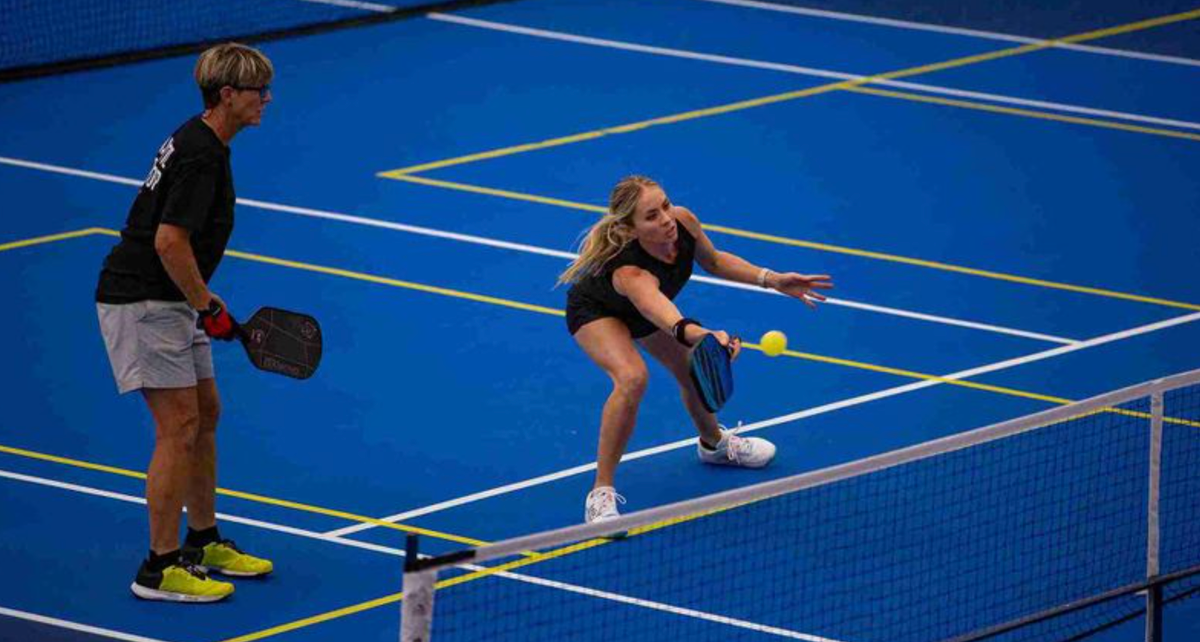
What to Actually Do With This Information
Start by identifying which type you lead with, even without taking a formal test. Ask yourself: when a point is close, what do you default to?
Then identify your third or fourth type. That gap is your biggest opportunity right now.
You can take the full pickleball personality test here to get your results ranked with percentages across all four types.
Once you know your ranking, use it as a conversation starter with your coach and your regular doubles partner.
Not "here is what I am" but "here is how I naturally want to play, and here is what I am working on."
That conversation changes everything. Curiosity about your own game is often the real separator between players who plateau and players who keep improving.
Your superpower is real. But your gap is where the rating points are hiding.
Frequently Asked Questions
What are the 4 pickleball player types?
The four pickleball player types are the Rock, the Architect, the Attacker, and the Artist. Each type describes a natural default style of decision-making and play under pressure. Most players carry all four in their game but lead with one.
Can I be more than one pickleball player type?
Yes, and you always are. The test gives you a ranked percentage across all four types, not a single label. Your highest type is where your instincts naturally go, but your third and fourth types are where your biggest growth opportunities usually live.
What is the biggest weakness of an Attacker in pickleball?
Attackers tend to go for low-percentage shots when they are losing, hitting harder instead of resetting and rebuilding the point. They also often lack a reliable soft game, which makes their attacks more predictable. Adding more Rock to your game as an Attacker is almost always the right move.
Why do Architects get frustrated so much on the pickleball court?
Architects see the game at a strategic level and get frustrated when their partner repeats the same mistake or when they themselves cannot execute the shot they know they should hit. That gap between vision and execution is the Architect's core tension. Managing that emotion is one of the biggest performance factors for this type.
How does knowing your pickleball player type help with doubles partnerships?
It gives you and your partner a shared language to talk about why you are clashing instead of just fighting about shot selection in the moment. A Rock and an Attacker have very different instincts on when to be patient and when to attack. Knowing that ahead of time turns a source of conflict into a strategic conversation.
Love Pickleball? Join 100k+ readers for free weekly tips, news & gear deals.
Subscribe to The Dink