Why a College Tennis Player Can Beat a 4.0 But Loses to a 5.0
A college tennis player faced every pickleball skill level from 2.5 to 5.0 in one day. What happened reveals exactly where tennis skills transfer and where they fall apart.
The tennis player vs pickleball player debate comes up constantly in recreational circles, and most people get it wrong in both directions.
Tennis players aren't just automatically good at pickleball, but they also aren't starting from zero.
The real answer is more specific than that, and watching what actually happens across five different skill levels tells you a lot about where your own game might be leaking points.
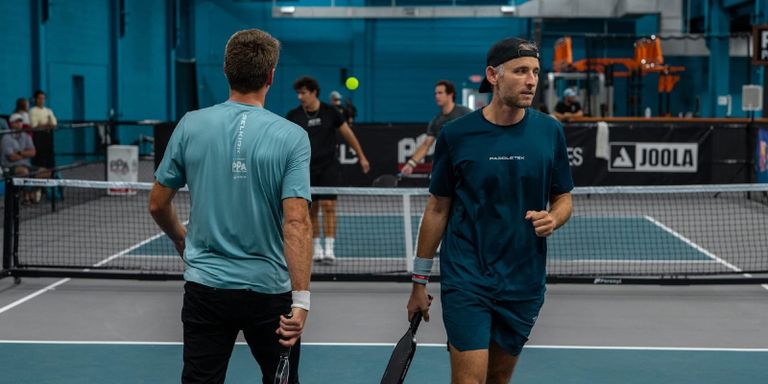
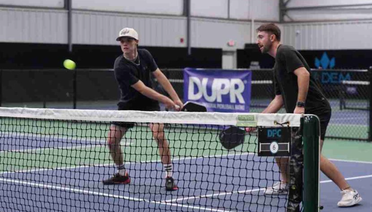
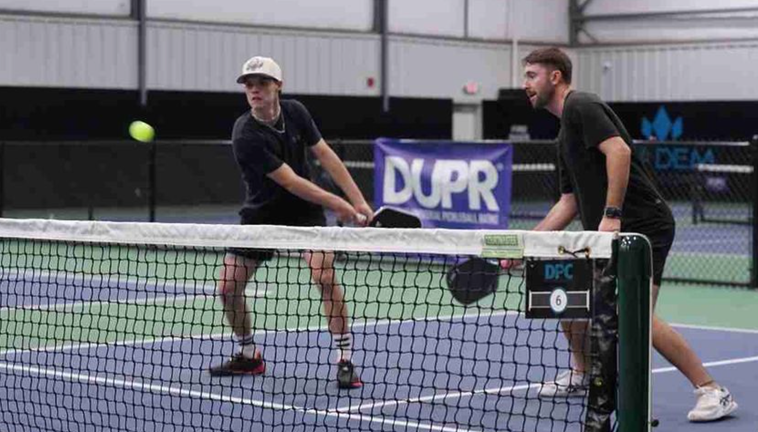
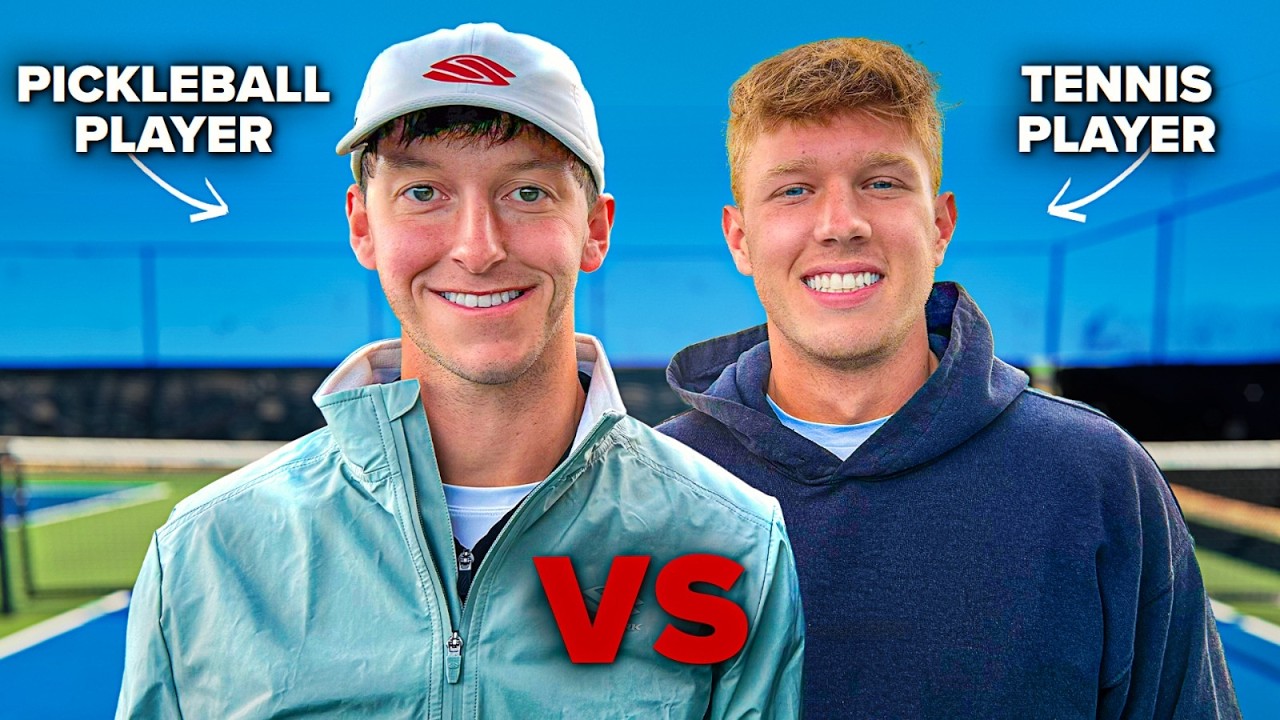
Shea Underwood Pickleball put this to the test by bringing in Caleb, a college-level tennis player with no real pickleball experience, and running him through a gauntlet from a 2.5 all the way up to a 5.0.
The results were surprising, instructive, and directly applicable to how you should think about your own skill transfer.
Love pickleball? Then you'll love our free newsletter. We send the latest news, tips, and highlights for free each week.
What the Gauntlet Looked Like
Caleb played singles against players at the 2.5, 3.0, 3.5, 4.0, 4.5, and 5.0 levels, in that order.
Each game was worth real money per point, escalating from $1 at the 2.5 level all the way to $50 per point against the 5.0.
He came in with no pickleball paddle of his own. He was handed one at the start and told to figure it out.
The format is useful because it removes the "he just had a bad day" excuse.
You see the same player adapt in real time across six opponents of increasing quality. That's where the real lessons live.
How Did He Do Against the Lower Levels?
Against the 2.5, Caleb won 11-0. That result should surprise exactly nobody.
Tennis athleticism, hand-eye coordination, and raw ball-striking ability are more than enough to dominate at that level.
Against the 3.0, he won 11-1. One point given up.
He was clearly learning from mistakes in real time, adjusting margins after each error, which is a very tennis-brained way to approach a new sport.
The 3.5 match was the first real test.
He went down 0-2 early, which was the first time he trailed in any game. He settled in and won, but you could start to see the gaps forming.
If you're a tennis player who picked up pickleball recently, this arc probably feels familiar. The lower levels feel comfortable. Then something shifts.
If you want to understand exactly which tennis habits hurt your pickleball game, that 3.5 range is usually where they start costing you.
What Did the 3.5 Match Reveal?
Three specific things showed up in the 3.5 game that would become bigger problems at higher levels.
- The kitchen rule. Caleb said it out loud: "I hate this kitchen rule, I just want to get to the net." That's the tennis instinct talking. In tennis, rushing the net after a good shot is correct, but the non-volley zone forces you to earn that position differently under the official rules.
- The slice advantage. His tennis slice was genuinely effective. The 3.5 opponent said flatly that she couldn't handle it coming off his backhand. That's a real weapon that transfers well.
- The soft forehand. It was flagged even at this level. The comment was direct: "That forehand is looking a little soft." Against a 3.5, it didn't cost him the game. Against a 4.5, it absolutely did.
The tennis habits that kill your pickleball reset are often the same ones that show up in your groundstrokes.
The instinct to generate pace from the baseline is deeply wired in tennis players, and pickleball punishes that wiring at higher levels.
 The Dink Media Team
Where Did the 4.0 Match Go?
The 4.0 also had a tennis background, which made for a longer, more tactical tennis vs pickleball matchup.
One thing stood out immediately.
The 4.0 was using drop shots in singles, a shot that barely exists in competitive tennis but functions as a core weapon at higher pickleball levels.
Caleb still won, finishing with $198 through four games. The margin was smaller and the errors cost more.
His slice kept creating problems, and his placement was smarter than most new players manage.
The observation from the video was accurate: "Smart play can beat athleticism."
That's the fundamental split. Understanding what 4.5 players consistently do right is less about physical skill and more about decision-making under pressure.
 The Dink Media Team
What Happened Against the 4.5?
The 4.5 match was not close.
Heath, the 4.5 player, was described as "playing out of this world," but the more honest read is that he was exposing real weaknesses that were always there.
Two things specifically broke Caleb down.
- Topspin down the line. Caleb's game was slice-oriented, which meant he was essentially handing topspin-heavy opponents a blueprint. Go down the line with topspin, and he struggles to redirect it. Heath ran that play repeatedly.
- Inside-out drop placement. Caleb said afterward, "I've never seen that before in tennis." The inside-out drop is a shot that doesn't exist in tennis, and when you haven't trained a response to it, you're essentially seeing it for the first time in a competitive situation. That's not a good place to learn.
If you're a tennis player trying to get past the 4.0 barrier, this is where countering topspin in pickleball becomes a non-negotiable skill to develop.
 The Dink Media Team
What Did the 5.0 Match Show?
Against the 5.0, each point was worth $50. Caleb finished with $200 from that game, which means he won four points.
The 5.0 noted that he felt pressure at moments and nearly let the match slip when he stopped being sharp.
That's actually important context. Even at the 5.0 level, a tennis athlete with good hands can create problems sporadically.
But "sporadically" isn't the same as competing.
A few patterns defined the 5.0 match.
- Unforced errors on the forehand side. The soft forehand that was noticed at 3.5 became a genuine liability at 5.0. Better players spotted it and targeted it repeatedly.
- Pickleball-specific rules. A subtle rule cost Caleb a point, and he admitted he didn't know it. At 5.0, every rule matters, and ignorance of any of them is a point given away.
- No consistent third shot. He hit some third shot drops during earlier games, but they weren't reliable under pressure. The 5.0 punished every floater that came back attackable.
Understanding why you miss your third shot drop is something that matters even for tennis players who have good touch.
The mechanics are different enough that tennis feel doesn't automatically translate.
 The Dink Media Team
What Does This Tell You About Your Own Game?
If you're a tennis player who has recently picked up pickleball, here's what Caleb's gauntlet actually reveals about where your game stands.
Your slice backhand is probably your best immediate weapon. Use it. At lower and mid levels, very few players can read it or redirect it effectively.
Your forehand needs to adapt.
The full tennis swing generates too much pace on shots that need to be controlled, and a soft or inconsistent forehand gets targeted fast at 4.0 and above.
The kitchen is not the enemy, but you have to respect it differently than you do the net in tennis.
Fixing your volley at the kitchen line is one of the highest-return things you can work on early.
Topspin from opponents is going to cause you more trouble than pace. Pace you can redirect.
Topspin that kicks up into your body is a different problem, and most tennis players have never had to deal with it on a shorter court where there's no time to reset feet.
Drop shots in singles are real. They exist. They work. If you have no answer for one, you'll lose points you feel like you should win.
Decision-making at the 3.5 level starts with knowing which shots to expect and having a plan before they happen.
 The Dink Media Team
The Real Tennis vs Pickleball Takeaway
Tennis transfers more than people think and less than tennis players hope. That's the honest tennis vs pickleball summary.
Caleb beat four of six opponents on his first day ever holding a paddle.
That's impressive by any measure. But the gap between the 4.0 win and the 4.5 loss was significant, and it was specific.
- What crossed over cleanly: hand-eye coordination, court awareness, backhand slice, and in-match learning.
- What didn't: forehand mechanics under pace, kitchen positioning, and shots tennis never taught him.
If you want to compete against higher pickleball ratings, the path isn't more reps.
It's targeted reps on the exact things your tennis background doesn't give you for free.
Caleb walked away with a new paddle and a clear development path. Most tennis players who switch have the same tools he had.
The ones who reach 4.5 and above are the ones who stop leaning on what tennis gave them and start building what pickleball demands.
Knowing when you're ready to move up starts with being honest about which gaps you've actually closed, and what separates 3.5 from 4.0 is rarely athleticism.
Frequently Asked Questions
Can a college tennis player beat a 4.0 pickleball player?
Yes, and Caleb proved it on his first day ever holding a pickleball paddle. Tennis athleticism, hand-eye coordination, and slice mechanics give a skilled tennis player enough tools to compete with 4.0 players, especially in singles. The gap starts showing at 4.5 and above, where pickleball-specific shot patterns become harder to handle without training.
What tennis skills transfer best to pickleball?
The backhand slice transfers almost immediately and can be a genuine weapon against players up to 4.0. Court awareness, reaction speed, and the ability to adjust margins between points also carry over well. The forehand, especially with full tennis mechanics, often needs to be rebuilt for pickleball's shorter court and different pace requirements.
What is the kitchen rule in pickleball and why does it confuse tennis players?
The kitchen, also called the non-volley zone, is the 7-foot area on each side of the net where you cannot volley the ball. In tennis, rushing the net after a strong shot is a core tactic. In pickleball, you have to let the ball bounce before entering that zone if you're volleying, which forces a completely different approach to net positioning.
Why do tennis players struggle against 4.5 pickleball players?
The 4.5 level is where pickleball-specific shot patterns like the inside-out drop and topspin placement down the line become reliable weapons. Tennis players who are slice-oriented have no natural answer for heavy topspin on a short court with no time to reset. The forehand mechanics that feel natural in tennis also tend to break down under the pace and angles a 4.5 player generates.
How long does it take a tennis player to reach 4.0 in pickleball?
A competitive tennis player with real court time can reach 4.0 within a few months of focused practice. The timeline shortens significantly if they work specifically on kitchen positioning, third shot drops, and responding to topspin rather than just playing more matches. Understanding what actually separates 3.5 from 4.0 is often more useful than raw hours on court.

Love Pickleball? Join 100k+ readers for free weekly tips, news & gear deals.
Subscribe to The Dink