
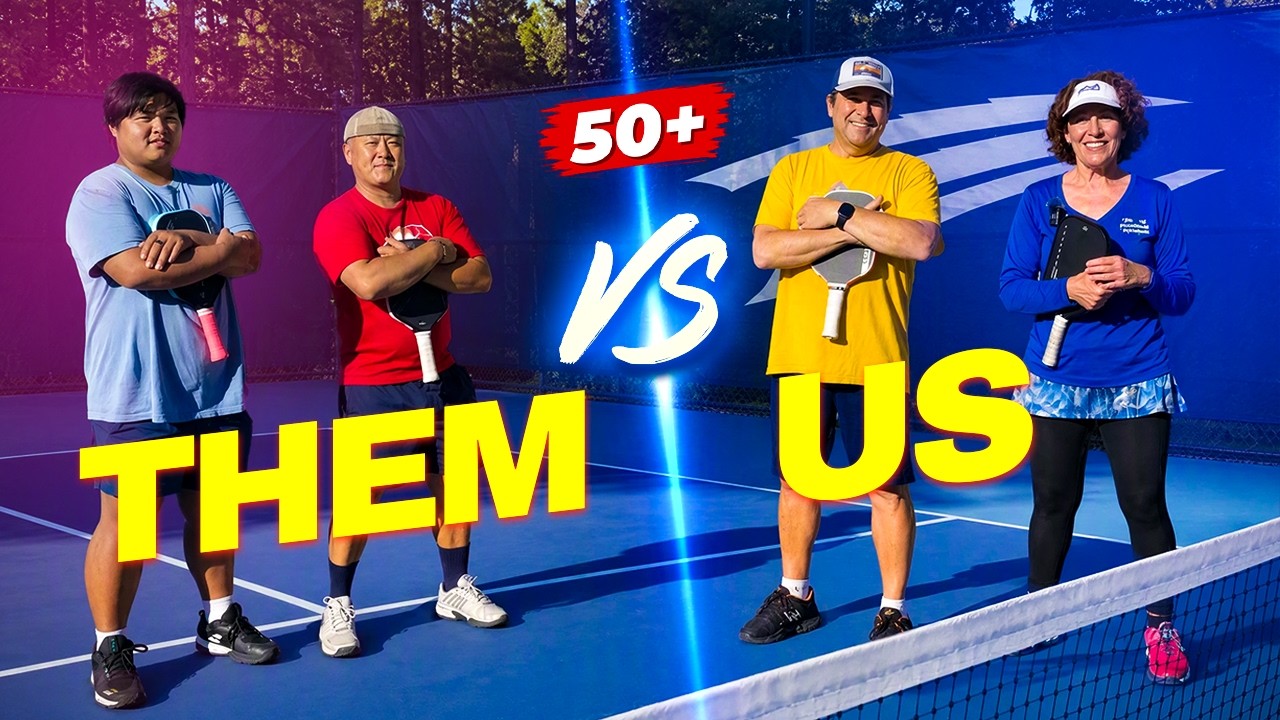
3 Mistakes Players Over 50 Keep Making Against Younger Opponents
Senior pickleball strategy is the real reason older players struggle against younger opponents, not slow reflexes. Fix these 3 mistakes and the gap closes fast.
If you are over 50 and keep losing to younger players, the problem almost certainly is not your reaction time.
It is your senior pickleball strategy, and more specifically, the fact that you are using tactics built for a different type of opponent.
Younger players are faster, they recover quicker, and they punish certain shots that older opponents would simply let go.
Trying to beat them with the same game plan you use against players your own age is a losing formula.
CJ Johnson from Better Pickleball on YouTube breaks down the three biggest strategic mistakes players over 50 make against younger opponents, and the specific fixes for each one. Here is what you need to change.
Love pickleball? Then you'll love our free newsletter. We send the latest news, tips, and highlights for free each week.
Why Strategy Matters More Than Speed
Most players over 50 assume they lose to younger opponents because they cannot keep up physically.
That assumption sends them chasing the wrong fixes, like trying to speed up their swing or react faster to hard shots.
The real issue is that the strategies many experienced players rely on simply do not work against players with more foot speed and faster hands.
When you know which tactics to stop using and what to replace them with, the physical gap matters a lot less.
These three mistakes show up constantly at every level of recreational play.
Fix even one of them and you will win more points against younger opponents immediately.
Mistake 1: Trying to Match Their Pace
When a younger player hits the ball hard, the instinct is to hit it back just as hard. That instinct will cost you the rally almost every time.
Younger players are built for pace battles. They will keep driving the ball hard, and eventually you will pop one up or miss outright.
Trying to out-bang a banger who is also 25 years old is not a strategy.
It is a mistake.
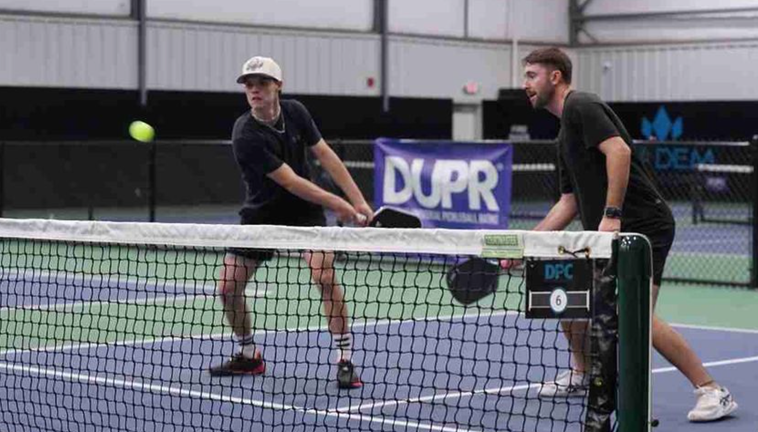
The fix is the block volley, and the key is in the preparation. Most players start with their paddle at roughly 12 o'clock, the natural ready position.
But when you know a hard shot is coming, you need to cheat your paddle toward 10 or 11 o'clock before the ball arrives.
 Alex E. Weaver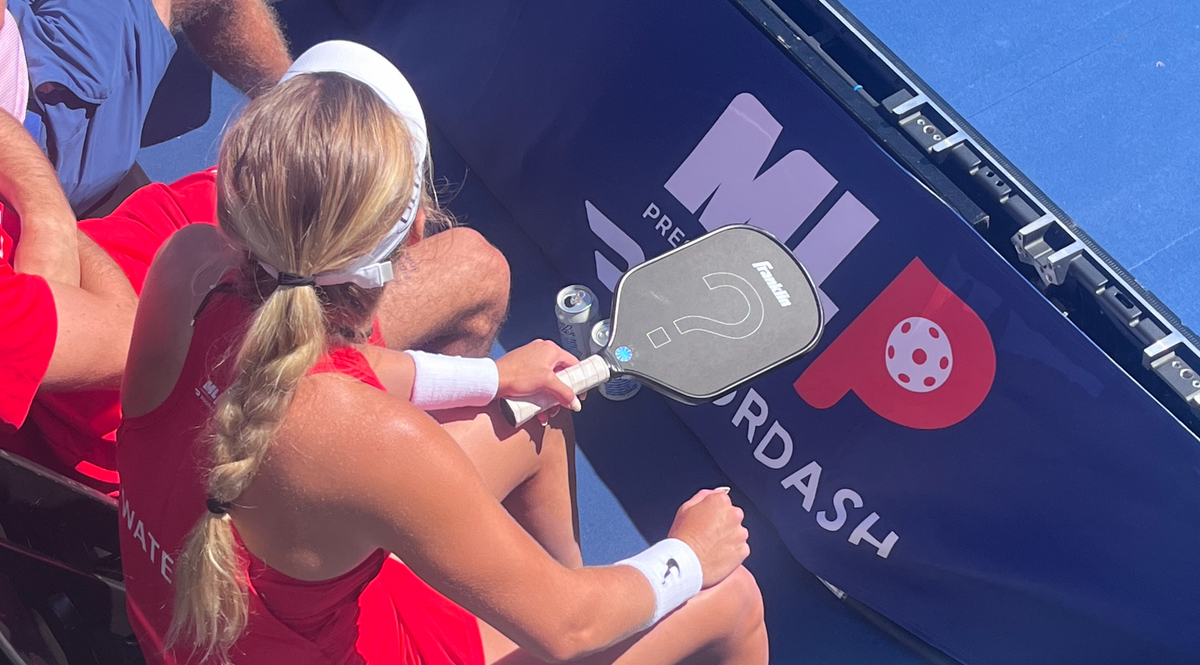
That pre-positioning means you are already close to the block volley position instead of scrambling to get there after contact.
From 10 or 11, you can easily shift the paddle to 9 o'clock for a shot to your left, or swing it over to about 1 o'clock for a shot to your right.
Here is what makes the block volley so effective against hard hitters.
You are using their pace against them. A well-angled block off a hard drive dies before they can even react.
The ball does the work. You just redirect it.
If you want more detail on neutralizing pace at the net, this breakdown of how to block hard shots in pickleball covers the mechanics in depth.
Key points for the block volley against hard hitters:
- Anticipate the hard shot before it comes, not after
- Pre-angle your paddle to 10 or 11 o'clock as the ball is being struck
- Use a firm but relaxed grip so the paddle absorbs pace rather than adding to it
- Aim the block toward an open area or at their feet as they move in
Mistake 2: Using Shots That Work on Older Players
This one catches a lot of experienced players off guard because the shots they are using are not bad shots.
They just do not work against players with more foot speed.
The classic example is the soft angled dink or the short angled serve. Against players who move slowly, those shots are winners.
Against a younger player, they are just opportunities.
A 25-year-old can cover that angle in two steps and put the ball away before you even reset.
The fix is simple and it works on any opponent regardless of age: hit the ball at their feet.
A ball directed at an opponent's feet is hard to defend no matter how fast they are.
It forces an uncomfortable contact point, limits their swing, and makes a quality return very difficult. It does not matter if your ball floats a little.
As long as it is going back deep and landing around their feet, you are in control.
When you are at the non-volley zone line and the serving team is still transitioning, do not try to hit fancy angles that invite them in closer.
Keep the ball deep, keep it at their feet, and wait for them to miss.
Senior pickleball adjustments like this one are about removing the shots that give faster players free points, not about trying to overpower them.
The longer you keep the serving team away from the non-volley zone line, the better your odds of winning the point.
That principle never changes based on your opponent's age.
 The Dink Media Team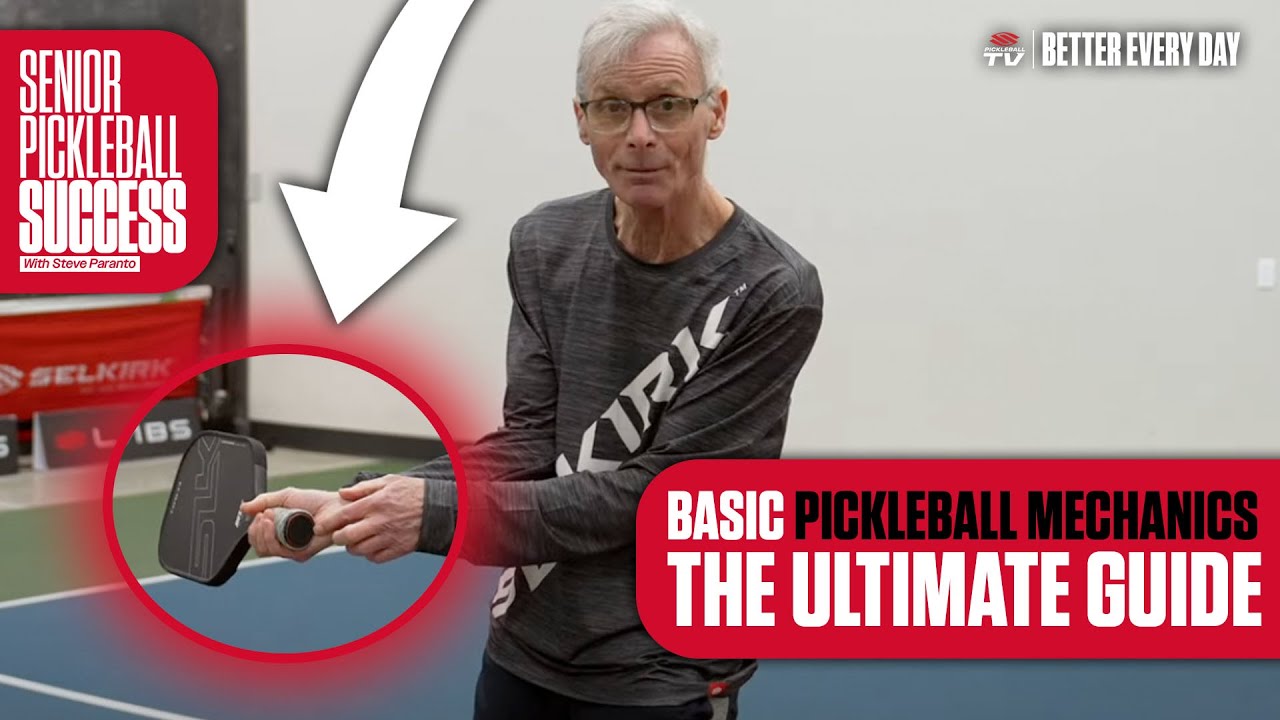
Why Do Angles Work Less Against Faster Players?
It comes down to recovery distance. A sharp angle that forces an older opponent to move four or five feet might be unreachable.
For a younger player, that same angle is just a quick shuffle.
Foot speed changes the geometry of the court. Shots that look like winners against one type of opponent become setup opportunities for another.
You have to adjust your target zones based on who is across the net.
Hitting to the feet is not flashy. It also does not require elite touch or timing.
It just requires discipline and the patience to trust a conservative target over a crowd-pleasing angle.
 The Dink Media Team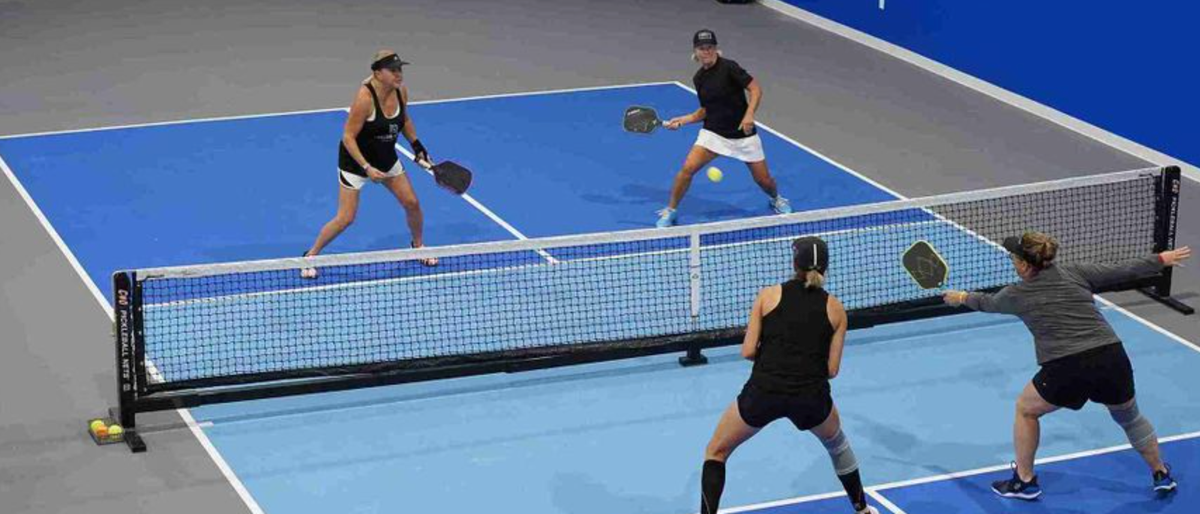
Mistake 3: Starting Hands Battles at the Wrong Time
This is probably the most damaging mistake of the three because it feels like aggression when it is actually just poor timing.
Here is the scenario. You are in a dink rally at the non-volley zone. The ball is low, nobody is making errors, and you decide to speed up the ball from below the net.
That ball has to travel low to high to clear the net, which telegraphs your intention and slows the pace slightly before it gets to your opponent.
A younger player with faster hands will counter that speed-up before you have time to recover.
You initiated a hands battle from a weak position, and now you are on the losing end of it.
 The Dink Media Team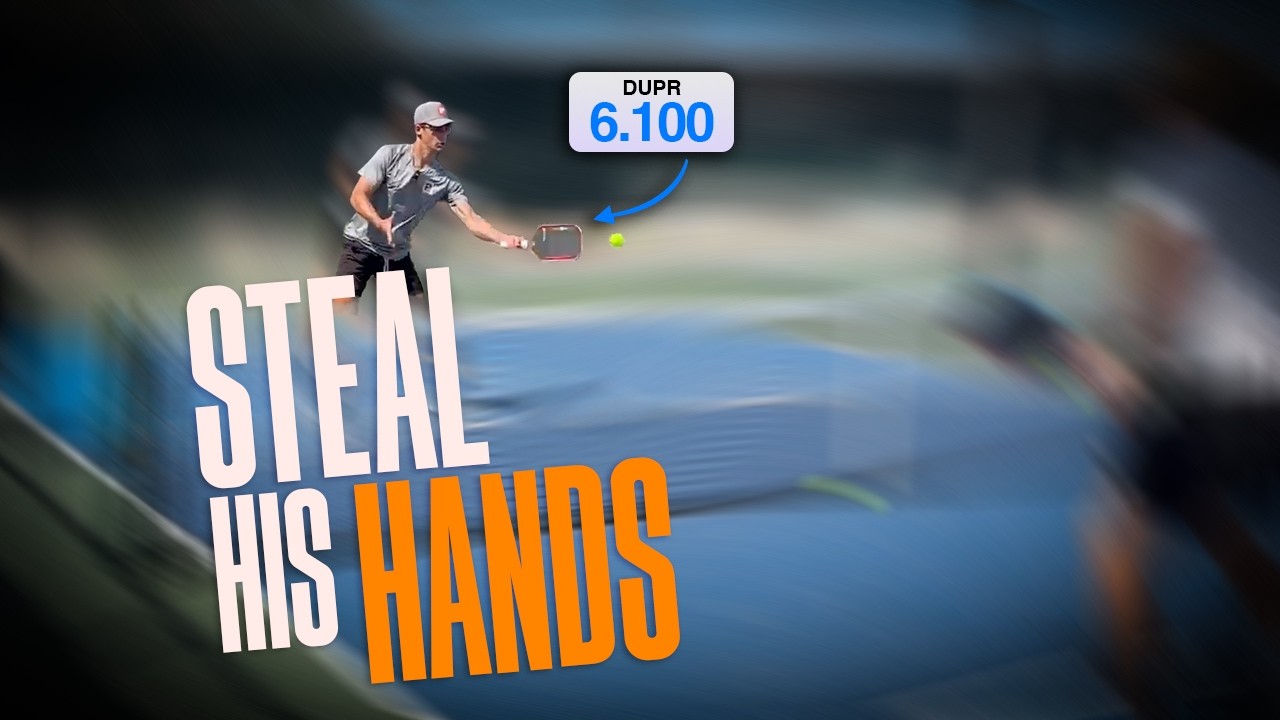
The fix is about patience and shot selection. Do not start a hands battle until you have a ball you can attack from above the net or at least at net height.
Wait for the right moment instead of forcing one.
The way you create that moment is by working the opponent side to side. Think left foot, right foot, left foot, right foot.
Move them laterally with your dinks until one of two things happens: they pop the ball up, or they miss.
Either outcome is better than losing a hands battle you initiated from below the net.
You are playing the long game in the rally, using placement and patience instead of trying to overpower someone with faster reactions.
Understanding shot selection on a 1 to 10 scale can help you recognize which moments are actually worth attacking and which ones you should let pass.
Steps to create the right attacking opportunity:
- Maintain a neutral dink rally and resist the urge to speed up early
- Work the ball to your opponent's left side, then right side, repeating the pattern
- Watch for a ball that sits up above net height or arrives with less pace
- Attack only when you have a clear ball you can contact at or above net level
- If no pop-up comes, wait for an unforced error rather than forcing the issue
 The Dink Media Team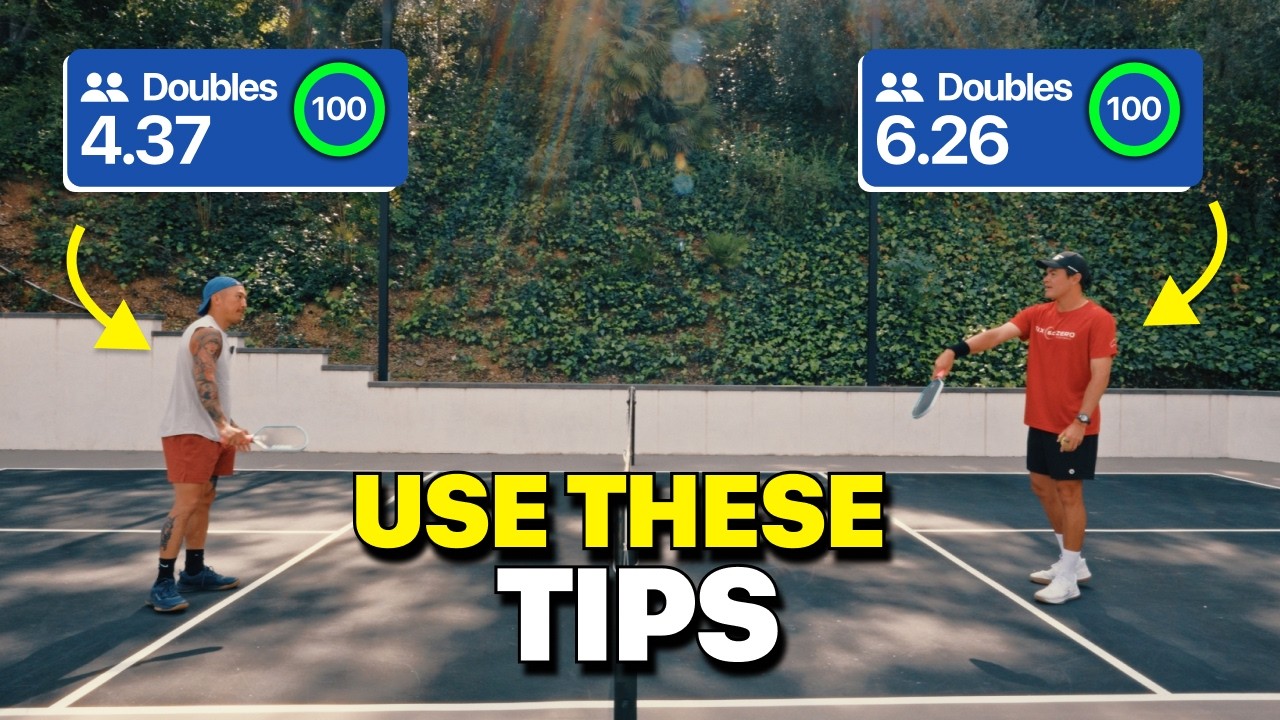
How Do You Practice Patience in a Dink Rally?
The hardest part of fixing this mistake is mental, not mechanical. Most players know they should wait. They just do not do it under pressure.
Drilling side-to-side dink patterns with a partner is one of the fastest ways to build the habit.
If you want structured repetitions that actually build this skill, these dinking drills from a senior pro are worth working through.
The goal in practice is to extend rallies on purpose, not to look for the attack. When you train patience in drills, it shows up in matches.
 The Dink Media Team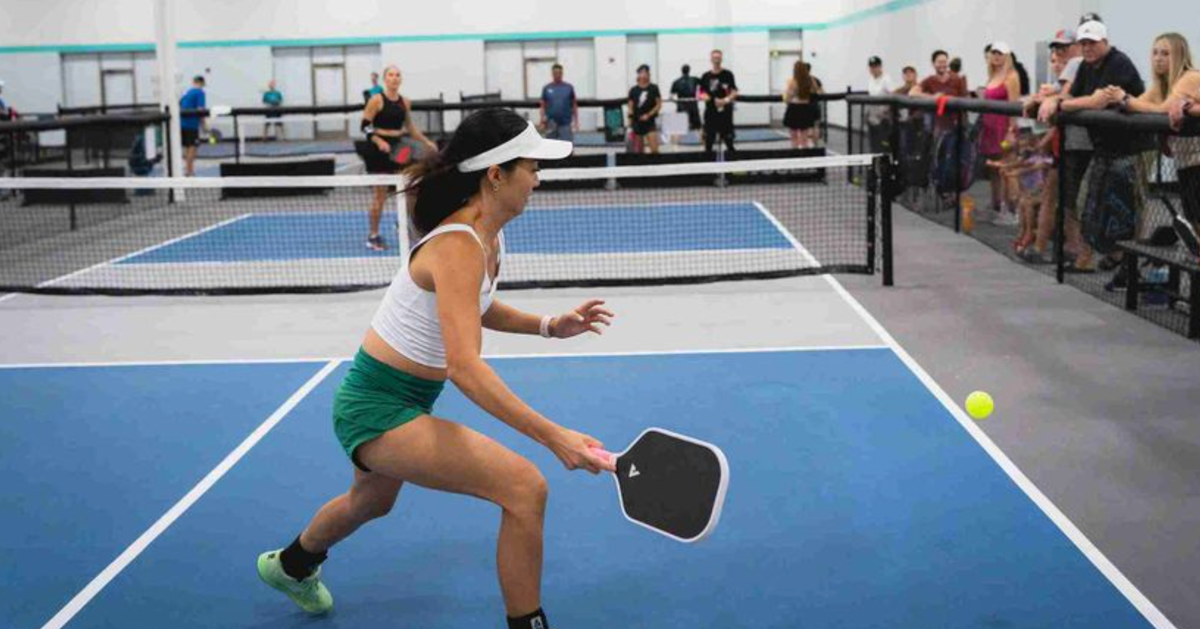
Putting It Together Against a Younger Opponent
These three mistakes share a common thread. They all come from applying the wrong strategy for the opponent in front of you.
Against younger players, matching pace is a losing trade.
Using angles that reward their foot speed hands them free points. And speeding up from a low position gives faster hands the chance they are waiting for.
Flip all three. Use the block volley to absorb pace and redirect it. Hit to the feet instead of chasing wide angles.
And wait for the right ball in a hands battle instead of manufacturing one from a bad position.
None of these fixes require you to be faster or stronger. They require you to be smarter about which battles you choose to fight.
That is where experience actually becomes an advantage.
For more ways to build a tactical edge without relying on athleticism, check out these pickleball IQ tips for outsmarting better players.
You can also explore how to compete against higher-rated opponents for a broader strategic framework.
If the hands battle situation keeps costing you points, studying fast hands mechanics from a top 10 pro will give you a better sense of why timing matters so much in those exchanges.
One more resource worth reading: the real reason you keep losing to bangers ties directly into Mistake 1 and gives you even more context for why the block volley is the right answer to pace.
Fix one of these mistakes this week. You do not need to overhaul your entire game at once. Pick the one that shows up most often in your matches and start there.
The results will follow.
And if the dink side of your game needs work alongside all of this, here is why your dink fails in games and what to do about it.
Combine that with these dinking drill tips for senior players and you will have a complete system for controlling the kitchen against any opponent.
Frequently Asked Questions
Why do older pickleball players struggle against younger opponents?
The biggest reason is strategy, not physical ability. Older players often use tactics like short angles and pace-matching that work against slower opponents but give faster, younger players easy opportunities. Adjusting your shot selection and rally approach closes the gap significantly.
What is a block volley in pickleball and when should I use it?
A block volley is a compact, controlled shot where you hold a firm paddle angle and let the ball rebound off the face without swinging through it. You use it when an opponent is hitting hard at you at the non-volley zone, absorbing their pace and redirecting the ball into a difficult position. Pre-angling your paddle to 10 or 11 o'clock before contact is the key to executing it consistently.
Should players over 50 avoid hands battles completely?
Not completely, but you need to be selective about when you start them. The mistake is initiating a hands battle from a low contact point below the net, which gives a faster opponent the advantage. Wait until you have a ball you can contact at or above net height before speeding up.
What shots work best against younger pickleball players with more foot speed?
Shots directed at the opponent's feet are the most reliable because foot speed does not help you when the ball is right at your toes. Deep balls that keep the serving team away from the non-volley zone line also reduce their ability to use athleticism as an advantage. Short angles and soft drop shots that sit up are the shots to avoid.
How do I create a pop-up opportunity in a dink rally without speeding up too early?
Work the ball side to side, targeting your opponent's left foot and then right foot in a repeating pattern. Moving them laterally increases the chance they either mistime a dink or float one up slightly above net height. That is your moment to attack, and it is far more reliable than trying to force a speed-up from a neutral or low position.

Love Pickleball? Join 100k+ readers for free weekly tips, news & gear deals.
Subscribe to The Dink