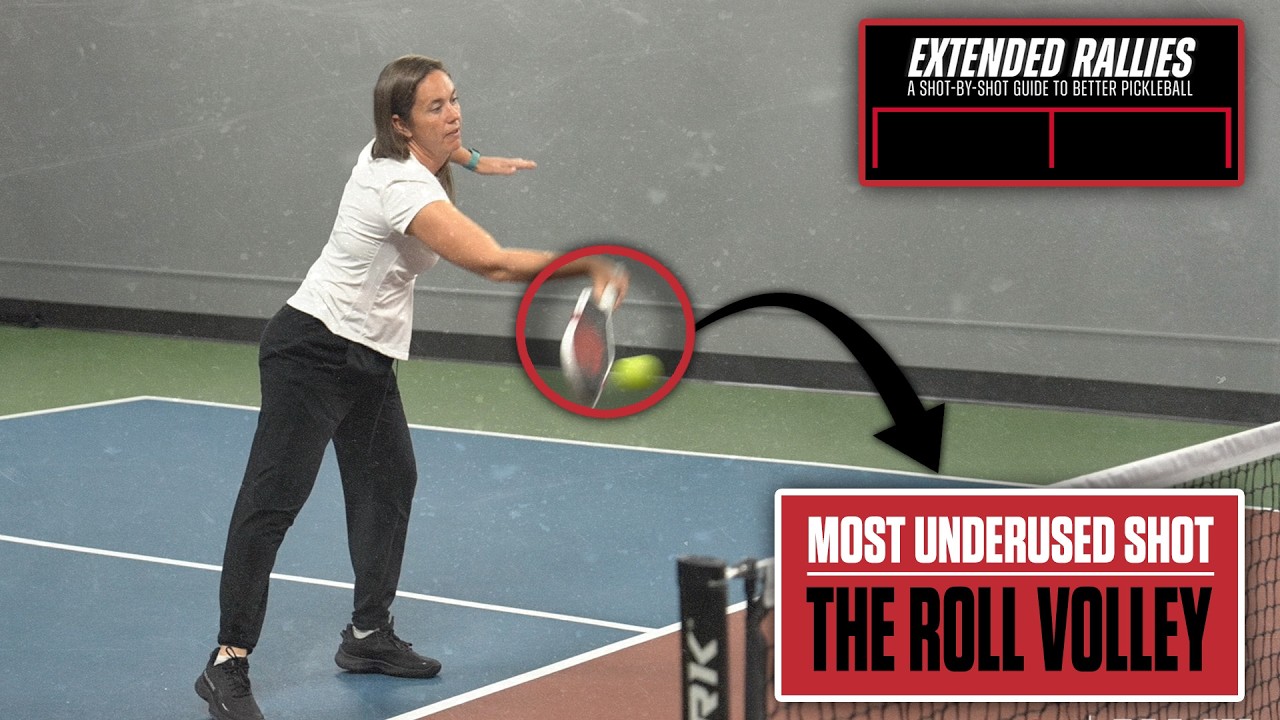
Why Your Fourth Shot Volley Keeps Failing (And How to Fix It)
Knowing when to hit a roll volley instead of a punch volley can extend your rallies and put real pressure on your opponent's feet. Here's exactly how to execute it.
You're moving toward the kitchen, the ball drops into that awkward zone, and you reach out and punch it.
It sails long. Or worse, it floats up and gets crushed back at you.
The problem might not be your reaction time. It might be that you're hitting a punch volley when the situation is calling for a roll volley.
These are two different shots, and the ball tells you which one to hit.
Most players don't know how to read that signal, so they default to the same volley every time and wonder why their fourth shots keep breaking down.
This breakdown comes from Selkirk TV on YouTube, where the coaching staff walks players through exactly when and how to execute the roll volley on the fourth shot.
Love pickleball? Then you'll love our free newsletter. We send the latest news, tips, and highlights for free each week.
What Is a Roll Volley and When Do You Hit It?
A roll volley is a topspin volley you hit when the ball is falling into that questionable zone, not coming directly into your body, but dropping low enough that a flat punch would either pop it up or send it wide.
The punch volley works when the ball is coming straight at you at a manageable height.
The roll volley is for when gravity is working against you and the ball is descending into the difficult zone around your knees or below.
Reading that difference early is what separates players who extend rallies from players who keep ending them by mistake.
If you want to understand shot selection as a whole system, the roll versus punch decision is one of the first forks in the road you need to master.
Why Does Paddle Position Matter So Much on the Roll Volley?
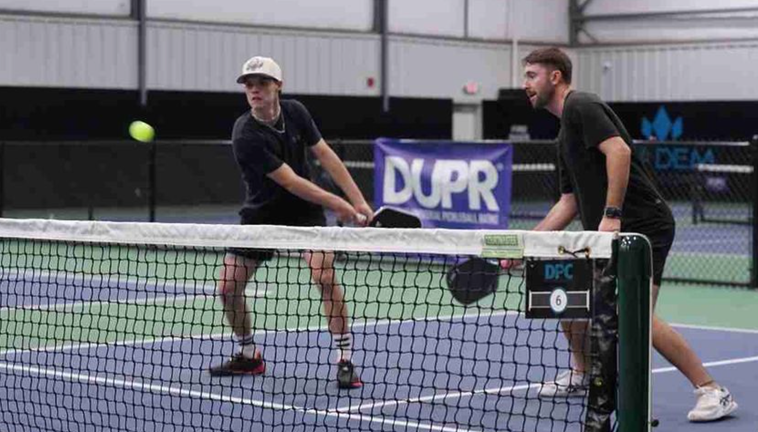
The single biggest mechanical key is this: dip your paddle head below the level of the ball before contact.
This is not optional. Without that dip, you cannot generate the upward brushing motion that creates topspin and keeps the ball from floating.
Most players keep their paddle too flat or too high when they see the ball dropping.
That forces them into a half punch, half roll hybrid that does neither job well. You need to commit to the dip.
Here's what the full roll volley setup looks like:
- Stay in a ready position with your paddle out in front of you at all times, not tucked to your side.
- Dip the paddle head so it drops below the ball before you make contact.
- Contact point stays in front of your body, never beside you or behind you.
- Brush up through the ball from low to high, finishing with the paddle still visible in your peripheral vision.
- Stay low throughout the shot, bending your knees and keeping your center of gravity down.
That last point about peripheral vision is critical.
If your paddle disappears behind you during the follow through, your margin for error explodes and your consistency drops fast.
The Contact Point Rule You Cannot Break
Contact must happen in front of your body.
This applies to both the punch and the roll volley, but it matters even more on the roll because of the swing path involved.
When you let the ball get beside you or past you, you lose control of the swing direction entirely.
The topspin you're trying to generate requires a clean upward brush, and that motion only works when your paddle is leading the way out in front.
Think about staying in what coaches call a ready position. Your paddle is extended, your knees are bent, and you're prepared to adjust in either direction.
That setup is what gives you time to dip the paddle head and execute the roll before the ball gets past you.
This same front-contact principle applies when you're working on common volley mistakes across the board, not just on the roll.
 The Dink Media Team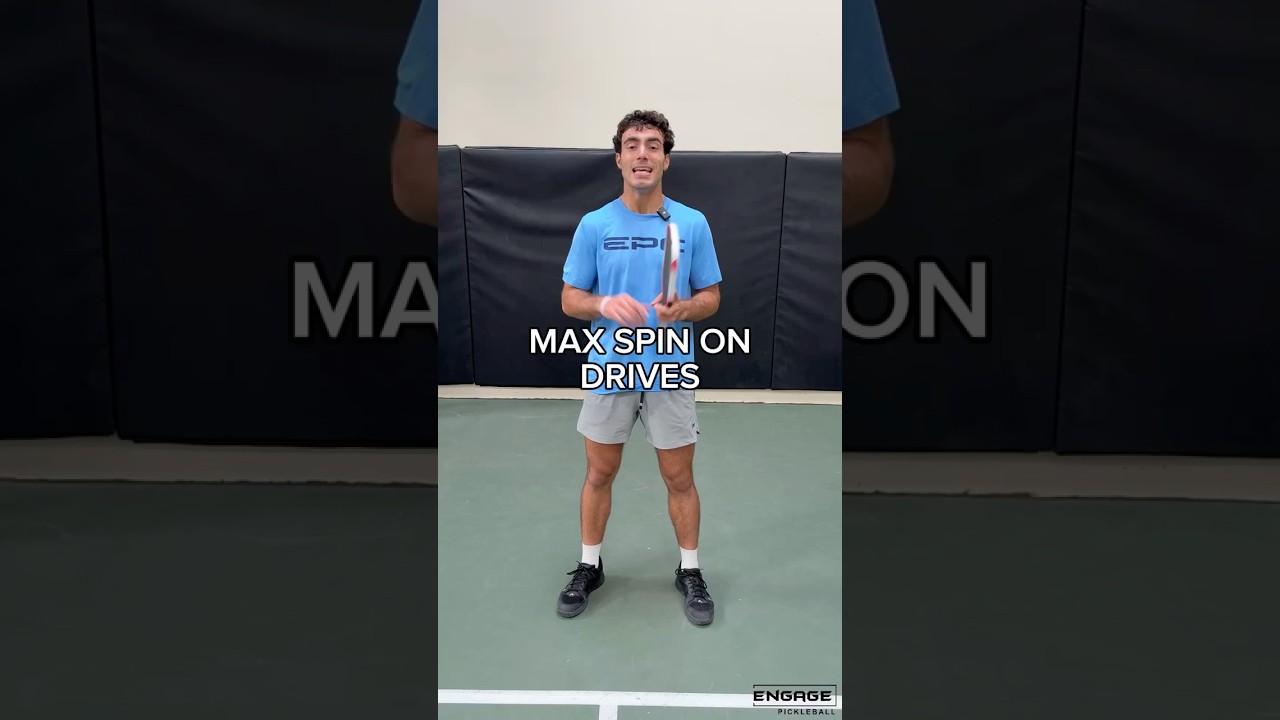
What Does "Stay Low in Your Chair" Actually Mean?
This is one of the most useful coaching cues for the roll volley. Imagine you're sitting in a low chair and you cannot stand up during the shot.
That image forces your knees to stay bent and your body to stay compressed through the entire stroke.
When players stand up during a roll volley, two things go wrong.
- First, the swing path flattens out and you lose the topspin.
- Second, the contact point drifts back because your posture has shifted.
Staying low keeps everything in front of you and keeps the brush angle intact.
Knee bend is not a suggestion here. It is the mechanism that makes the shot work.
If you have a tendency to stand up through your volleys, it often comes from the same root issue that causes problems in the transition zone.
You're rushing to get tall instead of staying patient and low.
 The Dink Media Team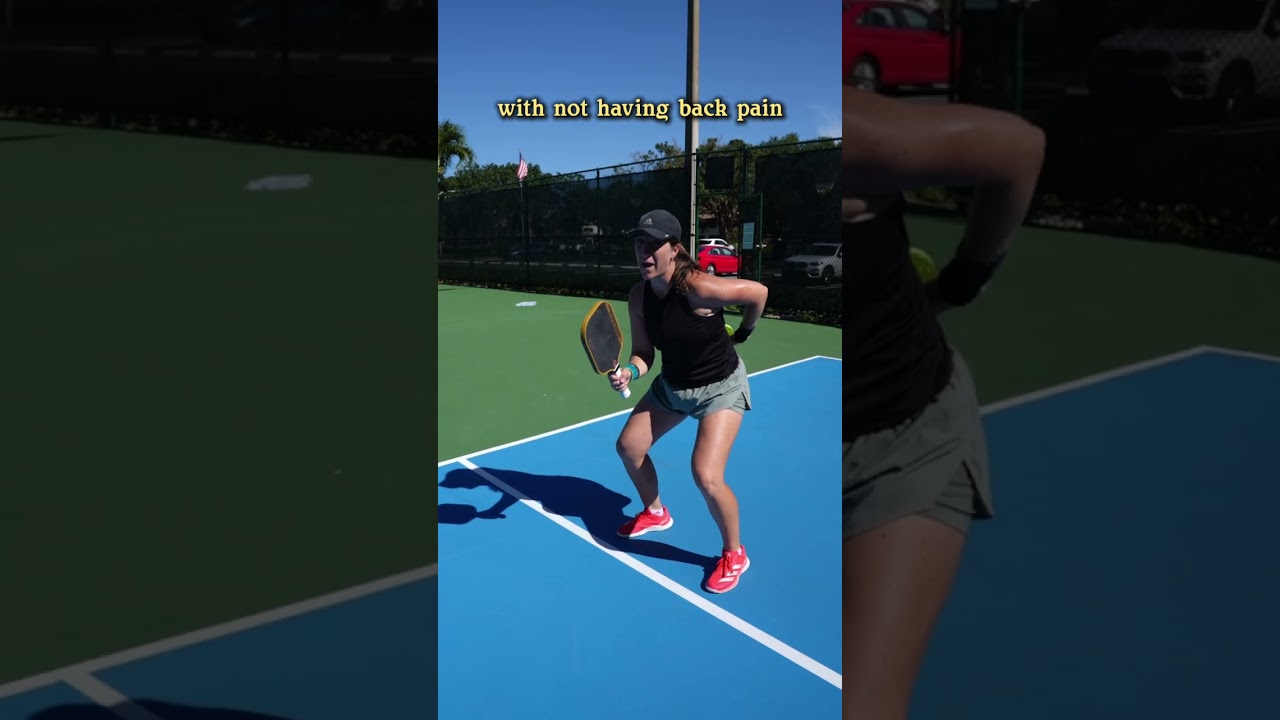
How Do You Aim the Roll Volley Effectively?
The target on a roll volley is almost always your opponent's feet.
Topspin pulls the ball down, which means a well hit roll volley with good trajectory will land in the kitchen or just past it and drop quickly toward the feet of whoever is at the line.
This is not a shot you hit cross court at full pace and hope for the best. The roll volley is a placement shot that uses spin to create a difficult angle.
The spin does the work when your swing path and contact are correct.
Here's a simple checklist for aiming your roll volley during a point:
- Identify where your opponent is standing at the kitchen line.
- Pick a landing zone at or just past the kitchen that forces them to reach down.
- Execute the low to high brush with a trajectory that peaks early and drops fast.
- Hold your low stance through the finish so the swing stays on path.
When you add topspin with intention, you're not just keeping the ball in play.
You're creating a shot that forces your opponent into a difficult low contact. That's the point.
 The Dink Media Team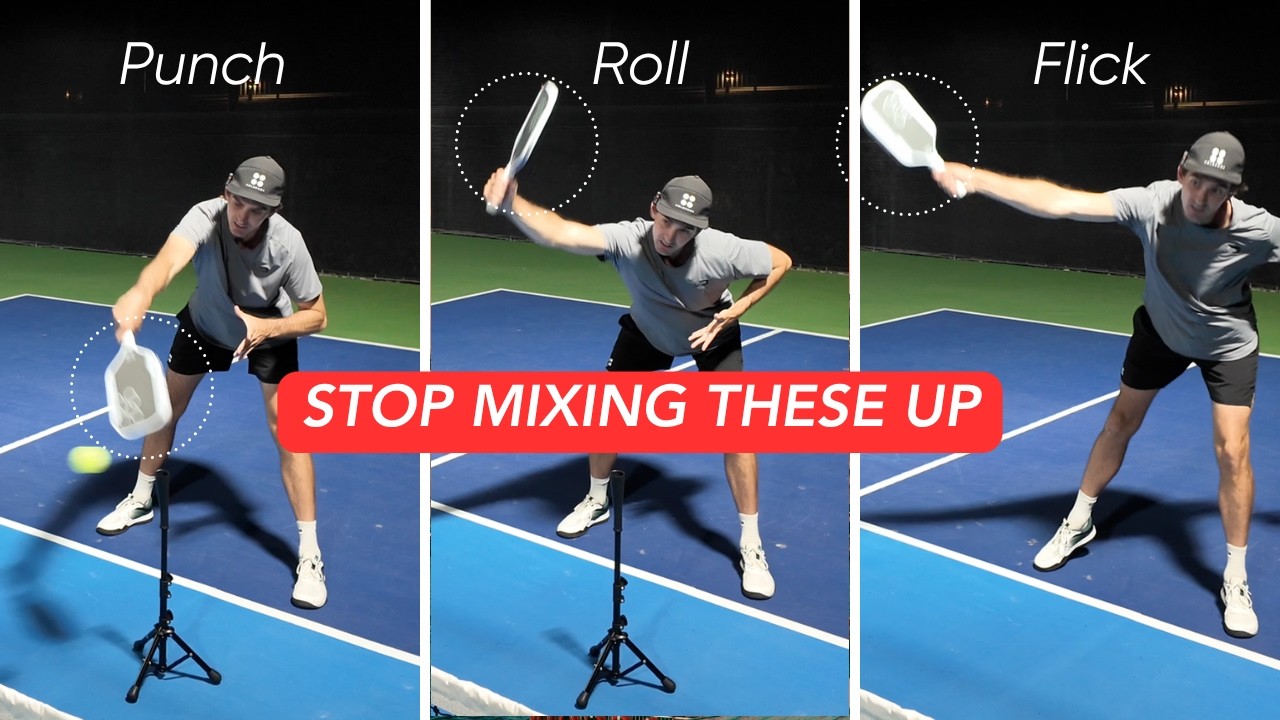
What Happens When Your Swing Gets Too Big?
One of the most common errors on the roll volley is taking too big a backswing.
When the prep is too large, the paddle disappears from your peripheral vision and recoil pulls it behind your body on the follow through.
When the paddle goes behind you, three things happen: you lose spin, you lose direction control, and you lose the ability to recover for the next shot.
The roll volley is a compact stroke, not a full groundstroke swing.
Think of it as a controlled brush, not a full rip. The paddle head dips, contacts the ball, and finishes out in front, still visible, still ready.
That's the complete motion. Anything more is adding error without adding power.
If you're finding that your swing mechanics are inconsistent across different shot types, the roll volley is often where that inconsistency shows up first because it requires more precision than a flat drive.
 The Dink Media Team
How Does the Roll Volley Fit Into Your Fourth Shot Strategy?
Your fourth shot is one of the most important shots in the rally.
You're transitioning toward the kitchen, the third shot drop or drive has been played, and now you need to make a decision in real time about what to do with the incoming ball.
If the ball is coming directly at your body at a manageable height, punch it.
If the ball is dropping and falling into that awkward zone below your normal contact point, roll it.
The decision should happen before the ball reaches you, not during contact.
Understanding ball height rules for shot selection is what makes that early read possible.
The more you train your eye to spot the ball's trajectory early, the more time you give yourself to set up the correct shot.
Players who struggle with fourth shots often have a third shot issue feeding the problem.
If your third shot is too high, the opponent's response will be aggressive, and you'll face exactly the kind of awkward falling ball that demands a roll volley you haven't practiced.
 The Dink Media Team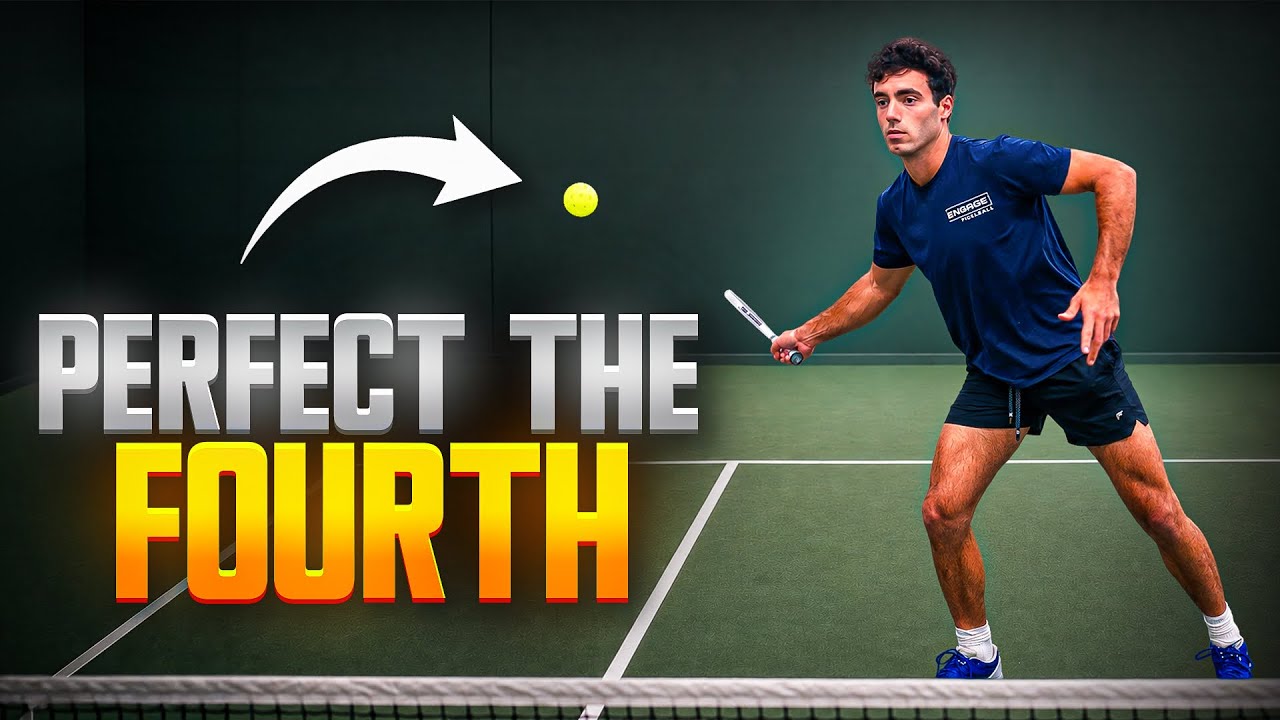
Drills That Build Roll Volley Consistency
You cannot develop this shot just by thinking about it in games.
The mechanics need to be grooved through repetition so the low to high brush becomes automatic under pressure.
Here are three focused ways to build roll volley consistency:
- Shadow drilling: Without a ball, practice the dip and brush motion slowly, checking that your paddle stays in peripheral view throughout the finish. Feel the low stance and hold it.
- Hand feed practice: Have a partner hand feed balls into the dropping zone, low and slightly away from your body, while you focus only on paddle dip and low to high contact. Do this 50 times before using it in a rally.
- Live drilling with a specific target: Rally with a partner and call out "roll" when a ball drops into the zone. Your only job is to execute the shot and find your partner's feet. Track how many land where you intended.
Consistent wall practice can also build your feel for the low to high brush when a partner is not available.
The wall does not give you the exact same ball flight, but it trains the swing path and the compact finish.
The goal with any of these drills is to make the paddle dip and low contact feel completely natural.
When you're in a real point and a ball drops into the roll zone, you should not be thinking about mechanics. The body just does it.
That level of automaticity is what you see from players who have really invested time in progressive drilling across skill levels.
They have a shot for every situation and they reach for the right one without hesitation.
 The Dink Media Team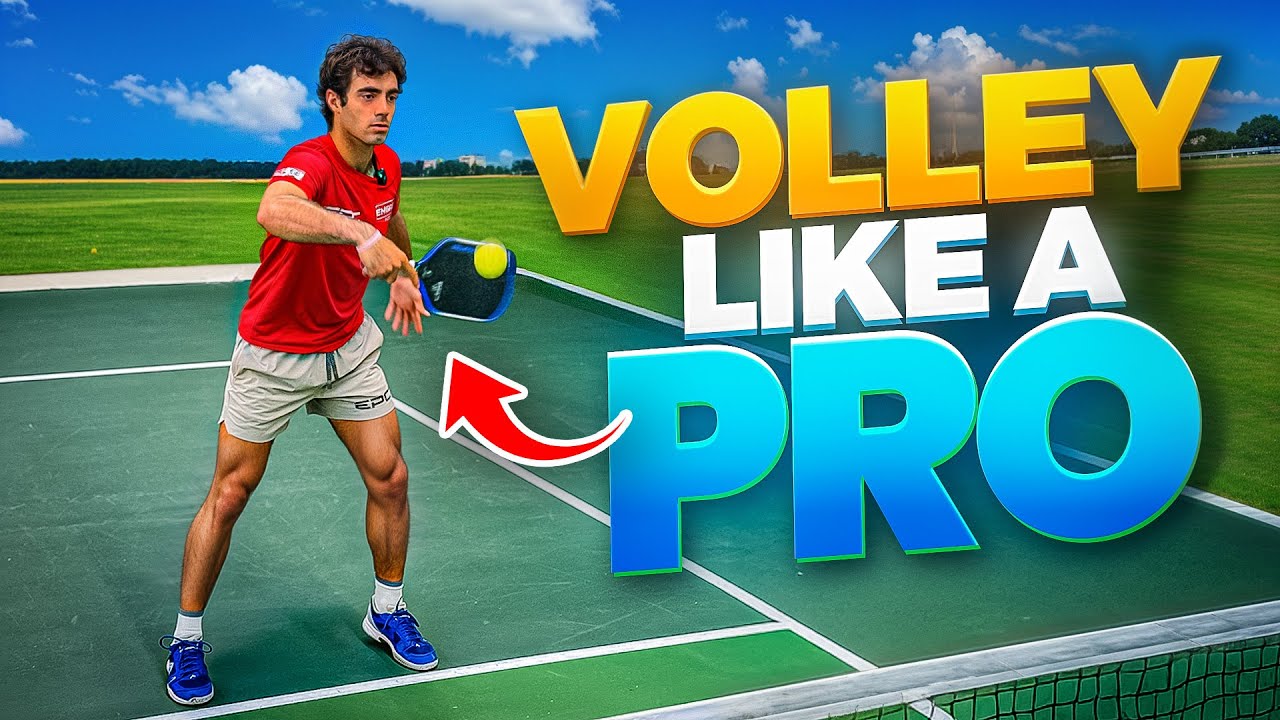
The Difference Between a Good Roll Volley and a Wasted One
A good roll volley lands low, moves fast, and forces your opponent to dig from below the net.
A wasted roll volley either floats because the swing path was too flat, or sails long because the brush was late and the contact happened behind the body.
Trajectory is everything. You want the ball to peak early and drop hard, not float across at net height and give your opponent a comfortable swing.
The topspin is what controls that trajectory, and the topspin comes from the dip and the upward brush.
Understanding the roll versus flick decision at the kitchen builds on this same foundation.
Once you own the roll volley, the flick becomes a natural extension of your kitchen attack toolkit.
The difference between 4.0 and 6.0 players often comes down to these exact in between decisions.
The higher rated player reads the ball earlier, selects the right shot faster, and executes with less wasted motion.
The roll volley is a perfect example of that gap showing up in real points.
Frequently Asked Questions
What is a roll volley in pickleball?
A roll volley is a topspin volley hit by dipping the paddle head below the ball and brushing upward through contact. It is used when the ball is falling into a low or awkward zone and a flat punch would pop it up or send it long. The result is a ball that drops quickly toward your opponent's feet.
When should I hit a roll volley instead of a punch volley?
Hit a roll volley when the ball is dropping and falling below your normal contact zone, rather than coming directly into your body. A punch volley works best when the ball is coming at you at a manageable height and you can meet it flat. If the ball is descending and you try to punch it, you will likely either float it or miss wide.
Why does my roll volley keep sailing long?
The most common reason is that your contact point is too far back, beside or behind your body, which flattens out the swing path and kills the topspin. Without topspin, there is nothing to pull the ball down into the court. Keep your contact point in front of your body and dip the paddle head before the ball arrives.
How do I stop standing up during my roll volley?
Use the "sitting in a low chair" mental image to keep your knees bent and your center of gravity down through the entire shot. Standing up during the stroke flattens your swing path and pushes the contact point back. Staying low is what keeps the brush angle intact and the ball on target.
Where should I aim a roll volley?
Aim for your opponent's feet, specifically the area at or just past the kitchen line where the topspin will cause the ball to drop quickly. A well aimed roll volley with good trajectory will land in a spot that forces your opponent to contact the ball below the net. That low contact limits what they can do offensively on the next shot.

Love Pickleball? Join 100k+ readers for free weekly tips, news & gear deals.
Subscribe to The Dink