
4 Pickleball Volley Mistakes That Are Costing You Easy Points
Most players lose the net battle before the ball even arrives. Here are four pickleball volley fixes that turn your hands into a weapon.
The pickleball volley is where points are won and lost, and most players are giving them away before the ball even reaches the paddle.
You reach for balls you should let bounce. You wind up when you should stay compact. You bury counters in the net.
None of that is a hands problem. It is a decision problem, and decisions are fixable.
This breaks down the four volleys that matter most at the net, the single biggest mistake players make on each one, and exactly what to do instead.
Love pickleball? Then you'll love our free newsletter. We send the latest news, tips, and highlights for free each week.
Should You Volley That Dink or Let It Bounce?
If letting the ball bounce gives you a higher contact point than volleying it, let it bounce.
That one rule fixes the most common pickleball volley mistake at the kitchen line.
Players see a dink floating over the non-volley zone and think, "If I can reach it, I should take it."
So they overextend, lunge, and punch a volley from down around their knees. The return on that is tiny.
The lower you make contact, the less you can do with the ball.
Here is the test. If your contact point would be higher by letting the ball bounce, you should probably just let it bounce.
A ball you would have volleyed from your shins becomes a comfortable, controllable shot once it comes back up to waist height.
Understanding pickleball kitchen rules is the foundation of making this read correctly, every time.
Reaching feels aggressive.
It is actually the passive choice, because you are accepting a worse contact point than the one the bounce would have handed you.
Patience here is what real kitchen control looks like. The best players treat the pickleball dink as a setup tool, not a shot to scramble away from.
Why Your Hands Are Too Slow in a Pickleball Volley Firefight
In a firefight, the biggest pickleball volley mistake is a big backswing, because a big backswing forces a big follow-through and wrecks your reload speed.
Keep the paddle in front of the kitchen line and your hands get faster instantly.
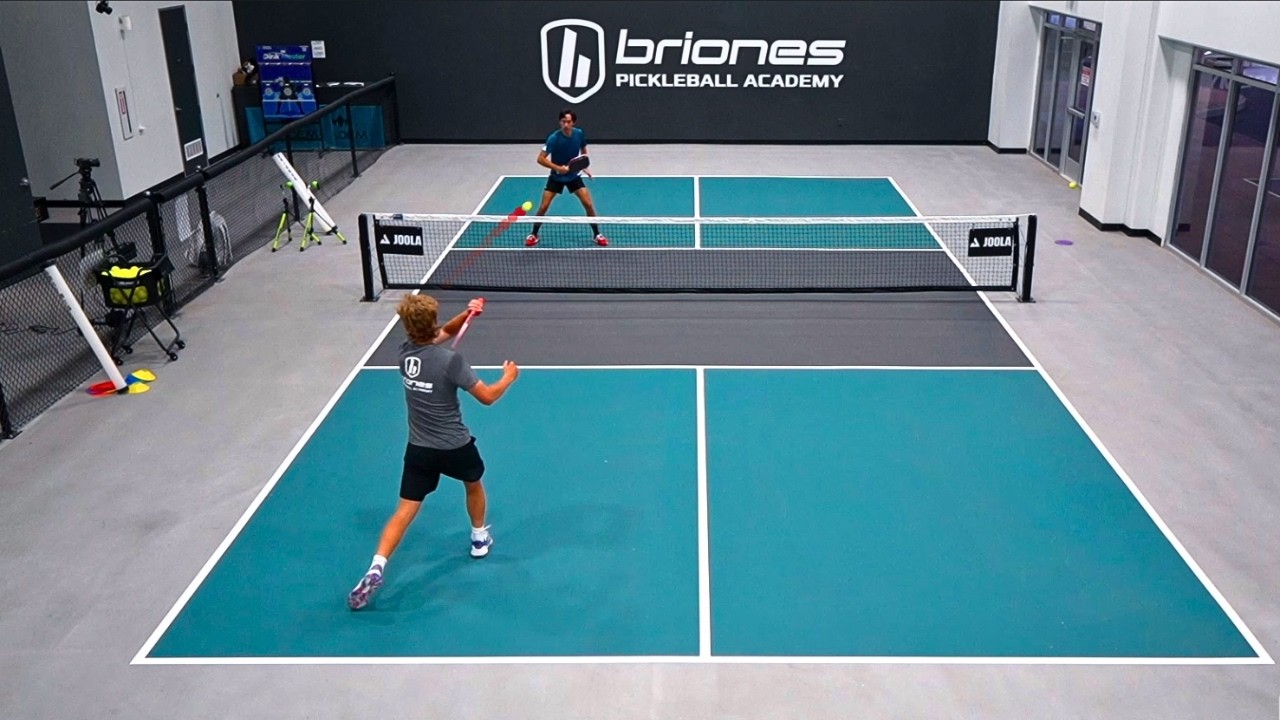
A firefight is that rapid back and forth exchange where you and your opponents are trading volleys at point blank range.
Whoever reloads fastest usually wins it.
Mastering the 12 drills you need for 2026 will build that reload speed into muscle memory.
When you take a full swing, one of two things happens.
You send the ball flying out, or you finish with your paddle stuck out of position and you are completely compromised when the next ball comes back.
The fix is to keep everything compact. Your backswing and your follow-through both stay in front of your body, in front of that kitchen line, at all times.
Watch Anna Leigh Waters, the World No. 1 who turned pro by accident at age 12 and has since piled up dozens of triple crowns.
According to CBS Sports' 2025 profile of Waters, her dominance at the kitchen line comes from an elite hands game that makes opponents feel like the net is closing in.
Her swing in a hands battle is tiny. Elbows in toward the body, not jammed, just quick and compact. That compactness is what creates a fast reload.
Think about the path. With a big swing you are reloading from way out here, then back, then up.
With short, compact hands you are simply going back and up.
Less distance to travel means you are ready for the next ball sooner.
These are the hands battle habits that win exchanges, and they are worth drilling until they feel automatic.
To see how the best pros on tour in 2025 use compactness as a weapon, watch their kitchen-line clips frame by frame.
If you want a structured way to build that speed, work through a dedicated hand speed drill with a partner.
How Do You Counter a Speed-Up Without Spraying It?
To counter a speed-up cleanly, get your paddle in position early and swing slightly toward the side of your body so the counter goes cross body with pace.
Anticipation, not a bigger swing, is what makes the shot.
Say you dink to the middle and you see it sit up.
That is your cue. Instead of waiting flat footed, you read where the ball is going, get the paddle ready, and meet it out in front.
Knowing who covers the middle ball with your partner keeps you from both lunging at the same speed-up.
The modern strategies winning pickleball in 2026 emphasize middle-ball communication as one of the most underrated net-game skills.
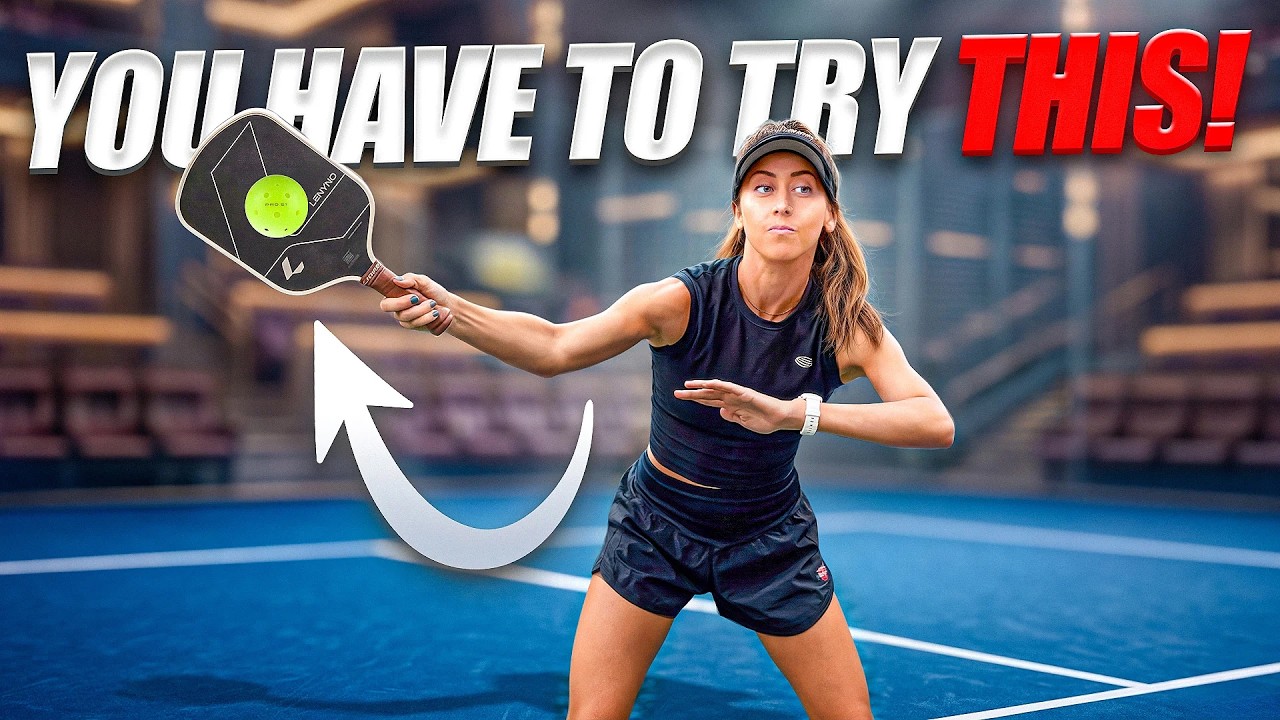
Swinging toward the side of your body lets you generate power without a huge backswing, because the power comes from direction rather than length.
The counter travels cross court and carries real pace.
 The Dink Media Team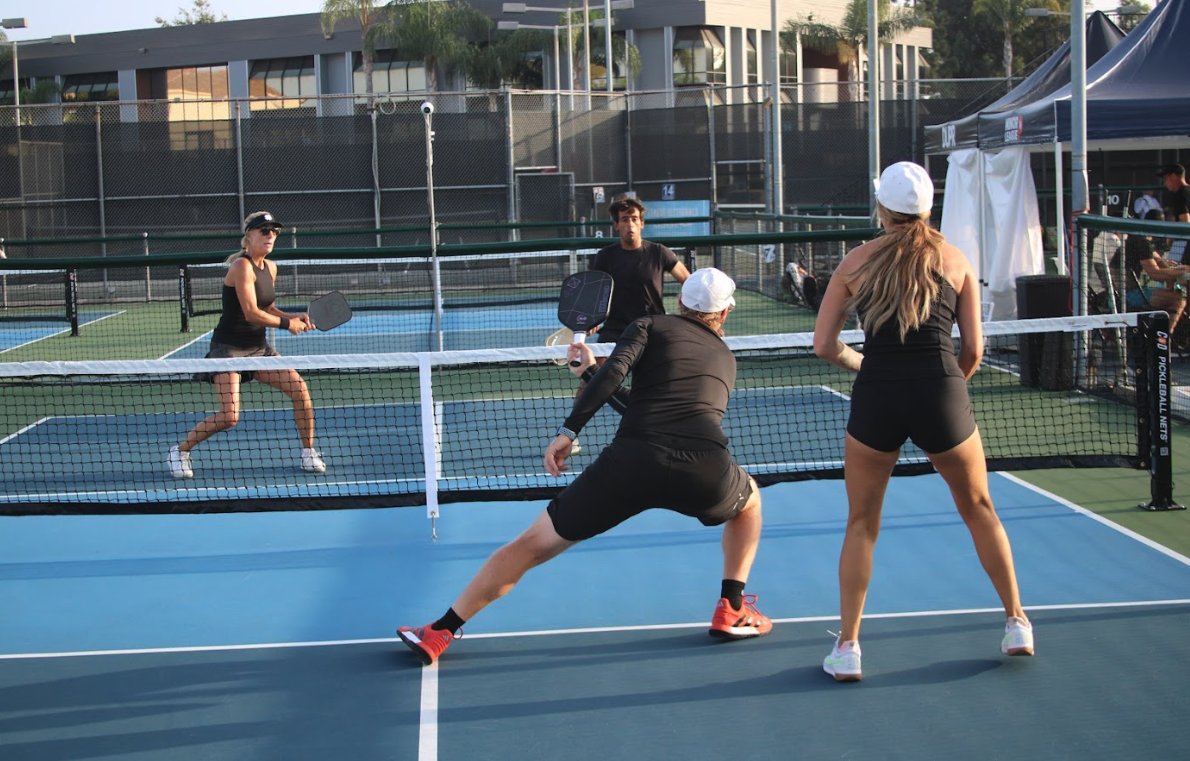
The Paddle Face Fix Most Players Miss on the Pickleball Volley
If your counters keep dying in the net, your paddle face is probably closed too much.
Opening it slightly, so it faces a touch toward the sky, lets you hit down on the ball and still clear the net with topspin.
The instinct is logical. The ball is high, so you close the face to hit down on it. But close it too far and you drive that forehand counter straight into the tape.
Try the opposite. Open the face so it points slightly upward, then swing.
You will get topspin on the ball while still hitting down through it, and it clears the net instead of crashing into it.
The same topspin principle carries over when you are countering a drive, not just a speed-up.
Pro players who abandoned the slice in favor of topspin-heavy volleys explain why professionals ditched the slice shot in 2025 and what they replaced it with.
So if you are netting a lot of balls, do not assume your hands betrayed you. Check the face first.
 The Dink Media Team
The Swinging Volley: When to Stop Resetting and Attack
The swinging volley is the shot that separates players who only defend from players who finish points, and the mistake is resetting a ball that is begging to be attacked.
When a floater hangs up in transition, swing it.
Most players get stuck in the middle of the court and hear the same advice on repeat: reset, reset, reset.
That is correct when the ball is low. You open the face, absorb it, and move forward.
But too many players reset balls that are floating up at chest height, balls they should be attacking.
Defaulting to the reset every single time hands free balls back to your opponents.
If you want to break 5.0, the five pickleball shots you must master before 2026 includes the swinging volley as a non-negotiable.
 The Dink Media Team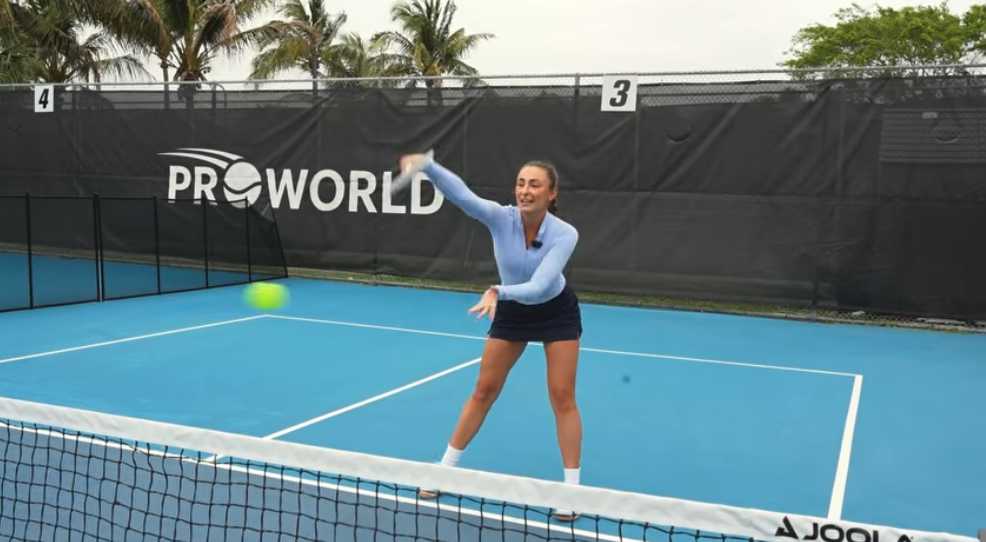
How Do You Hit a Swinging Pickleball Volley Correctly?
Start with your feet. Split step instead of running through the shot, then move to the ball. Running while you swing is how the swinging volley falls apart.
Keep your chest facing forward and resist the urge to over rotate. When the ball arrives, accelerate through it with a swing across your body, catching it out front.
A useful image: finish as if you are catching the paddle in your opposite hand.
The decision is simple once you commit to it. In transition you split step and reset whatever comes in low.
The moment a ball gets a little higher and lacks pace, you are free to swing.
According to ESPN's 2025 breakdown of pro pickleball net play, elite players attack transition-zone floaters at a significantly higher rate than recreational players, converting those opportunities into outright winners instead of extended rallies.
Resetting buys time, but the swinging volley is how you take time away from the other team.
If you want to be the player who punishes those floaters, looking to attack rather than absorb is the whole shift.
Pairing this mentality with the four key strategies to winning pickleball in 2026 turns the swinging volley from a highlight shot into a regular weapon.
 The Dink Media Team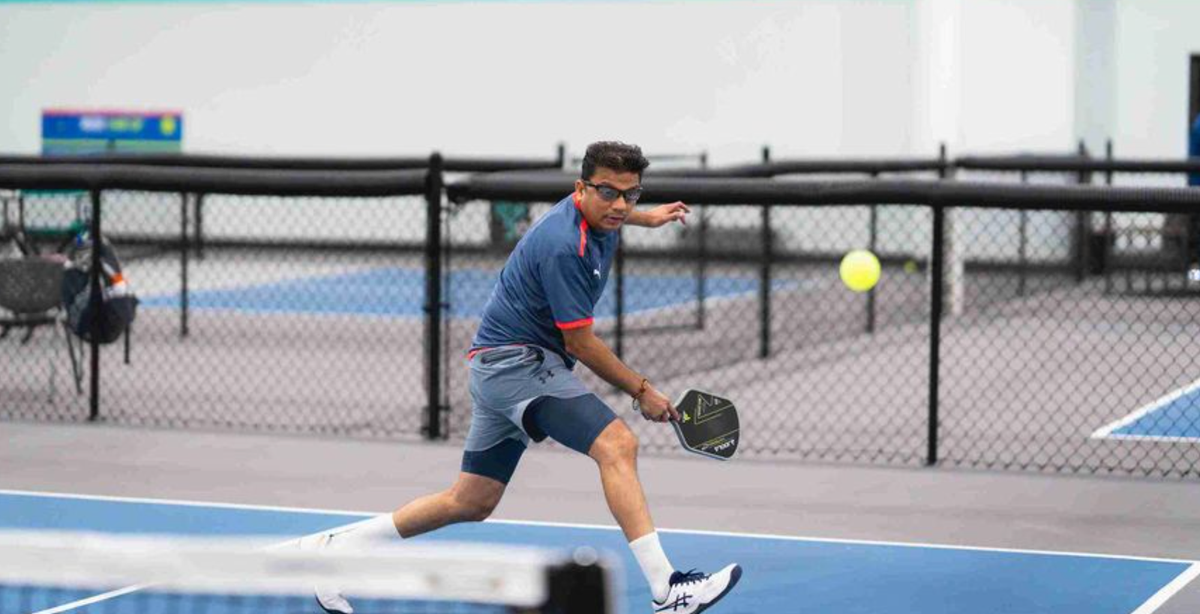
Putting the Four Pickleball Volleys Together
Every one of these fixes points the same direction: stop giving the ball back when you do not have to, and stop forcing offense when the ball will not allow it.
The pickleball volley rewards good decisions far more than it rewards fast hands.
Run this checklist the next time you are at the net:
- At the kitchen line: if the bounce gives you a higher contact point, let it bounce.
- In a firefight: paddle in front, compact swing, fast reload.
- On counters: anticipate early, swing to the side of your body, and open the face slightly.
- In transition: reset the low ball, swing the floater.
None of this requires more talent. It requires better defaults. Drill them one at a time and your net game stops leaking points.
The same discipline shows up when you are punishing speed-ups and tracking the ball off a sudden speed-up from your opponents.
It is also what you will see if you watch the best in the world up close.
The clean, compact volleys on display at events featuring the top pros of 2025 are not about superhuman reflexes.
They are the same four decisions, made a little faster and a little more often.
If you are serious about raising your net game, the essential pickleball shots to master for 2026 give you the full picture of what belongs in your arsenal.
Frequently Asked Questions
When should you let a dink bounce instead of hitting a pickleball volley?
Let it bounce whenever the bounce would give you a higher contact point than the volley. The lower you make contact, the less you can do with the ball, so a low volley off your shins is almost always worse than a waist-high ball after the bounce. Reaching for low volleys is the most common kitchen-line mistake.
Why do my pickleball volleys keep going into the net?
The usual culprit is a paddle face that is closed too much. When you close the face to hit down on a high ball and overdo it, the ball drives straight into the net. Open the face slightly so it points a touch toward the sky, and you will get topspin while still hitting down, which clears the net.
How do you win a firefight at the kitchen line?
Keep your swing compact and your paddle in front of your body at all times. A big backswing creates a big follow-through, which leaves you out of position and slow to reload. Short, compact hands like Anna Leigh Waters uses let you reset for the next ball almost instantly, and reload speed wins firefights.
What is a swinging volley in pickleball?
A swinging volley is an offensive volley you take out of the air on a ball that floats up around chest height, usually in the transition zone. Instead of resetting it softly, you split step, keep your chest forward, and accelerate through the ball with a compact swing across your body. It turns a defensive moment into an attack.
How do you counter a speed-up in pickleball?
Anticipate it and prepare early rather than swinging harder. When you see a dink sit up, get your paddle in position, then swing slightly toward the side of your body so the counter travels cross court with pace. Keep the swing short, and check that your paddle face is open enough to clear the net.

Love Pickleball? Join 100k+ readers for free weekly tips, news & gear deals.
Subscribe to The Dink