5 Fourth-Shot Decisions That Keep You in Control of the Point
The fourth shot is where rallies are won or lost. Here is how to read the ball, choose between the air and the bounce, and keep your opponents on defense.
The fourth shot is the most underrated swing in pickleball, and it quietly decides who controls the rest of the rally.
You serve, your opponents return, your partner sends a third, and then the ball comes back to your side.
What you do next sets the tone for everything that follows.
Most players treat that ball as a reaction. Better players treat it as a decision.
The whole shot comes down to one read: do you take the ball out of the air and keep the pressure on, or do you back up, let it bounce, and reset?
Get that read right and you stay on offense. Get it wrong and you hand momentum straight back to the other team.
Love pickleball? Then you'll love our free newsletter. We send the latest news, tips, and highlights for free each week.
What Is the Fourth Shot in Pickleball?
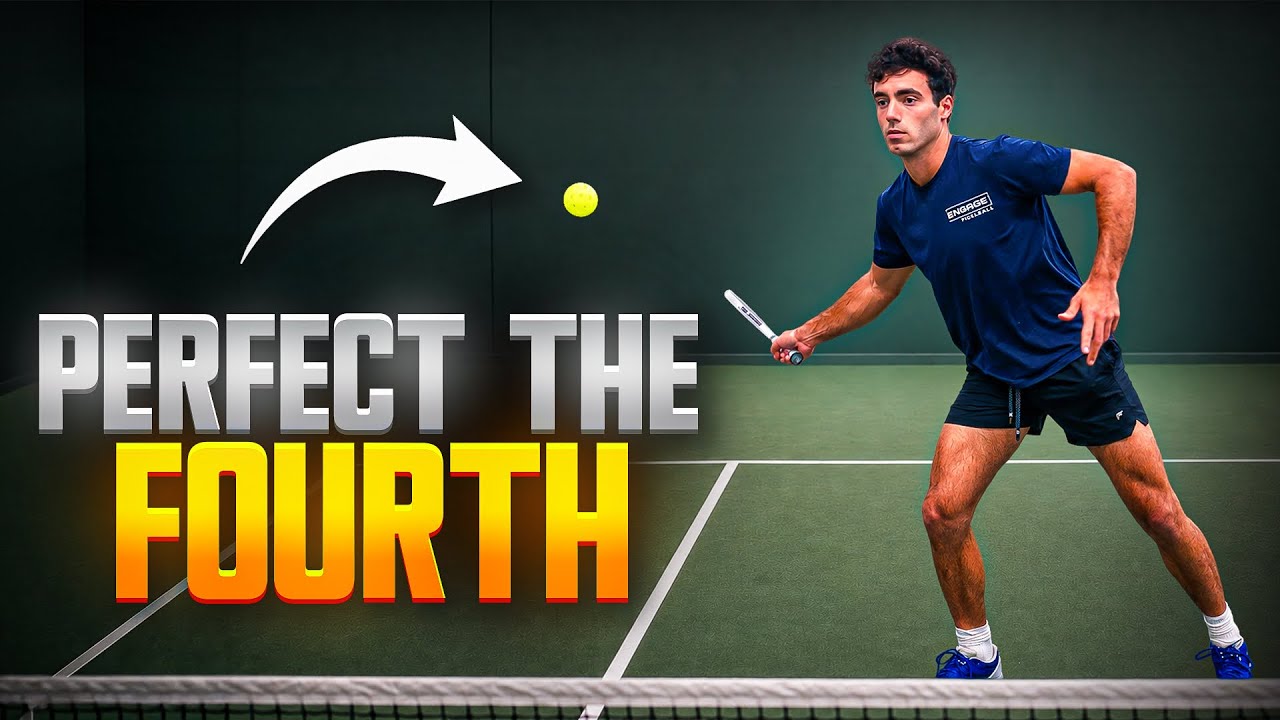
The pickleball fourth shot is the ball you hit right after your opponents return your third, and it is your first real chance to seize control of the point.
The serving team hits one (serve) and three (usually a drop or drive). The returning team hits two (the return) and four.
That makes the fourth shot the returning team's setup ball.
Hit it well and you keep your opponents pinned back.
Hit it poorly and you invite them to the kitchen, where they would much rather be.
This is why the third shot decision and the fourth shot are really two halves of the same conversation.
If you understand how a third shot drop arrives at your feet, you already know what your fourth shot needs to do about it.
Reach or Back Up? The Read That Decides Your Pickleball Fourth Shot
The entire pickleball fourth shot comes down to one read: is the ball high enough to take out of the air, or low and fast enough that you should back up and let it bounce?
Everything else follows from that single question.
Three things tell you the answer in a split second: the ball's height, its pace, and its trajectory.
When the ball is floating and sitting above net level, step in and take it. Hesitating only lets it drop into a worse position.
When the ball is dropping fast and low toward your feet, forcing it out of the air is how easy points turn into unforced errors.
That instinct to attack a high ball is the same one behind taking the ball out of the air: contact happens earlier, your opponents get less time, and you keep them stuck on defense.
Quick Reads Before Every Fourth Shot
Run this checklist in the half second before contact:
- Height: Is the ball above the net? If yes, lean toward taking it in the air.
- Pace: A slow, floaty ball is an invitation. A fast, sinking ball is a trap.
- Trajectory: Is it rising into your strike zone or dropping toward your shoelaces?
- Your balance: Are your feet set, or are you lunging? Never attack off your back foot.
- Opponent position: If they are still moving up, a firm fourth shot at their feet is brutal to handle.
How Do You Take the Pickleball Fourth Shot Out of the Air Without Popping It Up?
To take the pickleball fourth shot out of the air cleanly, keep your paddle out in front, contact the ball early, and punch through it with a firm wrist rather than swinging at it.
The mistake most players make is reaching late and slapping, which floats the ball up and gives the other team a free attack.
Think of it as a controlled block with intent, not a full swing. Your paddle face does the work, and your body stays quiet and balanced.
This is exactly where amateurs leak points.
Many of the same errors show up in these common volley mistakes: dropping the paddle head, reaching across the body, and adding a big backswing that there simply is not time for.
The Anna Leigh Waters Lesson on Shot Economy
Watch Anna Leigh Waters on a high fourth ball and you will see how little her paddle moves.
She lets the ball's own pace do the work and redirects it down at her opponents' feet.
That economy of motion is what keeps her shots low and consistent under pressure.
Once you trust your hands out front, you can start picking your spots and deciding when to speed up rather than just blocking everything back.
 The Dink Media Team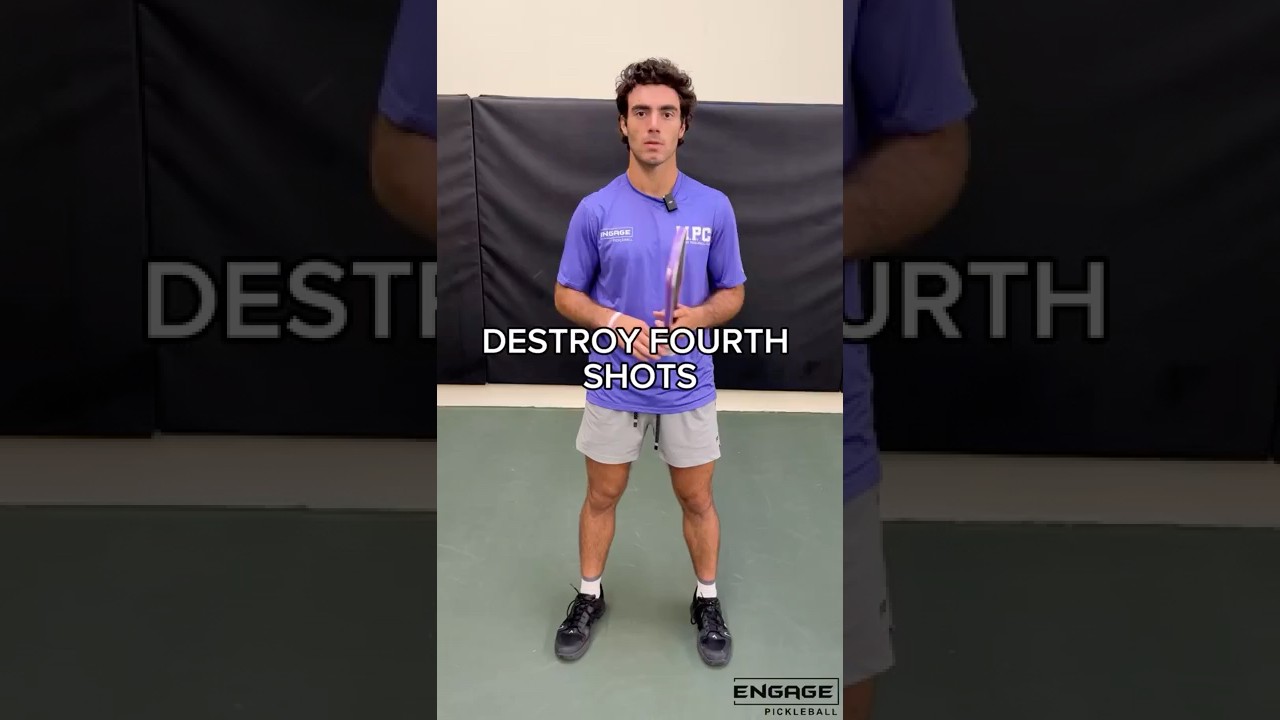
When Should You Back Up and Let the Fourth Shot Bounce?
You should back up and let the fourth shot bounce whenever the ball is dropping low and fast toward your feet, because a clean reset off the bounce beats a forced, popped-up volley every time.
Discipline here is what separates 4.0 players from 3.5 players.
Backing up is not retreating. It is buying yourself a cleaner contact point so your next ball can be a controlled reset rather than a panic swing.
The trick is recovering your position afterward.
If a low ball pushes you off the line, treat it like any moment when you get pushed back from the kitchen: reset the ball, then move forward again with purpose.
That entire stretch of court between the baseline and the kitchen is where points are won and lost, so it pays to study how to navigate the transition zone instead of rushing blindly through it.
 The Dink Media Team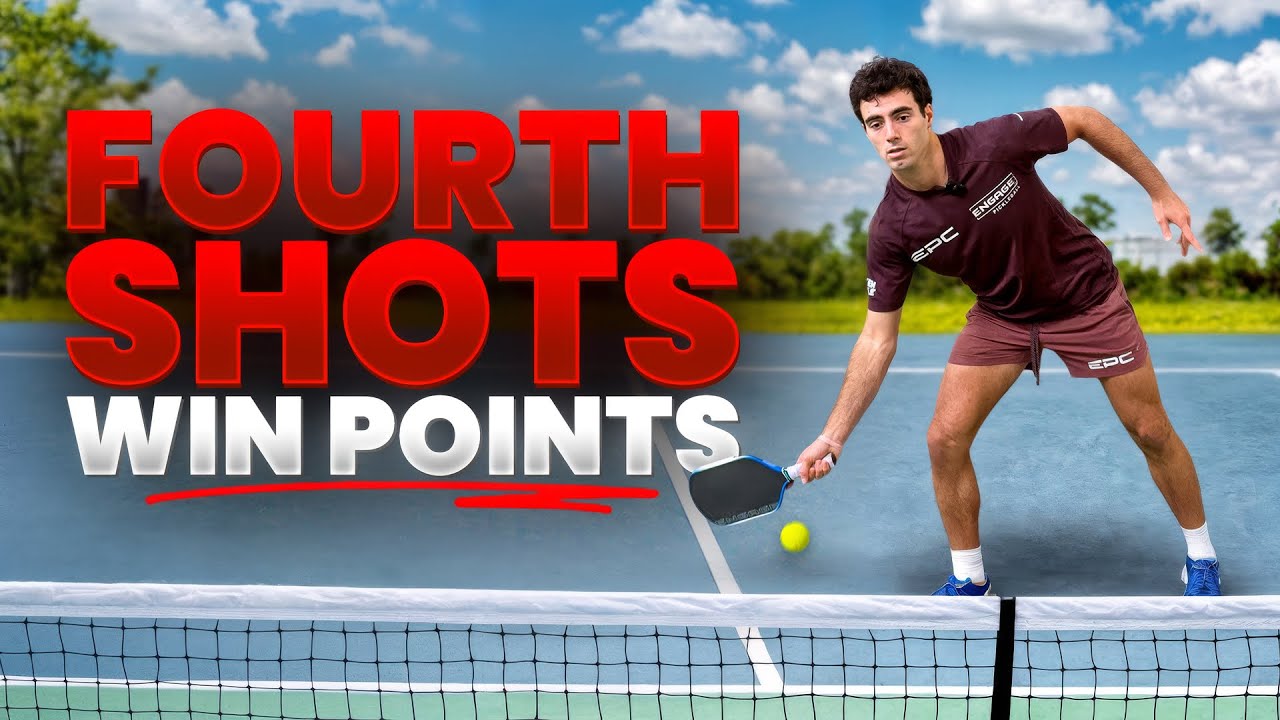
Why Your Footwork Makes or Breaks the Fourth Shot
Your pickleball fourth shot is only as good as the feet underneath it.
If you are caught flat or leaning, even the right decision produces a bad ball.
The split step is the foundation. A well-timed split step gets you balanced and ready to move in either direction the instant you read the ball.
From there it is about clean movement and a stable base, and you can sharpen both with dedicated footwork drills that make the reach-versus-back-up decision feel automatic.
Drill it deliberately and the fourth shot stops being a reaction. It becomes a weapon.
 The Dink Media Team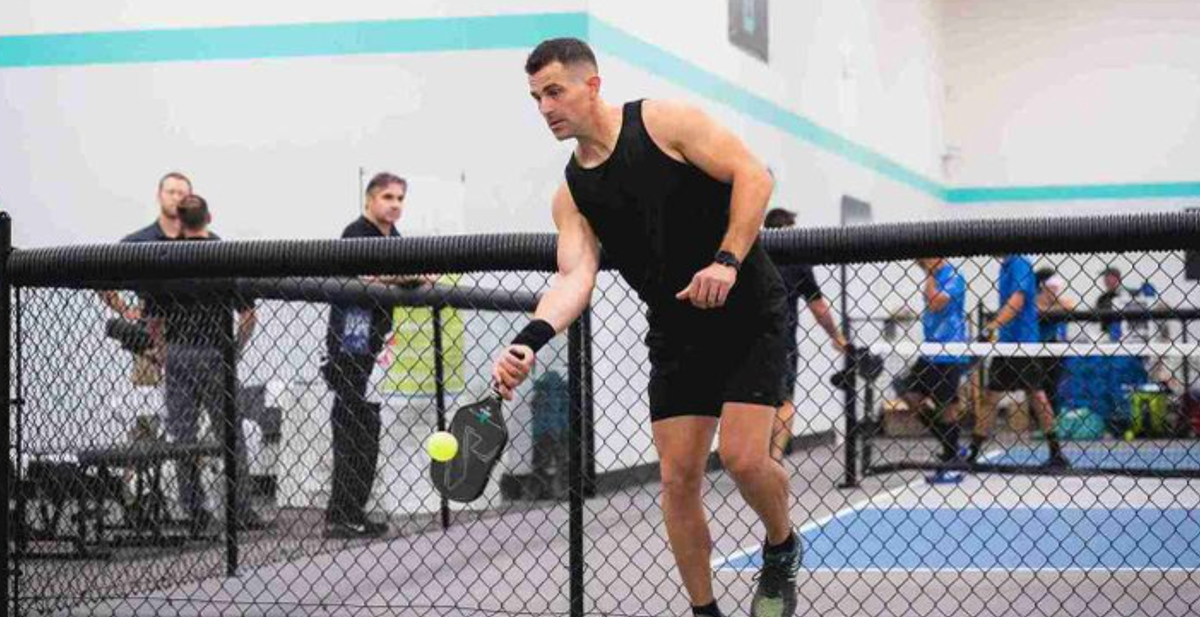
The Fourth Shot Mistakes Costing You Points
Most fourth shot errors are decisions, not technique. Fix the decision and the technique usually cleans itself up.
- Forcing a low ball out of the air. The single most common error. If it is dropping fast, let it bounce.
- Reaching late and slapping. Get your paddle out front early so contact is in front of your body, not beside it.
- Standing flat. No split step means no balance, and no balance means a floaty ball.
- Aiming for the lines. The feet of an advancing opponent are a bigger, more punishing target.
- Swinging too big. There is rarely time for a backswing on the fourth shot. Punch, do not wind up.
 The Dink Media Team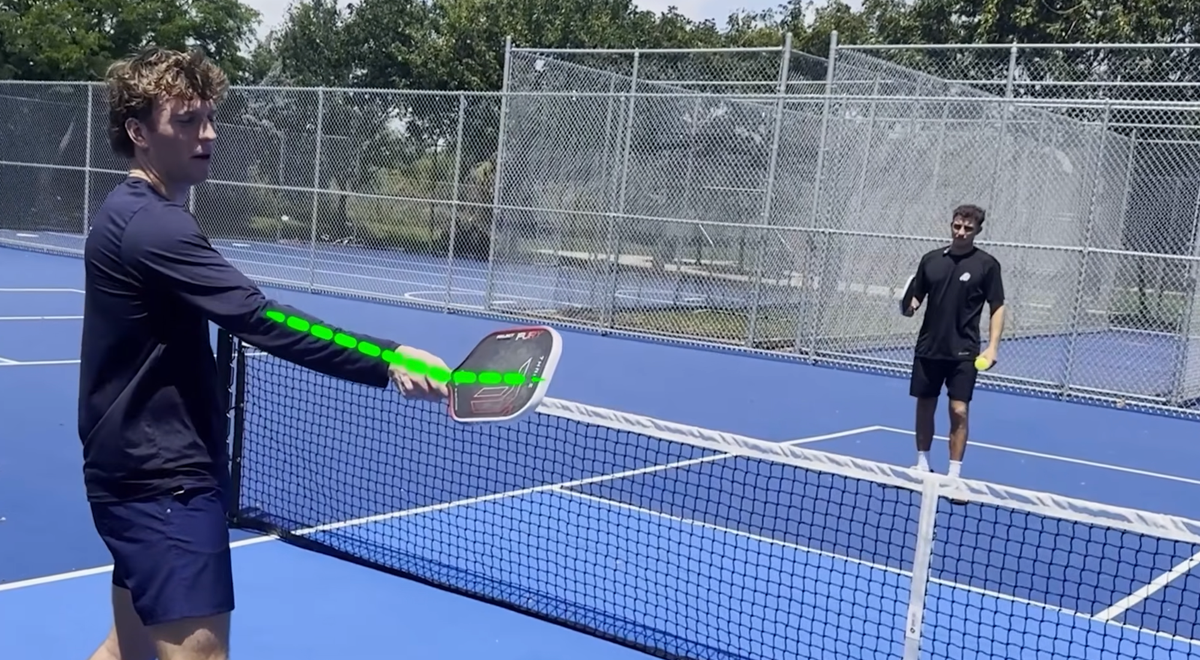
How Fourth Shot Pressure Is Reshaping the Modern Game
When you start hitting it on purpose, the pickleball fourth shot becomes a weapon.
The Dink has covered how relentless fourth ball pressure is reshaping how points are played at every level.
A well-placed sneaky fourth shot at the kitchen line turns a neutral ball into a free point. That is the difference between playing defense and playing chess.
According to CBS Sports' coverage of professional pickleball, elite players at the highest levels increasingly use the fourth shot as an offensive weapon rather than a neutral transition, applying pressure before their opponents can settle into position.
And as NBC Sports has highlighted in its coverage of top-tier doubles play, shot selection and court positioning at the fourth-shot moment is one of the clearest separators between recreational and elite-level play.
Frequently Asked Questions
What is the pickleball fourth shot?
The pickleball fourth shot is the ball the returning team hits after their opponents' third shot. It is the returning team's first real chance to take control of the point, usually by attacking a high ball out of the air or resetting a low one off the bounce.
Should I take the fourth shot out of the air or let it bounce?
Take it out of the air when the ball is above net height and traveling slowly enough to control. Let it bounce when it is dropping fast and low toward your feet, since a clean reset beats a forced, popped-up volley every time.
Why do I keep popping up my fourth shot?
Usually because you are reaching late or swinging too big. Keep your paddle out in front, contact the ball early, and punch through it with a firm wrist instead of taking a backswing. Setting your feet with a split step first fixes most of these pop-ups.
Where should I aim my pickleball fourth shot?
Aim at the feet of whichever opponent is still moving forward. A ball at the feet is the hardest to handle and forces a weak reply, which gives you the next ball in an even better position.
How do I get more consistent on the fourth shot?
Train the decision, not just the swing. Drill your split step and footwork so you are always balanced, then practice reading ball height and pace so the reach-versus-back-up choice becomes automatic under pressure. Pairing this with dedicated pickleball drills accelerates the process.

Love Pickleball? Join 100k+ readers for free weekly tips, news & gear deals.
Subscribe to The Dink