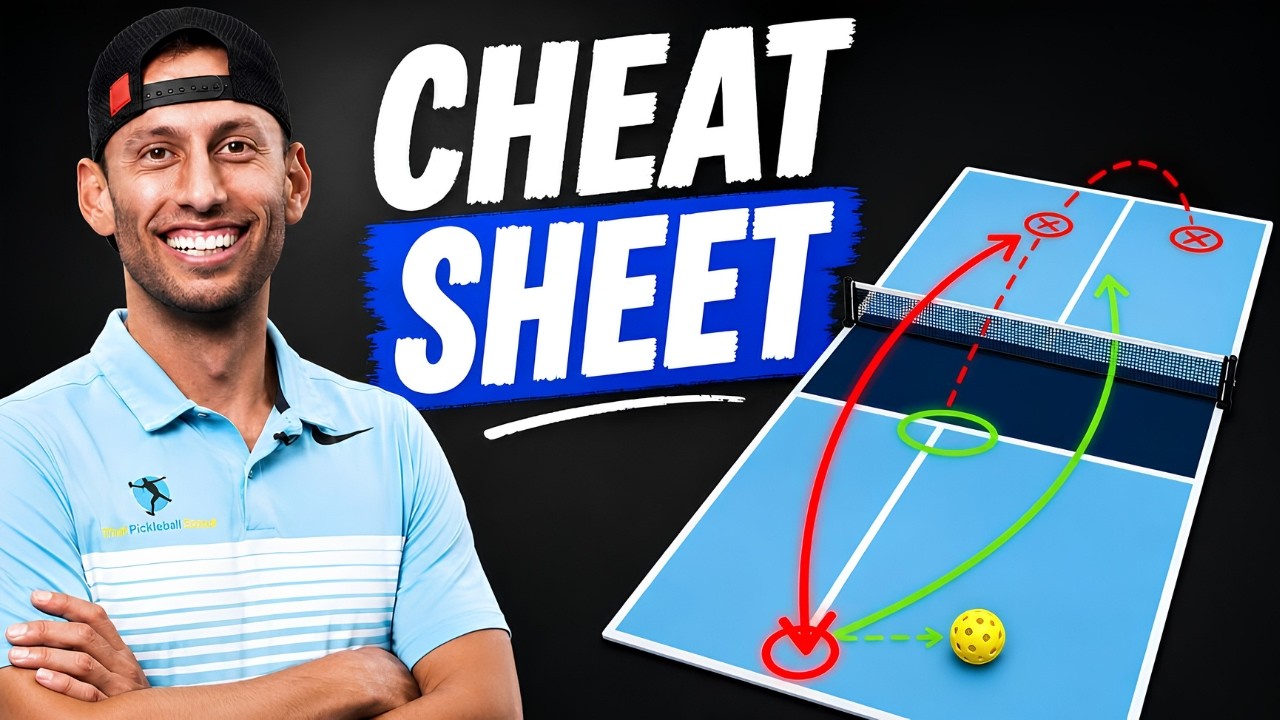
9 Pickleball Tips for Beginners That Fix the Most Common Mistakes
Most beginners repeat the same mistakes every single session without knowing why. These pickleball tips for beginners give you a simple, printable cheat sheet to take on court and start fixing errors immediately.
Most new players walk onto a pickleball court and immediately start making the same mistakes, over and over, without knowing what is causing them.
Bad shots, pop-ups, missed returns, and lost points all trace back to a handful of fixable habits.
This breakdown covers exactly those habits.
The pickleball tips for beginners come from ThatPickleballGuy Kyle Koszuta, who pulled advice from over 1,000 members of his online pickleball school and combined it with five years of playing experience to create a practical on-court cheat sheet.
Work through each one and you will immediately start making cleaner contact, fewer errors, and smarter decisions.
Love pickleball? Then you'll love our free newsletter. We send the latest news, tips, and highlights for free each week.
1. Fight for Your Feet First
When you miss a shot, your first instinct is to blame your paddle, your grip, or your swing.
Almost every time, the real problem started with your feet.
Footwork is the foundation of every good shot in pickleball, and it sits at the top of every honest list of pickleball tips for beginners.
If your feet are not in the right place before contact, nothing else works correctly.
The fix is simple to say and takes real repetition to build: move your feet early to get behind the ball, get stable, then be still at contact.
When you rush, lean, and flick, you create the errors and pop-ups that compound into more frustration.
Think of it like a basketball player fighting for position before a shot. Get your feet sorted first and your hands have a chance to do their job cleanly.
If you want to build this into your game faster, these three footwork drills make the game feel slower by training your movement before pressure hits.
2. Keep Your Paddle in a Ready Position
Beginners often stand at the baseline with their arms by their sides, waiting. Then the ball arrives and they wonder why their hands are slow.
Keep your paddle raised and ready before the ball comes.
You want the paddle below your chin with arms slightly tucked, so all you need is a forward motion when a ball comes at you fast.
When your paddle starts low, you have to bring it up before you can move forward. That extra step costs you time you do not have.
The ready position fix that actually works shows why starting position matters so much against hard drives.
3. Use Small, Compact Swings
Big swings lose points. This is one of the most consistent mistakes at every beginner level.
The simple rule: if your paddle travels behind your body, it has gone too far. You lose sight of it in your peripherals and you lose efficiency in your swing.
A tight, compact swing lets you use the pace your opponent gives you without adding extra force you cannot control.
For a one-handed backhand, turn and punch. For a two-handed backhand, rotate your core rather than swinging back.
The less unnecessary motion, the more consistent your contact.
 The Dink Media Team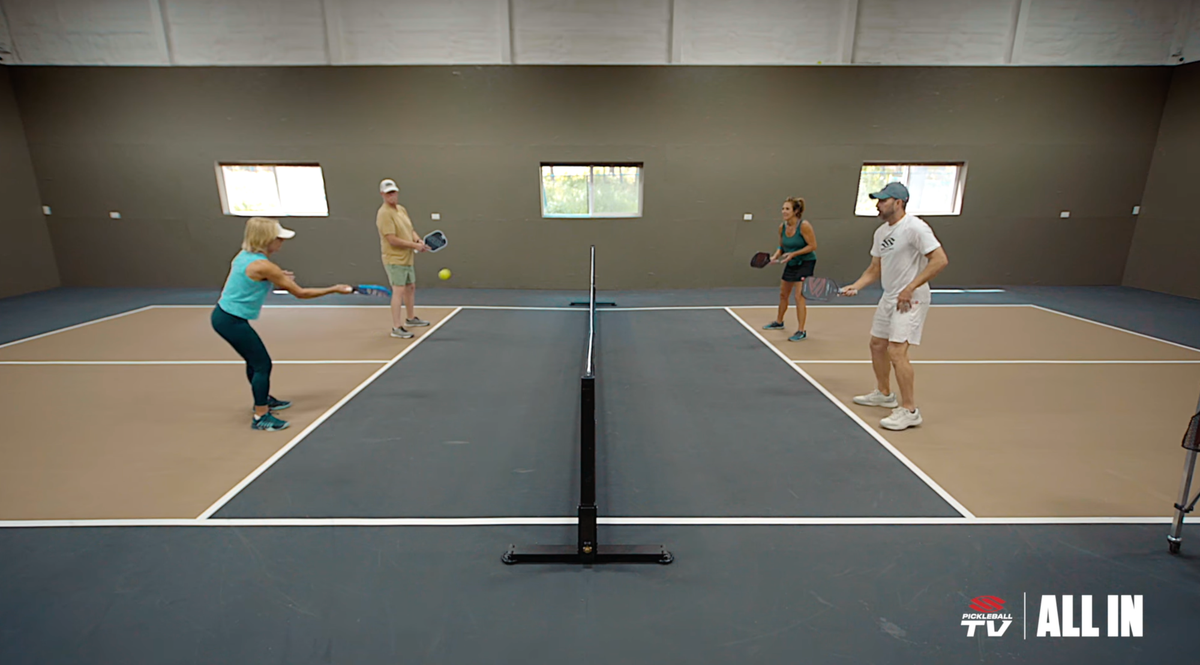
What Does "Locking Your Wrist" Actually Mean?
A locked wrist means you are not flicking or snapping your wrist through contact. You are keeping it neutral and firm so the paddle face stays consistent.
When your wrist gets involved at the moment of contact, especially on drops and dinks, the paddle face changes angle and you add force you did not intend.
That is why those shots sail long or pop up.
Use your bigger muscles, your shoulder and core, to drive the motion.
Keep the wrist quiet. This is especially true on soft shots where placement matters more than power.
If your dinks keep popping up, a wrist that fires too early is likely the culprit.
 The Dink Media Team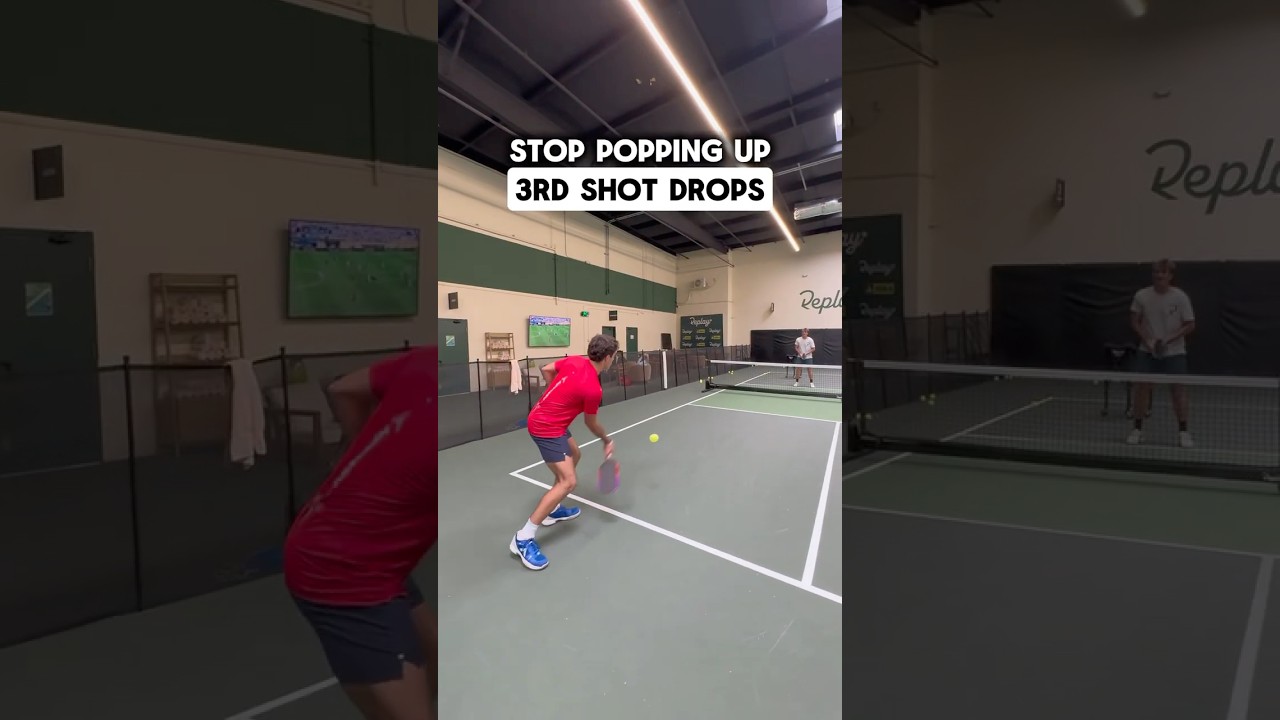
4. Relax Your Grip
Squeezing your paddle like it might escape is a habit new players develop before a point even starts. It feels like control. It is actually the opposite.
A tight grip turns your paddle into a wall. Balls bounce off it unpredictably.
A relaxed grip lets you absorb pace on soft shots and guide the ball where you intend.
Think about toothpaste. When you put toothpaste on your brush, you apply just enough pressure. Not so little the tube drops, not so much it explodes.
That is the feel you want on your paddle handle. For a detailed breakdown of how grip affects your game, this guide on grip pressure is worth your time.
 The Dink Media Team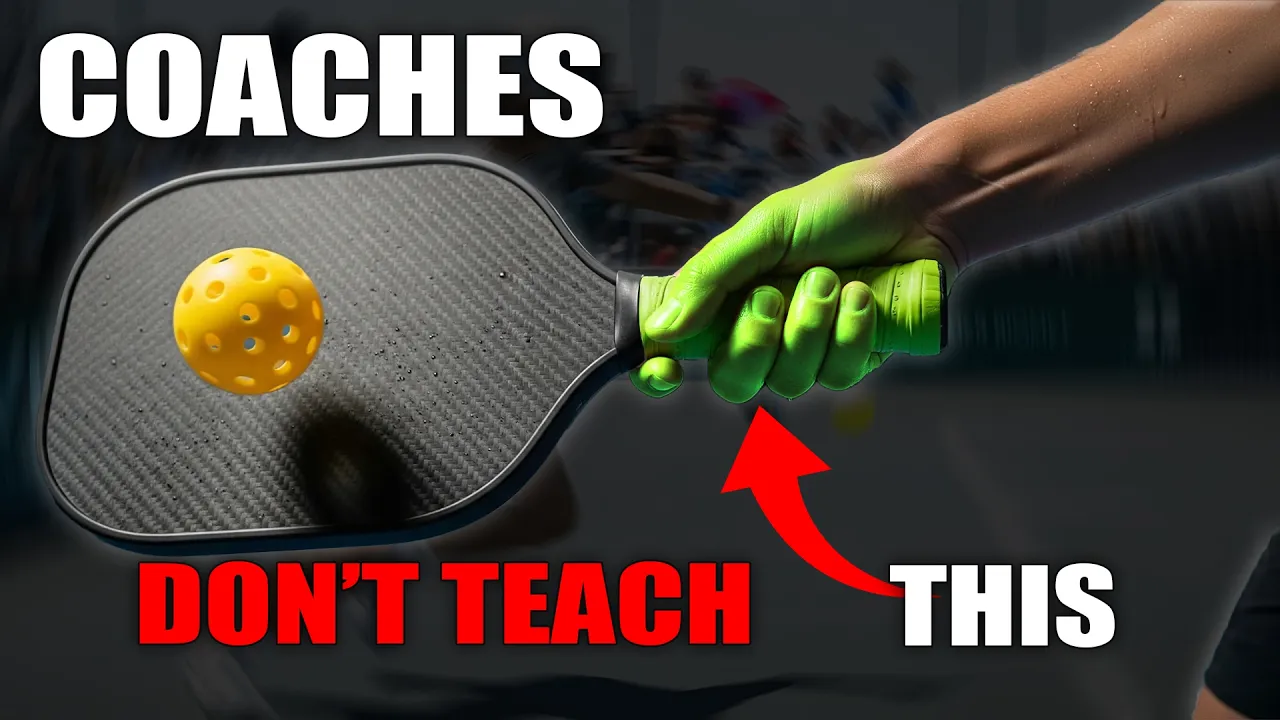
5. Watch the Ball Into Your Paddle
Keeping your eyes on the ball through contact is the single fastest way to improve your shot quality.
When you lift your head early to look at your target, your shoulders shift, your arm timing changes, and contact suffers.
Pro players consistently hit the ball closer to the center of the paddle face, according to visual-tracking research on racket sports.
Beginners hit it all over, because their eyes are already somewhere else.
On ground strokes especially, resist the urge to look up.
Keep your gaze on the ball for an extra couple of milliseconds and your accuracy improves immediately.
 Eric Roddy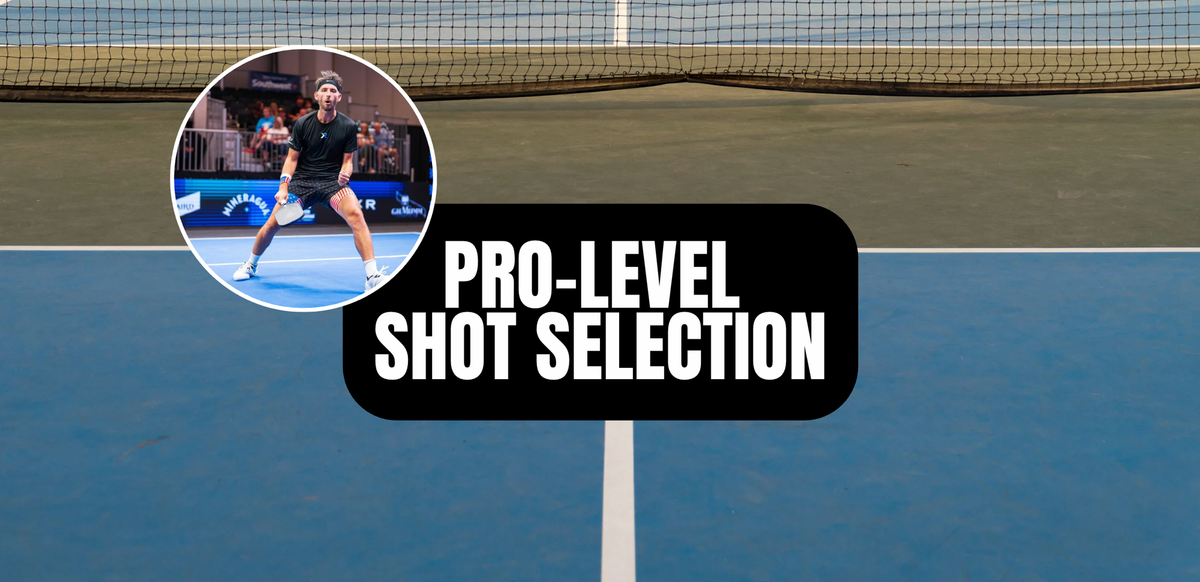
6. Hit the Ball on the Fall, Not the Rise
Rushing forward to meet the ball while it is still rising is one of the hardest beginner habits to break.
The physics are simple: a rising ball still has bounce energy and is moving fast. Timing it cleanly is extremely difficult.
Here is how to think about it:
- After the bounce, the ball rises, slows, and reaches a brief peak where it nearly hangs in place.
- That hang moment is your ideal contact window.
- Let the ball peak and begin to fall before you swing.
- Your timing becomes easier, your body slows down naturally, and you can guide the ball with real control.
This only works if your feet get you into position early enough to create space.
If you are always crowded by the ball, you will always be forced to take it on the rise.
This breakdown of what actually wins points for beginners connects timing directly to court positioning.
 The Dink Media Team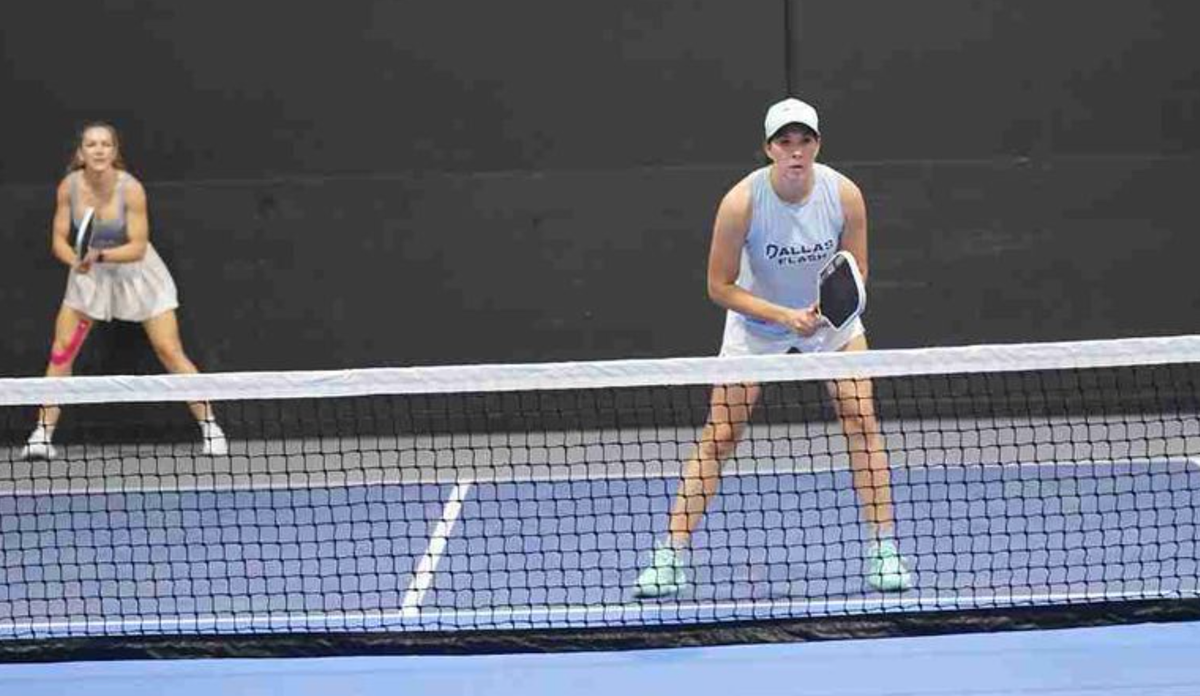
7. Serve and Stay
Do not drift into the court after you serve. This is one of the most reliable pieces of early advice any player can receive.
In pickleball, the serving team must let the return bounce before hitting their third shot.
If you step in after serving and the return comes back deep, you will be hitting off your back foot. Balls hit off the back foot go high.
The better default: serve, stay near or behind the baseline, read where the return lands, and then move.
If your opponent keeps hitting short returns, adjust. But start with serve and stay as your baseline habit.
Understanding return of serve fixes that stop unforced errors also helps you understand why ball placement off the serve matters so much for what comes next.
 The Dink Media Team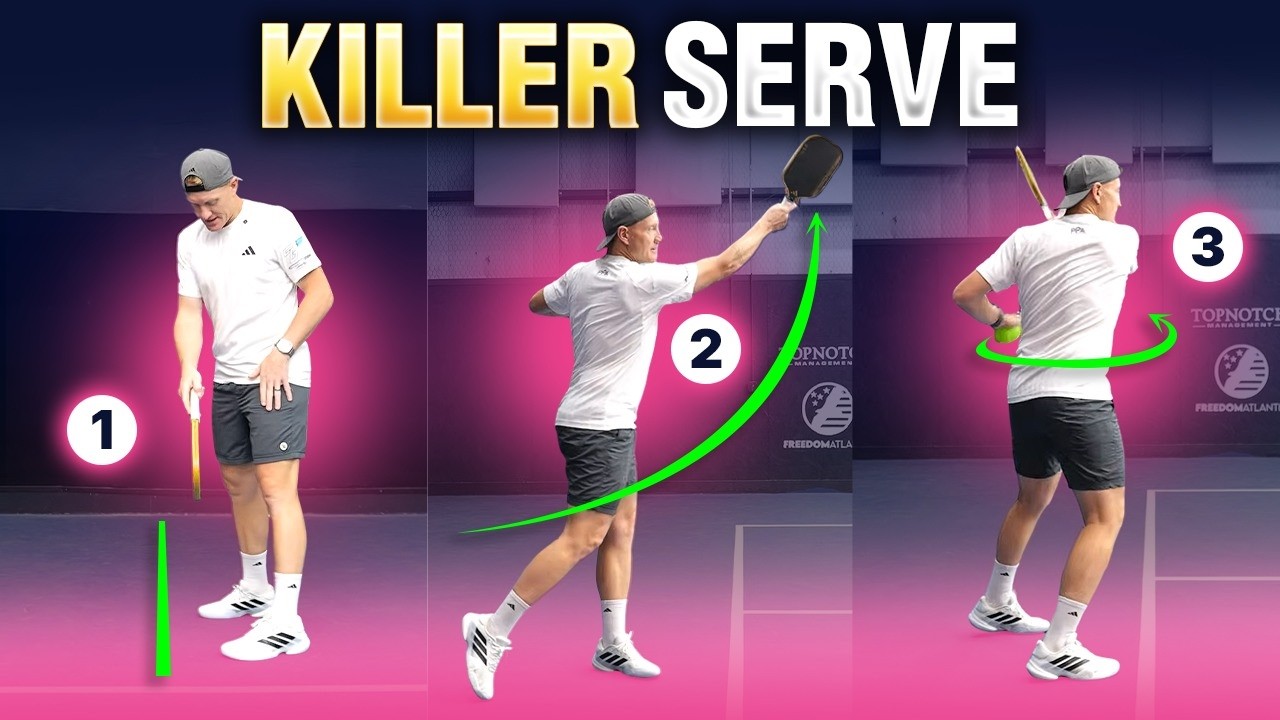
Should You Always Move to the Kitchen After Returning?
Yes. When you are the returning team, you already have a positional advantage because your partner is at the kitchen line and your opponents have zero players up.
When you hit your return and run to the kitchen, you go from a plus one advantage to a plus two advantage.
Return and run is the principle. Hit the return, then move forward to the kitchen line as quickly as possible.
When you stay back at the baseline after your return, you leave an enormous target area open for your opponents.
They can hit anywhere in that space and make you work. When you move up, you shrink their targets and force them to be more precise.
Using the kitchen line as a target, not just a rule, will change how you think about court positioning entirely.
 The Dink Media Team
8. Do Not Race to the Kitchen on Your Third Shot
This one trips up players who have learned the kitchen line is important.
They rush toward it after every third shot, regardless of whether that third shot was actually good.
The right approach uses a simple traffic light system:
- Red light: Your third shot lands high or out of position. Stop. Do not run toward the kitchen because you will arrive while your opponent is attacking.
- Yellow light: Your shot is okay but not great. Move carefully, stay ready, and evaluate as you go.
- Green light: Your drop lands softly in the kitchen and forces an upward reply. Move forward confidently.
The quality of your third shot should dictate your movement. A bad drop that you chase with a sprint to the kitchen only puts you in a worse position.
Knowing the right shot for each third shot situation takes the guesswork out of this decision entirely.
 The Dink Media Team
9. Be Efficient in Everything You Do
The best players do less, not more. Their technique is simpler, their footwork is quieter, and their swings are shorter. They look calm because they are efficient.
Beginner players tend to move constantly, swing big, and grip tight. All of that extra effort creates extra variables. Extra variables create inconsistency.
Start working toward efficiency in every part of your game. Fewer wasted movements. Tighter swings. Relaxed hands. Quiet eyes on the ball.
Learning these skills in the right order will get you from beginner to competitive player faster than grinding random tips.
And if you feel like your progress has stalled, this guide for beginners who feel stuck is a good next step.
Frequently Asked Questions
What is the most important pickleball tip for a complete beginner?
Get your feet moving first. Nearly every missed shot traces back to poor positioning before contact. Move early, get behind the ball, and be still when you swing.
Why do my pickleball shots keep popping up?
Pop-ups almost always come from hitting the ball on the rise, using too much wrist at contact, or gripping the paddle too tightly. Focus on letting the ball drop to its hang point and keeping a neutral wrist through contact.
Where should I hold my paddle while waiting for the ball?
Keep your paddle below your chin with your arms slightly tucked. This ready position means you only need a forward motion when the ball comes, which is faster than starting from low and bringing the paddle up.
Should I move to the kitchen line after my return of serve?
Yes, every time you can. Moving to the kitchen after your return puts both you and your partner at the line, which gives your team the positional advantage in the rally. Staying back at the baseline leaves your opponents a huge open court to work with.
How loose should my grip be on the pickleball paddle?
Loose enough to absorb pace on soft shots, firm enough to maintain control. Think about squeezing a tube of toothpaste with just enough pressure to hold it steady. A death grip removes all feel and turns your paddle into a wall.


Love Pickleball? Join 100k+ readers for free weekly tips, news & gear deals.
Subscribe to The Dink