If you want to know how to stop hitting the ball into the net in pickleball, the answer almost always comes down to a handful of fixable mechanics mistakes. This guide breaks down the root causes shot by shot - and gives you concrete drills to clean it up fast.
If you want to know how to stop hitting the ball into the net in pickleball, start with this truth: the net is almost never the problem - your contact point is.
Most players who net the ball consistently are making the same two or three mechanical errors and repeating them at speed.
The good news? Every single one of them is fixable.
Love pickleball? Then you'll love our free newsletter. We send the latest news, tips, and highlights for free each week.
Why Do You Keep Hitting the Net? (It's Not Bad Luck)
Hitting the net in pickleball is not a mystery.
It's almost always one of three root causes: a downward swing path, a contact point too far back in your stance, or a paddle face that closes through impact.
Most recreational players think they're hitting too hard. They're not. They're hitting flat and blaming power when the real issue is angle.
The official USA Pickleball net height is 34 inches at the center and 36 inches at the posts, which means a flat drive gives you almost no margin for error.
Think of it this way: a slightly upward swing path gives you net clearance and topspin. A flat path gives you neither.
A common mistake players don't know they're making is treating every net error as the same problem, but a netted dink and a netted drive come from completely different breakdowns.
How to Stop Hitting the Ball Into the Net on Drives and Groundstrokes
Drives and groundstrokes net for one reason above all others: the swing path is too flat or descending through contact.
When your paddle travels level or downward, you're fighting physics every time.
The fix is a low-to-high swing path.
Start your backswing below the ball, make contact somewhere between your knee and hip (depending on ball height), and finish with your paddle face above your wrist.
This upward brush through the ball creates two things simultaneously: lift to clear the net, and topspin that pulls the ball back down into the court.
Here's the catch most players miss: your contact point has to be in front of your body.
 Alex E. Weaver
If you're making contact beside or behind your hip, your swing path naturally flattens out and the paddle face tends to close.
Move your feet early, get positioned, and let the ball come into your strike zone in front of you.
A good drill for this is the figure-8 drill, which forces you to track the ball through full rotations and develop consistent contact habits.
Another option: shadow swings in front of a mirror, checking that your finish is high and your paddle face is open at impact.
If you're struggling specifically with your drive technique, work on shortening your backswing first.
Long backswings create timing problems that push contact late and pull the face down through the ball.
How to Stop Hitting the Ball Into the Net When Dinking
Dinking into the net is a different problem.
Soft shots net because of wrist tension, late contact, or a paddle face that collapses at impact, not because you're swinging too softly.
When you tighten your grip at contact, the paddle face rotates forward and closes.
That's your net ball. The fix is a firm but relaxed grip (4-5 on a 10-point scale) with a face that stays slightly open, angled toward the sky, through the full shot.
Make contact around net height or slightly above it.
Once the ball drops below the tape, you need a dramatic lift angle just to clear, and that usually means a pop-up instead of a net ball, but you've already lost the exchange.
JW Johnson's unusual dinking technique is worth studying: his contact point is consistently out front and his face angle almost never changes.
Research published in the Journal of Sports Sciences on racket sport motor control shows that excess grip tension reduces fine motor accuracy in precision tasks.
A pickleball dink is exactly that. Pickleball's hardest dinking drill will stress-test those contact habits fast.
 The Dink Media Team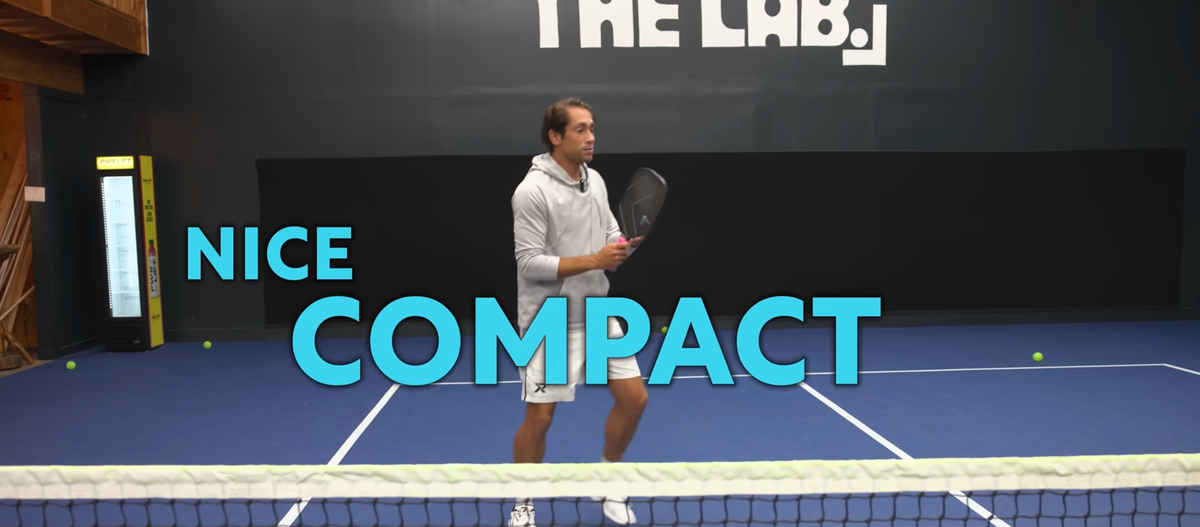
Is Your Stance Killing Your Shot Accuracy?
Your feet determine everything that happens above them. If your stance is off, no amount of paddle work will save you from chronic net balls.
The single biggest stance mistake for net errors is being too upright. Standing tall at contact naturally pulls your swing plane down through the ball. Get low.
A proper pickleball stance means athletic knees bent, weight slightly forward, and your center of gravity dropped so your paddle can travel up through the ball rather than angling down.
Here's the other one: don't lean back on hard shots. When players lean their torso away from the ball to generate power, the paddle face tilts down.
The result is a drive that clips the tape or buries in the net. Stay forward, stay balanced, swing through.
Good positioning versus good shot selection is something a lot of players don't think about until they're already out of position.
The point is simple: if you're reaching for the ball or off-balance, the net is more likely than the baseline. Move your feet first. Then swing.
 The Dink Media Team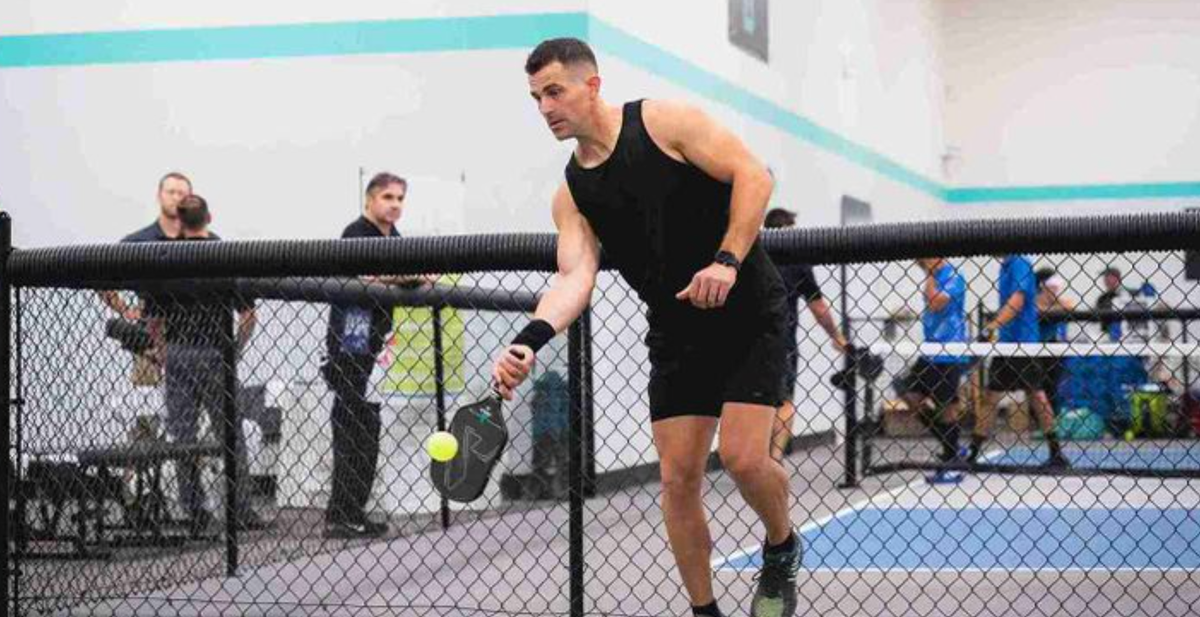
How to Stop Hitting the Ball Into the Net on Your Third Shot Drop
Third shot drops are responsible for a huge percentage of net errors in competitive recreational play.
The third shot drop nets when players try to hit it too softly from too far back - or swing downward toward a low target.
Here's the reality of third shot geometry: you're standing 20+ feet from the net, hitting toward the kitchen, and trying to land the ball at your opponent's feet.
That ball needs to arc. A flat or downward shot from the baseline will clip the net before it gets anywhere near the transition zone.
The fix is committing to the upward swing path and trusting the arc.
Most players who net their drops are underswinging because they're scared of hitting long. Ironically, the answer is more lift, not less.
The topspin will bring it down. The third shot drop case has been made better than almost anywhere else here - the arc is your friend, not your enemy.
Understanding the drive vs. drop decision on the fifth shot also helps here, because if you're forcing a drop from bad position, the net error becomes almost inevitable.
Transitions matter. Talking transitions is something the best players do obsessively.
 The Dink Media Team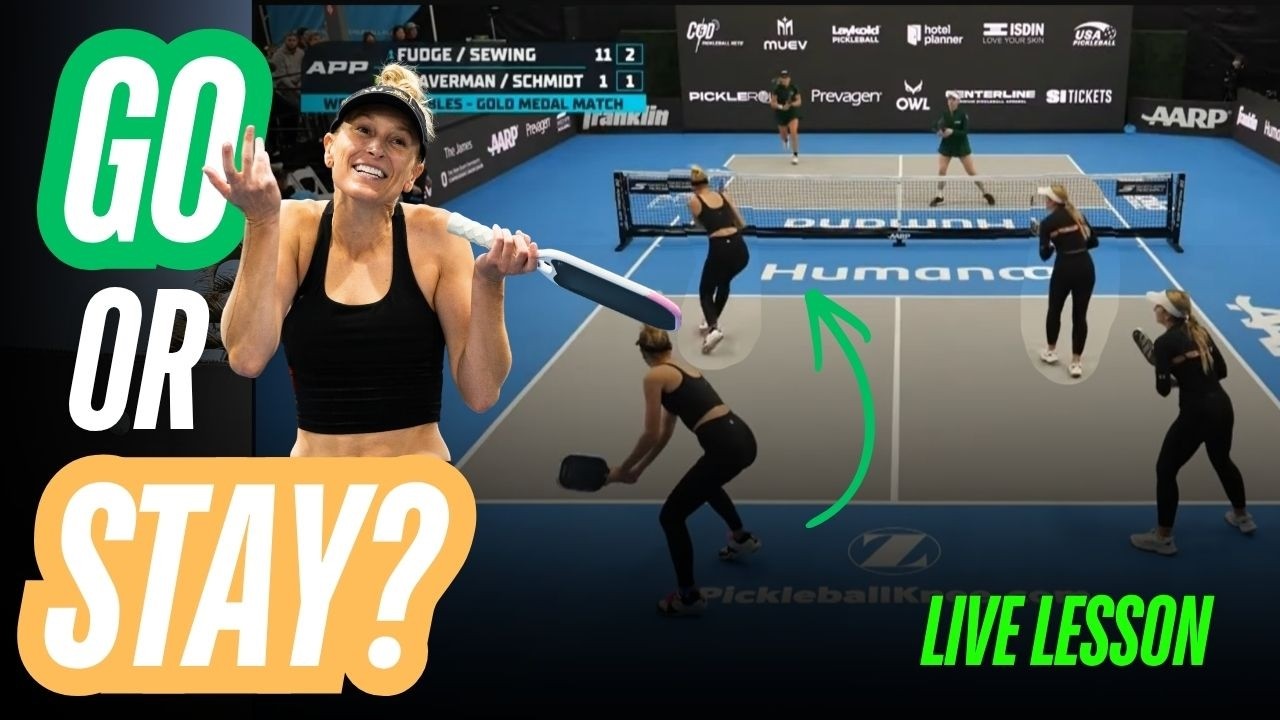
What to Do When Net Balls Keep Happening Mid-Match
If you're netting shots mid-match and can't diagnose it in real time, default to two things: more net clearance and slower tempo.
Aim 6-12 inches above the net until your contact settles.
Hurried swings rush contact and tighten the wrist, which sends the ball right into the tape.
Letting your paddle do the work instead of forcing shots is something the best players say constantly.
After the match, take your problem shots to solo drills. Shadow swings and drop-feed reps let you isolate mechanics without live rally pressure.
 Robert S Cormack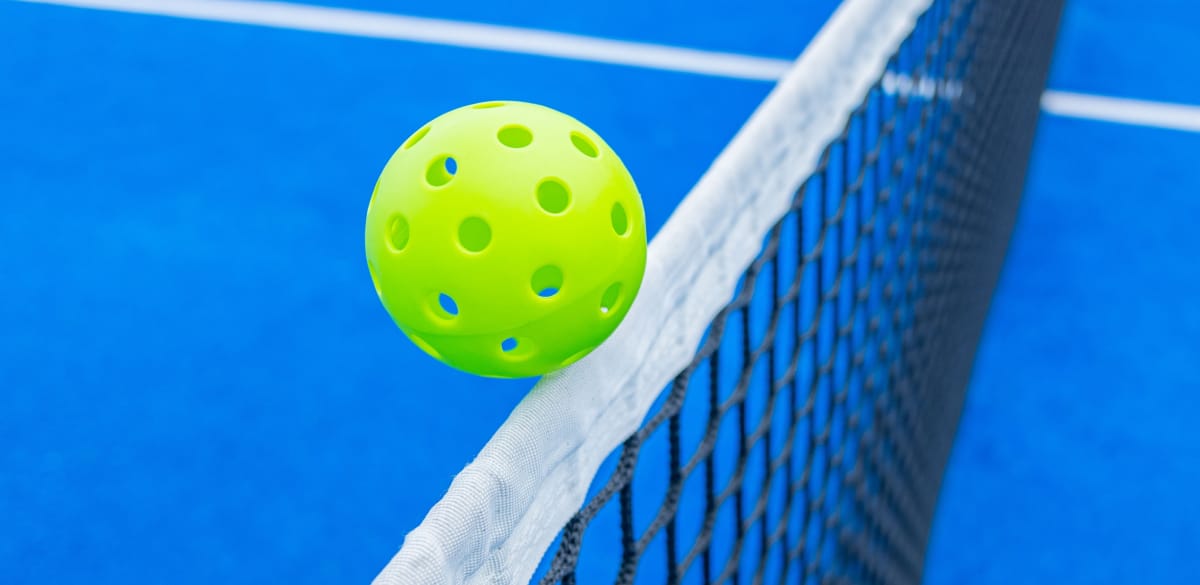
The Role of Topspin in Clearing the Net
Topspin is the single most reliable tool for eliminating net errors on drives.
When the ball rotates forward through the air, it creates downward pressure (the Magnus effect) that pulls it toward the court after clearing the net.
You can aim higher and the ball still lands in.
Mastering topspin requires one consistent habit: brushing up through the back of the ball at contact, with a slightly open paddle face at the start of the swing that squares through impact.
The upward brush creates spin.
The spin creates margin. A 2025 biomechanics analysis reported in the British Journal of Sports Medicine confirmed that players who used low-to-high swing paths had significantly fewer net errors than those using flat swings.
Get under the ball and brush up.
 The Dink Media Team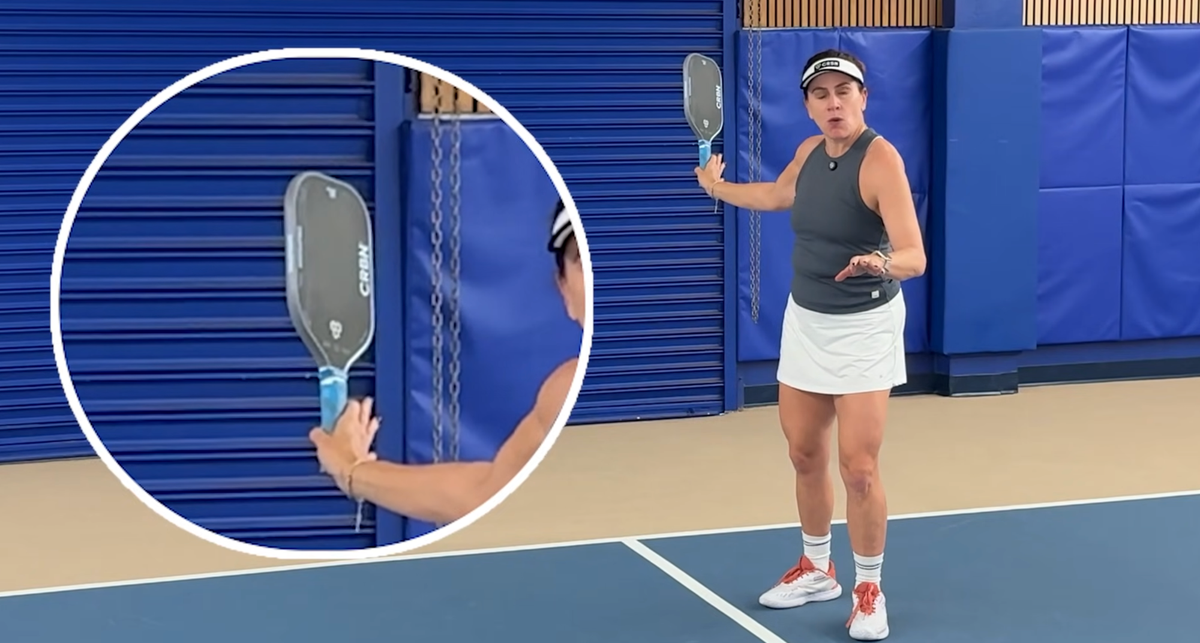
Key Takeaways
- Most net errors in pickleball trace back to contact point, swing path, or improper net clearance margins - not effort or paddle choice.
- The net is 34 inches at the center and 36 inches at the posts. Most players aim too flat and pay for it.
- Low-to-high swing paths and slightly open paddle faces at contact solve the majority of net balls.
- Soft game net errors (dinks and resets) typically come from wrist tension and late contact - not from swinging too softly.
- Drilling with purpose, not just rallying, is the fastest path to fixing a chronic net problem.
Frequently Asked Questions
Why do I keep hitting the ball into the net in pickleball even when I'm trying to hit softly?
Soft shots net differently than power shots. When you try to hit softly, grip tension increases, which closes the paddle face and sends the ball into the tape. Keep a relaxed grip (4-5 on a 10-point scale) and keep your paddle face slightly open through impact. Contact above net height also helps - the higher you catch the ball, the less lift you need.
How much net clearance should I aim for in pickleball?
Most coaches recommend 6-12 inches of net clearance on drives and groundstrokes, and 3-6 inches on dinks and drops. The net is 34 inches at the center, so aiming flat gives you almost no margin for error. When in doubt, aim higher.
Does my paddle face angle really affect net errors that much?
Yes. Paddle face angle is one of the two biggest variables in whether a shot clears the net. A closed face (tilted forward) directs the ball down. An open face (tilted back) creates lift. A slightly open face at contact, combined with an upward swing path, will fix the majority of your net errors. Film yourself in slow motion to check it.
How do I stop netting my third shot drops specifically?
Commit to the arc. Third shot drops need a clear upward swing path because the ball must travel 20+ feet and land softly in the kitchen. Players who net their drops are almost always under-swinging out of fear of going long. Trust the topspin to bring the ball down and follow through fully. Slowing the third shot drop down in practice until the arc becomes automatic is the fastest fix.
What drills help fix chronic net errors in pickleball?
Three drills move the needle fastest. First, drop-feed self-hitting: toss the ball, let it bounce, and focus on swing path with no live rally pressure. Second, cross-court dink rallies focusing on contact point and grip relaxation. Third, the figure-8 drill to build consistent contact habits under movement. Solo practice drills are underrated for fixing mechanics fast.

Love Pickleball? Join 100k+ readers for free weekly tips, news & gear deals.
Subscribe to The Dink