
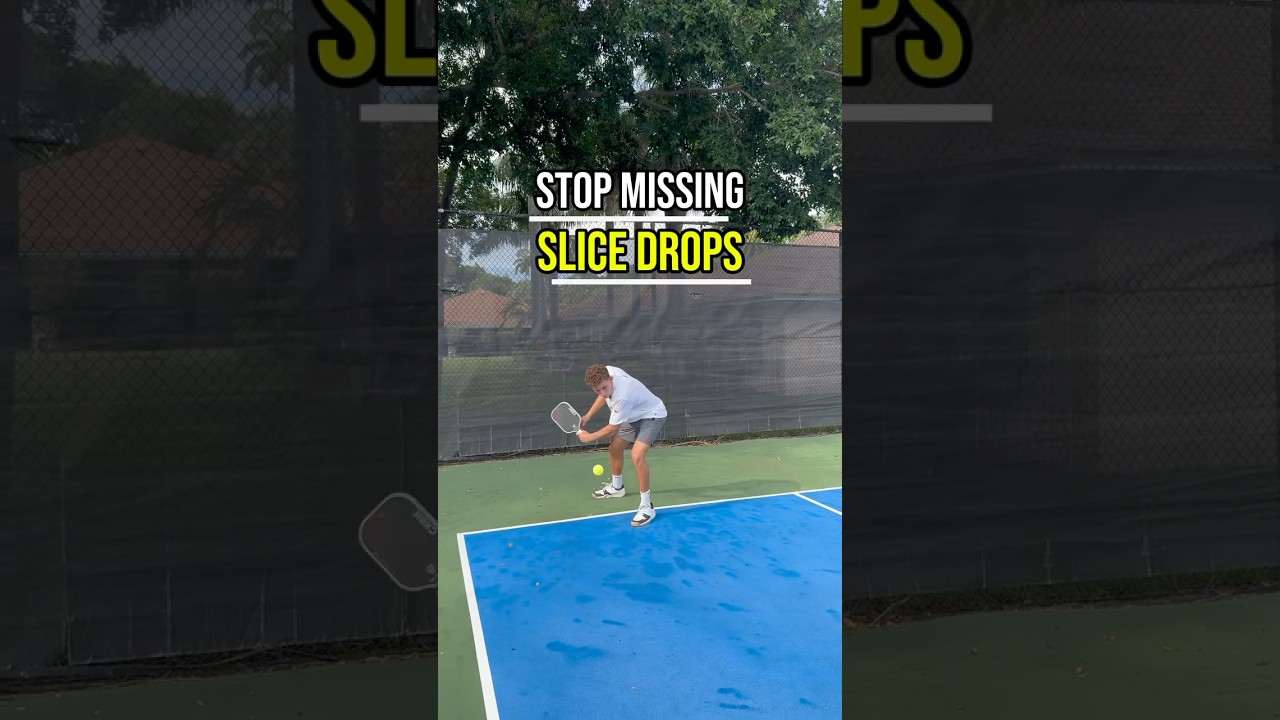
Why You Keep Chopping Your Third Shot Drop (And How to Fix It)
Most players ruin their third shot drop before they even swing. Fix your stance and swing path with two adjustments that build real consistency on the third shot drop.
Your third shot drop is not failing because you lack touch. It is failing because of two mechanical errors that most players never address.
The good news is that both fixes are simple and you can apply them immediately. No special equipment, no complicated drill progressions required.
This breakdown comes from tanner.pickleball on YouTube, who laid out the two most common mistakes destroying the slice drop and exactly how to correct each one.
Love pickleball? Then you'll love our free newsletter. We send the latest news, tips, and highlights for free each week.
What Is a Slice Drop and Why Does It Matter?
A slice drop is a third shot hit with backspin, designed to arc softly into the kitchen and force your opponents to hit upward.
Done correctly, it neutralizes pace and buys you time to advance to the non-volley zone.
Done wrong, it becomes a pop-up your opponents punish immediately.
Most players assume the problem is feel. The real culprit is almost always stance and swing path, two things you can physically correct right now.
That is also why the slice drop has quietly fallen out of favor at the pro level while recreational players keep swinging at it.
Mistake 1: The Open Stance Is Killing Your Control
The first error is the most common one. Players set up with an open stance, meaning their feet are facing the net when they contact the ball.
An open stance forces you to rely entirely on your arm to generate the shot.
Your body has nowhere to go, so you end up slapping at the ball with your wrist or forearm and losing control immediately.
This is why so many slice drops sail wide or come out flat. The arm is doing all the work it was never designed to do alone.
So What Should Your Feet Actually Do?
Get your feet in line with the target. Your stance should point toward where you want the ball to land, not toward the net.
When your feet are lined up properly, your body can rotate and push through the shot. You are no longer just swinging an arm.
You are using your whole body as a unit, which is how you generate soft, controlled touch consistently.
Think of it like throwing a ball accurately. You would never throw with your chest fully open to the target from the start. You rotate through.
The same principle applies here.
Here is what to check before you swing:
- Feet pointed toward your intended landing zone in the kitchen
- Shoulders slightly closed, not facing the net
- Weight ready to shift forward through contact
- No lateral drift with the arm before the body has moved
If you can run through that checklist before the ball arrives, you have already eliminated the number one cause of inconsistent slice drops.
For more detail on how third shot drop situations change your approach, that resource breaks down when and how to adjust based on ball position and court location.
 The Dink Media Team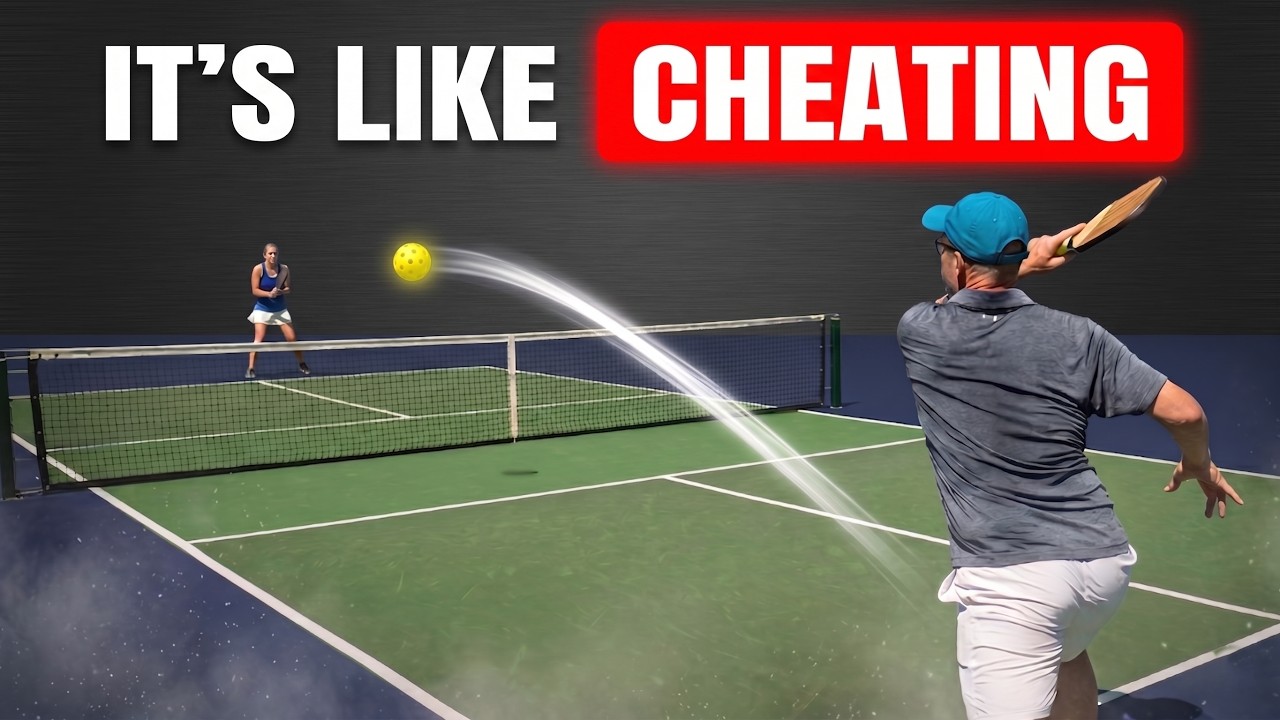
Mistake 2: Starting Your Swing High and Coming Under the Ball
The second mistake is a swing path problem.
Players bring the paddle up high and then swing downward underneath the ball, trying to generate backspin through a dramatic chopping motion.
This creates way too much movement. The more your paddle travels before contact, the harder it is to control where the ball actually goes.
A long, choppy swing means timing errors compound. A small miscalculation in the start of the swing gets amplified by the time you reach the ball.
Why Does the Chop Feel Right Even When It Is Wrong?
Because it gives you the sensation of doing something active.
The big swing feels powerful and intentional. But for a drop shot, activity is the enemy. Quiet is the goal.
Players who chop are trying to force backspin through effort.
The drop does not need that much swing. It needs a well-positioned paddle and a quiet delivery, and it is the same overswing problem that [one specific drill].
This is related to a broader overswing problem that one specific drill can fix quickly, and it applies directly to your drop mechanics as well.
 The Dink Media Team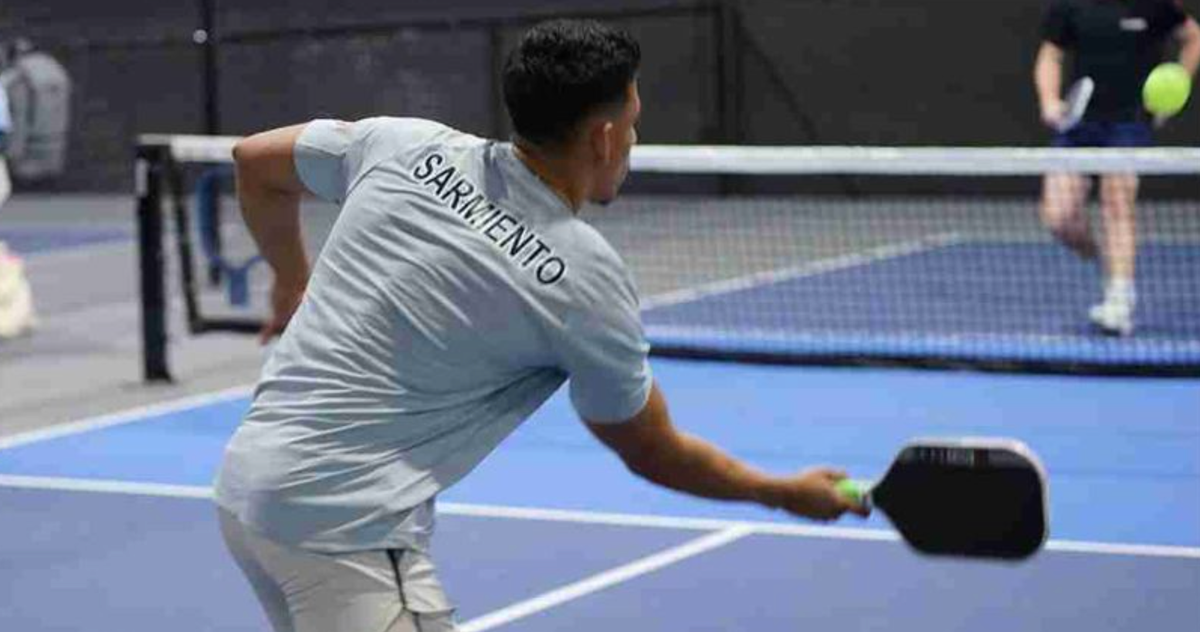
The Fix: Paddle Down, Catch It With Your Shoulder
Here is the correction. Get your paddle down early, before the ball arrives, and then simply let the ball meet the paddle face as your shoulder moves through.
The phrase "catch it with your shoulder" is the key mental image. Your shoulder is doing the work. The arm is just along for the ride.
When you lead with the shoulder instead of the wrist or elbow, you automatically produce a shorter, more controlled swing path.
The backspin still happens. You just get it through body rotation rather than a dramatic downward chop.
Here is the step-by-step process for the corrected swing:
- As the ball leaves your opponent's paddle, drop your own paddle below contact height immediately
- Keep the paddle face slightly open, angled back toward you
- Let your shoulder begin rotating toward the target as the ball approaches
- Contact the ball as your shoulder moves through, not before or after
- Follow through low and toward the kitchen, not upward or across your body
The result is a compact, controlled motion that produces consistent backspin without the wild variability of a full chop swing.
 The Dink Media Team
How These Two Fixes Work Together
Stance and swing path are not independent problems. They feed each other.
When your stance is open, you instinctively compensate by swinging harder, which leads to the chop.
When your stance is correct, your body can rotate, which makes it natural to keep the swing short and let the shoulder do the work.
Fix the stance first and the swing often corrects itself. That is the sequence to follow when you take this to the court.
If you are still struggling after fixing your mechanics, the issue may be why players miss the third shot drop for other common reasons worth reviewing.
What Does a Good Slice Drop Actually Feel Like?
It feels almost effortless. That is how you know it is right.
When the stance and swing path are correct, the ball seems to just roll off the paddle with minimal effort.
There is no grunt, no dramatic motion, no sense that you forced anything.
Players often describe their first clean slice drop as feeling like they "did nothing."
That is the right feeling. Chase that sensation, not the feeling of working hard at the shot.
 The Dink Media Team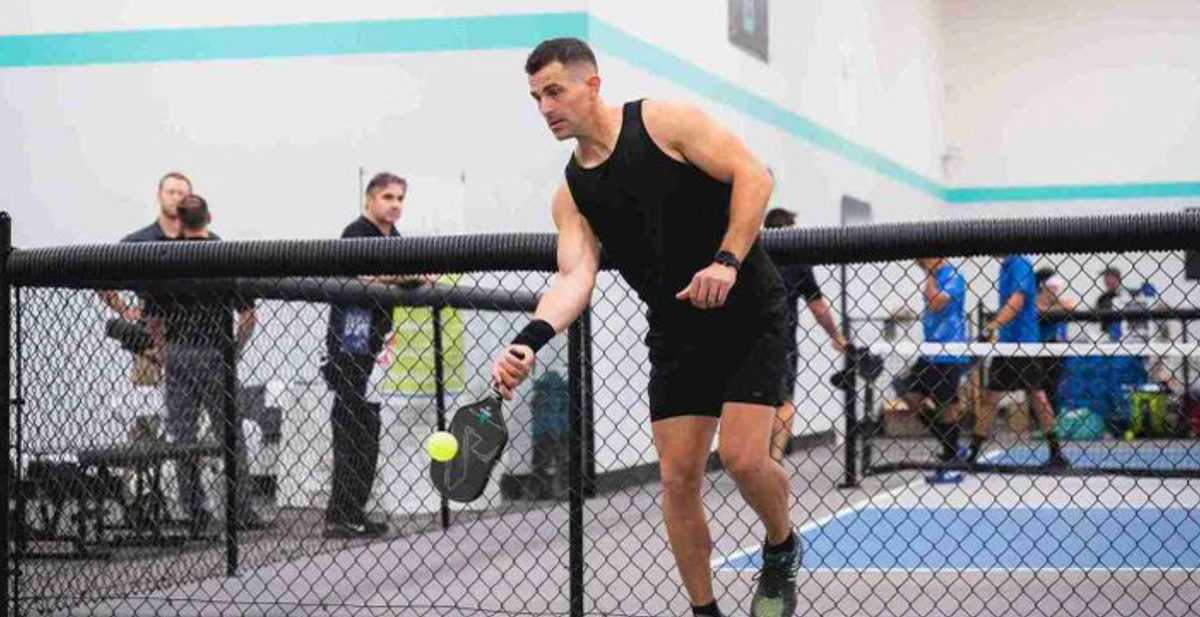
Practice This Before You Try It in a Match
Do not take these fixes straight into competitive play. Spend a few minutes in a drill setting first.
Have a partner feed you soft balls from the kitchen line. Focus entirely on stance and shoulder rotation. Ignore where the ball lands at first.
Just build the movement pattern.
Once the motion feels automatic, start paying attention to depth and placement. That progression, movement first then placement, is how mechanics actually stick.
You can also study the only landing spot that consistently works for the third shot drop to sharpen your targeting once the mechanics are solid.
For players who want a longer training framework, this 90-minute drilling blueprint from a PPA pro gives you a structure to build drop consistency alongside the rest of your game.
 The Dink Media Team
Common Questions After Making These Changes
Some players fix the stance and swing and then ask: why does the ball still feel flat?
Flat drops usually mean the paddle face is too vertical at contact. Keep it slightly open, angled back toward you, and the backspin will load naturally.
You should see the ball skid low off the paddle rather than jumping forward.
Others find the ball going too short after fixing the chop. This happens because the chop was actually providing more forward energy than they realized.
Add a touch more shoulder rotation forward and the depth will return without sacrificing control.
If you are also seeing errors creep in from losing points right after the serve on the third shot drop, that resource addresses the specific pressure of executing this shot in a real game situation.
 The Dink Media Team
Why Most Players Never Fix This
Most players spend their practice time hitting more balls, not fixing what is wrong with the balls they already hit. The chop feels productive so they keep doing it.
The stance feels natural because they learned to play with an open stance from the start. Nobody told them it was the source of their inconsistency.
Two small adjustments, feet in line with the target and paddle down early with the shoulder leading, separate players who have a reliable slice drop from those who spray it everywhere.
These kinds of fundamental mistakes are exactly the ones that hold players back longer than they should.
The fix is not complicated. It just requires actually making the change instead of hoping the chop eventually becomes consistent. It will not.
Change the inputs and the results will follow.
If you want to see how the third shot drop connects to the broader tactical picture, these three placement rules show you exactly where to aim once your mechanics are cleaned up.
And for players who want to understand the full role of the drop in building pressure from the baseline, the push drop technique that Ben Johns uses to advance every time is worth studying as a next step.
Frequently Asked Questions
Why does my third shot drop keep going into the net?
A drop that goes into the net usually means your paddle face is too closed at contact or your swing is starting too high and losing energy before the ball. Keep the paddle face slightly open and get it below ball height before the ball arrives, not during the swing.
Should I use a slice drop or a topspin drop on the third shot?
A slice drop is generally easier to control because the compact swing path gives you fewer variables to manage. Topspin drops require more timing precision and a longer swing, which increases error risk under pressure. Start with the slice and build from there.
How do I practice the third shot drop by myself?
Drop feeding is one of the most effective solo methods. Stand at the baseline, drop the ball and let it bounce, then practice the stance and shoulder rotation on each rep. Focus on compact swings and consistent paddle position before worrying about placement.
What counts as a good landing zone for the third shot drop?
The ball should land inside the kitchen, ideally in the middle third closest to the net. Landing too deep gives your opponents a ball at a comfortable height. A ball that dies near the net line forces them to scoop upward and gives you time to move forward.
Can I use a slice drop if I am coming from a tennis background?
Yes, but you will need to actively unlearn the big backswing that tennis encourages. Tennis slice shots use much more arm and shoulder travel than the pickleball version requires. Shorten the swing intentionally and let the body rotation do more of the work than you are used to.
Love Pickleball? Join 100k+ readers for free weekly tips, news & gear deals.
Subscribe to The Dink