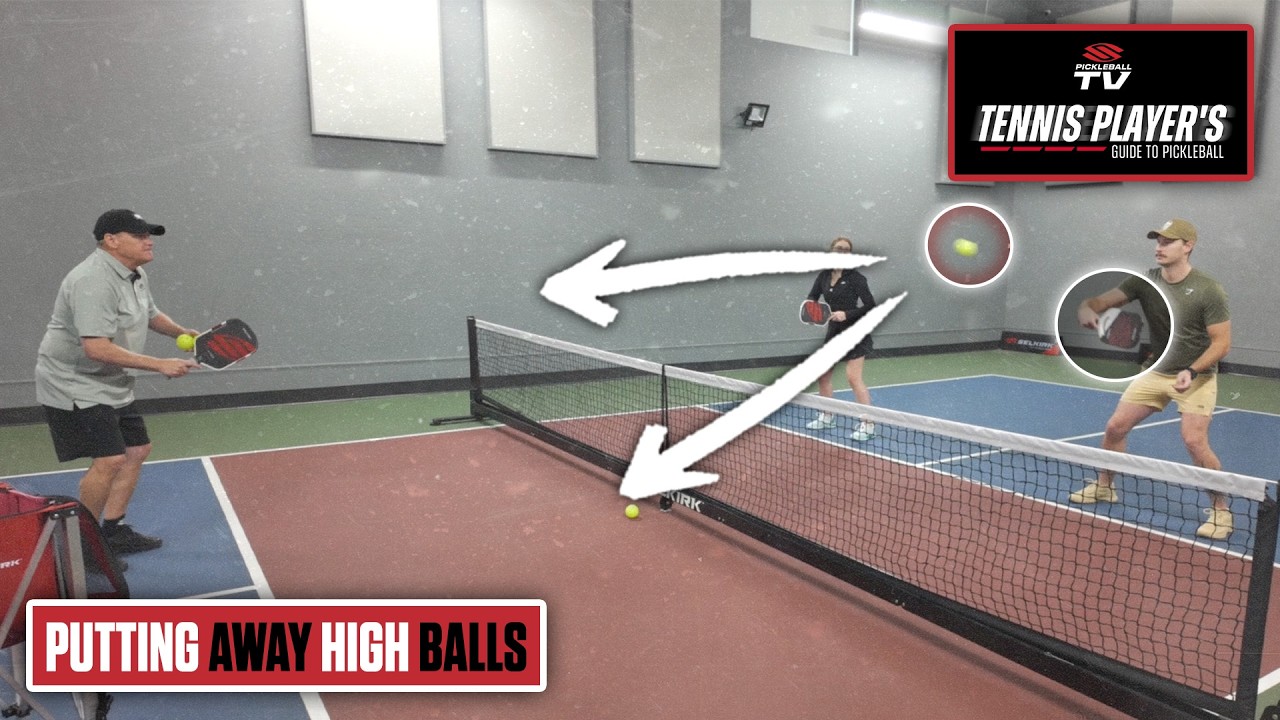
The pickleball finishing shot feels easy until you blow it into the net or send it wide. Here is exactly why that keeps happening and what to do instead.
The pickleball finishing shot should be the easiest ball you hit all point. The ball is high, you are at the kitchen, and all you need to do is put it away.
But instead you muscle it into the net or dump it wide, and the rally keeps going when it should be over.
Most players make this harder than it needs to be.
They swing too hard, drop their wrist, or use the wrong grip entirely, especially if they are coming from a tennis background.
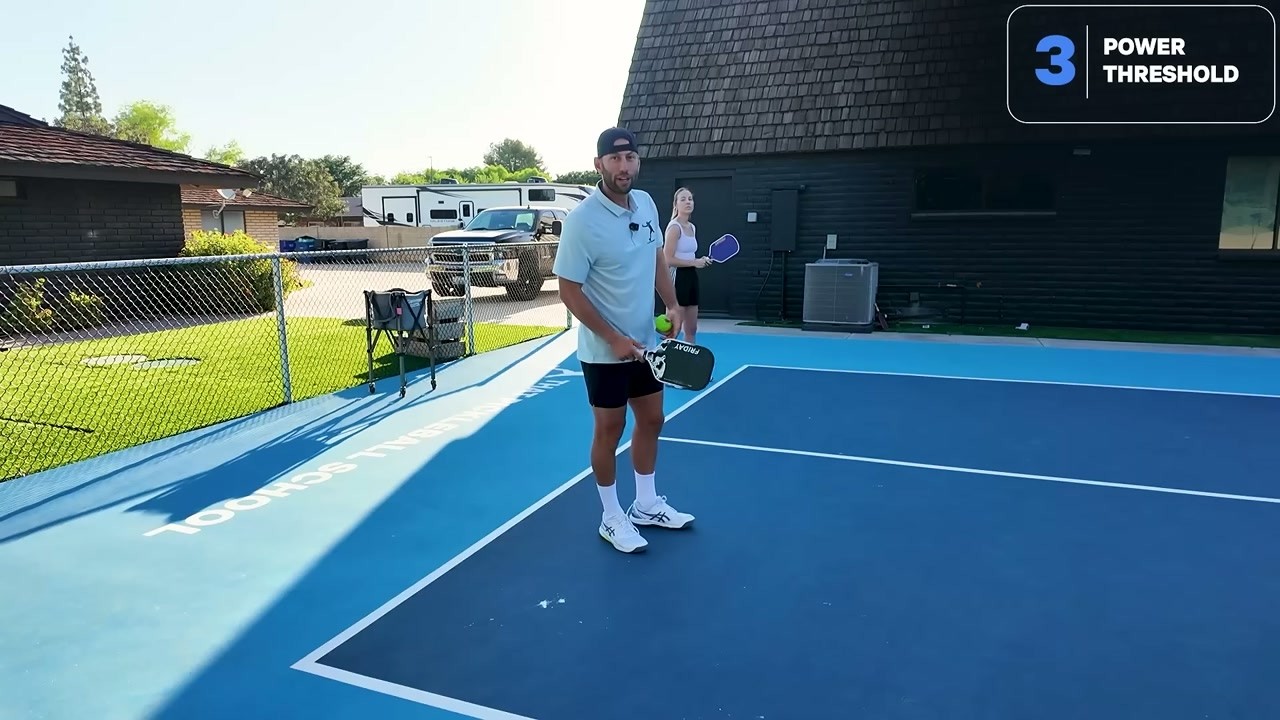
This breakdown comes from Selkirk TV on YouTube, where coach Matthew Haley walks students Chris and Kyla through the exact mechanics of finishing shots at the non-volley zone.
Here is what actually works.
Love pickleball? Then you'll love our free newsletter. We send the latest news, tips, and highlights for free each week.
The Grip Issue That Wrecks Most Finishing Shots
If you played tennis before picking up a paddle, your instinct is to shift into a topspin forehand grip when a high ball comes.
That grip made sense on a tennis court. It will cost you points in pickleball.
At the kitchen line, you want a continental grip. Your hand forms a V shape right down the center of the handle, similar to how you would hold a hammer.
The continental grip covers forehand, backhand, and every quick hand exchange in between without rotating your hand.
It also lets you manipulate your wrist angle to close the paddle face on a high ball without a full swing.
Not sure where to start?
This breakdown of tennis habits that hurt your pickleball reset covers grip as a foundational fix, and the three pickleball grips and when to use them shows exactly where continental fits.
Where Should Your Paddle Be Before the Ball Arrives?
Higher than anywhere else on the court. The ball travels fast at close range, and a low starting position means you are already late before the shot even starts.
Keep your elbows out and your paddle up around chest height.
The moment you drop your hands while waiting, you hand yourself a recovery problem instead of an attack opportunity.
That habit separates players who finish from players who pop the ball up and pray.
Your ready position is costing you points goes deeper on what low hands actually give away, and these kitchen line volley fixes cover the rest of the setup.
The Sweeping Motion: What It Is and Why It Works
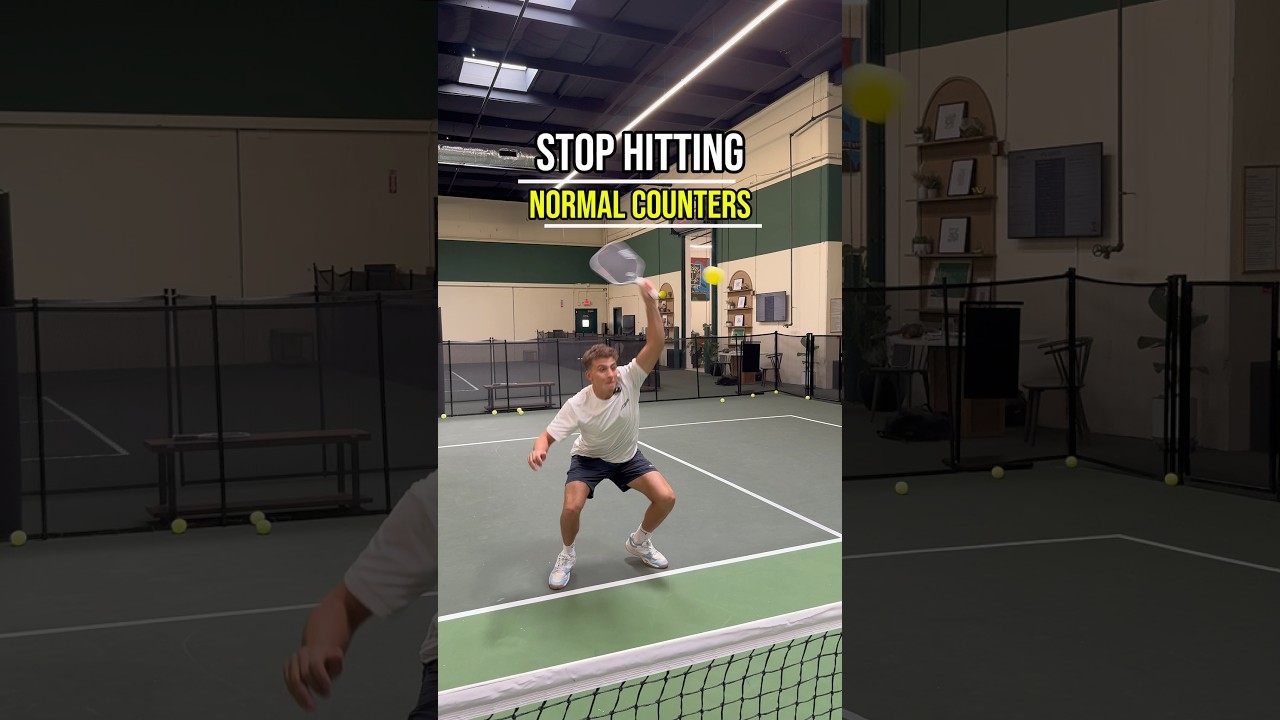
When a ball comes to you at shoulder height or above, you do not need a big swing. What you need is a sweeping motion with a slightly closed paddle face.
Here is the sequence:
- Take a small shoulder turn as the ball approaches.
- Close your paddle face slightly so it angles slightly downward toward the court.
- Sweep across the ball with a firm wrist rather than a loose, whippy one.
- Finish with your paddle high, not dropped toward the ground.
The finish position matters more than most players realize.
If your paddle ends up pointing down after contact, your shots will consistently go into the net or drift short.
Keep the paddle high through the swing and you redirect the ball with control rather than brute force.
 The Dink Media Team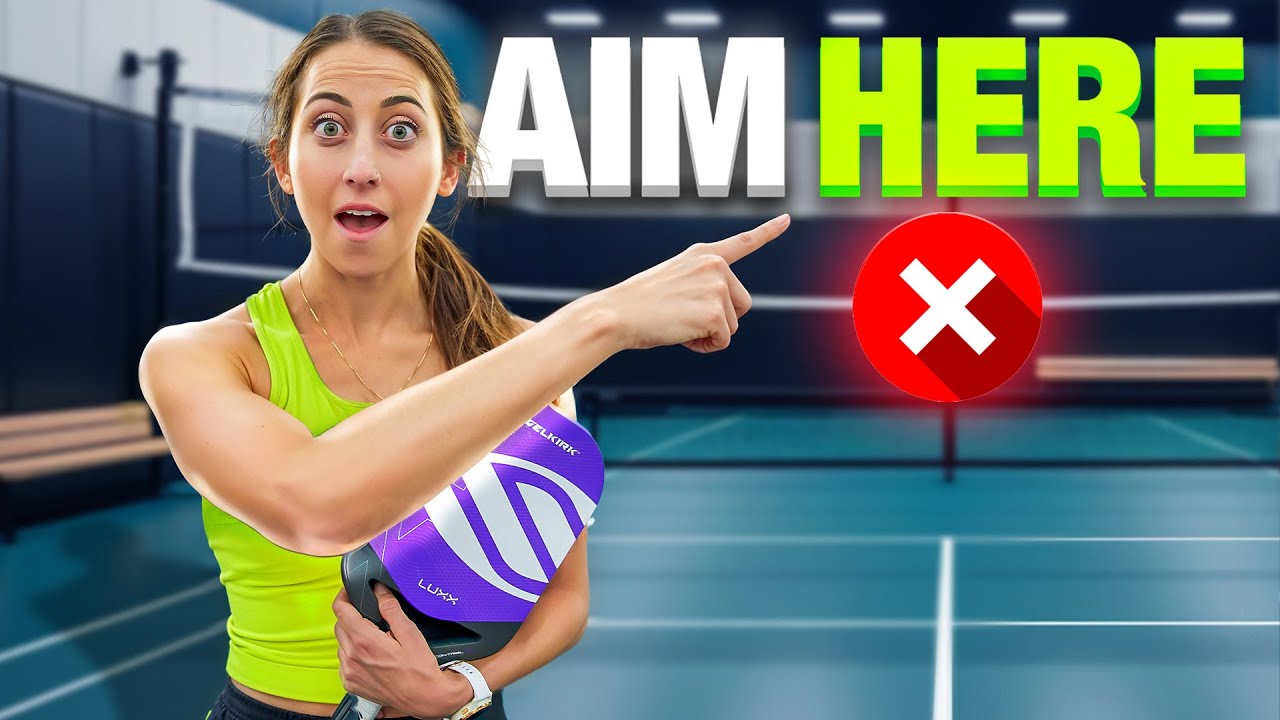
Why Is a Firm Wrist So Important on This Shot?
A floppy wrist is the single most common reason players miss finishing shots they should be putting away.
When your wrist moves independently of your arm during the swing, you introduce a timing variable that is very hard to control under pressure.
Think of it like your wrist is in a light cast.
It can still move slightly to close the paddle face, but it should not be snapping through the ball the way you might flick a topspin shot in tennis.
The coach in this video made the correction with Chris directly: less wrist action means fewer things can go wrong.
That is not just coaching advice, it is physics. Every extra moving part in your swing is another chance for the timing to break down.
Here is a detailed look at what wrist lag actually does to your swing, which explains why firm and controlled beats loose and powerful every time at the kitchen.
 The Dink Media Team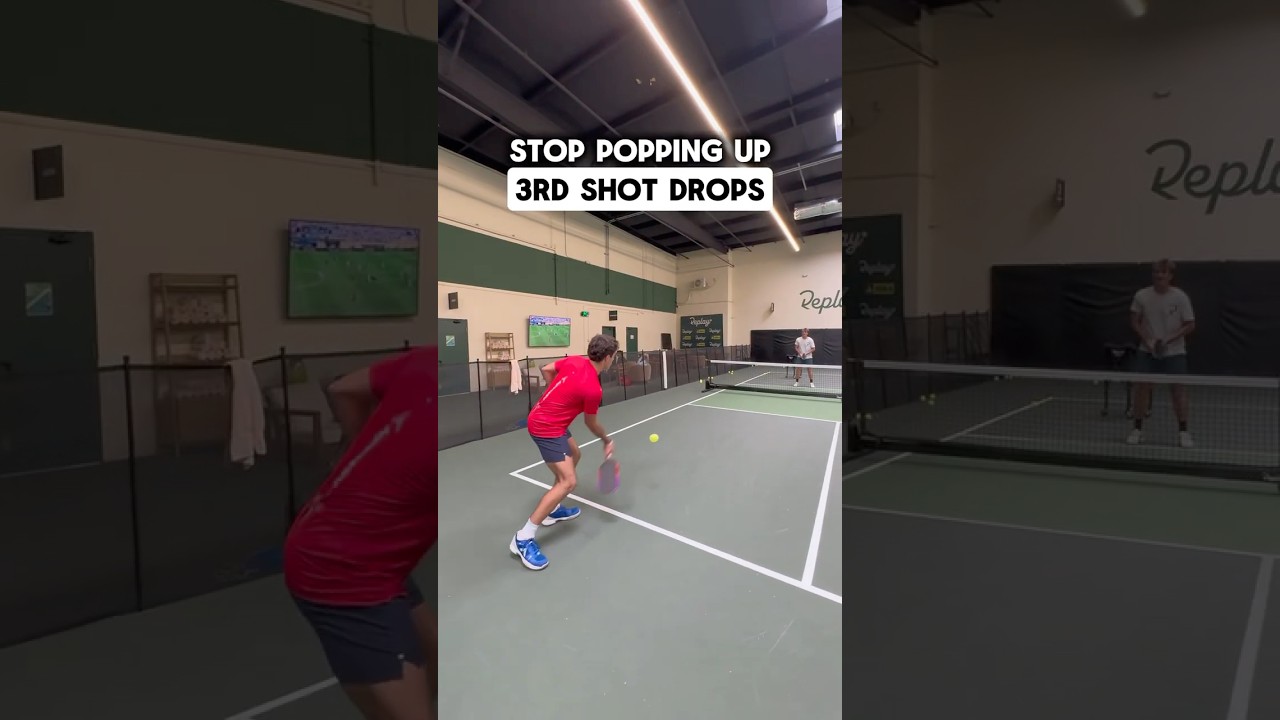
The Teeter-Totter Rule: Contact Height Decides Who Wins
Here is the concept that ties all of this together. Picture a teeter-totter. The player who makes contact at the higher point gets to swing down.
The player who makes contact at the lower point is forced to swing up. The player swinging down wins that exchange roughly 78 percent of the time.
This means your job at the kitchen is not just to hit the ball. Your job is to be the team that contacts the ball at a higher point than your opponents.
Once you start thinking about contact height as a strategic position rather than just a mechanical detail, your shot selection changes completely.
You stop attacking balls that are dropping below the net tape. You start waiting for the ball that is at your shoulder.
And when that ball comes, you finish it with a downward angle instead of trying to lift and muscle it over the net.
This pairs directly with understanding how ball height should determine your shot selection on every single point.
 Eric Roddy
Where Should You Actually Aim?
Power without a target is just chaos. When you get a high ball and are ready to finish, aim for one of three spots:
- The left elbow of your opponent. This is a natural dead zone between forehand and backhand that creates communication problems in doubles.
- The hip area. Similar reasoning as the elbow. A ball aimed at the body is harder to reset cleanly than one you can reach at arm's length.
- The middle of the court in doubles. When both opponents are at the line, the middle creates hesitation about who takes the ball.
The middle shot is especially nasty because it exploits the gap between two players.
Attacking the middle gap is one of the highest-percentage finishing strategies at any level, and this guide to attacking the right spots on your opponents covers the rest of the map.
 The Dink Media Team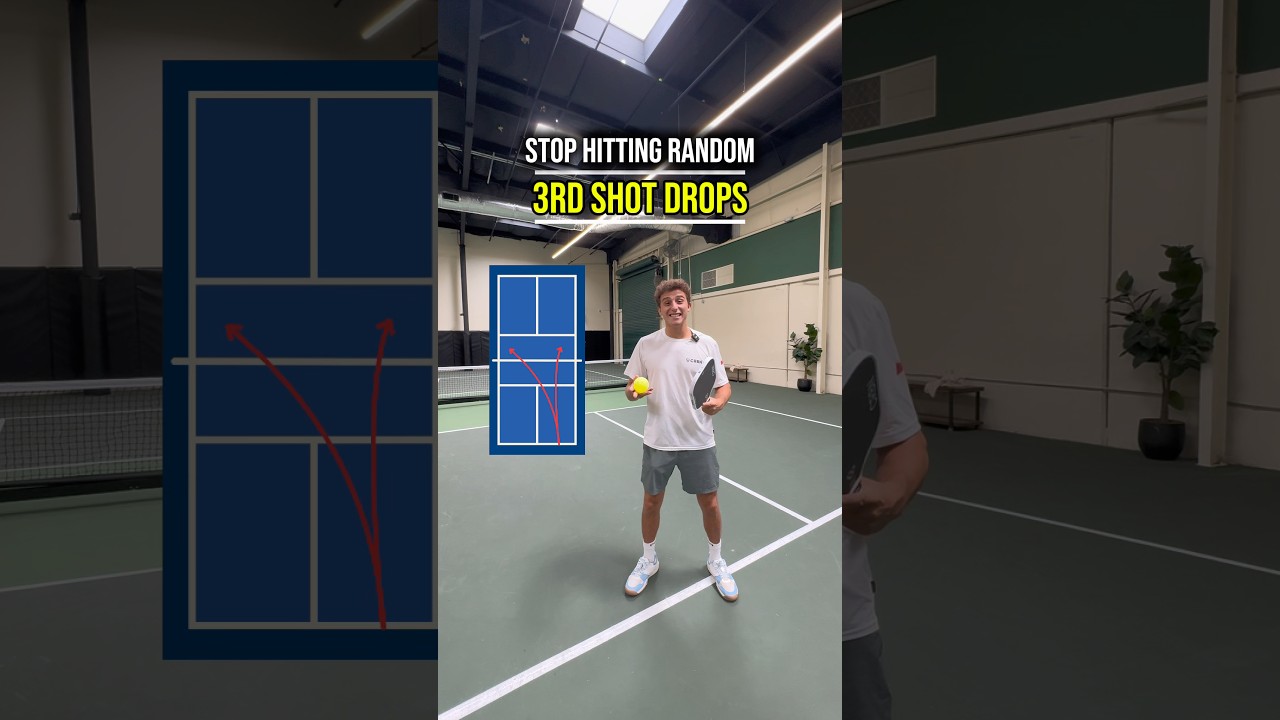
Backhand Finishing Shots: The Same Rules Apply
Everything above applies to your backhand side too.
Keep the paddle high, use a sweeping motion with a closed face, and finish with the paddle elevated rather than dropping it toward the floor.
Where players get into trouble on the backhand is letting the paddle finish low and across the body.
That position leaves you completely exposed to the next ball. If your opponent is fast enough to get your first shot back, you are not ready.
Finish high, stay balanced, and you are already in position for whatever comes next.
For players working on a two-handed backhand or a flick option from the backhand side, fixing your paddle face on the backhand flick is a useful companion skill to the finishing shot mechanics here.
 Alex E. Weaver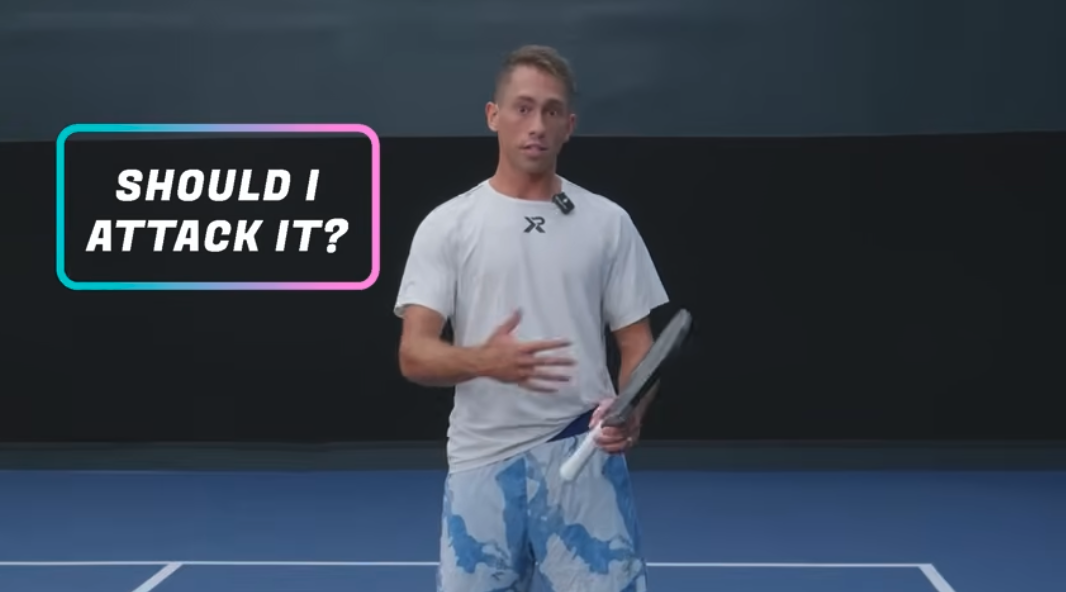
How to Practice This With a Partner
The best way to ingrain this shot is to start collaborative before going competitive.
Here is a simple drill structure:
- Both players stand at their respective kitchen lines and trade controlled dinks at a medium pace.
- When a ball rises above net height, the player with the advantage takes the finishing shot with the sweeping motion and a target in mind.
- Call out where the ball landed so both players build awareness of contact height and angle.
- Gradually increase pace as the mechanics feel more automatic.
The key word in step one is controlled. You are not trying to overpower each other from the start.
You are training yourself to recognize the high ball opportunity and respond with the right mechanics, not just the hardest swing you can produce.
If you want a more structured practice framework, these two-person drills build real game skills and translate directly to kitchen line finishing situations.
 The Dink Media Team
The 70-80 Percent Rule for Finishing Shots
You do not need full power. Swinging at 100 percent is the fastest way to introduce the wrist slop and timing errors that send the ball wide or long.
Aim for 70 to 80 percent of your maximum pace.
That range makes the shot difficult to return while keeping your mechanics clean enough to land it where you want.
Control and angle beat power every time at the kitchen.
A put-away at 75 percent aimed at the left elbow is harder to handle than a ball crushed at full force into the middle.
This breakdown of why smart shot decisions beat power explains why that ceiling wins you more points, and how to stop being a banger covers the same lesson from the soft-game side.
Tennis players need to accept this faster than almost any other adjustment.
The power that served you well on a full-size court becomes a liability when you are standing seven feet from your opponent.
Here is the skills progression that turned one tennis player into a 5.0, including where the adjustment usually breaks down.
 The Dink Media Team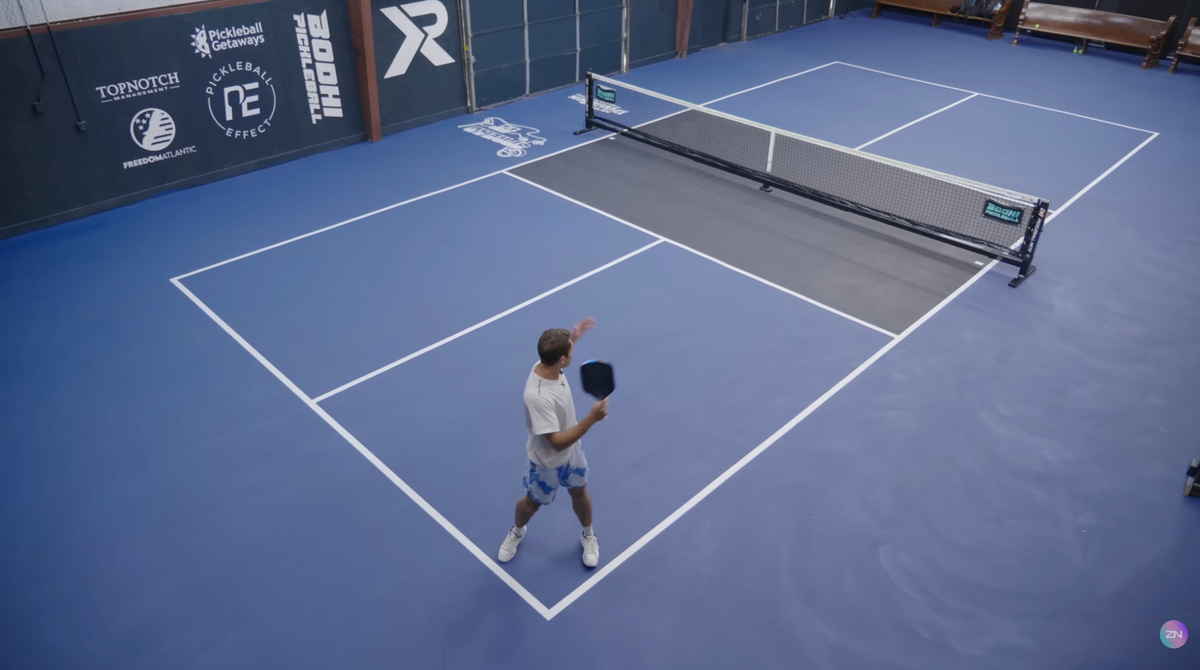
Quick Summary: What to Lock In
If you take nothing else from this, keep these three things in your head every time a high ball comes at the kitchen:
- Continental grip. Not your tennis topspin grip. The V goes down the center of the handle.
- Firm wrist, closed face, finish high. Sweep across the ball and do not let your paddle drop after contact.
- Pick a target before you swing. Left elbow, hip, or middle of the court. Aim there at 70 to 80 percent pace and commit.
If you want to see what shot selection looks like from a bigger picture, the stoplight rule for pickleball shot selection gives you a simple framework for deciding when to attack, when to reset, and when to wait for a better ball.
Frequently Asked Questions
What grip should I use for pickleball finishing shots at the kitchen?
Use the continental grip for all volleys and finishing shots at the non-volley zone. It lets you cover forehands, backhands, and quick exchanges without rotating your hand on the paddle. Avoid the topspin forehand grip you may have used in tennis because it limits your range of motion significantly at close range.
Why do I keep hitting my finishing shots into the net?
The most common reason is a dropping wrist during the swing, which closes the paddle face too much and redirects the ball downward before you want it to go down. Keep your wrist firm and finish with your paddle high, not pointed toward the ground. Also check that you are making contact above net height rather than trying to finish a ball that has already dropped below your ideal contact zone.
How hard should I hit a put-away shot in pickleball?
Aim for 70 to 80 percent of your maximum pace. That range keeps your mechanics clean and your accuracy up while still generating enough pace to make the shot difficult to return. Swinging at full power increases your margin for error dramatically at close range.
Where is the best place to aim a finishing shot in doubles pickleball?
Target the left elbow, the hip area, or the middle of the court between both opponents. The elbow and hip create body shot problems that are hard to reset cleanly. The middle creates hesitation about who takes the ball, which often results in neither player taking it well.
What is the continental grip in pickleball?
The continental grip is the neutral paddle grip where the V shape formed by your thumb and index finger sits directly on top of the paddle handle, similar to holding a hammer. It is the preferred grip for net play because it requires no adjustment between forehand and backhand shots. Most instructors recommend it as the default grip for anyone playing at the kitchen line.

Love Pickleball? Join 100k+ readers for free weekly tips, news & gear deals.
Subscribe to The Dink