Most pickleball players think about where to aim but never think about how high to aim. This red, yellow, green height system fixes your pickleball shot selection instantly.
If your pickleball shot selection feels like guesswork, it probably is. Most players think only about where to hit the ball, not how high over the net to hit it.
That missing piece is costing you points. Not because your mechanics are broken, but because you have no clear target above the net on different shots.
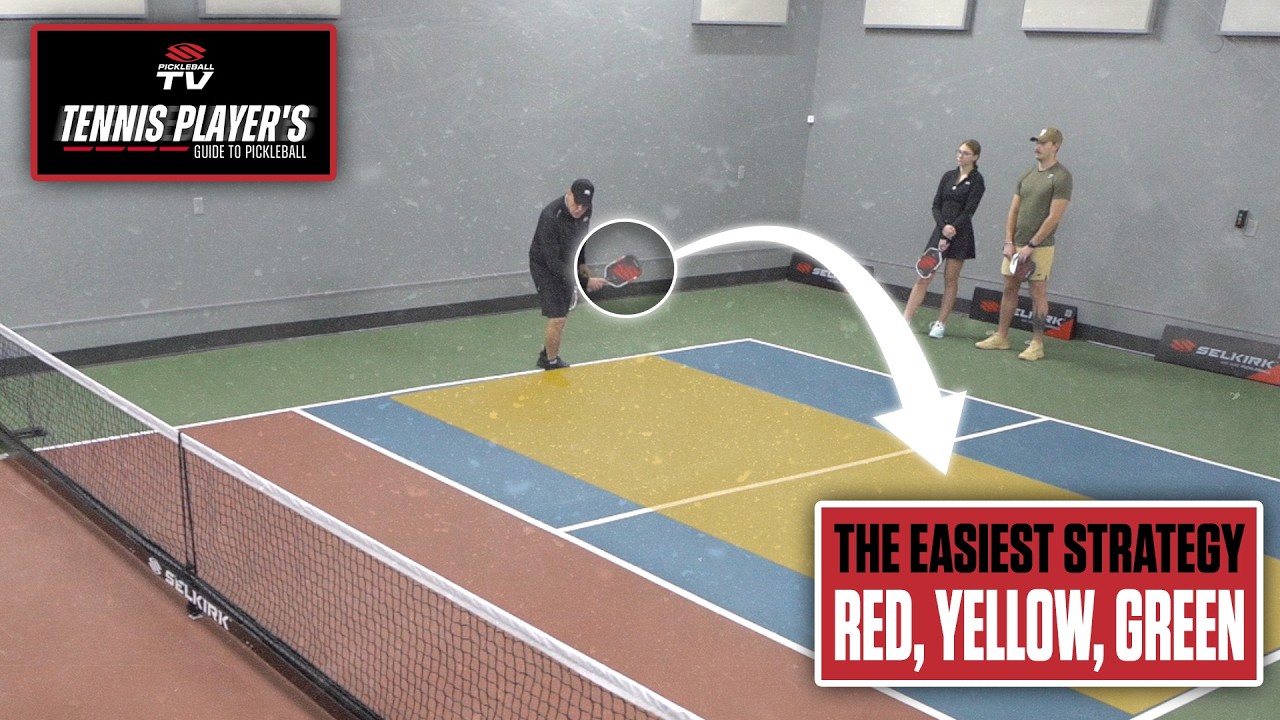
This color-coded system, the red, yellow, and green framework, gives you a simple mental structure for every ball you face.
The content below comes straight from Selkirk TV on YouTube, where this system is broken down on the court with live reps and real feedback.
Love pickleball? Then you'll love our free newsletter. We send the latest news, tips, and highlights for free each week.
Why Net Height Is the Missing Half of Pickleball Shot Selection
Every ball you hit either clears the net or it doesn't. That part is obvious.
What most players ignore is that how much clearance you give that ball should change based on the situation.
Hitting too low while scrambling leads to net errors. Hitting too high when you have a chance to finish gives your opponent time to reset.
The height target you choose is a direct reflection of how much risk you're managing at that exact moment.
Since the net sits at 34 inches in the center, according to the official USA Pickleball rulebook, every height target in this system is measured off that fixed number.
This is exactly what makes pickleball shot selection more than picking a direction.
You need a height framework built into your decision-making, and this three-color system gives you one.
It's the same structural thinking behind the four key strategies to winning in 2026.
Think of it like a traffic light. Red means survival. Yellow means setup. Green means go.
What Is the Red Zone and When Should You Use It?
The red zone is your survival mode. You're not trying to win the point here. You're trying to stay alive in it.
Picture this: someone rips a serve that pulls you out wide.
Or you're caught at the baseline while your opponent is at the kitchen line and they put an overhead right at you.
You're not in position, you're off balance, and all you need is one more shot to reset the rally.
In those moments, the red zone applies. Here's how to think about it:
- Height target: approximately three paddles stacked on top of the net
- Goal: get the ball back with maximum clearance, not depth or pace
- Paddle face: open it up and let the ball climb
- Follow through: swing upward, not across
Depth is a bonus in the red zone. Height is the requirement.
If you're panicking and trying to rip a low, flat ball when you're scrambling, you will lose that point far more often than you should.
The key adjustment is slowing yourself down mentally. Take a breath, open that face, and send it up.
That ball going high gives you time to recover your position and gives your partner a chance to stay in the point.
For tennis players making the transition to pickleball, this is often the hardest habit to build. You're conditioned to drive through the ball even under pressure.
Pickleball punishes that instinct. Tennis habits can seriously hurt your pickleball reset, and the red zone is where that tends to show up first.
How Does the Yellow Zone Set Up Your Best Shots?
The yellow zone is where you build the point. You're not surviving, but you're not finishing either. You're constructing.
This is the most common zone you'll operate in during a rally.
You're in the transition area, maybe coming in behind a return, maybe hitting a third shot drop, maybe working through a dinking exchange.
The yellow zone is where your decision-making becomes critical.
Height target in the yellow zone: two paddles high over the net.
You still want clearance because any ball in the net is a lost point. But this height gives you more control and makes it harder for your opponent to attack.
Here are the shots that live in the yellow zone:
- Third shot drops hit with a slightly open face and soft hands
- Transition zone dinks that keep you moving forward
- Topspin approaches going to the middle to neutralize your opponents
- Short return follow-ups where you're closing the net
The yellow zone is also where mastering the transition zone pays off the most.
If you rush through this phase trying to skip straight to a green ball, you'll gift your opponent an easy put-away.
A useful way to think about yellow: you're setting the table, not eating yet.
 The Dink Media Team
The Green Zone: When to Attack and How to Finish
The green zone is your finishing zone. This is where all the patient groundwork pays off.
You've survived a tough moment, you've built the point through the middle, and now you have a ball you can actually do damage with.
Height target in the green zone: one paddle high over the net. You're hitting down, finding seams, and going with pace or placement to end the rally.
Green zone mechanics look different from red or yellow:
- Close the paddle face slightly to keep the ball from climbing
- Sweep across the ball for speed or angle
- Target open court, the opponent's hip, or the middle seam
- Commit to the shot, hesitation leads to errors
The green zone also applies to dinking when you're at the kitchen line and keeping the ball low.
A well-placed dink that barely clears the net and dies in the kitchen is a green zone shot, not because it has pace, but because the height and placement create real pressure.
This is also where ball height rules start to click together as a full system rather than isolated tips.
One common mistake: players go green when they should still be in yellow.
If you're not fully in position, if your balance is off or your opponent is already set, forcing a green ball is how you hand them the point.
Be honest about what color the situation actually calls for.
 The Dink Media Team
How Do You Practice the Red Yellow Green System?
You can start drilling this framework immediately, even before you have it fully memorized.
Have a partner call out the color as they feed you the ball. Your only job is to match the height target to the color called.
Here's a simple progression to try:
- Start at the baseline. Have your partner feed tough, wide balls. Practice hitting red zone clearance every time.
- Move up to the transition zone. Take mid-court feeds and practice two-paddle height with controlled placement.
- Step into the kitchen area. Practice green zone dinks and finishing shots with one-paddle height and a slightly closed face.
- Mix the colors randomly. Have your partner call the color just before contact so you're forced to react and adjust.
That last drill is where the real progress happens.
When you can hear "red" and immediately open your face and go high, or hear "green" and compress through the shot, the system becomes automatic.
You stop thinking and start responding.
If you want to sharpen this kind of reactive decision-making, two-person pickleball drills are the fastest way to get there.
 The Dink Media Team
What Does This System Change About How You Think on Court?
Most players make shot selection decisions reactively, without any framework. The ball comes and they just hit it.
The red, yellow, green system gives your brain a structure to work within before you even make contact.
That structure reduces panic.
When you're in a scramble and you already know that a red ball means high clearance and open face, you don't have to solve a problem in real time.
You just execute a known response.
For anyone who feels like your progress has stalled, this is exactly the kind of structured thinking that separates improving players from plateaued ones.
The system also pairs well with understanding shot selection on a broader scale. Height is one variable.
Direction, pace, and spin are others. Once height becomes automatic, your brain has more capacity to process the rest.
The big picture is this: you win more points by making fewer mistakes, not by hitting more winners.
- The red zone keeps you in rallies you should survive.
- The yellow zone keeps you building pressure without giving anything away.
- The green zone lets you close out the points you've earned.
- That's the traffic light. Red, yellow, green. Stop, set up, go.
If you want to see how this height awareness connects to finishing shots at the net, look at how players like Anna Leigh Waters and Tyra Black control the kitchen line.
Their green zone mechanics are almost never high. They compress the ball down and use placement to end points, rarely power.
Using the kitchen line as a target instead of just a boundary is a big part of that.
Build the habit of asking yourself what color this ball is before you swing. That one question will clean up more errors than almost any mechanical fix.
And if the red zone is where your unforced errors tend to live, fixing your return of serve is a natural place to apply this system first.
Returns under pressure are classic red zone situations, and most players hit them way too low.
Start there. Build the framework one color at a time. Your shot selection will sharpen fast.
Frequently Asked Questions
What is the red yellow green system in pickleball?
The red, yellow, green system is a height target framework that assigns a net clearance level to each type of shot situation. Red means maximum height for survival, yellow means moderate height for setup, and green means low clearance for finishing shots. It was adapted from a system originally developed by legendary tennis coach Nick Bollettieri.
How high should I hit the ball over the net when I'm scrambling?
In a scramble situation, aim for a red zone height of roughly three paddles stacked above the net. Your only goal is to keep the ball in play and give yourself time to recover position. Depth and placement are secondary when you're fighting to survive the rally.
When should I try to finish a point in pickleball?
Only go for a finishing shot when you're in a strong position and the ball is attackable. The green zone applies when you can hit down on the ball with one paddle of clearance or less. Trying to finish from a defensive position is one of the most common reasons players give away free points.
Can this system help tennis players transitioning to pickleball?
Yes, and it's especially useful for tennis players who tend to drive the ball flat even under pressure. Pickleball punishes low, flat shots from defensive positions far more than tennis does. The red zone height concept directly addresses that habit by giving a clear visual target to aim for instead of reverting to muscle memory.
How do I practice pickleball shot selection using height targets?
The fastest way is to have a partner call out a color just before they feed you the ball, then match your height to the color. Start with isolated zones at the baseline, transition area, and kitchen line before mixing them together. Two-person drills built around color calls will make this system automatic faster than solo practice.

Love Pickleball? Join 100k+ readers for free weekly tips, news & gear deals.
Subscribe to The Dink