
How to Attack the Transition Zone in Pickleball: 4 Offensive Patterns
Most players treat the transition zone like a minefield: something to escape, not exploit. These 4 offensive patterns will change how you approach the transition zone attack in pickleball and show you exactly how to generate winners from mid-court.
The most dangerous place on a pickleball court isn't the kitchen. It's the transition zone, and most players have no idea how to use it offensively.
The transition zone is the area between the non-volley zone (NVZ) line and the baseline, roughly the middle third of the court.
Most coaching tells you to get through it fast, reset if things get hot, and survive until you reach the kitchen line. That's solid advice. But it's incomplete.
A smart transition zone attack in pickleball can win points outright, force errors, and keep opponents off-balance in ways that purely defensive play never will.
Here's the thing: the transition zone isn't just a hallway to the kitchen. It's a weapons room. You just need to know which ones to grab.
Love pickleball? Then you'll love our free newsletter. We send the latest news, tips, and highlights for free each week.
What Is the Transition Zone in Pickleball?
The transition zone in pickleball is the mid-court area that stretches from roughly 7 to 14 feet behind the NVZ line.
It's the space you're moving through on your way to the kitchen after a serve, return, or drop shot.
Most players know it as "no-man's land": the place where bad things happen. And they do happen, but not because the zone is inherently dangerous.
They happen because players arrive there without a plan.
According to USA Pickleball's official playing guide, transitioning efficiently to the net is a foundational element of advanced play.
The problem is that "efficiently" doesn't mean "passively."
Your goal in the transition zone is still to reach the NVZ line.
But the smartest players in the game also use the transition zone to create problems before they get there.
Think of it as controlled aggression. You're not camping mid-court. You're making them pay while you advance.
Understanding court positioning is the foundation before anything offensive happens in mid-court.
Without knowing where you're supposed to end up, you won't know how to use the space you're passing through.
Why Most Players Struggle with Transition Zone Attacks
Most players freeze up in the transition zone because they've been told to fear it. The standard advice: drop, reset, get to the kitchen. is correct as a baseline.
But treating it as the only option is what keeps intermediate players stuck at a 4.0 ceiling.
Research on reaction time and court sport performance published in the Journal of Sports Sciences (2025) shows that athletes who develop pattern-recognition skills make faster and more accurate decisions under pressure.
The transition zone in pickleball is exactly that kind of pressure environment. If you've drilled only one response (the drop), you've trained only one pattern.
That makes you predictable.
The fix isn't to abandon the drop. It's to build a menu of options so your opponent never knows what's coming. That's what these four offensive patterns do.
Each one starts from the transition zone and creates an attacking opportunity without abandoning court progression.
Check out this breakdown of drive vs. drop from the fifth shot. It maps perfectly onto the same decision-making framework you'll use here.
Transition Zone Attack Pickleball Pattern #1: The Punch Volley Drive
The pattern: You're moving forward, the opponent's shot has pace but limited depth, and you intercept it mid-court with a compact, aggressive punch volley aimed down the line or cross-court at their feet.
This is the most common transition zone attack in pickleball, and it works because your opponent expects a reset. When the ball is waist-high and you're at the mid-court line, a flat punch volley to the sideline forces a defensive reply and buys you another step toward the kitchen.
The technique matters here. The punch volley drive is not a full swing. It's a short, explosive weight transfer through the ball using a firm wrist. Think of it as redirecting, not generating. The swing volley is a related but more advanced shot. Save that for when you're properly set and the ball is at shoulder height.
When to use it: Ball arrives between knee and shoulder height. You're within 2–3 steps of the NVZ line. Your weight is moving forward, not lateral.
The target: Your opponent's backhand hip in doubles. The open sideline in singles. Cross-court angles create the most geometric pressure from mid-court.
Pickleball is full of patterns, and recognizing when the punch volley fits is one of the fastest ways to improve your transition game.
 The Dink Media Team
Transition Zone Attack Pickleball Pattern #2: The Approach Speed-Up
The pattern: You're advancing through the transition zone after a third shot drop. Your opponent's return dink or soft response is floating a little high.
Instead of resetting, you rip it.
This is the mid-court speed-up, and it's a weapon that pros use constantly.
The key is shot selection: you're only hitting this when the ball is above net height and in front of your body.
Anything lower than that, you're better off dropping into the kitchen.
The approach speed-up works because it catches opponents in their own transition.
If they hit a quality drop and expected you to float it back softly, they may still be repositioning when your aggressive reply arrives.
Research on anticipatory timing in racket sports consistently shows that unexpected pace changes generate the most errors, and this exactly that, applied to pickleball.
The stroke is a compact forehand topspin snap, aimed at a 45-degree angle into the opponent's body or the open court.
You're not trying to blast a winner. You're trying to force a pop-up.
How to respond to the perfect drop covers the opposite side of this equation, which makes it required reading once you start threading this into your game.
Pro tip: After you speed up, don't stop moving. Crash toward the kitchen line. The point isn't always won on the speed-up itself.
It's won on the next shot when your opponent's pop-up response sits up waiting for you.
 The Dink Media Team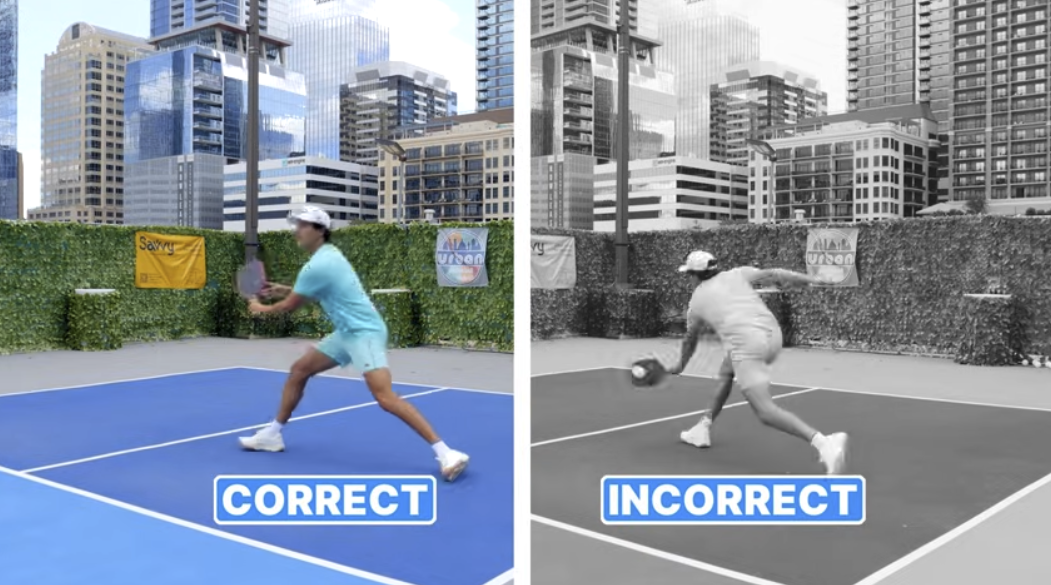
Transition Zone Attack Pickleball Pattern #3: The Transition Drop-and-Crash
The pattern: You hit a quality third shot drop, your opponent resets softly, and instead of slowing down, you deliberately accelerate through the transition zone and volley the next ball aggressively at the kitchen line.
This one's slightly different. It's not an attack from the transition zone. It's an attack through it. The drop is the setup. The crash is the offensive move.
Here's why it works: opponents at the kitchen line often play defense by habit. When you hit a soft shot, they return a soft shot. They expect you to repeat.
When you arrive at the NVZ line moving fast and volley aggressively, their reset tempo gets disrupted. You've forced them to change gears mid-point.
Talking transitions is essential reading here: the footwork decisions you make in the transition zone directly control how explosive you can be at the kitchen.
Footwork cue: Keep your split step short. You want to be moving on contact, not parked. The aggression comes from forward momentum, not from a stationary big swing. Think of doubles strategy positioning as the system that makes your crash land in the right place.
The target on the crash volley: Aim at the wider hip of the opponent who's furthest from center. In doubles, that's almost always a winner or a forced error.
 The Dink Media Team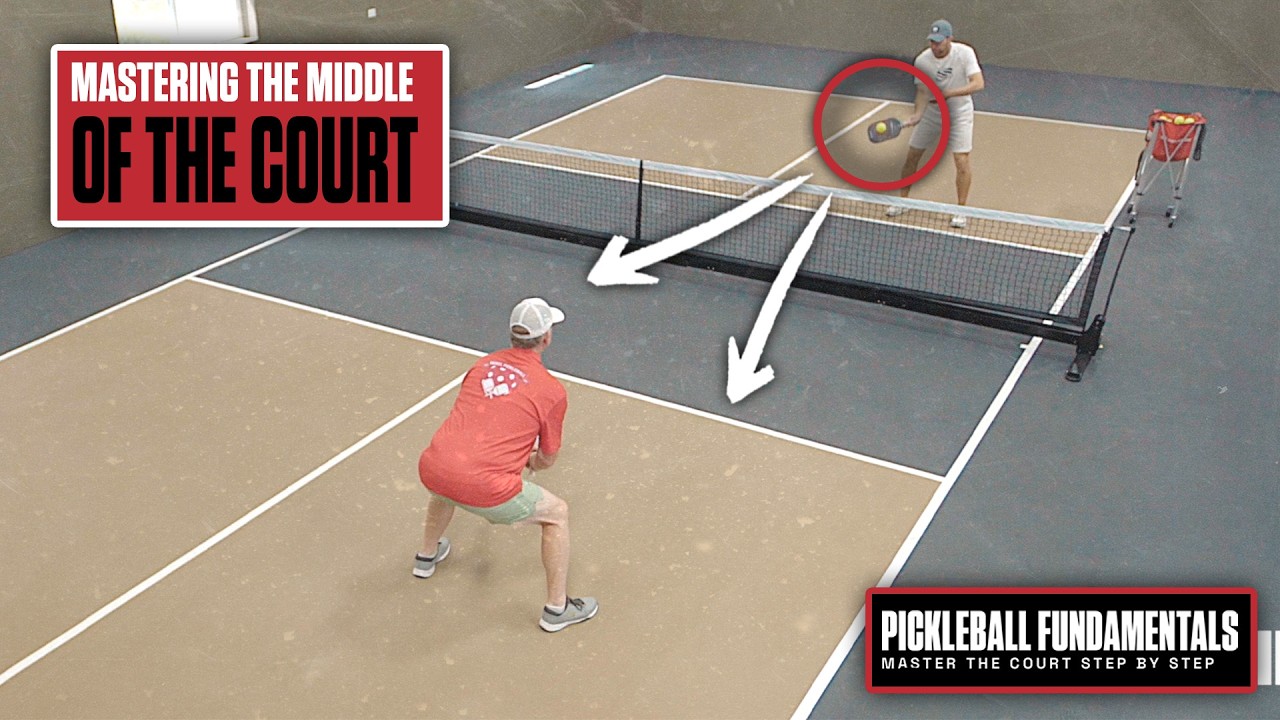
Transition Zone Attack Pickleball Pattern #4: The Lob Counter-Attack
The pattern: You're in the transition zone, your opponent speeds up aggressively from the kitchen.
Instead of blocking defensively, you hit a topspin lob over the attacking player's backhand shoulder.
This is the highest-risk pattern on the list, and also the most underused.
When a player at the NVZ line fires a speed-up at a transition zone player, the natural response is a block or reset.
A well-struck topspin lob as a counter is the last thing they expect.
The Journal of Human Kinetics (2025) has published research showing that cognitive surprise in racket sports significantly reduces reaction time, which explains why the unexpected lob counter disrupts even elite-level players.
The window is narrow: you need the speed-up to be slightly high (above the shoulder) so you can get your paddle under the ball.
You don't use this shot when someone speeds up at your feet. That's a different problem entirely.
You use it when a high-bouncing ball gives you a fraction of a second to counter with something they're not reading.
How to become unattackable in pickleball is worth studying alongside this pattern, because understanding what makes a player hard to attack tells you exactly which openings to look for when you're the one attacking.
Target: the non-dominant shoulder of the player who just attacked. If they're right-handed and at the kitchen line, lob over their left shoulder (backhand side).
They can't track backward fast enough to get it.
 The Dink Media Team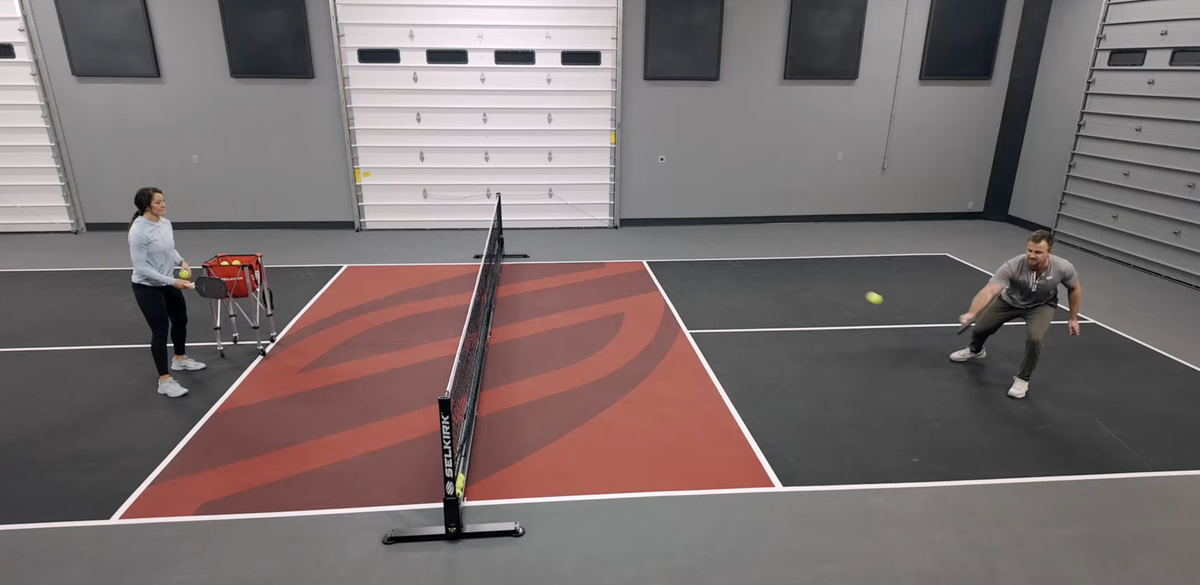
Key Takeaways
- The transition zone is the mid-court area between the NVZ line and the baseline, typically 7–14 feet behind the kitchen.
- Most players only defend from this zone. The best players also attack from it.
- The 4 offensive patterns: punch volley drive, approach speed-up, drop-and-crash, and the lob counter-attack.
- Transition zone attacks work because they break your opponent's expectation of a reset.
- Shot selection is everything: these patterns only apply when the ball height and position are right. When in doubt, drop.
- After any mid-court attack, keep moving forward. The transition zone is a launching pad, not a destination.
- Good shot selection vs. bad positioning separates players who attack well from players who attack recklessly.
Frequently Asked Questions
What is the transition zone in pickleball?
The transition zone in pickleball is the mid-court area between the non-volley zone line and the baseline. It's approximately 7 to 14 feet behind the kitchen and is the area most players pass through on their way to the net. It's commonly called "no-man's land" because players who linger there are vulnerable to attacks at their feet.
When should you attack from the transition zone in pickleball?
You should attack from the transition zone in pickleball when the incoming ball is above net height, in front of your body, and your weight is already moving forward. If the ball is below net level or forcing you sideways, a drop or reset is the smarter play. Only attack when the ball position genuinely creates an opportunity, not as a reactive emotional decision.
What Are the Best Transition Zone Attack Pickleball Patterns to Learn First?
The four most effective transition zone attack patterns in pickleball are: the punch volley drive (compact, aggressive volley aimed at the opponent's body or sideline), the approach speed-up (topspin forehand fired at a floating dink while advancing), the drop-and-crash (soft drop shot followed by an aggressive NVZ-line volley), and the lob counter-attack (topspin lob over the backhand shoulder in response to a high speed-up). Each works in specific ball-height and positioning windows.
How do you fix poor transition zone play in pickleball?
Fixing poor transition zone play in pickleball starts with two things: footwork and shot selection. Drill your split step so you can change direction quickly while moving forward. Practice recognizing ball height. Anything above the net is a potential attack, anything below demands patience. Then add one transition zone attack pattern to your game at a time, starting with the punch volley drive. Solo drills can help engrain the muscle memory before you put it in a match.
Is it ever smart to stay in the transition zone in pickleball?
No. Staying in the transition zone in pickleball is never the goal. You pass through it on your way to the kitchen. The offensive patterns above are designed to generate advantage while you're moving through the zone, not as justification for camping mid-court. If your attack doesn't land a winner or force an error, your next priority is still to reach the NVZ line. The transition zone attack in pickleball is a weapon you fire in motion, not a position you set up in.

Love Pickleball? Join 100k+ readers for free weekly tips, news & gear deals.
Subscribe to The Dink