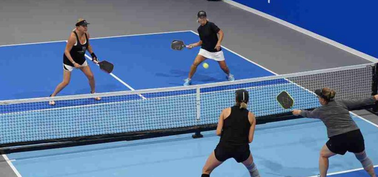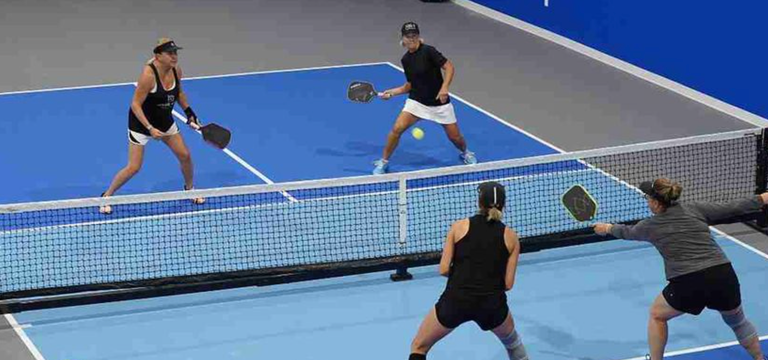


When opponents pull you wide at the net, your instinct might be to speed it up or hit it cross-court, but that's exactly what gets you in trouble.
The wide aggressive dink is one of the most frustrating shots to face at the net.
Your opponent hits a dink that pulls you way outside the sideline, and suddenly you're off-balance, stretched out, and forced to make a decision in a split second.
Here's what usually happens: you panic.
Your instinct tells you to either speed the ball up or rip it hard back cross-court to punish your opponent for pulling you wide.
Both of those moves feel aggressive and confident, but they're also mistakes that lead to errors.
Richard Pickleball, a respected pickleball coach, breaks down exactly why this happens and what you should do instead.
According to his analysis, when players get pulled wide, they abandon their fundamentals and try to do too much with the ball.
The real issue is that an off-balance speed-up or a desperate cross-court shot puts you in a vulnerable position.
You're not in control of the rally anymore. You're reacting emotionally instead of strategically.
Why the Middle Is Your Best Friend When Facing a Wide Aggressive Dink
So what's the solution? Use the middle of the court.
When you're pulled wide and facing a wide aggressive dink, the instinct to go cross-court makes sense on the surface.
But the middle is actually your escape route.
Here's why it works so well:
- First, you don't have to reach as far around the ball. When you're already stretched out wide, trying to hit a cross-court shot forces you to rotate your shoulders even more and extend your arm further. The middle shot requires less movement and less effort.
- Second, the net is lower in the middle of the court than it is near the sidelines. This gives you a bigger margin for error. You can hit a softer, more controlled shot and still clear the net comfortably.
- Third, and most importantly, hitting to the middle gets you back to neutral. That's the real goal here.
You're not trying to win the point outright. You're trying to survive the rally and reset the point so you and your partner have a chance to attack.
What Not to Do When You're Pulled Wide by an Aggressive Dink Shot
Let's be clear about what doesn't work. When you're pulled wide and facing an aggressive dink, speeding up the ball is a trap.
You're off-balance, your mechanics are compromised, and you're trying to hit a hard shot from a bad position. That's a recipe for an unforced error.
The same goes for the hard cross-court shot. Even if you make it, you're still out of position.
Your opponent has time to recover and potentially hit another aggressive dink at you or your partner. You haven't actually improved your situation.
Richard Pickleball emphasizes that the goal when you're pulled wide isn't to hit a winner. It's to get back into the point.
Once you understand that mindset shift, the strategy becomes clear: hit it to the middle, get back to neutral, and let the rally develop naturally.
The Mechanics of the Wide Aggressive Dink Middle Shot
So how do you actually execute this shot? The mechanics are simpler than you might think.
When you're pulled wide, your first instinct should be to use the angle that's already created by your position.
You're already outside the sideline, so the angle to the middle is right there in front of you. You don't have to create anything fancy.
Keep your paddle up and ready. Your goal is a soft, controlled dink that lands in the middle of the court on your opponent's side.
Think of it as a reset shot, not an attacking shot. You're not trying to hit it hard or with spin. You're trying to hit it accurately and with control.
The key is to stay low and use your legs, not your arm.
Even though you're stretched out, you can still bend your knees and get your paddle in front of your body.
This gives you better control and a better chance of hitting the ball where you want it to go. Perfecting your posture is what makes this shot repeatable under pressure.
 The Dink Media Team
Why This Wide Aggressive Dink Strategy Changes the Rally
When you hit the middle shot after being pulled wide, something important happens: your opponent has to move.
They can't just sit in their comfortable position and wait for the next ball. They have to adjust.
This movement creates opportunities. Maybe they have to move toward the middle, which opens up the sideline for your next shot.
Maybe they're not as comfortable hitting from the middle as they are from the sideline. Either way, you've taken control of the rally back.
More importantly, you've given yourself and your partner a chance to get back into an attacking position.
Once you're back to neutral, you can start thinking about your next move. You can look for a third shot drop, a speed-up, or a reset. You have options again.
This is why the wide aggressive dink strategy works so well at higher levels of play.
The best players understand that pickleball is about controlling the rally, not winning every point with a single shot.
They know that getting back to neutral is often more valuable than trying to hit a winner.
The Dink Media Team
The Bigger Picture: Dink Strategy in Modern Pickleball
The wide aggressive dink is becoming more common as players get better and more aggressive.
It's a legitimate attacking tool, and it's designed to put you in a tough spot.
But understanding how to respond to it is what separates good players from great ones. This isn't just about one shot. It's about understanding the philosophy of dinking. The dink is supposed to be a soft, controlled shot that keeps the ball low and forces your opponent to hit up.
But when someone pulls you wide with an aggressive dink, they're trying to break that pattern and force you into an error. According to research covered by CBS Sports on advanced pickleball strategy, the ability to reset under pressure is one of the defining traits separating recreational players from competitive ones.
By responding with the middle shot, you're saying:
"I understand what you're trying to do, and I'm not going to panic."
You're staying calm, staying in control, and keeping the rally alive. That's the mark of a skilled pickleball player.
The Dink Media Team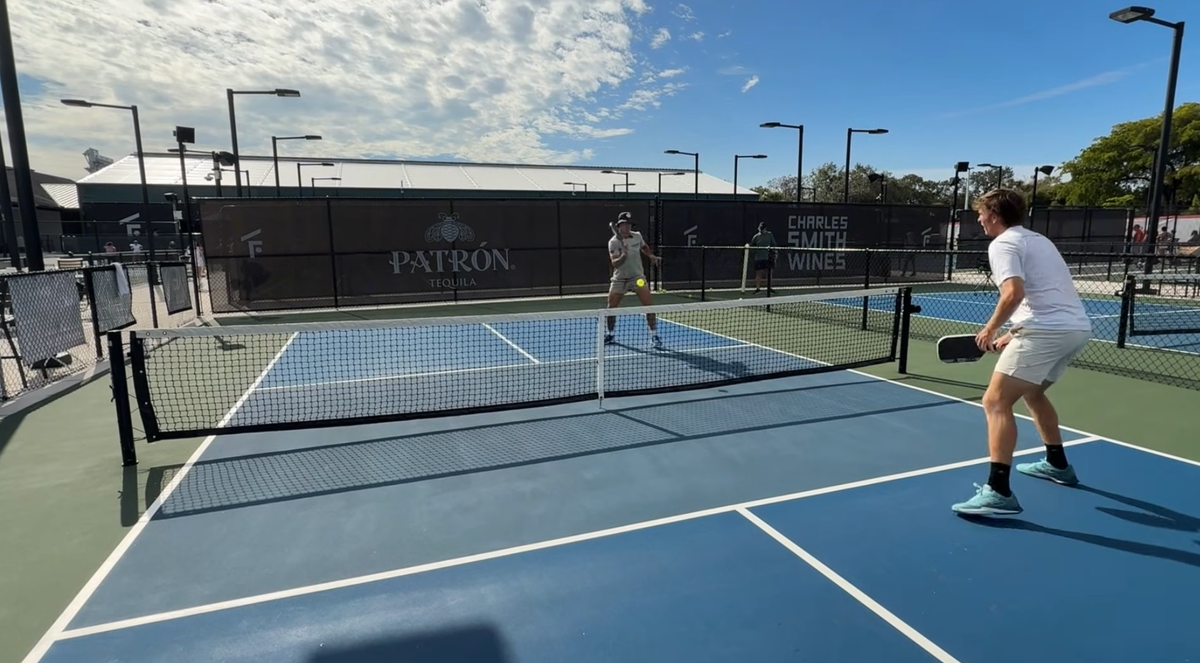
How to Practice This Wide Aggressive Dink Response Until It's Automatic
The only way to get comfortable with this strategy is to practice it. When you're on the court, your instincts take over.
If you haven't practiced hitting the middle shot from a wide position, you'll fall back on your default instinct, which is probably to speed it up or go cross-court.
Spend time in practice working on this specific scenario.
Have your partner or a coach pull you wide with dinks, and practice hitting the middle shot over and over.
Get comfortable with the mechanics. Feel what it's like to hit a soft, controlled shot from a stretched-out position.
Once you've practiced it enough, it becomes automatic. When you're pulled wide in a real match, you won't have to think about it. Your body will just know what to do.
Consider these simple wall drills to build the muscle memory for soft, directional dink control on your own.
How Recognizing Your Court Position Makes Every Shot Smarter
When you understand how court position dictates shot selection, the middle reset stops being a second choice and starts being your default reaction. Knowing when to play safe versus when to attack from the transition zone is the same skill applied a step earlier in the rally.
As more players study these situations, the reset and dink neutralization skills are drawing attention beyond the recreational community. NBC Sports has covered the rise of strategic dink play as a hallmark of the sport's competitive evolution, noting how top pros treat every wide ball as a setup, not a crisis.
Frequently Asked Questions
What is a wide aggressive dink in pickleball?
A wide aggressive dink is a dink hit with intention and pace to pull you far outside the sideline, forcing you off-balance and out of position. Unlike a standard kitchen dink, it's designed to create an angle that exploits your reach and recovery time.
Why is the middle shot the best response to a wide aggressive dink?
The middle shot requires less rotation and arm extension than a cross-court reply, which makes it easier to execute when you're already stretched out wide. It also passes over the lowest part of the net, giving you a bigger margin for error and getting you back to a neutral position faster.
How do I stop my instinct to speed up the ball when I'm pulled wide?
Repetition in practice is the only reliable fix. Drill the middle reset shot specifically from a wide position until it becomes your automatic response, so your instincts are retrained before you step into a real match.
Can I use the middle shot as an attacking strategy, or is it strictly defensive?
The middle reset is primarily a survival and neutralization shot, not an attacking one. That said, forcing your opponent to cover the middle often opens up the sideline for your next ball, so it indirectly sets up your attack.
How does the wide aggressive dink differ from a regular dink?
A regular dink is soft and controlled, landing just over the net with the goal of keeping the ball low. A wide aggressive dink adds directional pressure, pulling you out of your kitchen line position. Both land softly, but only one is designed to make you scramble.

Love Pickleball? Join 100k+ readers for free weekly tips, news & gear deals.
Subscribe to The Dink