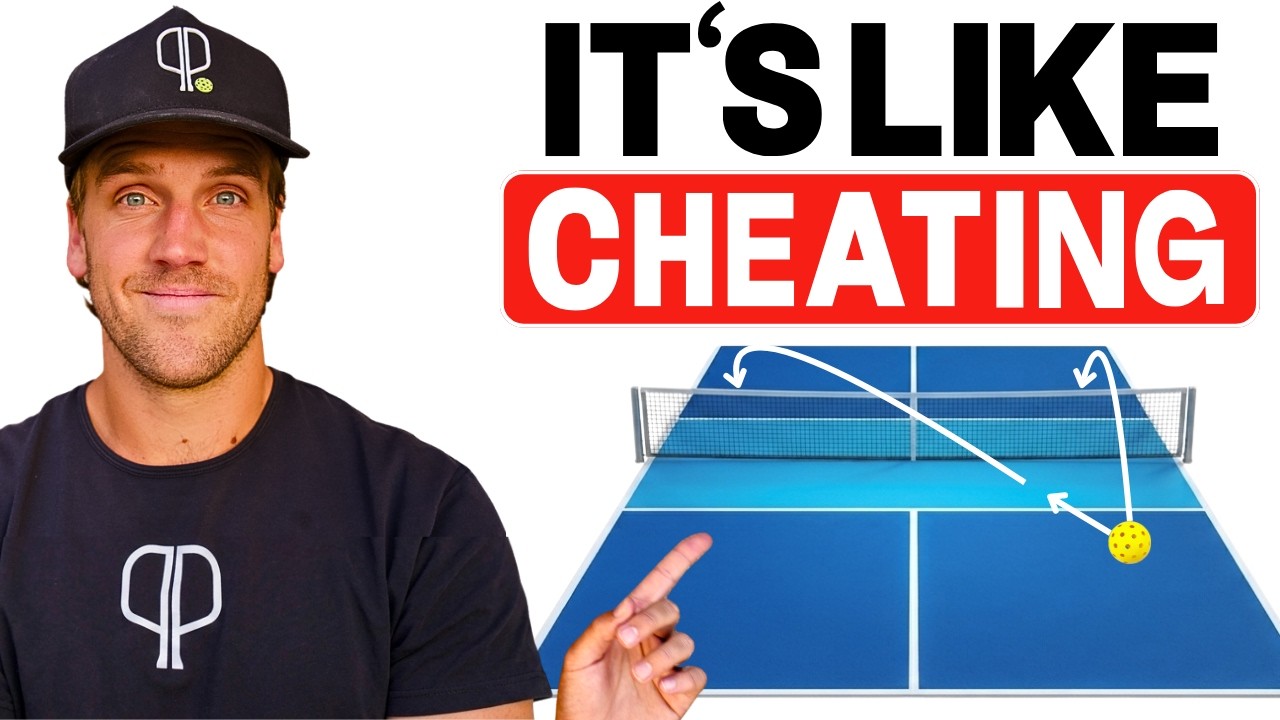
Most players dink with two separate motions and wonder why they keep popping the ball up. This pickleball dinking technique collapses those two motions into one fluid swing that works on every shot.
If your pickleball dinking technique feels completely different in a real match than it does in practice, you are not alone.
You drill, you feel good, you step onto the court for a rec game and suddenly the ball is popping up or sailing into the net.
The mechanics that felt smooth in warmups disappear under pressure.
The reason is almost always the same: you are making two separate motions instead of one.
This breakdown comes from PickleballPlaybook - Austin Hardy on YouTube, and once you see it, you cannot unsee it in your own game.
Love pickleball? Then you'll love our free newsletter. We send the latest news, tips, and highlights for free each week.
The Real Problem With Your Dink Swing
Most players break their dink into two distinct movements: back swing first, then a separate push forward. It feels natural. It even looks okay on video.
But it is creating a robotic, two-part motion that destroys your timing.
When you load up early and then pause before pushing through, you are introducing a moment where everything can go wrong.
The ball bounces slightly differently than you expected. Your timing shifts. The result is a popup or a ball dumped into the net.
The fix is a single, continuous motion. You load and you swing in one fluid movement, timed so the acceleration begins right as the ball is about to bounce.
There is no pause. There is no waiting. It is one smooth action from start to finish.
Think of it as drawing a small letter C through the ball as you come forward.
That shape keeps the paddle moving and prevents you from jabbing at the ball or stopping your follow-through short.
Why Do Pros Never Seem to Prepare Early?
Watch any top player at the kitchen and it looks like they barely prepare at all.
The paddle seems to just materialize at the ball. This confuses a lot of recreational players who have been told to prepare early.
The truth is that pros prepare with their feet, not their paddle.
They are reading the incoming ball, moving into position, and keeping the swing compact until the very last moment.
Austin Hardy uses a great baseball analogy here. A fielder running down a fly ball does not sprint across the outfield with the glove open and raised.
The glove stays closed and relaxed until the player is certain of exactly where the ball will be.
Only then does the glove come up.
Running with an open glove blocks your field of view and tightens your body. The same thing happens in pickleball when you load your paddle too early.
You get stiff, your timing breaks down, and the ball goes somewhere you did not intend.
If you load before you truly know where the ball will land, you are committing to a position that might be slightly wrong.
Even a small error in your predicted contact point can send the dink wide or into the net.
Waiting until the ball is about to bounce gives you the best information before you commit.
This is exactly the kind of adjustment covered in resources like why your forehand dink fails and how to fix it fast, where the same timing principles apply to the forehand side specifically.
Creating Space: The Two Methods That Change Everything
Creating space is what makes the one-motion swing possible.
Without space, your legs get in the way of your paddle path and you end up making contact in an awkward, cramped position.
There are two ways to create that space, and you should be using both.
 The Dink Media Team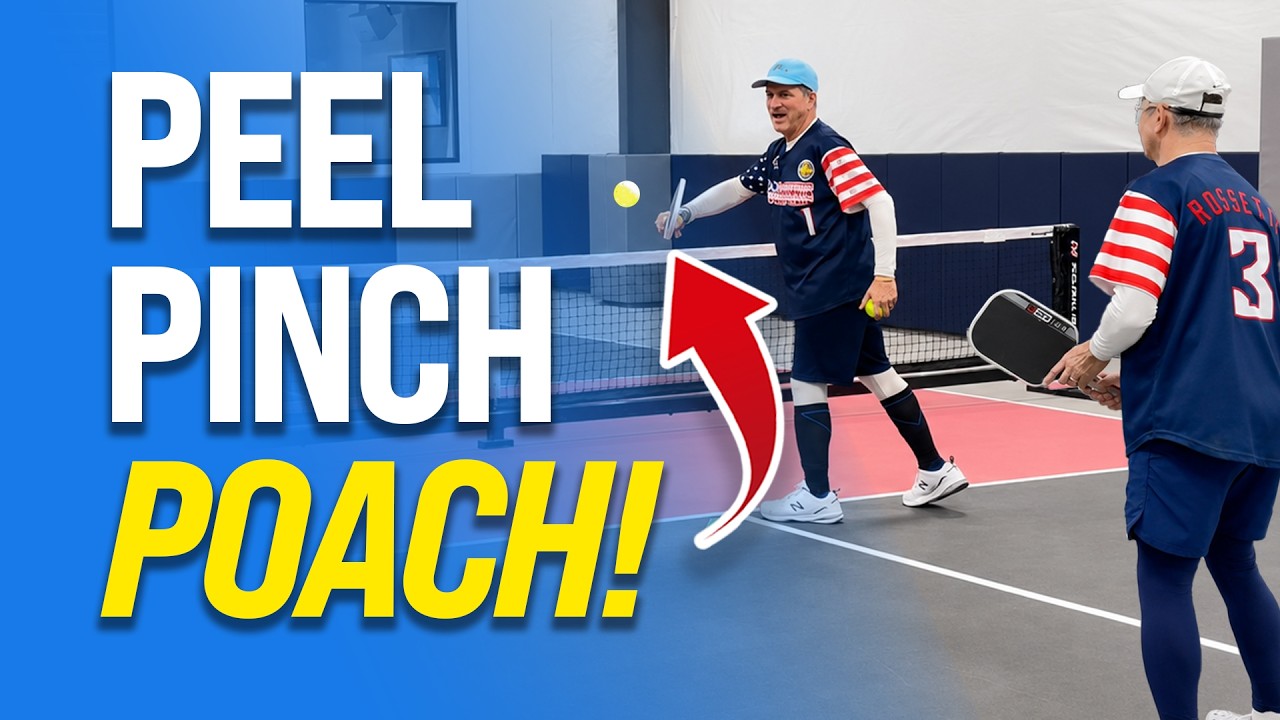
Method 1: The Step Back With Your Legs
As soon as you recognize whether the ball is coming to your forehand or backhand, take a step back with the corresponding foot.
This is called a step back, and it opens up the space your paddle needs to swing through cleanly.
Here is what happens without it: you shuffle laterally but your legs stay in the path of the swing.
The closer the ball gets to your feet, the more awkward the contact becomes. You end up hitting off-balance with no room for a proper follow-through.
With the step back, your leg clears the path. The swing stays compact and out in front.
Your back swing, forward swing, and follow-through all happen in that one continuous motion without your own body getting in the way.
You can see the full effect of this when you study this simple two-step method for fixing your pickleball dink, which reinforces why foot movement is the foundation of a clean dink.
To build this into muscle memory faster, structured repetition is your best tool.
Check out these three backhand dink drills built for real consistency and incorporate the step back into every single rep.
Method 2: Take One or Two Steps Off the Kitchen Line
This one challenges what most players believe about positioning. The conventional thinking says you should always stay glued to the kitchen line.
But if you keep losing dink rallies from that position, the line is working against you.
Stepping back one or two steps gives your pickleball dinking technique more time and more distance to work with.
Both of those things directly improve your dink consistency.
More time means you are less rushed.
More distance means you have a larger margin for error on depth, so balls that would have landed at your feet now give you a comfortable bounce.
The strategic benefits go beyond just consistency.
When you are a few feet back, you can also do what Austin calls the sneak attack: creep forward while your opponent is used to hitting to your deeper position, then take the ball out of the air before they expect it.
Suddenly you are two feet closer and their dink floats right into your strike zone.
The step-back position also gives you more court to hit through.
Players who understand why their pickleball dink fails in games often find that position is the first thing to address before mechanics even come into play.
 The Dink Media Team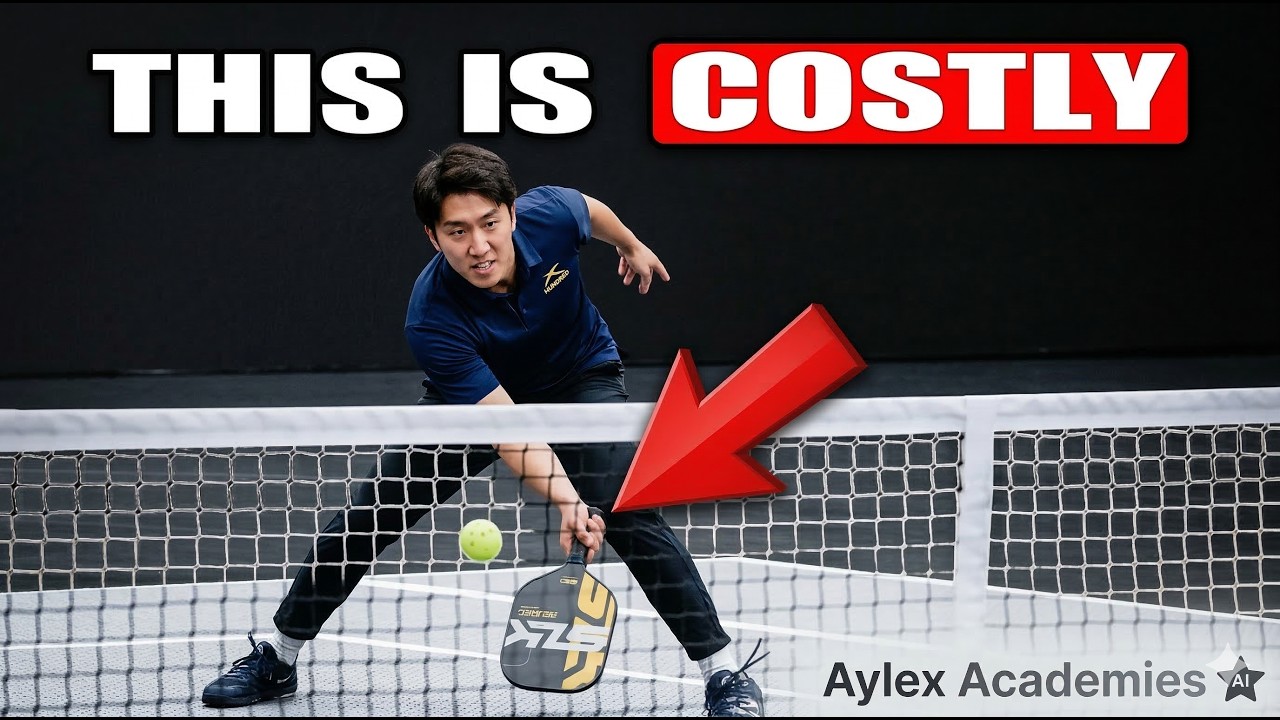
Why Comfort Is Actually the Competitive Advantage
There is a mindset trap that catches a lot of players: the belief that being aggressive means staying as close to the kitchen as possible at all times. This is wrong.
The more comfortable you are, the more your opponent feels pressure.
When you are stretched, rushed, and cramped, every dink becomes a survival shot. When you have space, you can be deliberate, move the ball around, and wait for a real opportunity.
Being comfortable is not passive. It is actually how you force errors.
Understanding why you keep popping up dinks comes down to exactly this: comfort creates cleaner mechanics, and cleaner mechanics produce consistent results.
Players at higher levels understand this instinctively.
If you want to know what separates players at each rating tier, these are the shots you must master to break 5.0, and three patterns separate good pickleball players from great ones.
 The Dink Media Team
Putting the Full Technique Together
Here is a quick summary of what you are building toward every time you get into a dink rally:
- Read the ball early with your eyes, not your paddle. Identify forehand or backhand as soon as possible.
- Move your feet first. Get into position with a step back so your legs are clear of the swing path.
- Keep the paddle compact and relaxed until the ball is about to bounce.
- Initiate one continuous motion as the ball reaches the bounce point. Load and swing in a single fluid action.
- Accelerate through a C shape as you make contact, keeping your follow-through smooth and complete.
- If the rally is difficult, step back one or two feet from the kitchen to create more time and distance.
- Use your deeper position strategically. Sneak forward when your opponent adjusts to the longer distance.
These are not complicated adjustments, but they require conscious effort during play.
These three pickleball footwork drills can help make the foot movement automatic so your brain can focus on the ball instead of your feet.
If you want to drill the full dinking sequence with a partner, these two dinking drills are built specifically to groove the kind of fluid, consistent motion this technique demands.
Getting the motion right also ties into your wider game.
Tyson McGuffin's tip-down dinking technique complements the compact motion described here, especially for players who tend to flick or scoop the ball instead of driving cleanly through it.
It also pairs well with the four key strategies shaping modern pickleball.
The players who make dinking look effortless are not doing something you cannot do.
They have simply trained themselves to stay relaxed, move their feet early, and commit to one smooth motion.
Wide dink mistakes almost always trace back to the same broken mechanics covered here.
And if you want to see kitchen positioning control an entire rally, Anna Leigh Waters is the best example to study.
Her ability to create pressure purely through consistent dinking is a masterclass in everything described here.
Frequently Asked Questions
What is the biggest mistake recreational players make when dinking in pickleball?
The biggest mistake is splitting the dink into two separate motions: loading the paddle, pausing, and then pushing forward. This creates timing errors that cause popups and net balls. The fix is combining both movements into one continuous, fluid swing.
Should I prepare my paddle early before a dink?
You should prepare with your feet early, not your paddle. Moving into position first keeps your body relaxed and lets you commit to the swing right as the ball bounces, which is when you have the most accurate read on where it will be.
Is it bad to step back from the kitchen line during a dink rally?
No. Stepping back one or two steps gives you more time to react and more distance to hit through, both of which improve consistency. You can still move forward and apply pressure when the right opportunity appears.
Why do I dink well in practice but fall apart in real games?
Nerves tighten your body and cause you to load the paddle earlier than you should, which breaks the fluid motion. Focusing on one relaxed, continuous swing and giving yourself physical space to operate will help your practice mechanics carry over into matches. Managing panic during tight rallies is a separate skill worth developing alongside your mechanics.
What does a C motion mean in pickleball dinking?
The C motion describes the arc your paddle travels as it comes through the ball during a dink. Instead of a straight, jabbing push, the paddle curves slightly, which keeps the motion fluid and promotes a clean follow-through. It works for both topspin and underspin dinks.

Love Pickleball? Join 100k+ readers for free weekly tips, news & gear deals.
Subscribe to The Dink