The pickleball flick is one of the most effective attacking shots in the game, allowing you to generate topspin and catch opponents off guard. Master both backhand and forehand variations with this comprehensive technique breakdown.
The pickleball flick is one of the most underrated weapons in modern pickleball.
If you're stuck in dinking rallies and want to take control of the net, this shot can change everything.
Unlike a forward poke that travels flat and predictable, a proper flick generates topspin, dips quickly over the net, and puts your opponent on their heels.
Love pickleball? Then you'll love our free newsletter. We send the latest news, tips, and highlights for free each week.
Why the Pickleball Flick Matters More Than You Think
Here's the thing: most recreational players never develop a reliable flick.
They either poke the ball forward with no spin, or they try to hit it too hard and send it sailing long.
The result? They stay stuck in neutral dinking exchanges, never able to finish points.
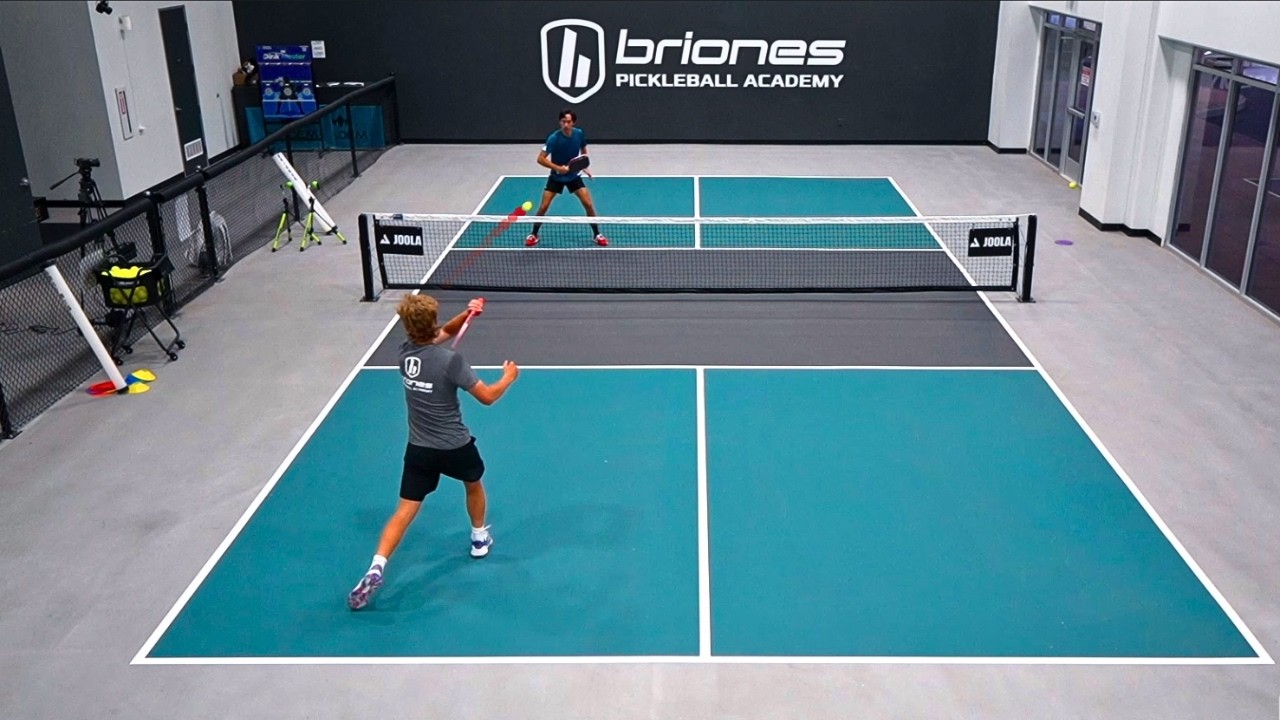
Coach Jordan Briones from Briones Pickleball Academy breaks down exactly why the flick is so critical.
"The flick is your transition shot," he explains in his recent coaching video.
"It's how you move from defense to offense without giving your opponent an easy put-away."
The beauty of the flick is that it works in tight spaces. When a ball sits just above the net and you're at full extension, you don't have room for a big swing.
The flick lets you generate pace and spin with minimal backswing, catching opponents who expect a soft dink.
The Backhand Flick: Building Your Foundation
Let's start with the backhand flick, since most players find it more intuitive than the forehand version.
The backhand flick begins with wrist positioning, and this is where most people go wrong.
When you reach in to flick a ball, your wrist needs to be bent back. Briones calls this the "motorcycle wrist" position.
Your paddle face angles slightly upward, and your wrist is cocked like you're revving a motorcycle throttle.
This isn't a natural position, so it takes practice to feel comfortable here.
From the motorcycle wrist position, your job is simple: take the top edge of the paddle and move it upward through the ball.
You're not poking forward. You're not swinging hard. You're moving up, which creates topspin and causes the ball to dip.
"The key is getting on the outside of the ball," Briones emphasizes.
When you contact the ball on its outside edge and move upward, you create the spin that makes the flick so effective.
The ball will dip down even if you hit it harder, because the topspin is doing the work.
What's the Biggest Mistake on the Backhand Flick?
Grip tension kills the backhand flick. Players grip too tight, which restricts wrist movement and prevents the snap needed for topspin.
Briones had his student relax the grip pressure, and immediately the flick improved.
Another common error is hitting long. This usually happens because players are moving forward through the ball instead of upward.
The fix is mental: think "up," not "through." Your paddle should finish pointing toward the ceiling, not toward your opponent's baseline.
Timing also matters. You need to get your paddle down early enough to make contact in front of your body.
If you're late, your arm bends and you lose extension. The lower the incoming ball, the more important it is to get that paddle down and ready.
 The Dink Media Team
The Forehand Flick: Adding Variety to Your Attack
The forehand flick uses the same principles as the backhand, but the mechanics feel different. On the forehand side, wrist action becomes even more important.
"Everyone tells people not to use their wrist," Briones notes. "But on the flick, you absolutely need it."
The forehand flick is a wrist-dominant shot. You're not swinging with your arm. You're snapping with your wrist.
To execute a forehand flick, get your wrist back and let the ball come to you. Then snap it. The motion is quick and compact.
Briones describes it as a "quick snap" rather than a full swing.
You're dropping your paddle down, then accelerating upward through the ball with wrist rotation.
The forehand flick also benefits from shoulder rotation. As you snap your wrist, rotate your shoulders slightly to add power without taking a big backswing.
This combination of wrist snap and shoulder rotation creates the acceleration needed for pace and spin.
One critical detail: simplify your swing. Don't loop your paddle back before coming forward. Just drop it down and snap.
The bigger your backswing, the harder it is to adjust if the ball is lower or higher than expected. A compact motion gives you more control.
The Dink Media Team
How Do You Hit the Top Half of the Ball?
This is the secret to consistent flicks. You're not trying to hit the center of the ball.
You're targeting the top half, and specifically the outside top half on angled shots.
When you accelerate upward on the top half of the ball, topspin is automatic. The ball dips down because of the spin, not because you're hitting down.
This is why relaxed arm speed matters more than raw power. A faster swing speed generates more spin and more pace without requiring you to muscle the ball.
The Dink Media Team
Placement and Court Positioning
The flick isn't just about technique. It's about knowing where to hit it. Most players default to hitting down the middle, which is safe but predictable.
The real advantage comes from hitting angles.
When your opponent shifts to cover the middle, there's a gap on the sideline. That's your target. Briones calls this the "ankle breaker" angle.
You're not going for a corner. You're aiming for a spot with good margin, maybe two feet inside the sideline.
To hit the angle, you need to contact the ball further out in front.
Your paddle is already angled toward the sideline, so you're essentially redirecting the ball rather than swinging at it.
This requires quick hands and good court awareness, but it's worth developing.
The key is not getting too big with your motion on angled shots. Simplify. Get the outside edge of the ball and let the angle do the work.
Overcomplicating the shot leads to inconsistency.
The Dink Media Team
Putting It All Together: Flick Drills and Progression
Technique is one thing. Applying it in rallies is another. Briones uses a progression that builds confidence and consistency.
- Start with basic reps where a coach feeds you balls just above the net. Focus on the feel of the shot. Get comfortable with the wrist position and the upward motion. Don't worry about placement yet.
- Next, add movement. You're not just standing still. You're reading your opponent's paddle face and shuffling to get into position. This is where the flick becomes a real weapon. You're moving laterally, getting your feet set, and then flicking.
- Then introduce the intercept drill. You're dinking with a partner, and when they hit a crosscourt dink, you shuffle over and flick it back. This teaches you to recognize opportunities and commit to the shot.
- Finally, play out full rallies. Start with a dink exchange, then look to speed up with a flick when you get a ball that sits up. The flick should feel like a natural progression from the dink, not a separate shot.
The Dink Media Team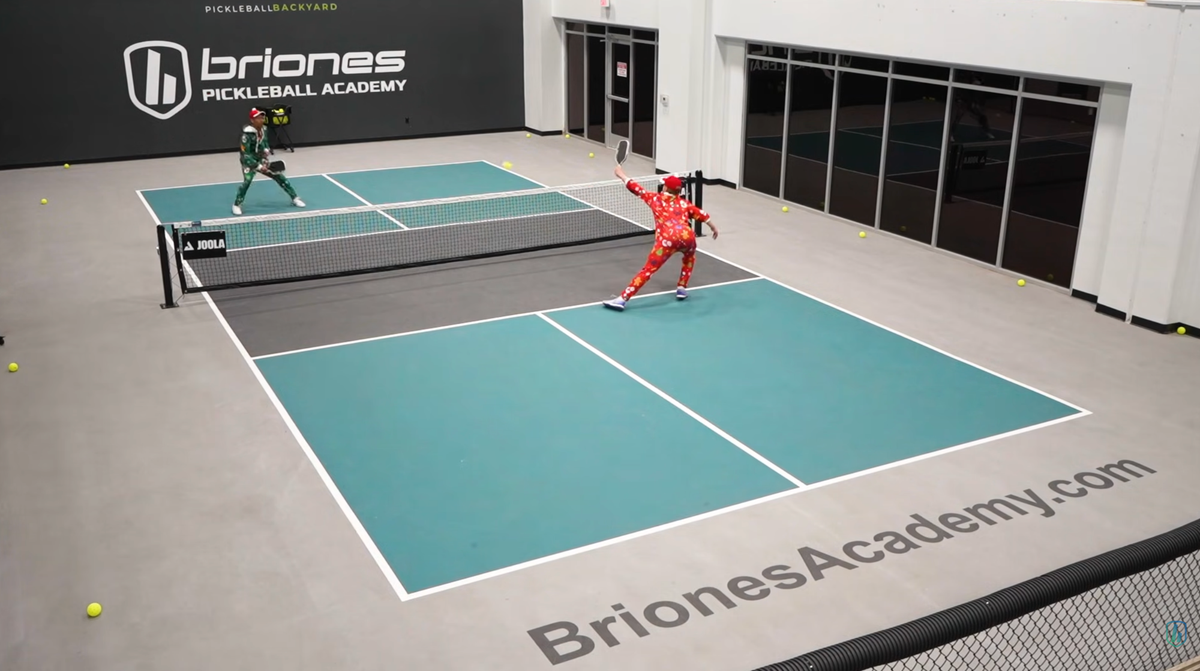
The Mental Side: Commitment and Pressure
Here's something Briones emphasizes that most coaching videos skip:
You have to commit to the flick.
If you're tentative, the shot falls apart.
When you see an opportunity to flick, you have to go for it. The moment you hesitate, you're likely to push or poke instead of snap.
Pressure actually helps here. When the score is tight and you know you have to make the shot, you tend to commit harder.
This is why drilling matters. The more reps you get, the more automatic the shot becomes.
When you're in a match and the pressure is on, your body will default to what you've practiced.
The Dink Media Team
Common Errors and How to Fix Them
- Hitting Long: You're moving forward instead of upward. Cue: "Think up, not through."
- Into the Net: Your paddle isn't dropping low enough before you snap. Get those fingertips closer to the ground.
- Poking Instead of Flicking: Your wrist isn't snapping. Practice the wrist motion separately before adding the full shot.
- Late on the Ball: You're not getting your paddle down early enough. Work on anticipation and getting your feet set faster.
- Inconsistent Placement: You're overcomplicating the motion on angled shots. Simplify and trust the angle.
The Dink Media Team
Why This Matters for Your Game
The flick is the bridge between defense and offense. It's how you transition from a neutral dinking rally into an attacking position.
Without it, you're limited to hitting hard drives or waiting for a pop-up to put away.
Players who develop a reliable flick win more points in the kitchen. They're harder to defend because they have multiple options.
They can go down the middle or hit angles. They can surprise opponents with pace and spin.
If you're serious about improving your pickleball game, the flick deserves dedicated practice time.
It's not glamorous like a smash or a drive, but it's one of the most effective shots in pickleball.
Frequently Asked Questions
What's the difference between a flick and a poke?
A poke is a forward motion with minimal wrist action, creating a flat ball that travels fast but doesn't dip. A flick uses wrist snap and upward motion to generate topspin, causing the ball to dip quickly over the net. The flick is more effective in tight spaces and harder to attack.
How long does it take to develop a reliable flick?
With consistent practice, most players can develop a functional flick in 2 to 4 weeks. However, mastering placement and using it effectively in rallies takes longer. Dedicate 10 to 15 minutes per practice session to flick drills for best results.
Can I use the flick from the baseline?
Yes, but it's less common. The flick is primarily a kitchen shot used when you're at the net and the ball sits just above the net line. From the baseline, you have more room for a full swing, so a drive or third shot drop is usually better.
Should I use the flick on every ball above the net?
No. Use the flick when you want to attack or when you don't have room for a bigger swing. If you have space and time, a regular volley or drive might be more effective. The flick is a tool, not the only option.
What's the most important thing to remember about the flick?
Commit to it. Hesitation kills the shot. When you see an opportunity, go for it with confidence. The more you practice, the more automatic it becomes.

Love Pickleball? Join 100k+ readers for free weekly tips, news & gear deals.
Subscribe to The Dink