Your backhand punch doesn't have to be weak. With the right grip, targeted drills, and consistent practice, you can develop a backhand punch that generates serious pop and precision on the court.
The backhand punch is one of the most underrated shots in pickleball, yet it's also one of the most effective when executed properly.
If you've been struggling to generate power and consistency on your backhand side, you're not alone.
Many players default to forehands or avoid the backhand altogether, leaving points on the table and limiting their court positioning options.
The good news? Your backhand punch can be dramatically improved with the right approach.
According to pickleball instructor Ed Ju, the key isn't complicated mechanics or expensive equipment.
It's about building muscle memory through deliberate practice, nailing your grip, and understanding that power comes from precision, not effort.
Love pickleball? Then you'll love our free newsletter. We send the latest news, tips, and highlights for free each week.
Getting Your Grip Right: The Foundation of Everything
Before you hit a single ball, you need to nail your grip. This is where most players go wrong, and it's also where the biggest improvements happen fastest.
Place your paddle flat against the wall. This simple drill teaches your hand exactly where it should be for a proper backhand punch grip.
Your paddle should feel like an extension of your arm, not something you're gripping tightly.
The wall acts as your feedback mechanism, showing you instantly whether your hand position is correct.
Think of your grip as the foundation of a house. If it's off, everything else crumbles.
Your grip determines your contact point, your follow-through, and ultimately, your consistency.
Spend time with this wall drill until the grip feels natural and automatic.
Building Muscle Memory Through Targeted Drills
Once your grip is locked in, it's time to build the muscle memory that separates casual players from consistent ones.
This is where the real work happens, but it's also where you'll see the fastest results.
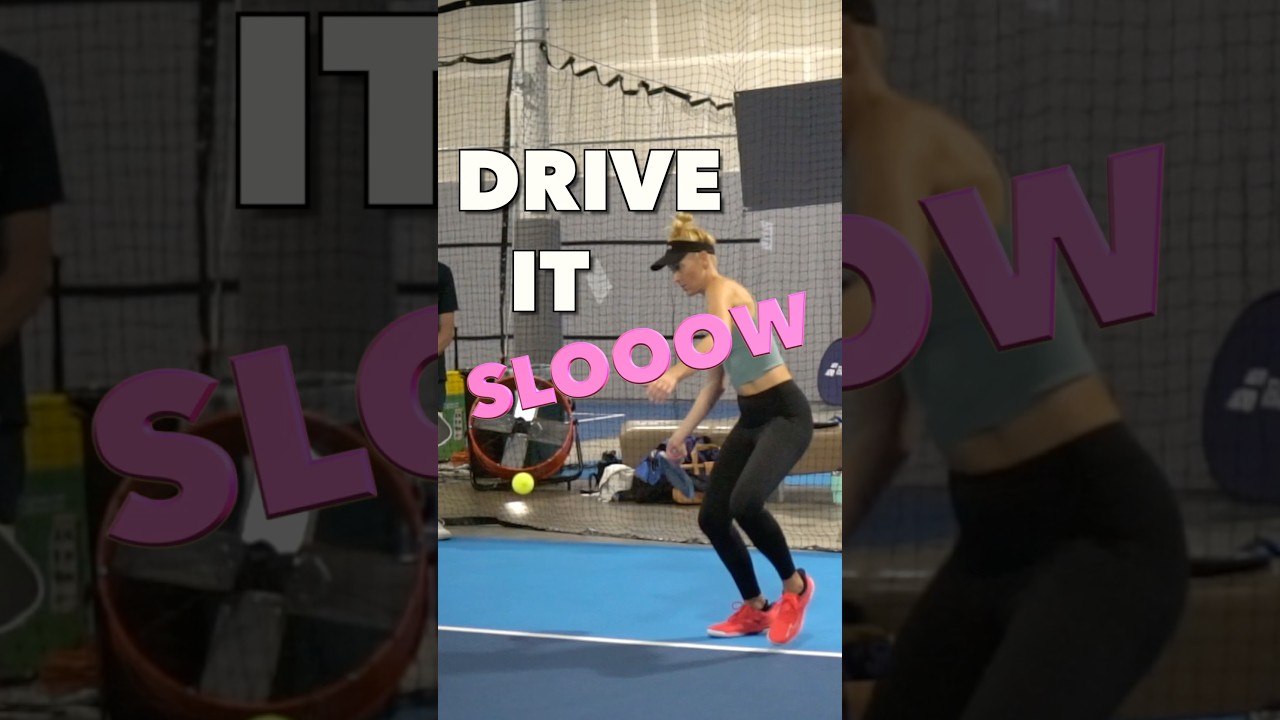
Start with 15 backhand taps using your new grip. These aren't full swings.
They're controlled, deliberate touches where you let the ball come to you naturally.
The ball should ricochet off your paddle's sweet spot with minimal effort from you. Your job is simply to be there, positioned correctly, with the right grip.
These reps serve a specific purpose: they train your body to find the ideal contact point without overthinking it.
Your nervous system is learning the exact position where maximum power and control intersect. This is muscle memory in action.
After you've completed your taps, move on to 15 full backhand punches. Now you're adding power, but here's the critical insight:
Your power comes from precision, not from swinging harder.
This is where most players make their biggest mistake. They see the word "punch" and think they need to muscle the ball. They don't.
The difference between a weak backhand punch and a devastating one isn't arm strength. It's consistency of contact and proper positioning.
When you've built the muscle memory through your taps, your full punches will have significantly more pop and control than they did before.
 Alex E. Weaver
Why Less Is More on the Backhand Side
Here's something that sounds counterintuitive but is absolutely true: your power comes from your precision.
The harder you swing, the more likely you are to mishit, lose control, and ultimately generate less power.
Think about it like this.
A professional tennis player's serve generates more power than a beginner's because of technique and timing, not because they're swinging harder.
The same principle applies to your backhand punch in pickleball.
Overswinging is the enemy of consistency.
When you focus on hitting the sweet spot with a controlled swing, several things happen simultaneously. Your contact point becomes more consistent.
Your follow-through becomes more natural. Your body learns the optimal mechanics without you having to think about it.
And paradoxically, you generate more power because you're not fighting against your own mechanics.
The Dink Media Team
The Three-Step Progression That Works
Let's break down the exact progression that Ed Ju recommends, because the order matters.
- Step one is the wall grip drill. Get comfortable with your hand position. Spend as much time here as you need. There's no rush.
- Step two is the 15 backhand taps. These are your foundation builders. They're teaching your body where the sweet spot is and how to find it consistently.
- Step three is the 15 full backhand punches. Now you're applying what you've learned. You're hitting with purpose, but you're not overswinging. You're letting your muscle memory do the work.
This progression works because it builds from simple to complex, from controlled to dynamic.
You're not asking your body to do everything at once. You're layering skills on top of a solid foundation.
The Dink Media Team
What Changes When You Get It Right
Once you've put in the work with these drills, you'll notice something immediate: a massive increase in the amount of pop and power you have in your punches.
But it's not just about power. It's about consistency, control, and confidence.
Your backhand punch becomes a weapon instead of a liability.
You can position yourself more aggressively at the net because you trust your backhand.
You can take balls earlier. You can finish points instead of just getting them back.
This is the kind of improvement that compounds. Better backhand punches lead to better court positioning.
Better court positioning leads to more offensive opportunities. More offensive opportunities lead to more wins.
It all starts with nailing the fundamentals.
The Dink Media Team
The Mental Side of Backhand Development
Here's something that doesn't get talked about enough: the mental game of developing a weaker shot.
Most players avoid their backhand because it's uncomfortable.
They hit it less, which means they get worse at it, which means they avoid it more. It's a downward spiral.
Breaking that cycle requires intentional practice. It requires spending time on the shot you're worst at, not the shot you're best at.
This is where drills like the ones Ed Ju recommends become invaluable. They give you a structured way to improve without the pressure of match play.
When you commit to these drills, you're not just improving your technique. You're building confidence.
You're proving to yourself that you can get better at something that felt impossible before. That confidence transfers to everything else in your game.
Frequently Asked Questions
What's the difference between a backhand punch and a backhand drive in pickleball?
A backhand punch is a shorter, more controlled shot typically used at the net or mid-court. A backhand drive is a longer, more aggressive shot hit from the baseline. The punch is about precision and placement; the drive is about power and depth. Most players benefit from mastering the punch first because it's more versatile in modern pickleball.
How long does it take to see improvement in my backhand punch?
You should notice improvement within a few practice sessions if you're doing the drills correctly. Significant improvement typically comes within 2-3 weeks of consistent practice. The key is doing the drills regularly, not just once. Muscle memory requires repetition.
Should I practice my backhand punch every time I play?
Yes, ideally. Spend 5-10 minutes before your matches or practice sessions working on these drills. It keeps your muscle memory sharp and builds confidence before you step on the court. Even professional players warm up their weaker shots.
Can I use these drills if I'm a beginner?
Absolutely. These drills are actually perfect for beginners because they build proper technique from the start. You're not trying to unlearn bad habits; you're learning the right way from day one. Start with the wall grip drill and progress at your own pace.
What if I don't have access to a wall for the grip drill?
You can modify the drill by holding your paddle in the correct position without a wall, or by practicing the grip while sitting down. The wall is helpful for feedback, but the key is getting your hand position right. A coach or experienced player can also give you feedback on your grip.

Love Pickleball? Join 100k+ readers for free weekly tips, news & gear deals.
Subscribe to The Dink