
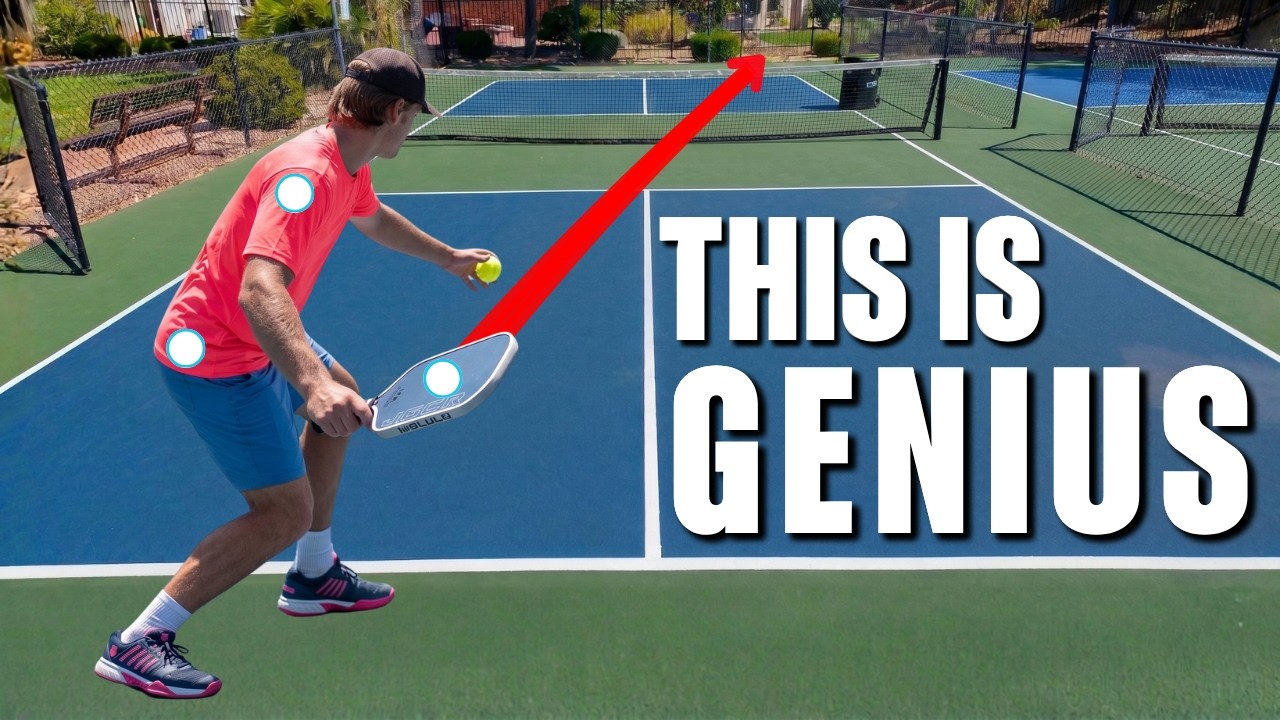
Why Your Pickleball Serve Has No Power (And the 3 Fixes That Work)
Most players try to hit a faster pickleball serve by swinging harder, and it never works. These 3 fixes show you exactly what the pros do differently.
You step up to the baseline, tell yourself this one is going to be different, swing as hard as you can, and the ball floats over the net with the same weak pace as every serve before it.
That is the most common pickleball serve power problem at every level, and the fix is not what most players think.
Swinging harder is not the answer.
The players hitting 60 to 70 mph serves look completely relaxed, almost effortless, yet the ball jumps off their paddle like a missile.
There is a mechanical reason for that gap, and it has nothing to do with strength.
Coach Austin Hardy of PickleballPlaybook breaks down exactly why most players stall out on serve speed, and the three principles that fix it fast.
Here is what you need to know.
Love pickleball? Then you'll love our free newsletter. We send the latest news, tips, and highlights for free each week.
The Real Problem Is Tension, Not Technique
Most players assume a faster serve comes from a bigger swing or more arm strength. That instinct is exactly what kills your serve speed.
When you try to muscle the ball, you tighten your arm.
A tight arm cannot whip. And without a whip, you are just pushing a stiff pole through the air instead of snapping a flexible chain.
Think about an actual whip. When you throw it forward, energy travels from the handle all the way to the tip, accelerating as it goes.
The tip of a real whip travels faster than the speed of sound.
Your goal with a pickleball serve is to get the tip of your paddle moving as fast as possible, and the only way to do that is to keep the arm loose enough to create that chain reaction.
Fix 1: Relax Your Arm Before Every Single Serve
This is not vague advice about staying calm. There is a specific way to build relaxation into your pre-serve routine so it happens every time.
Ben Johns does this better than almost anyone.
Watch him before he serves and you will notice his entire body is still, and his non-paddle arm bounces the ball with a completely loose arm.
He is not up in his shoulder, not gripping early, not bracing for impact.
He is finding a specific spot on the court to target, bouncing the ball consistently so his contact point stays repeatable, and letting his arm hang.
The cue that actually works here is simple: tell yourself "noodle arm" before you start your motion. It sounds silly, but it short-circuits the instinct to tense up.
A noodle arm releases the whip.
A rigid arm kills it.
Try bouncing the ball two or three times before each serve, keeping your paddle arm completely loose at your side.
That habit alone can add 10 to 15 mph before you change anything else about your motion.
If you want to go deeper on what happens when your serve lacks weight behind it, this breakdown on serve weight covers the carry-on effect that relaxation creates through the ball.
What Do the Pros All Have in Common If Their Motions Look So Different?
Ben Johns loads up in a smiley face arc.
Tyson McGuffin creates a frowny face. Anna Leigh Waters and Anna Bright also use a frowny face motion but with a closed stance, while Tyson serves open stance.
None of that variation matters as much as what happens in the middle.
Every one of these players does the same three things at and through contact. That middle window is where your serve speed gets made or lost.
Here are those three shared mechanics:
- Lag through the wrist before contact
- Elbow out at contact to generate topspin and lift
- Standing forward into the court with leg drive
 The Dink Media Team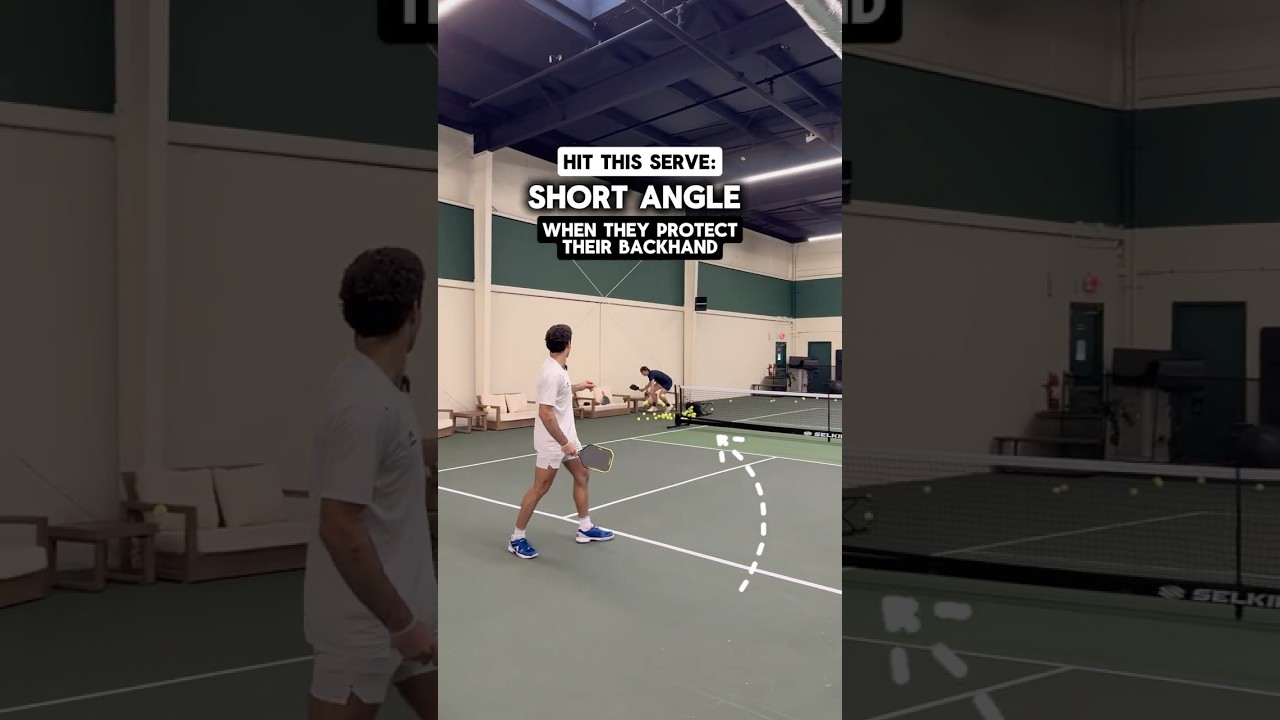
Fix 2: Add Lag, Elbow Out, and Leg Drive
Lag means your wrist stays bent back so your paddle tip points behind you as your arm starts moving forward.
Think about the difference between slapping someone with a fully extended stiff arm versus bending your wrist back first and snapping through.
The second one has dramatically more impact. Same physics apply here.
As you approach contact, the tip of your paddle should be pointing toward the back fence. Then you slap through, letting the tip whip forward after your hand passes.
That is lag, and without it you are punching the ball instead of slapping it.
The second piece is getting your elbow out to the side at the moment of contact. This does two things at once.
It creates the upward path your ball needs to clear the net, and it generates the topspin that pulls the ball back down into the service box.
A hard serve that has no spin will sail long. The elbow-out position solves both problems in one move.
The third element is leg drive.
Every strong server bends down during their load-up and then stands forward into the court as they swing, not straight up, but forward.
That momentum carries through the ball just like a pitcher driving off the mound, and it works the same way effortless power shows up through body rotation on every other shot.
If you are standing flat-footed and swinging with just your arm, you are leaving serious pace on the table.
Put those three together and the motion almost builds itself.
Get into your loaded position, hold your paddle with the tip pointing back, relax your arm completely, then stand forward while your arm whips through with the elbow moving out.
For a look at how this kind of technique connects to your forehand drive as well, this forehand drive fix covers the shared mechanics between groundstrokes and your serve motion.
And if you have been struggling with generating real topspin on any shot, here is why your topspin keeps failing and exactly how to correct it.
 The Dink Media Team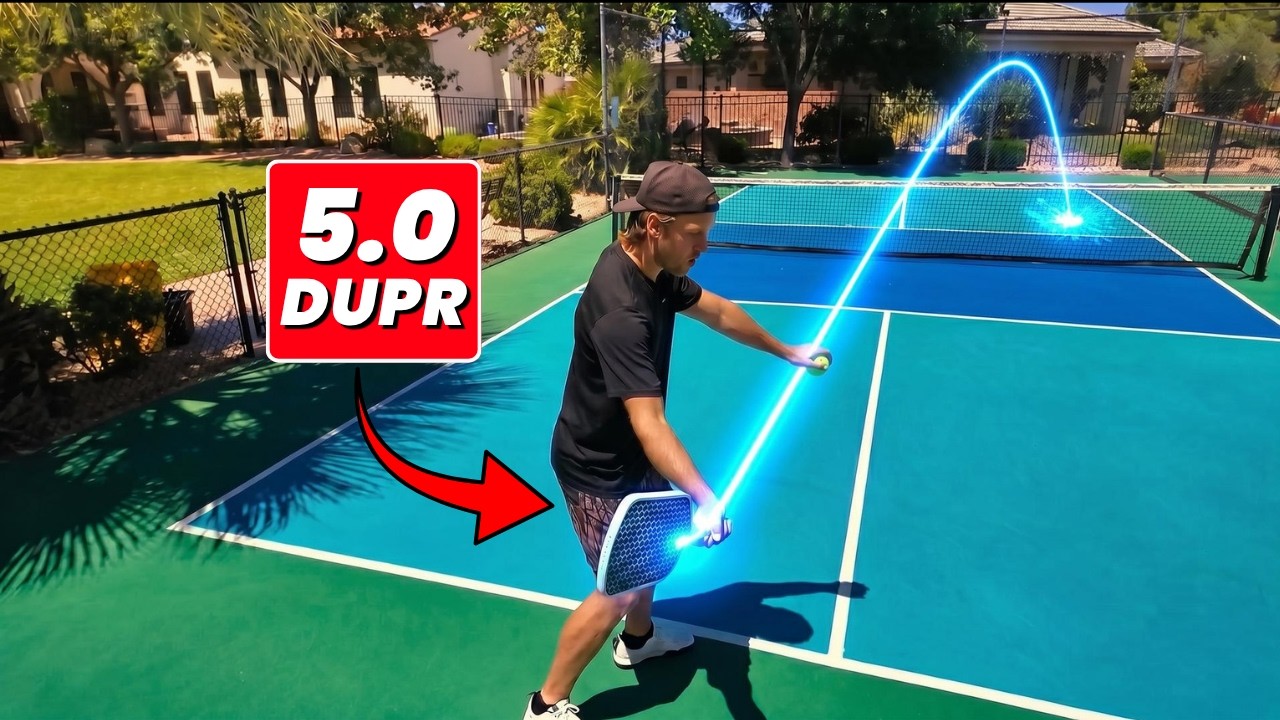
Does Grip Actually Change How Much Power You Generate?
Yes, and most recreational players are using the wrong grip for a power serve without realizing it.
A continental grip (hammer grip) is built for slice and underspin. When you swing hard with it, the paddle face opens upward and the ball flies long.
You cannot swing aggressively with that grip and keep the ball in the box consistently.
What you want for a topspin serve is an eastern forehand grip, also called a handshake grip. Here is how to find it:
- Hold your paddle vertically in front of you so you can see the eight bevels around the handle (like a stop sign shape)
- Count three bevels toward your dominant side
- Place the inside of your index knuckle and the bottom of your palm pad on that third bevel
- That is eastern forehand grip, the same feel as shaking someone's hand
With this grip, your paddle face is completely vertical at the point of contact.
That vertical face, combined with the elbow-out motion, produces topspin naturally.
The harder you swing, the more the spin kicks in to pull the ball down.
Your margin for error goes up as your power goes up, which is the opposite of what most players experience.
 Luke Burton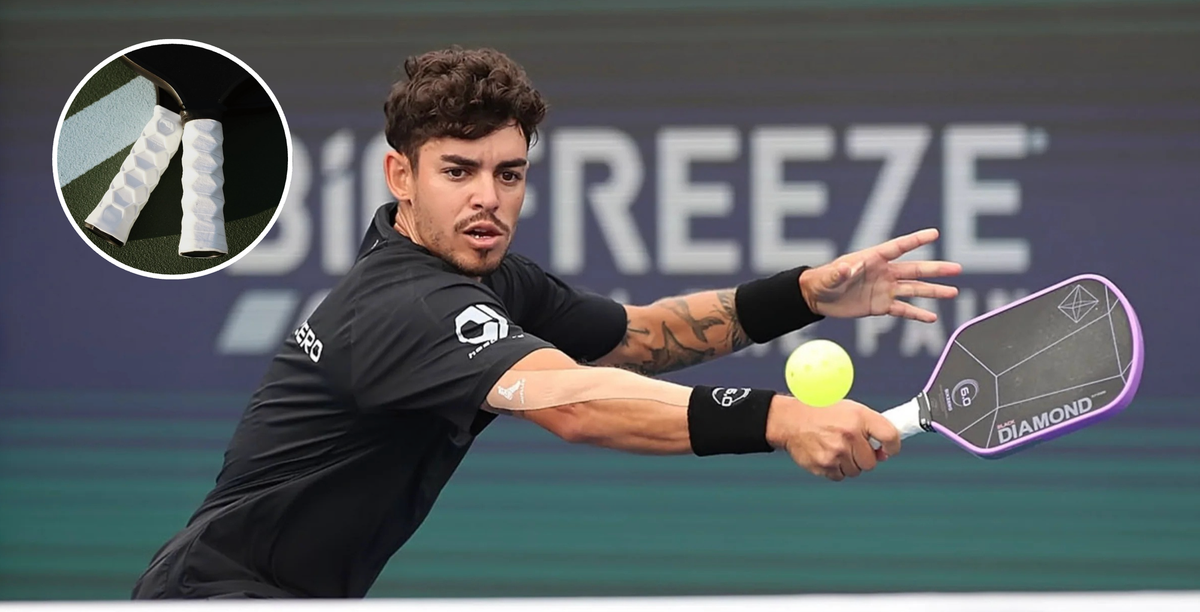
Fix 3: Get the Contact Point Right
Where you actually make contact with the ball ties everything else together. Too high and you lose the whip. Too far behind your body and you lose control.
- For a closed stance serve, contact should happen just out in front of your front knee.
- For an open stance serve, you want the ball about a foot to a foot and a half away from your body, fully extended, at roughly knee level.
You are not reaching way out high or jamming the ball close to your hip.
The most common contact mistake is tilting the paddle face downward at the moment of hitting.
If your paddle face is angled toward the ground, the ball goes into the ground. If you are using a continental grip and the face is open, the ball goes over the fence.
Vertical face, eastern grip, knee-level contact is the combination that produces power with control.
For more on how shoulder mechanics connect to your serve long term, especially as you age and start playing more frequently, this guide on protecting your serve shoulder is worth reading before problems start.
And if you want to see how a heavy spin serve can be built on top of these fundamentals, this breakdown of Jack Sock's heavy serve shows you the next step.
 The Dink Media Team
Putting All Three Principles Together
The three fixes are not separate drills. They are one motion that builds on itself.
- Relax your arm completely before the swing starts. Bounce the ball, cue "noodle arm," let the arm hang loose.
- Lag the wrist, drive the elbow out, and stand forward with your legs as you swing through contact.
- Make contact with a vertical paddle face in eastern forehand grip, at knee level, just in front of your front knee or a foot off your hip in open stance.
When all three happen together, your serve speed jumps without the wild inconsistency that usually comes with trying to swing harder.
The mechanics do the work. Your effort can stay the same or even decrease.
If you want to keep cleaning up the mechanical problems that hold most players back, this list of mistakes a coach fixes over and over is a useful next read.
You will recognize things in your own game immediately.
For players working on the full picture of their serve and transition game together, these advanced tips on third shot drive placement show how a strong serve sets up your next ball.
Finally, if you are dealing with errors that keep showing up no matter what you work on, these four tips for cutting unforced errors will help you identify the root cause faster.
Frequently Asked Questions
Why does my pickleball serve go into the net when I try to hit harder?
Tensing up when you swing harder is usually the cause. A tight arm reduces the whip effect and flattens your swing path, sending the ball downward. Focus on a relaxed arm and elbow-out motion to create lift and topspin that carries the ball over the net.
What grip should I use for a powerful pickleball serve?
Eastern forehand grip, also called handshake grip, gives you the best combination of power and topspin on your serve. It keeps your paddle face vertical at contact, which lets you swing aggressively while the spin pulls the ball into the service box. Continental grip makes it very hard to generate topspin on a hard serve.
What is lag in a pickleball serve?
Lag means your wrist stays bent back so your paddle tip trails behind your hand as your arm swings forward. This creates a whip effect where the tip accelerates through contact and produces significantly more pace than a stiff-arm swing. Think of it as the difference between slapping and punching.
Where should I make contact with the ball on a pickleball serve?
For a closed stance serve, contact should happen just in front of your front knee. For open stance, aim for about a foot to a foot and a half away from your body at knee level with your arm fully extended. Hitting too high or too far behind your body reduces both power and accuracy.
Why do pro pickleball players look so effortless on their serve?
Pros generate power through relaxation and mechanics, not muscling the ball. A loose arm transfers energy from the legs and body all the way through the tip of the paddle, the same way a whip works. The effortless look is the result of a relaxed chain of motion, not a lack of effort.

Love Pickleball? Join 100k+ readers for free weekly tips, news & gear deals.
Subscribe to The Dink