5 Serve Mechanics That Make Your Pickleball Serve Feel Heavier
Most players think a bigger pickleball serve means swinging harder. The real answer is a combination of depth, spin, trajectory, and variation that makes every return feel uncomfortable.
Your pickleball serve might have decent pace, but if opponents are stepping into it and attacking the third shot with confidence, something is missing.
The problem usually is not arm speed. It is the five or six mechanical details that separate a serve that feels heavy from one that just feels fast.
This breakdown comes from Roscoe Bellamy on YouTube, a top-ten professional who has built one of the most feared serves in the game and breaks down exactly why it works.
Love pickleball? Then you'll love our free newsletter. We send the latest news, tips, and highlights for free each week.
The Real Source of Serve Power Is Not Your Arm
Most recreational players generate serve power almost entirely from their arm and shoulder. That is the wrong place to start.
Power comes from the ground up.
This is called the kinetic chain, and it means energy starts at your feet, moves through your legs, transfers through your core, and finally exits through your paddle.
Research on the kinetic chain in overhead and underhand striking consistently shows that sequencing from the lower body produces more racket-head speed than arm-driven motion alone.
If your legs are passive during the serve, you are cutting that chain short and leaving most of your potential power on the table.
Here is what the kinetic chain looks like broken into steps:
- Leg drive: Push off the ground with a deliberate weight shift as you begin your swing.
- Core rotation: Let your torso rotate through the shot, not just your arm.
- Loose arm: Keep your arm relaxed so energy transfers freely like a whip snapping at the end.
- Paddle acceleration: Let the paddle naturally accelerate through contact rather than muscling the shot. This is where wrist lag does most of the quiet work.
A tight arm is one of the most common killers of serve power.
You work hard to generate energy from the ground, then a tense shoulder absorbs it before it ever reaches the ball.
Think of your arm as a whip, not a club. The more relaxed it stays, the faster the tip of that whip moves at contact.
If you want the full mechanical picture, this pro coach breakdown of 60 mph serves covers the same chain in slow motion.
Why Does Depth Matter More Than Raw Speed?
Why Does Depth Matter More Than Raw Speed?
You can absolutely crush a serve and still make it easy to return.
If the ball lands short, it slows down considerably before it reaches your opponent, giving them time to set their feet and step into a clean return.
Depth is the single most underrated element of a powerful pickleball serve.
When the ball lands in the back third of the service box, it stays hot off the bounce, rushes the returner, and shrinks the space they have to move forward.
Players who have faced a well-placed deep serve know the problem.
You are jammed against the baseline, the ball is kicking into your hip, and you barely have time to chip it back.
Depth works the same way on the return side, which is why both ends of the rally reward it.
What Changes Where Your Serve Lands
- Temperature: Hot days make the ball fly farther, so adjust your arc downward slightly.
- Ball hardness: A stiffer ball travels more, which means you may need less height to reach the same depth.
- Your own swing speed: The faster you swing, the more height you need to control depth.
The fix when your serve lands short is simple. Lift it a little more. Adding arc lets the ball travel further before gravity brings it down into that back third.
Warming up your serve before a match is not optional if depth is your goal.
You need reps to calibrate where your swing is landing that day with that ball, and a consistent grip makes that calibration repeatable.
This breakdown of serve mistakes that cost power and depth is worth reading alongside this one.
Spin and Trajectory: This Is Where the Weight Comes From
A flat serve that lands deep is good. A topspin serve with height that lands deep and kicks into your opponent's body is something else entirely.
Topspin creates forward rotation that causes the ball to accelerate and jump after the bounce.
Instead of skidding low through the return zone, the ball rises aggressively into the returner's chest or shoulder, forcing a rushed swing.
The key is brushing up the back of the ball at contact.
You are not hitting through the ball flat.
You are grazing upward across the back face so the ball rolls forward as it flies, and these common topspin mistakes are what usually break that motion.
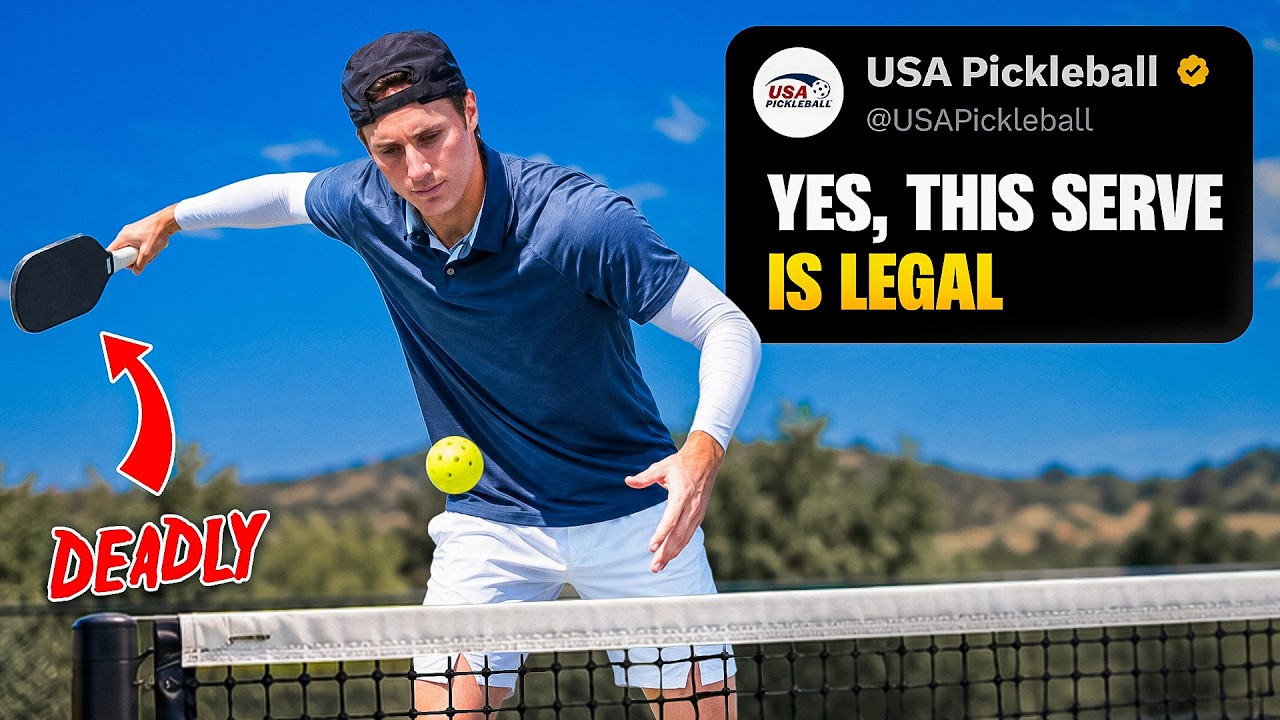
Spin serves remain legal under USA Pickleball's official rulebook as long as the contact and release requirements are met, so this is a weapon you can build without risking a fault.
If you are still unsure about your motion, the drop serve fault most players never notice is worth a read.
Trajectory is what amplifies that spin. A flat, line-drive serve skids and stays low, which limits the spin effect.
A serve with an upward arc that falls steeply bounces at a sharper angle, and the topspin then kicks it upward into the returner.
Height over the net paired with heavy topspin is what makes the ball feel like it weighs twice as much.
The same principle is why a heavy serve like Jack Sock's is so hard to neutralize even when returners know it is coming.
If you want to build the rotation from scratch, this complete topspin progression guide walks through it step by step, and the heavy topspin drive uses the identical brush-up mechanic.
 The Dink Media Team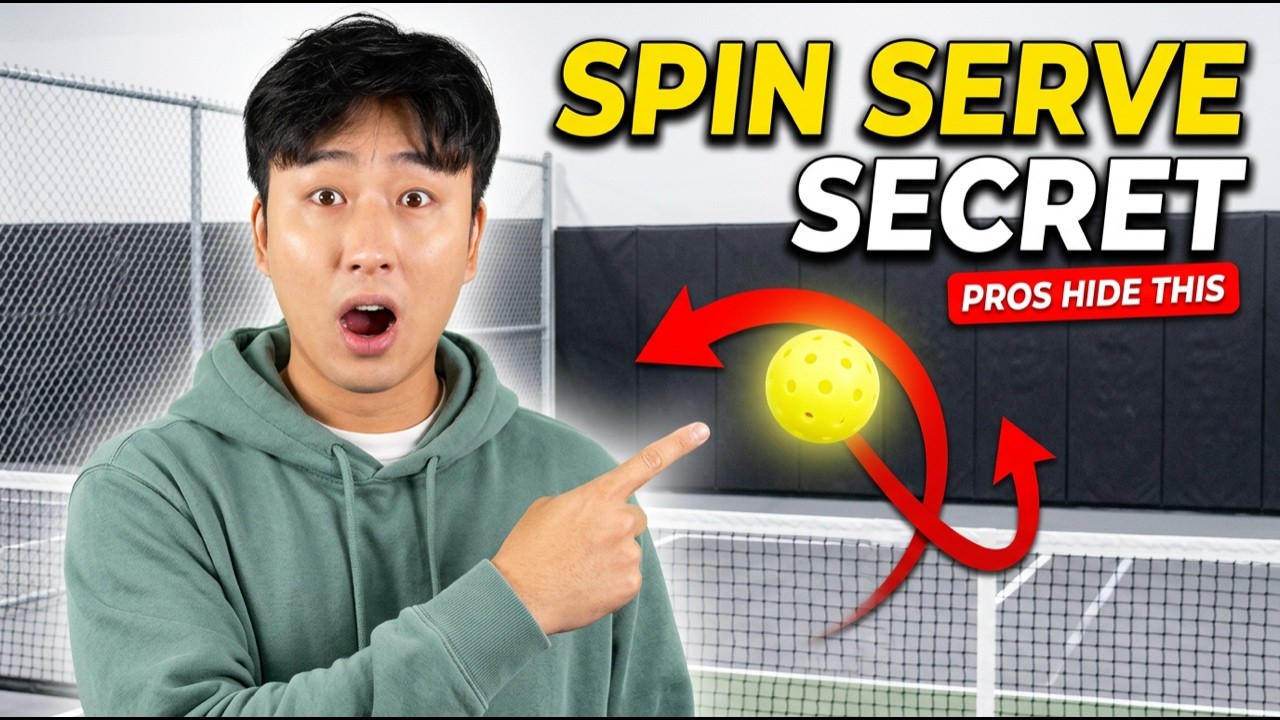
How Do You Use Variation to Stop Opponents From Dialing In?
Even a technically perfect serve becomes manageable once a returner has seen it five or six times.
Players are pattern-recognition machines. Give them the same ball repeatedly and they will start timing it.
Variation is the tool that prevents your opponent from ever settling into a comfortable return rhythm.
You are not just changing locations. You are changing speed, spin, height, and placement in combinations that force constant adjustment.
Here is what a strong variation toolkit looks like:
- Location: Mix serves to the backhand, forehand, and short-wide angles. Do not camp on one spot.
- Height and arc: Alternate between a flat, piercing drive serve and a high-kicking topspin serve.
- Spin type: Throw in a kick serve to change the bounce direction and a flatter ball to change the rhythm. Anna Leigh Waters' lob serve is the extreme version of this idea.
- Speed: A slower, heavy serve can be just as disruptive as a fast one when used at the right moment.
The goal is not randomness. The goal is to make your opponent feel like they cannot predict what is coming next.
When a returner misses one in the net, they will instinctively lift the next return higher.
Go flat on the next serve and you have already won that mental battle before the ball is in play.
Variation is also the fastest way to earn free points without improving your raw technique at all.
This ruthless return strategy shows exactly what opponents do under that pressure, so you can target those errors deliberately.
 The Dink Media Team
The Pre-Serve Routine Nobody Talks About
You can have every mechanical piece in place and still serve inconsistently if your preparation varies from point to point.
A pre-serve routine is what locks everything together.
Bellamy's routine is straightforward: step to the line, get into stance, bounce the ball three times, and go.
That pause lets him decide what serve he is hitting, calm his body, and get into the right physical setup before the swing.
Your routine does not need to be complex. It just needs to be consistent.
Even two bounces and a slow exhale before every serve will measurably improve your accuracy over a match, which is the same logic behind how early preparation buys you time on every other shot.
Routine also disguises variation. If your body language changes before a hard serve versus a soft one, good returners will read your tells.
This connects to the broader set of habits that separate 4.0 players from everyone else.
If your serve has been shaky under pressure, check your routine before you check your mechanics.
 The Dink Media Team
Putting It All Together
A bigger serve is not one thing. It is five things working simultaneously.
You need the kinetic chain to generate real power. You need depth to make that power matter. You need topspin and trajectory to make the ball feel heavy after the bounce.
You need variation to prevent adaptation. And you need a consistent routine to reproduce it under pressure.
Players who work on each of these separately and then combine them end up with serves that feel completely different from anything a recreational opponent faces in a typical week of play.
If you want your serve to create real pressure rather than just starting the rally, understanding what the returner is trying to do will sharpen your targeting decisions instantly.
You should also look at what happens on the very next shot.
This piece on losing points after the serve explains how a great serve becomes wasted if your third shot is not ready to follow it up.
A serve that lands deep with heavy topspin and a sharp kick is one of the most difficult balls in pickleball to neutralize.
Most players will not have the time or the footwork to turn it into a good return consistently.
Knowing where returners like to place their returns also tells you where to position for the third shot before the ball has even left your paddle.
Build each piece deliberately and your serve will stop being a formality and start being a genuine weapon.
Frequently Asked Questions
How do I get more power on my pickleball serve without swinging harder?
Use the kinetic chain by starting your power from the ground with leg drive and letting it flow through a loose, relaxed arm. A tight arm kills the energy transfer before it reaches the paddle. Focus on loosening your arm and using your legs before you think about swinging faster.
What does it mean to hit a heavy pickleball serve?
A heavy serve combines topspin with a higher trajectory so the ball accelerates and kicks upward after the bounce rather than skidding low. The ball does not just feel fast; it feels like it rises into the returner's body unexpectedly. Depth is also part of what makes a serve feel heavy, because the ball reaches the returner while still moving fast.
Where should a pickleball serve land to be most effective?
The back third of the service box is your target on most serves. A ball that lands here stays hot through the bounce and gives the returner very little time to set up and move forward. Landing short lets the ball slow down and gives the opponent a comfortable, unhurried swing.
How much should I vary my serve in pickleball?
Vary your serve often enough that your opponent cannot predict what is coming, but not so randomly that you lose control of your own execution. Changing location, spin, and height across three to four consecutive serves is enough to prevent adaptation. If a returner is timing your serve comfortably, that is the signal to change something immediately.
Does a pre-serve routine actually help consistency?
Yes, and it helps more than most players expect. A set routine gives you a moment to decide on the serve, calm your body, and trigger the same physical setup before every swing. It also masks your intentions from a returner who might otherwise read changes in your body language before you serve.
Love Pickleball? Join 100k+ readers for free weekly tips, news & gear deals.
Subscribe to The Dink