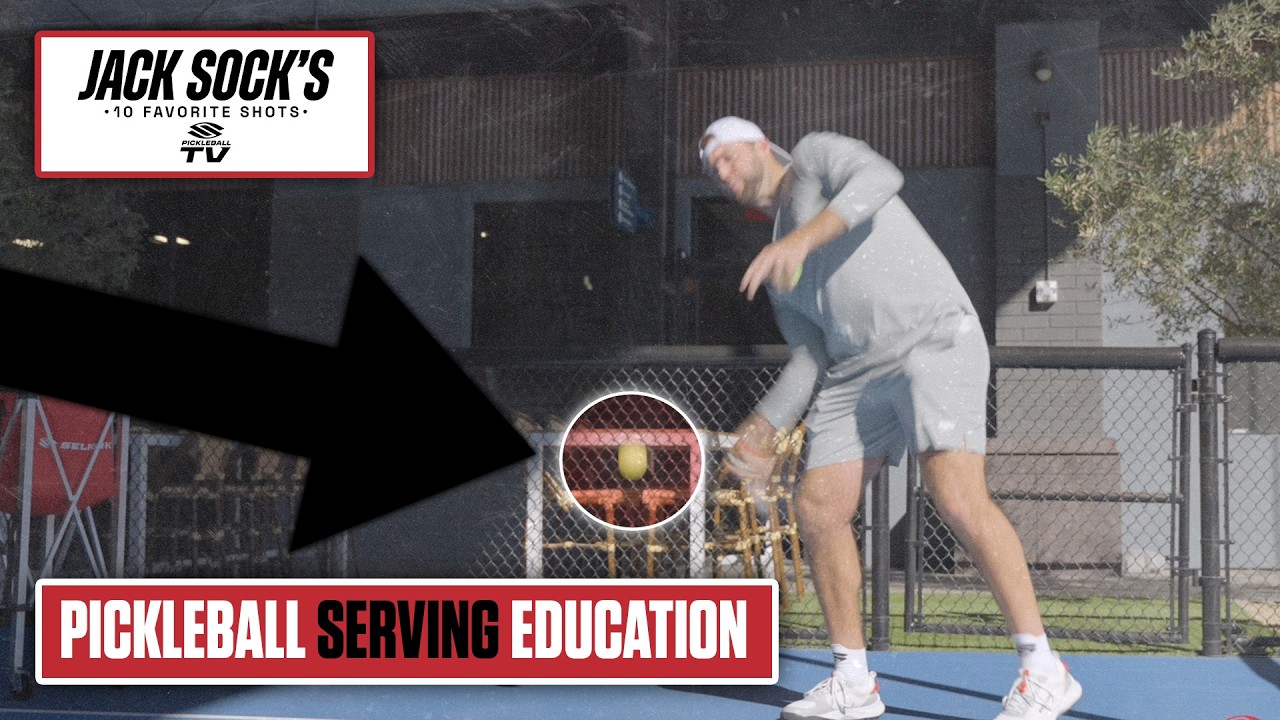
Most players treat the pickleball serve as a formality. Jack Sock treats it as a weapon, and his mechanics show exactly why it works.
If your pickleball serve is just getting the ball in play, you are already giving up a free advantage at the start of every point.
Most recreational players treat the serve as a formality.
Get it in, stay safe, move on. But at the pro level, the serve is increasingly being used to set up the entire point before the third shot even happens.
This breakdown pulls directly from Selkirk TV on YouTube, where Jack Sock walks through his full serving mechanics, including stance, contact point, and how he thinks about aggression versus consistency.
Love pickleball? Then you'll love our free newsletter. We send the latest news, tips, and highlights for free each week.
Why the Serve Matters More Than You Think
The serve is the only shot in pickleball where you have complete control before the point starts.
No reaction time required, no opponent pressure, just you and the ball.
Sock is clear about this: the serve is evolving. Better paddles, improved ball technology, and higher-level competition have all pushed players toward serving with more intention and more aggression.
In singles especially, a heavy pickleball serve forces your opponent to stay back.
That extra half-second or full step they lose on the return of serve directly shapes how you can play your third shot.
Even in doubles, Sock notes that returners are being pushed further back off the baseline.
A weak serve removes that pressure immediately and hands momentum to your opponent before the rally starts.
If you want to understand what is killing your power and depth on the serve, the fix almost always starts with how you are thinking about the shot in the first place.
What Does a "Heavy" Serve Actually Mean?
A heavy pickleball serve combines depth with spin or pace in a way that makes the return difficult to handle cleanly. It is not just about speed.
Sock describes his goal as landing the ball as deep in the service box as possible while loading it with either spin or pace.
The result is a return that sits up, comes back short, or forces the returner off balance.
This is different from the common advice to just get it in deep. Depth without weight is manageable.
Depth with topspin or a flat, driving contact is a different problem for the returner entirely.
For players looking to build more consistency with serve strategies that give you an instant edge, the combination of depth and spin is the first real step toward a heavy pickleball serve.
Open Stance vs. Closed Stance: Which One Is Right?
Sock is direct here: open stance works best for him, and his reasoning is worth understanding before you copy anyone else's setup.
He experimented with a closed stance for a period but found his miss rate climbed too high.
The open stance gives him accuracy, power, and the ability to drive toward his target without losing body control.
Here is how he breaks down the two options:
- Open stance: Body faces the target more directly. Easier to fire from the hip. Better accuracy for players who generate power from rotation rather than a full wind-up. Sock's preferred setup.
- Closed stance: More shoulder turn involved. Can generate more power for some players. Higher risk of contact and directional errors if the timing is off.
The honest answer is that stance is personal.
But Sock's point is worth taking seriously: test both, track your miss rate, and go with whatever keeps your percentage up without sacrificing aggression.
This is the same logic that applies to serve mistakes that cost you points at every level.
Wrong stance for your body type is one of the most common and most fixable problems in pickleball serve technique.
 The Dink Media Team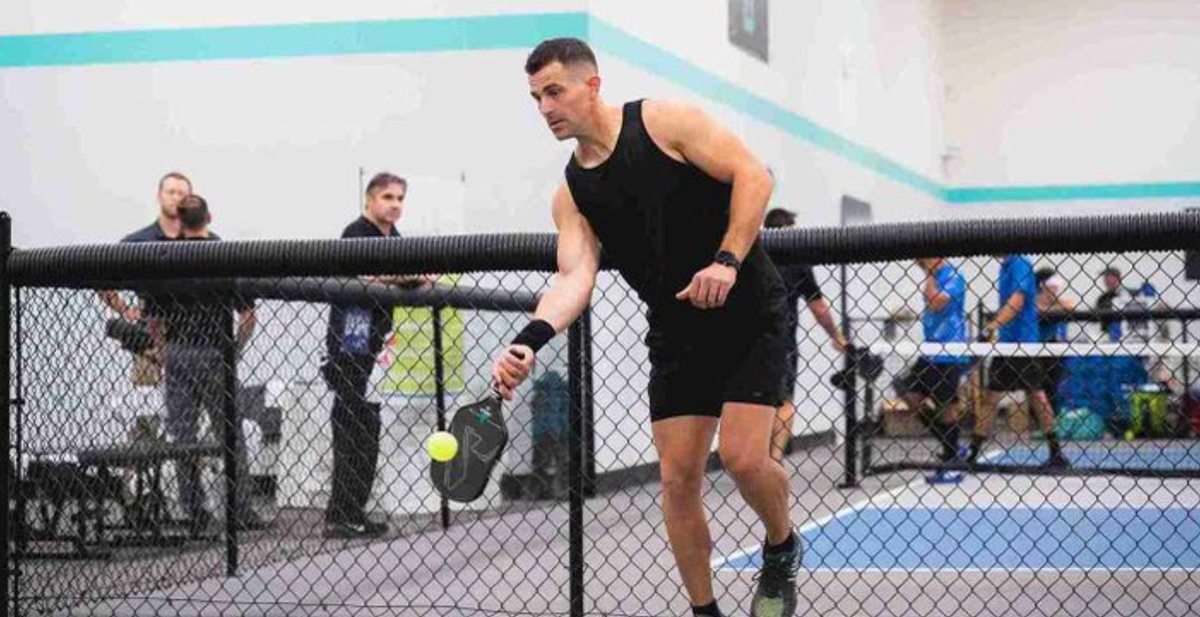
Where Does the Power Actually Come From?
Sock hits his serve out of his palm, from the hip. That phrase is worth sitting with, because it contradicts how most players try to generate power.
Many players swing high and late, trying to add speed at contact with arm speed alone.
Sock's approach anchors the power source lower, using hip rotation and a compact swing path to drive through the ball cleanly.
Hitting from the hip means your paddle face is consistent at contact. You are not guessing at the angle every time you swing.
That consistency is what makes a heavy pickleball serve repeatable under pressure.
 The Dink Media Team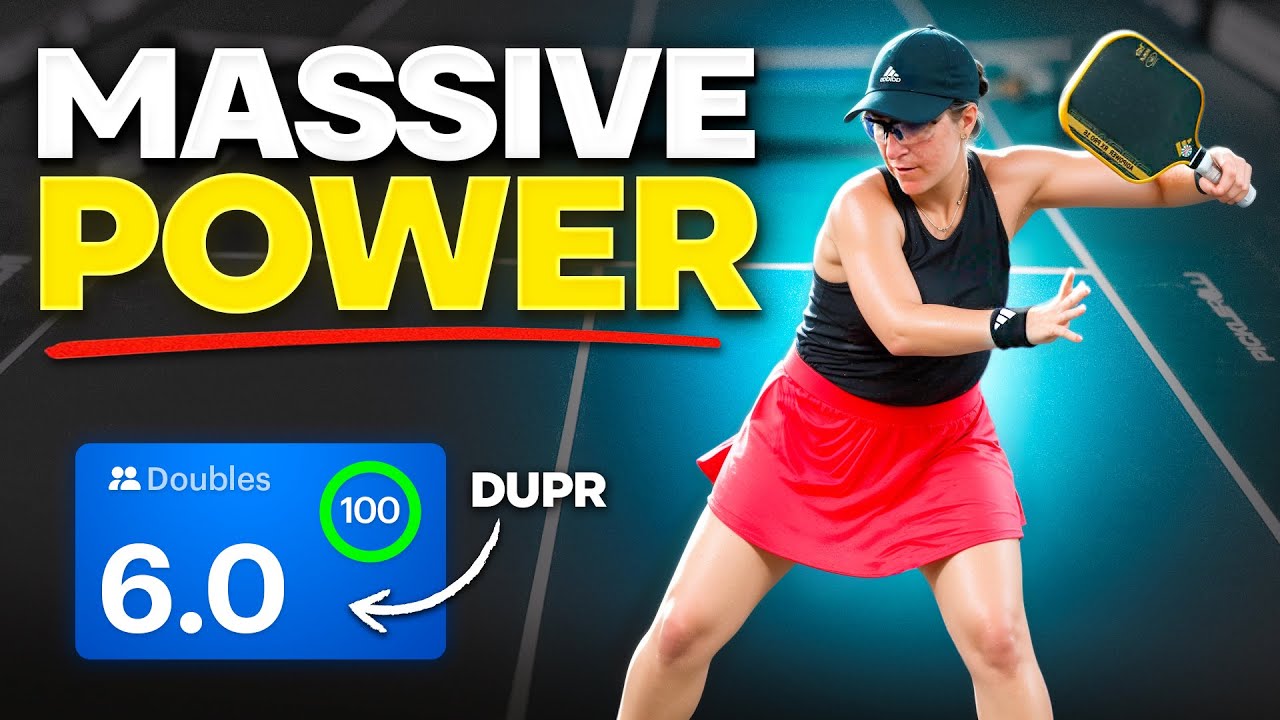
How to Think About the Contact Point
Sock mentions two release styles: hitting the ball out of your palm versus tossing it up slightly to give yourself more time.
Both are legal, both are used by pros, and both have real trade-offs.
- Palm release (Sock's method): The ball is released from the hand at the moment of contact or just before it. Less time in the air means less variability. The swing has to be ready before the release.
- Toss release: The ball is tossed upward slightly before contact. Gives more time to load the swing. Higher ceiling for power, but more variables introduced, including wind, timing, and arc.
Sock tried the toss and found it felt disconnected from his natural mechanics.
His palm release keeps everything tighter and more controlled, which matters when you are trying to serve deep and heavy on a consistent basis.
If you want to understand how to aim without changing your swing pattern, the mechanics of aiming your pickleball serve come down to exactly this: contact point consistency over swing speed.
 The Dink Media Team
How Much Risk Should You Accept on the Serve?
This is where Sock's mindset separates him from most recreational players.
He allows himself to miss one or two serves per game, and that number is intentional.
He is not playing scared and he is not playing reckless. He is accepting a calculated miss rate because the upside of winning free points is worth more than the occasional fault.
Most players operate in the opposite direction.
They serve conservatively to avoid missing, then wonder why opponents walk through their returns and take control of the net.
The math is simple: if a heavy pickleball serve wins two free points and costs you one fault, you are still ahead.
That works especially well in singles, where holding serve matters enormously.
This connects directly to the serve mistakes costing you points right now, because playing too safe is itself a mistake.
 The Dink Media Team
What Does This Mean for Your Third Shot?
A heavy pickleball serve does not just win points outright. More often, it creates a weaker return that makes your third shot dramatically easier.
Sock is explicit about this connection.
The goal of a deep serve is to keep your opponent back and off balance, which gives you more time, more options, and a better angle on your drive or drop.
A weak, short serve does the opposite. It lets the returner step in, attack the ball on the rise, and arrive at the kitchen line early.
You end up playing defense on your third shot instead of offense. Understanding why you lose points after you serve often comes back to this exact sequence.
If you want to see how the serve connects to the rest of the point, read up on third shot drop situations and which shot to hit depending on the return you get.
The serve and the third shot are one sequence, not two separate decisions.
 The Dink Media Team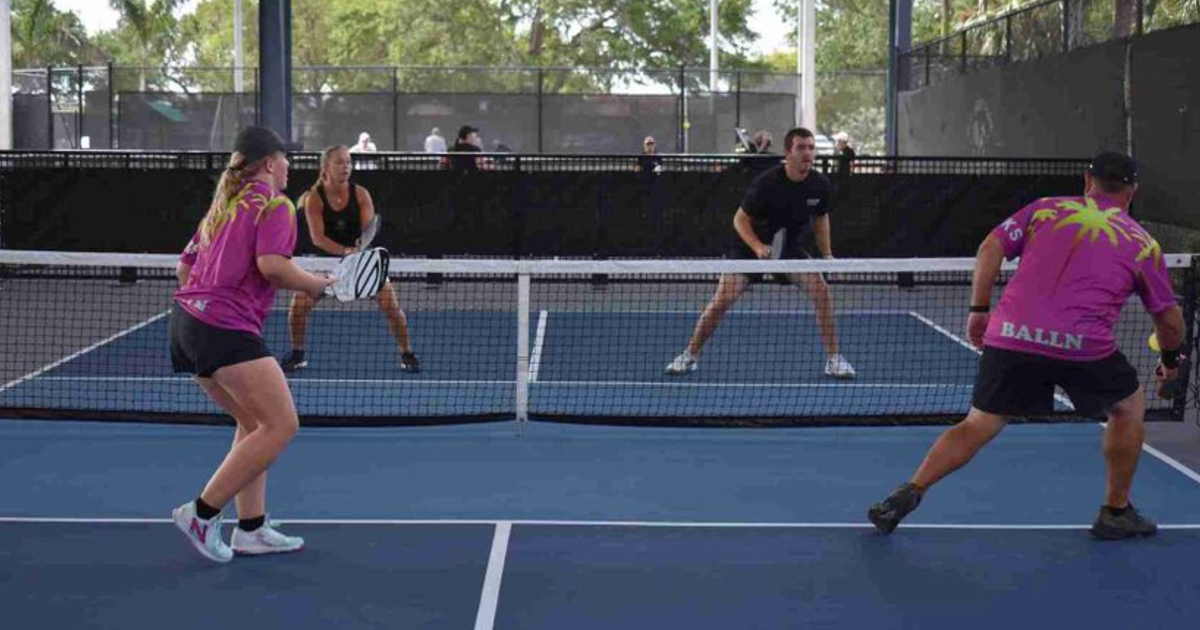
Is a Heavy Pickleball Serve Only for Advanced Players?
No. The heavy pickleball serve is accessible at almost any level, because Sock's mechanics do not require exceptional athleticism.
Open stance, hip-level contact, palm release, and a target deep in the box are all things a 3.5 player can practice today.
The miss tolerance mindset is something anyone can adopt by deciding to stop playing scared on the first shot of every rally.
Start by picking one change. Work on depth first, then add spin, then tighten your stance.
Players who focus on what pros do differently almost always find the serve is one of the biggest separators between levels.
It is also the one shot you can improve alone, any time you have a court.
For players building confidence and consistency from the baseline out, the 3-step serve system for instant depth is a practical place to start.
The serve is the one moment in every rally where you are completely in control. Use it like it matters, because it does.
Frequently Asked Questions
What makes a pickleball serve "heavy"?
A heavy serve combines depth with topspin or pace, making the return harder to control cleanly. It is not just about speed. The weight comes from how the ball behaves after it bounces, forcing the returner back or off balance.
Should I use an open or closed stance when serving in pickleball?
Jack Sock recommends testing both and tracking your accuracy. He uses an open stance because it gives him the best combination of power and consistency. Closed stance can work, but it introduces more timing variables that raise your miss rate.
How many serve faults per game is acceptable at the pro level?
Sock says he allows himself one or two faults per game as an acceptable trade-off for aggressive serving. The logic is that winning free points or forcing weak returns offsets the occasional double fault over the course of a match.
What is the palm release serve technique in pickleball?
The palm release means you release the ball from your hand at or just before contact, rather than tossing it upward first. It reduces the number of variables in your swing and keeps your contact point more consistent, which is key for serving with weight repeatedly.
How does the serve affect the third shot in pickleball?
A deep, heavy serve keeps the returner back and off balance, giving you more time and a better angle on your third shot. A weak serve does the opposite, letting the returner step in early and arrive at the kitchen line before you are ready to attack.
Love Pickleball? Join 100k+ readers for free weekly tips, news & gear deals.
Subscribe to The Dink